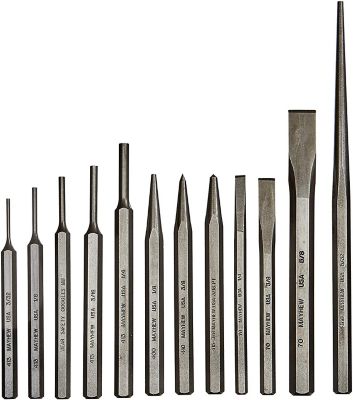
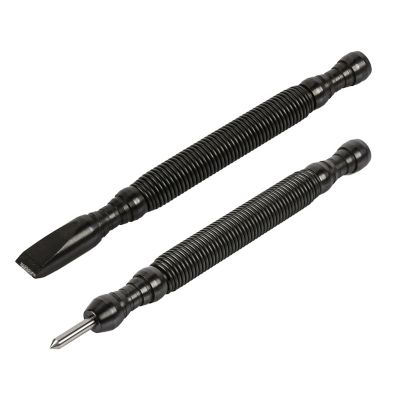
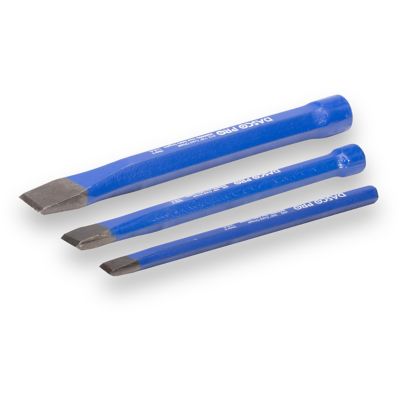
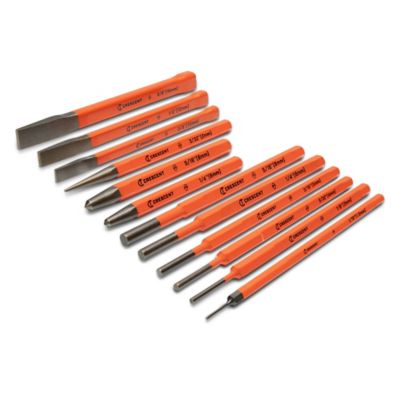
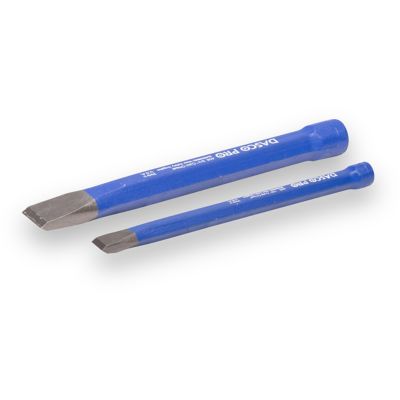
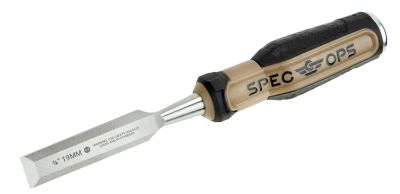
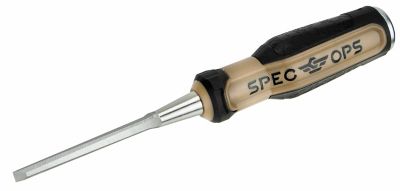
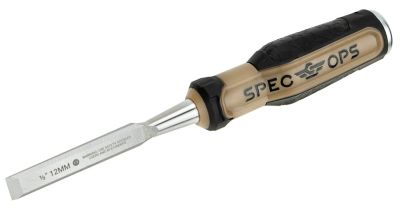
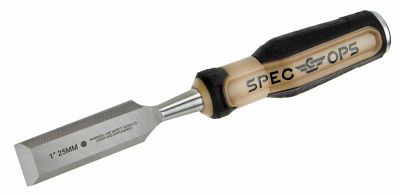
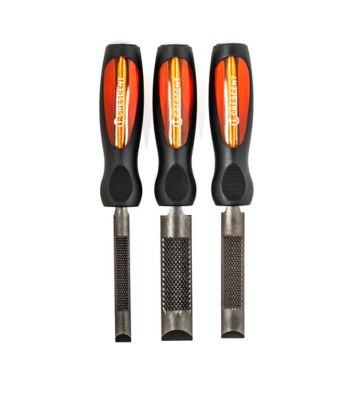
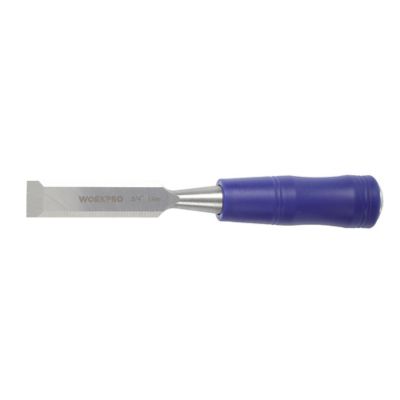
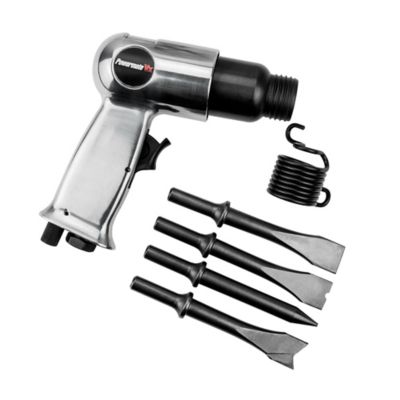
Workshop punch and chisel sets earn their place beside the vise, where small repairs often call for more control than a big swing. A hinge pin that needs moving, a fastener location that needs marking, or an edge of mild steel that needs trimming can each call for a different tip. Having several shapes and sizes together helps keep those jobs separate instead of asking one tool to handle everything. Center punches make a starting dimple that helps keep a drill bit from wandering, while pin punches help move pins through properly supported parts. Starter punches have shorter working ends for the initial movement of a stubborn pin, and longer pin punches can follow once it begins to move. Tapered alignment punches serve another purpose, bringing holes in separate pieces into line before a bolt goes through. Cold chisels have cutting edges intended for suitable metals without heating the workpiece; they are not the same as woodworking chisels. That distinction matters around a farm shop, garage, or equipment shed, where metal brackets, wooden handles, and machine parts may share the same bench. A mixed set can bring several of these tool styles together, while a set built around one style can give more size choices for repeated tasks. The right mix depends on the work: equipment maintenance may call for several pin diameters, while general metal repair may put more emphasis on marking points and cutting edges. A useful assortment reflects the jobs at hand rather than simply having the greatest number of pieces. Clear size markings also help when a repair has several pins that look nearly alike. With the right tip close by, there is less temptation to reach for a screwdriver or another tool that was never meant to take a hammer blow.
Materials and proportions tell a good deal about how a punch or chisel will handle at the bench. Heat-treated tool steel is common in striking tools because the working end needs to resist wear while the body must withstand repeated impacts. Alloy names can help describe the steel, but the heat treatment, intended application, and manufacturer's directions matter just as much. A very hard cutting edge still needs the toughness appropriate for striking work, and no steel tool is a match for every workpiece. Cold chisels are generally intended for metals softer than their cutting edges, not hardened bearings or other hardened components. When the job centers on cutting and shaping suitable metal,
Steel Chisels are another category worth considering alongside a mixed punch and chisel set. Edge width affects how much metal the chisel engages, while the bevel and profile influence the kind of cut it can make. A narrow edge can reach a confined spot, whereas a wider edge covers more of a broad surface and calls for an appropriate striking force. Punch diameter deserves equally close attention. A pin punch should fit the pin and surrounding opening without wedging against the hole, and its working length needs to reach the task without adding needless slenderness. Longer tools offer reach, but they do not automatically suit harder blows. Grip shape is another practical consideration when hands are greasy or space is tight. Hexagonal or other flat-sided bodies can feel different from round shafts and may be less likely to roll across a level bench. Knurled sections or fitted grips can provide a more defined handhold, though the tool still needs enough clearance for a controlled strike. Hand guards, where fitted, add separation around the grip but do not replace careful positioning. The striking end also needs to suit the hammer specified by the toolmaker. Those details make more difference in everyday handling than a large piece count alone.
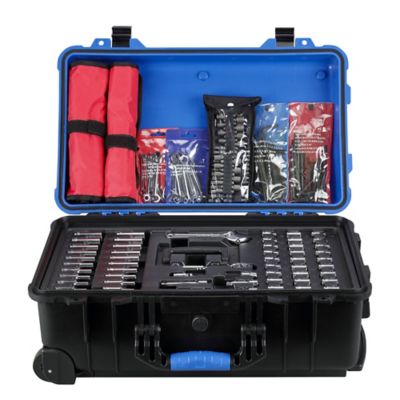
Care and storage have a lot to do with how these tools hold up between repairs. Metal chips, grit, and oily residue can hide wear or make a shaft harder to hold, so clean surfaces make inspection easier as well as keeping the toolbox tidier. A light protective film on bare steel can help limit rust during storage, with excess wiped away and gripping surfaces kept clean before work. Cutting edges need attention according to the maker's directions; an edge with the wrong shape or heat damage may not perform as intended. Chipped tips, bent shafts, cracks, and mushroomed striking heads are reasons to take a tool out of service and follow the manufacturer's repair or replacement guidance. Continuing to strike damaged steel can send fragments flying. Safety glasses with side shields belong with this work, along with any additional face protection called for by the task. A firmly secured workpiece and proper support beneath a part matter, too, especially when a pin needs room to exit. For storage, a fitted case, roll, or divided tray keeps narrow punches from disappearing under sockets and makes an empty space easy to spot. Markings that stay easy to read help return each piece to its place after a teardown. These are practical considerations for mechanics, welders, equipment owners, and folks who handle repairs around the property. They also make punch and chisel sets a thoughtful gift for someone building a first workshop or filling gaps in a long-standing tool collection. Matching the assortment to that person's work is more useful than choosing by size alone. A compact selection suited to small machinery serves a different need from a broader assortment for varied bench work, but either belongs in a setup where the right tool has a clear job and a place to go when the repair is finished.