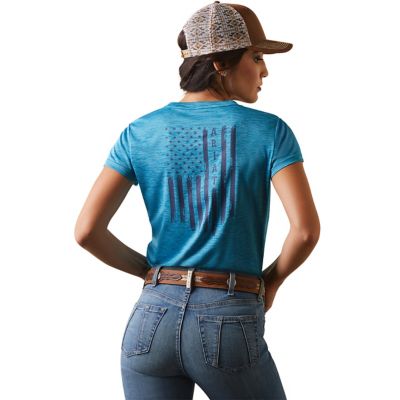
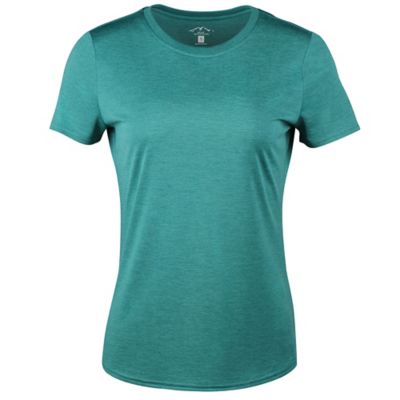
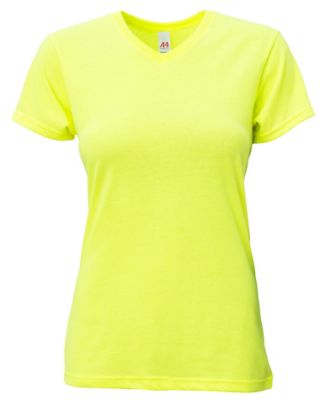
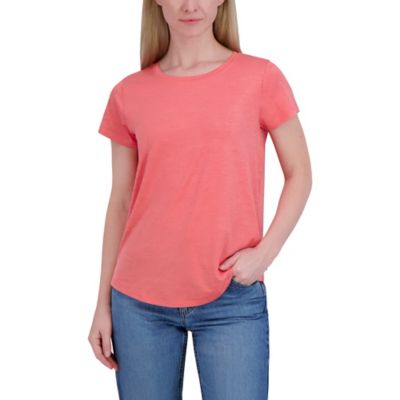
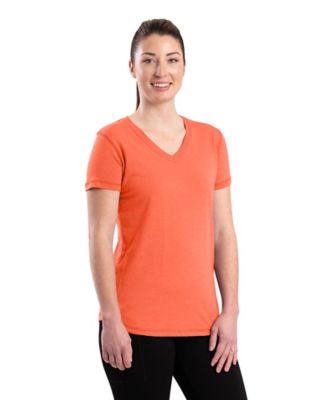
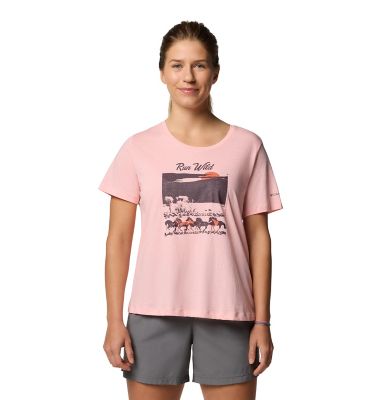
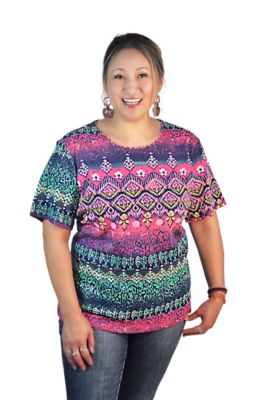
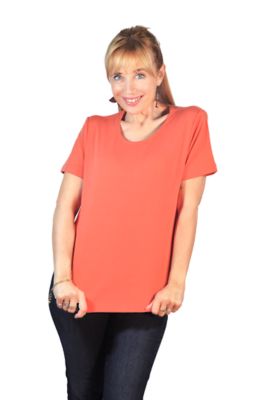
Women’s short sleeve workout tops bring easy movement, arm coverage and everyday comfort to everything from a morning walk down a gravel road to strength training at the gym. A workout tee should give you room to reach, bend and stretch without making you tug at the hem between sets. Short sleeves cover the shoulders while leaving the forearms free, making this style a practical choice for walking, running, lifting, cycling and studio exercise. Fabric makes a big difference in how a top feels once the pace picks up. Polyester and nylon fabrics are common in athletic shirts because they tend to dry faster than cotton, and moisture-wicking constructions help move sweat away from the skin toward the fabric’s outer surface. Cotton offers a familiar, soft feel for lighter activity and everyday wear, though it absorbs moisture and may feel heavier during a demanding workout. Blended fabrics combine different benefits, such as cotton’s softness with polyester’s faster drying or a little spandex for stretch. The amount of stretch matters when reaching overhead, pulling a resistance band or moving through a yoga pose; the shirt needs to move with the body and return to shape afterward. Fabric weight and construction also affect comfort. A lightweight knit can feel less restrictive, while a more substantial fabric may provide additional coverage. Mesh sections allow airflow, and smooth interior seams can help limit rubbing during repeated movement. Some athletic fabrics include odor-control treatments, but those features vary by garment and do not replace regular washing. For women balancing exercise with errands, animal care or a busy day around the place, a short sleeve training top can make the transition between activities simple. The most useful choice is one that suits the actual routine, whether that means steady miles on foot, a few sets with dumbbells or stretching after a long day. A shirt that feels comfortable through those familiar motions is more likely to become a regular part of the rotation.
Fit is just as important as fabric when choosing women’s short sleeve athletic tops. A fitted shirt sits closer to the body and can stay out of the way during floor exercises, while a regular fit provides a little breathing room without much extra fabric. A relaxed fit offers more space through the chest and waist for those who prefer a less clingy feel. None of these fits should pinch across the shoulders or pull tightly under the arms when reaching forward. Sleeve length and the shape of the arm opening matter, too. A shorter sleeve leaves more of the upper arm uncovered, while a longer short sleeve provides additional coverage without extending to the elbow. Sleeves that press into the upper arm can become distracting during lifting, and very loose openings may shift during overhead movement. Crew necks offer more coverage across the chest; V-necks and scoop necks leave a more open neckline. The right choice depends on comfort and how the top sits during movement, not just how it looks while standing still. Length deserves the same attention. A hip-length shirt can provide coverage during bends and stretches, a longer back hem may help when leaning over handlebars, and a cropped cut pairs differently with high-rise leggings or shorts. Shoppers looking for a broader size range can also explore
women's plus size workout tops and compare measurements with their preferred fit. Bust, waist and hip measurements are more useful than relying on a familiar size alone, since cuts differ between garments. Shoulder placement, torso length and room at the hem all influence how a shirt settles on the body. Color and fabric density can affect coverage, particularly when the material stretches, so a top should provide the level of coverage the wearer expects during a squat or overhead reach. For a gift, knowing the recipient’s usual size, favorite neckline and preference for fitted or roomy shirts takes much of the guesswork out of choosing something they will enjoy wearing.
The demands of the workout help narrow down the details worth paying attention to. Running involves repeated arm movement, so a smooth underarm area and a hem that does not bunch can make a noticeable difference over several miles. Strength training calls for shoulder freedom and enough stretch across the back for rows, presses and loaded carries. For yoga and other mat-based exercise, a shirt that stays reasonably close to the body may shift less when leaning forward, although some women prefer extra room and a longer hem. Walking and low-impact exercise allow more flexibility in fabric choice, with softness and easy movement often taking priority. A workout top can also pair with athletic shorts, leggings or joggers for a quick trip into town after exercise, without needing a whole outfit change. Long-term wear depends on fabric construction, stitching and care as much as the feel of the shirt on the first day. Even seams, secure hems and fabric that recovers after stretching help a top hold its shape through repeated movement and washing. Rough contact with equipment, hook-and-loop fasteners or unfinished surfaces can snag lightweight knits, so keeping those surfaces away from athletic shirts helps preserve the fabric. Care labels provide the best direction for washing and drying because fiber blends and fabric treatments have different needs. Washing after sweaty activity helps remove residue, while turning a shirt inside out can reduce friction on its outer surface. Fabric softener can interfere with the performance of some moisture-wicking materials, making the garment’s care instructions especially worth checking. High dryer heat may affect stretch fibers or cause shrinkage in certain blends; air drying or a lower setting may be appropriate when the label allows it. With a comfortable cut and sensible care, women’s short sleeve workout shirts can earn their place in a steady exercise routine, from a brisk walk before chores to the last stretch after a gym session.