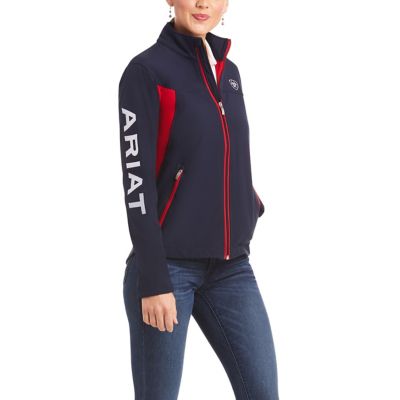
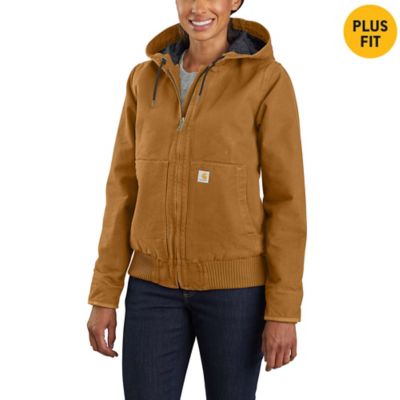
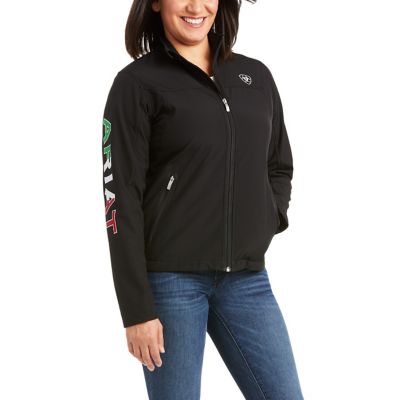
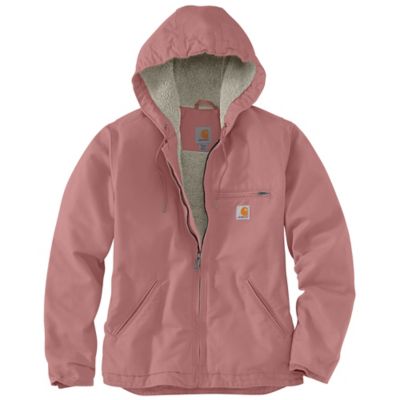
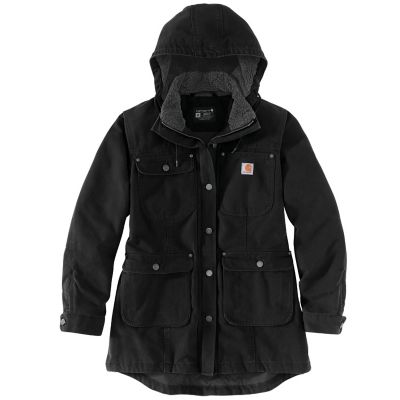
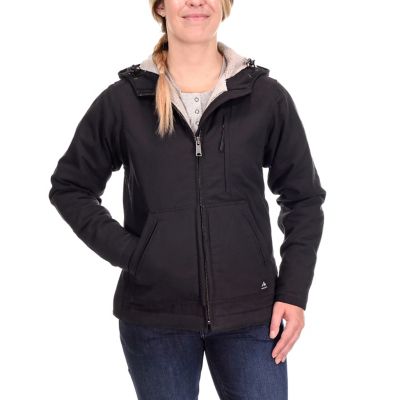
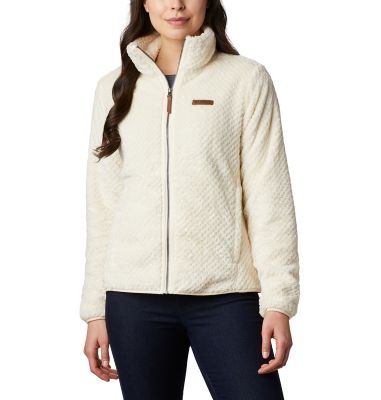
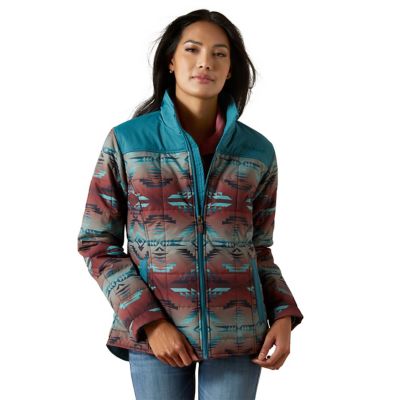
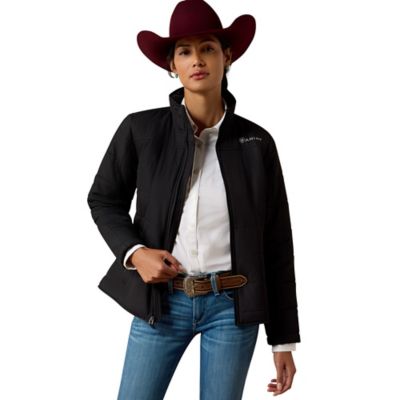
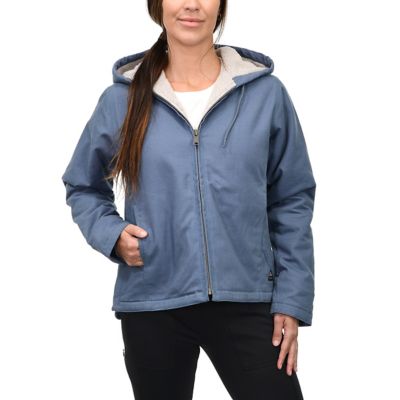
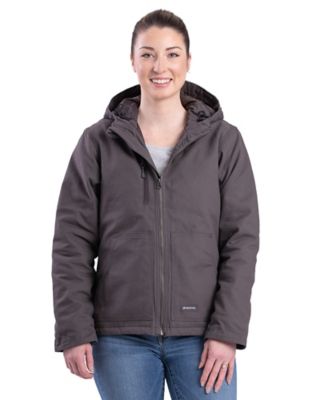
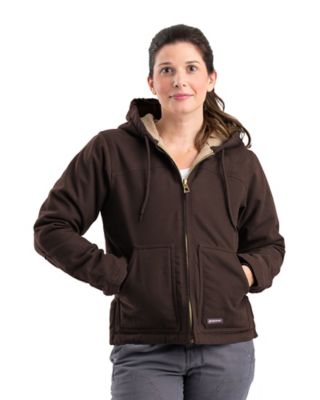
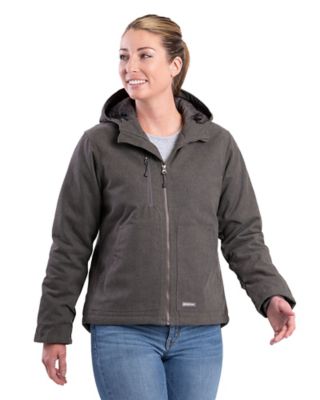
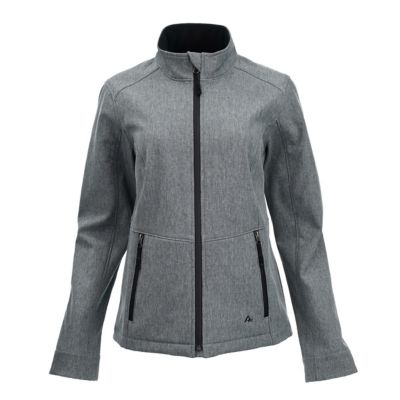
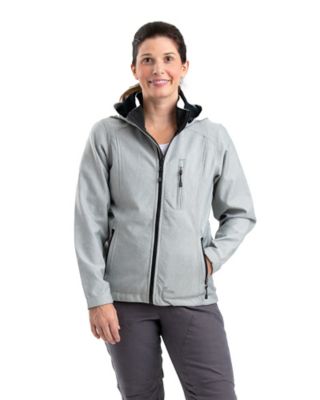
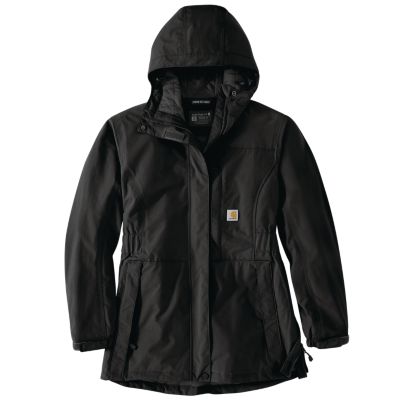
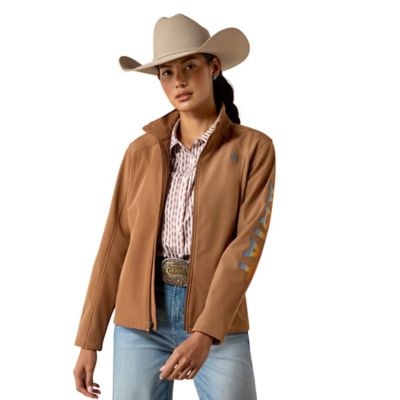
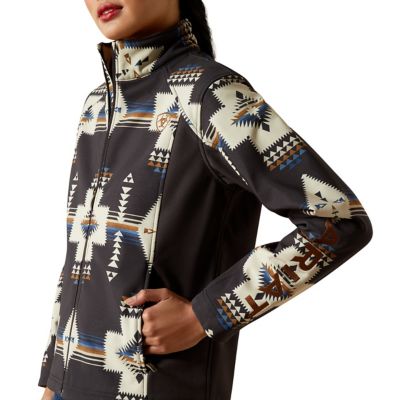
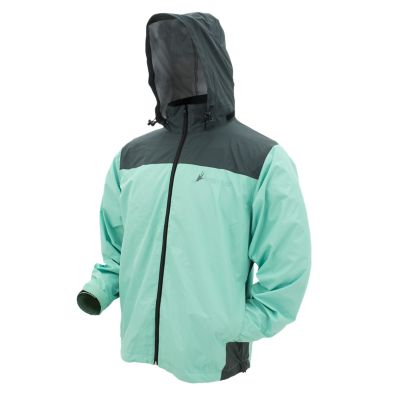
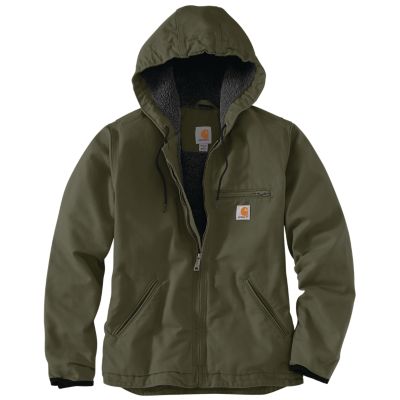
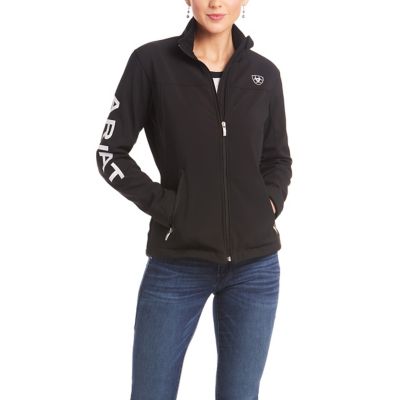
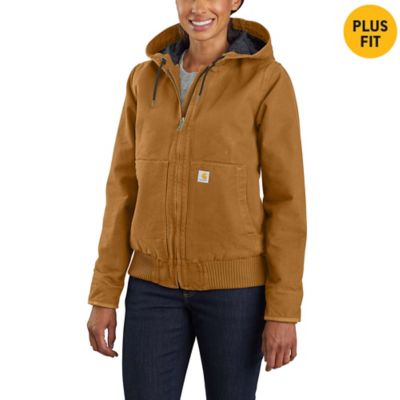
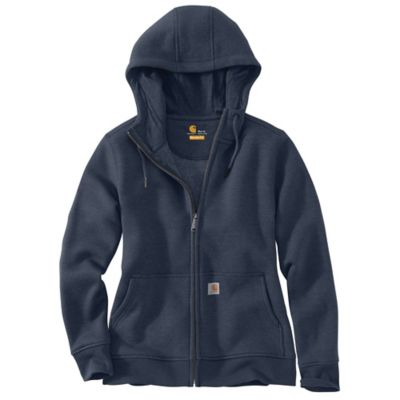
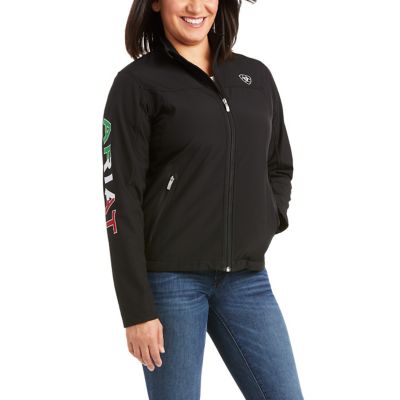
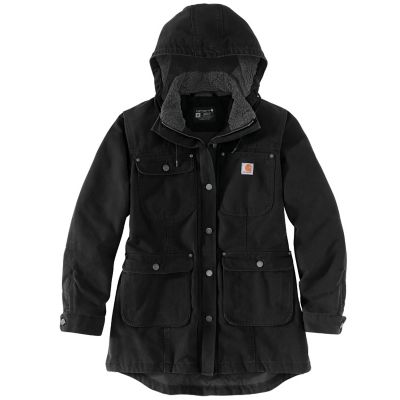
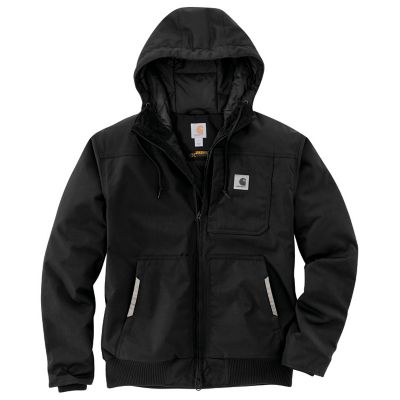
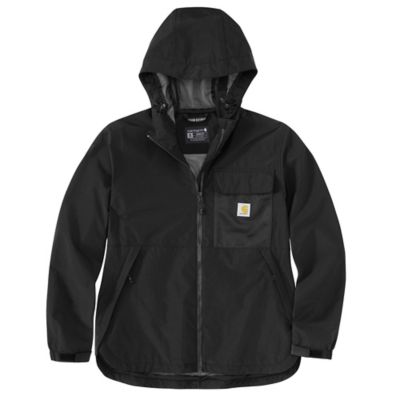
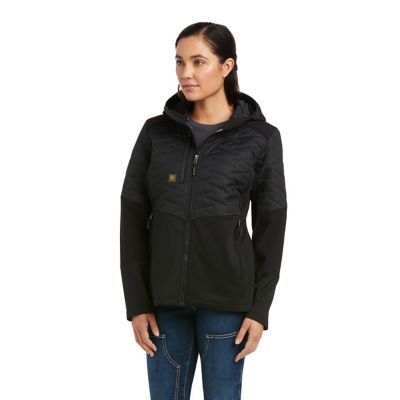
Women’s casual winter jackets pair everyday comfort with cold-weather coverage for trips into town, mornings at the bus stop, and walks down a frosty gravel lane. The right balance of warmth, weight, and weather protection depends on how much time a jacket will spend outdoors and what’s underneath it. A lightly insulated jacket can suit someone moving between a warm truck and indoor stops, while a longer, more heavily insulated style makes sense for extended stretches outside. Puffers, parkas, fleece-lined jackets, and canvas outer layers each bring something different to that routine. Quilted construction helps keep insulation distributed, while the amount and type of fill influence warmth and how easily the jacket compresses. Down offers warmth with relatively little weight and packs down well, but untreated down loses much of its insulating ability when wet. Synthetic insulation generally handles damp conditions better, though performance varies by construction. Down fill power describes loft rather than total jacket warmth; fill amount, body coverage, and protection from wind matter, too. Fleece adds a soft feel and can provide comfortable warmth for active days, but fleece alone often lets wind pass through. A tightly woven outer shell helps reduce that draft. Nylon and polyester shells are common for their light weight and ease of care, while cotton canvas brings a firmer feel that suits an everyday country wardrobe. Water-resistant fabric can handle some light precipitation, but it isn’t the same as waterproof construction with sealed seams. For steady rain or wet snow, that distinction matters more than how thick a jacket looks. A cozy lining feels good over a long-sleeve tee, yet insulation and the outer shell do more of the work when temperatures drop. Casual winter outerwear fits the space between dress coats and task-specific workwear, offering an easy match for jeans, flannel shirts, and boots without making every errand feel like a trek through deep snow.
Fit makes a real difference when a jacket has to work over several outfits. Women’s casual winter jackets should leave enough room for a sweater or sweatshirt without pulling across the shoulders, squeezing the upper arms, or bunching at the waist. Shoulder seams, sleeve shape, and space through the hips all affect comfort, especially when reaching for a tailgate, carrying groceries, or settling into the driver’s seat. A trim cut can still allow movement, while a relaxed cut shouldn’t require sleeves so long that they cover the hands. Trying the jacket over a typical winter layer gives a better sense of fit than wearing it over a thin shirt alone. Hip-length jackets offer easy movement for frequent trips in and out of a vehicle, while thigh-length styles provide more coverage across the seat and upper legs. A longer hem can be welcome beside a windy ball field or on an unhurried walk with the dog. Two-way front zippers allow the lower portion to open for sitting or taking a longer stride. Adjustable cuffs, rib-knit inner cuffs, and drawcord hems help close off gaps where cold air can slip in. Hoods add coverage around the head and neck; an adjustable hood is especially helpful when a loose fit would otherwise block side vision. A stand collar can tuck comfortably beneath the chin, and a zipper guard keeps cold hardware away from skin. Pocket placement deserves attention as well. Hand pockets with soft linings offer a comfortable resting place, secure closures help contain keys, and an inside pocket keeps small belongings tucked away. Neutral shades pair easily with most everyday clothes, while brighter colors add a little cheer to gray winter scenery. These jackets can make thoughtful gifts when the recipient’s size, layering habits, and preferred length are known. For another person on the gift list,
Men's Casual Winter Jackets offers a related category to explore without assuming everyone needs the same fit or level of insulation.
Everyday winter jackets see plenty of ordinary wear: rubbing against a seat belt, brushing a gatepost, or catching a bit of mud during a walk across the yard. Fabric weight, stitching, and construction help determine how well a jacket stands up to that routine. Canvas and heavier woven shells tend to feel substantial, while thin puffer shells trade some resistance to snags for lighter weight and easier packing. Neither approach fits every day equally well. Smooth linings slide more easily over flannel and knit sleeves, and neatly finished seams reduce rough spots that can rub against clothing. Reinforcement around pocket openings and secure stitching at closures are useful details in areas that take repeated strain. Even a sturdy casual jacket has limits around thorny brush, sharp wire, sparks, or hot equipment; everyday outerwear isn’t a substitute for protective clothing required by a task. Care also plays a part in keeping a winter jacket comfortable over time. The garment label should set the washing and drying routine because down, synthetic fill, fleece, and coated shells may need different treatment. Many washable jackets benefit from closed zippers and fastened tabs before laundering, which helps limit snagging. Fabric softeners can interfere with some performance finishes, and high heat may damage shell fabrics or trim. Insulated jackets need thorough drying according to their care instructions so damp fill doesn’t remain clumped inside. Down garments may call for low-heat tumble drying with dryer balls to help restore loft, but that method belongs only with care directions that permit it. Small spots of dirt can sometimes be cleaned without washing the entire jacket, provided the fabric instructions allow it. Between wears, a jacket needs room to air out rather than staying bunched on a truck seat. Longer-term storage works best when the garment is clean, fully dry, and not tightly compressed. Thoughtful construction, a comfortable fit, and suitable care all help a casual winter jacket earn its place beside the door, ready for everyday plans that carry on despite a cold breeze.