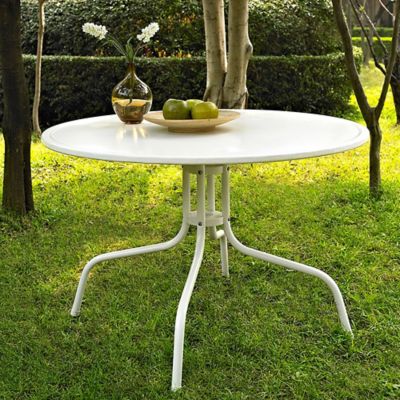
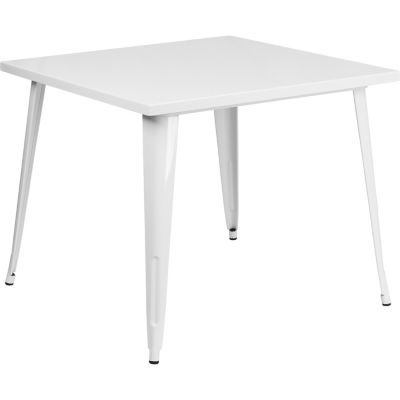
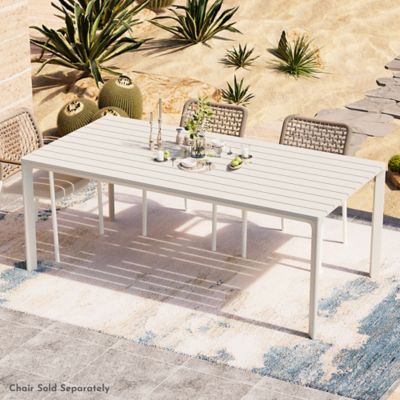
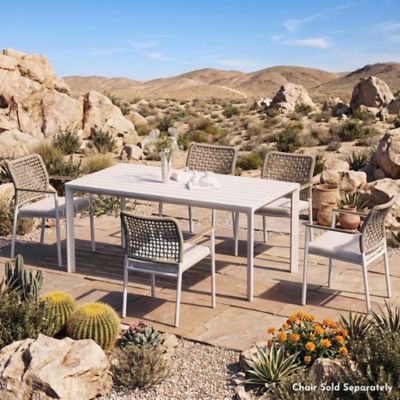
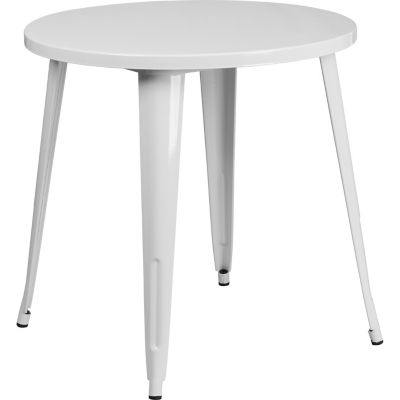
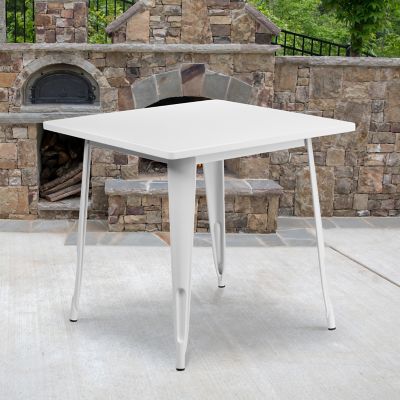
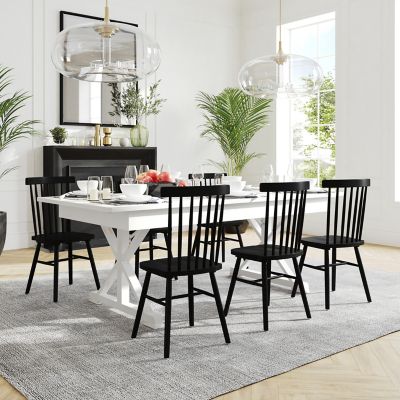
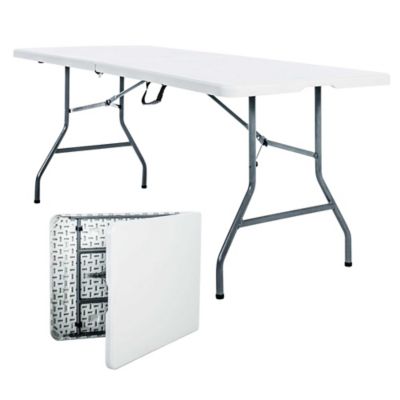
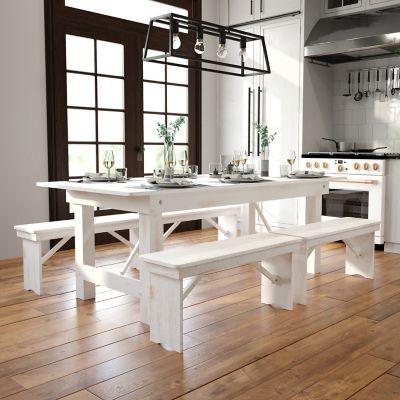
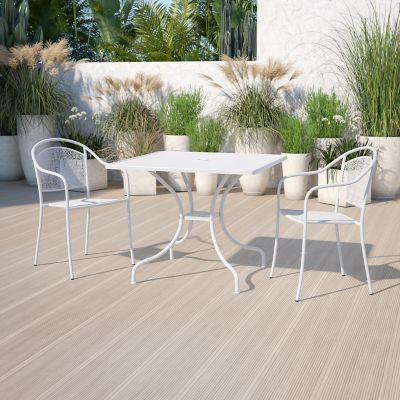
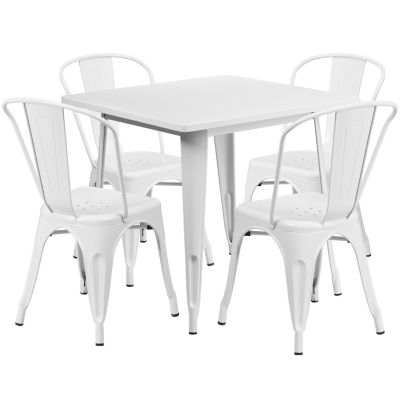
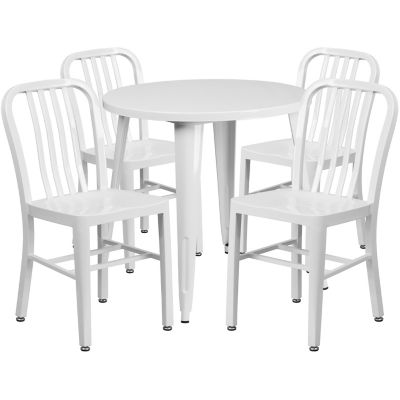
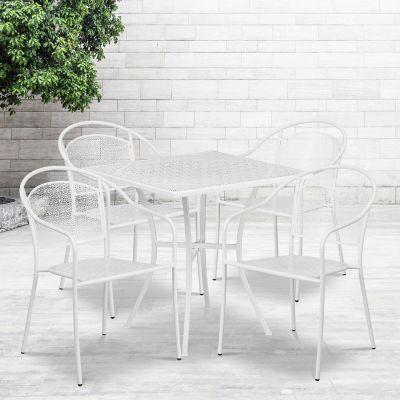
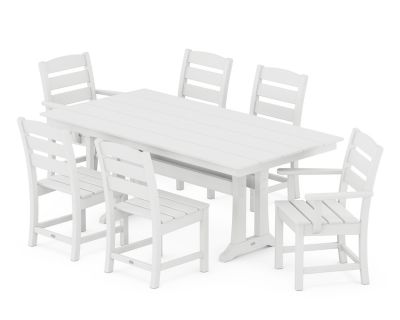
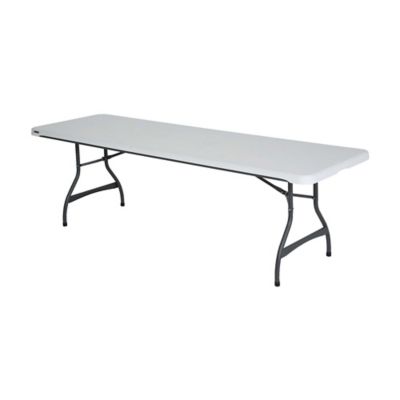
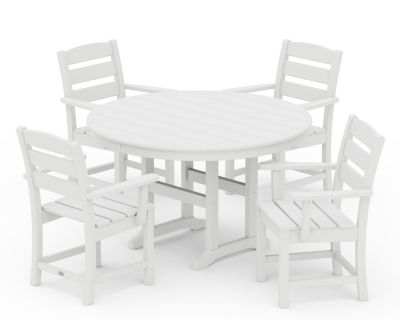
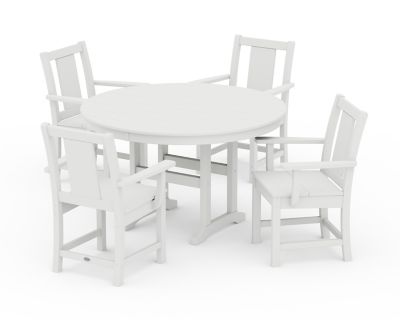
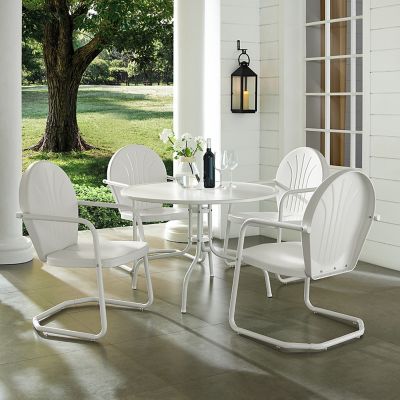
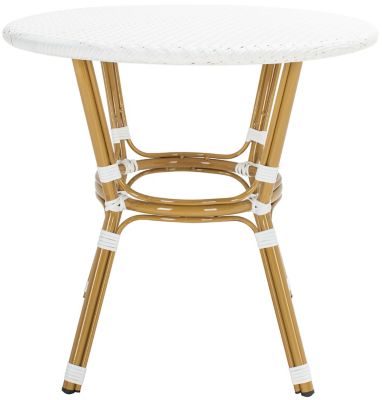
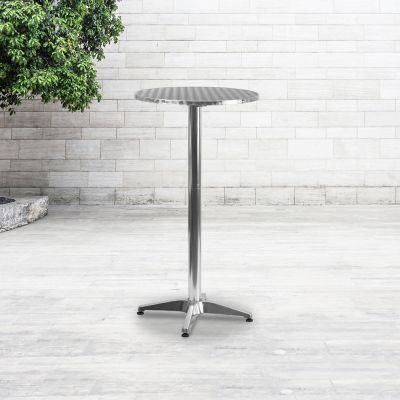
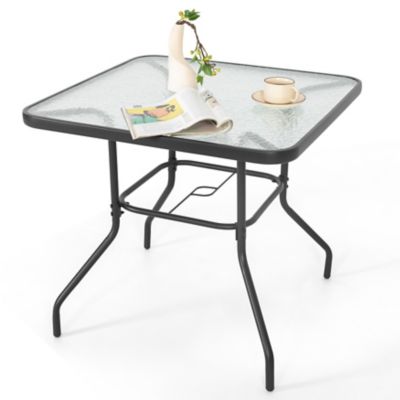
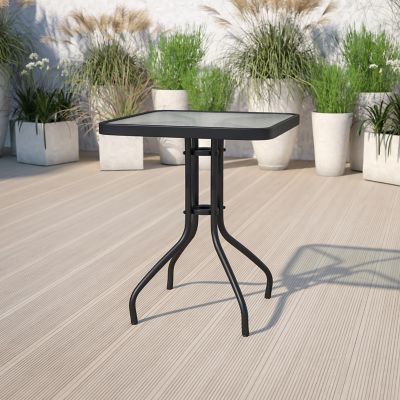
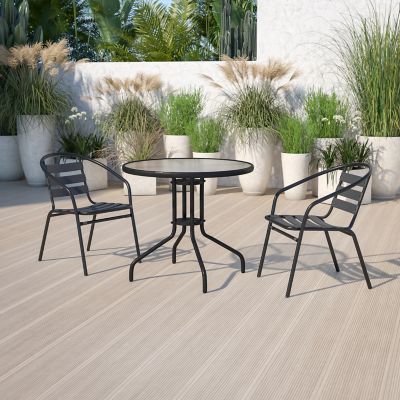
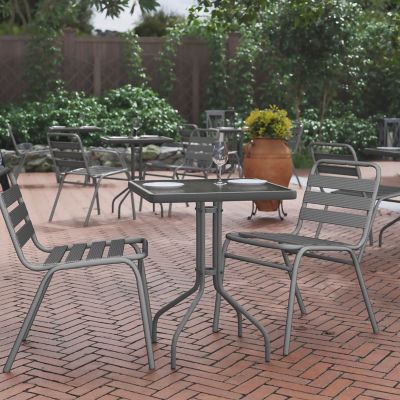
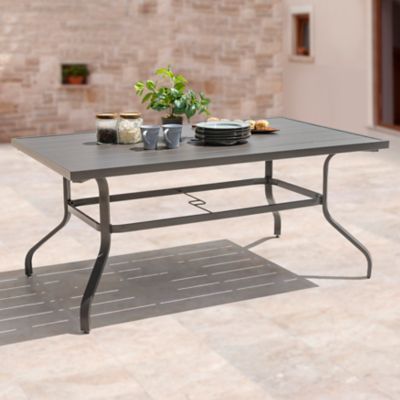
White outdoor dining tables bring a clean, bright look to patios, porches and backyard eating areas, with room for everything from a quiet cup of coffee to supper with the whole family. The white finish pairs easily with natural wood chairs, black metal seating, woven textures and colorful cushions, so the table can fit into a farmhouse porch or a simple paved patio without taking over the space. Shape makes a difference in how that space feels and functions. Round outdoor dining tables keep everyone facing toward the middle and make it easy to pass a bowl or carry on a conversation. A central pedestal can leave more room around the edge for chairs, although the base still needs to leave space for feet. Square tables suit smaller seating areas and give each person a defined spot. Rectangular tables make sense for longer patios, larger households and meals with serving dishes down the center. An extending table can offer extra seating when company comes over, provided there is enough room around it once fully opened. For a narrow porch, a compact tabletop may leave a clearer path between the doorway and the steps than a larger table squeezed into the same footprint. Details beyond the outline matter, too. Rounded corners soften the edges along a walking route, while broad legs or cross braces can affect where chairs slide underneath. A smooth white tabletop gives plates and serving pieces an uncluttered backdrop; a slatted top adds texture and allows water to drain through its openings. Those gaps can also affect how steadily small glasses or narrow serving pieces sit. The best fit comes from matching the table’s shape and layout to the way people actually gather, whether that means two chairs tucked beside the back door or a full seating arrangement near the grill.
Material and finish determine much of a white outdoor dining table’s weight, upkeep and ability to stand up to everyday use. Aluminum is relatively light and does not rust like iron or steel, making it a practical choice when the table needs to move for sweeping or rearranging chairs. A powder-coated finish adds a protective layer, though scratches and chips still deserve attention according to the manufacturer’s care directions. Steel offers a sturdy feel, but exposed spots can develop rust, especially around damaged coatings, joints and fasteners. White painted wood brings visible grain and a familiar porch-furniture look, with care needs that depend on the wood species and finish. It may need periodic refinishing, and standing water should not linger on the surface. High-density polyethylene, often called HDPE, resists moisture and does not require the same refinishing routine as painted wood, though its weight and construction vary. Concrete and concrete-composite tables can create a substantial gathering spot, but they are harder to reposition and may need sealing or particular cleaning methods to prevent staining. Glass tabletops intended for outdoor furniture offer a smooth surface that wipes down readily, while fingerprints and water marks may be more noticeable. Across materials, sturdy joints, secure hardware and a stable base matter just as much as the tabletop’s appearance. A white surface can make dirt, pollen and food spills easier to spot, which helps with cleanup but can call for more frequent wiping. Mild soap, water and a soft cloth are common care basics, subject to the table’s instructions. Abrasive pads and strong cleaners can damage some finishes. Placemats, coasters and trivets help protect surfaces from spills, scratches and hot serving dishes. Felt-free, outdoor-suitable protective pads under accessories can also help prevent rubbing, as long as they do not trap moisture against the finish. Care requirements are worth checking before choosing a material, especially for a table that will handle frequent family meals.
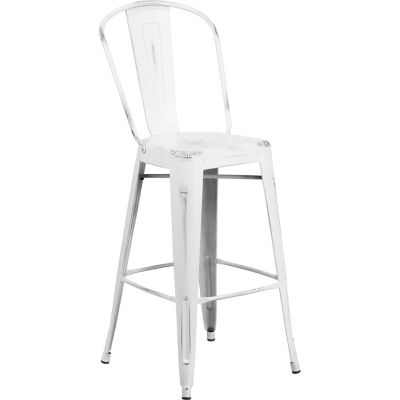
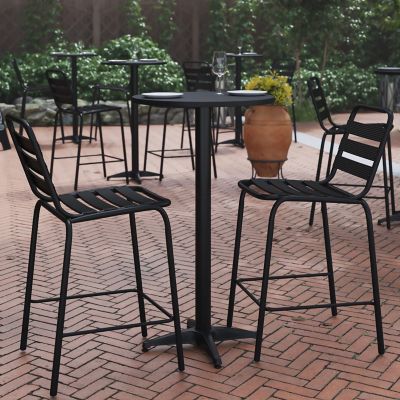
A comfortable outdoor dining setup depends on more than the table’s listed seating capacity. Allow roughly 24 inches of tabletop edge per person as a starting point, with extra space for wide chairs, armrests or generous place settings. About 36 inches between the table edge and a wall or railing generally gives chairs room to pull back; a busy walkway behind seated guests needs more clearance. Measuring the chairs matters, too, since thick cushions, tall arms and wide frames can change how well they fit. Standard dining tables are commonly about 28 to 30 inches high and generally pair with seats around 17 to 19 inches high, but the actual dimensions and space beneath the apron should guide the match. Bar-height stools are not a substitute for dining chairs. For a separate raised eating area,
White Outdoor Bar Stools can carry the same color into another part of the patio, with seat height matched to that surface. Beneath any table, a firm, level base helps keep drinks steady and reduces rocking. Adjustable feet can help on slightly uneven paving, but they cannot make up for an unstable surface. If an umbrella is part of the setup, the tabletop opening, pole diameter and base clearance all need to work together; an umbrella hole alone does not provide support. Tables with extension leaves also need enough room for their full length and a suitable place to keep any removable parts. A fitted furniture cover can help protect the finish between meals when recommended for the material, but the table should be clean and dry before covering, with ventilation as directed. Checking fasteners periodically and lifting rather than dragging the table can help protect both its joints and the patio beneath it. With the right proportions, suitable materials and manageable care needs, a white outdoor dining table can become a natural gathering place for everyday meals, visiting neighbors and a well-earned break after chores.