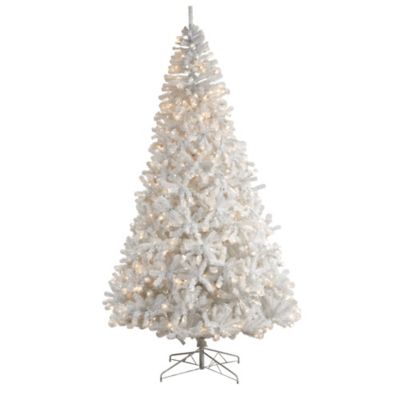
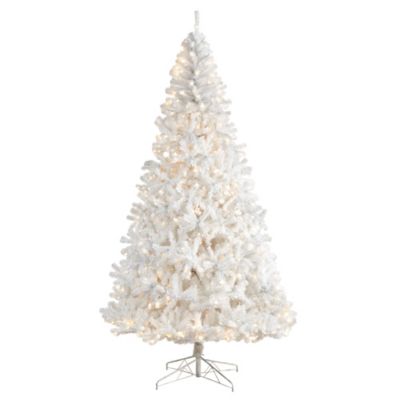
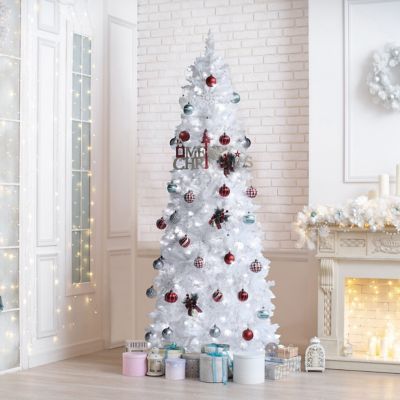
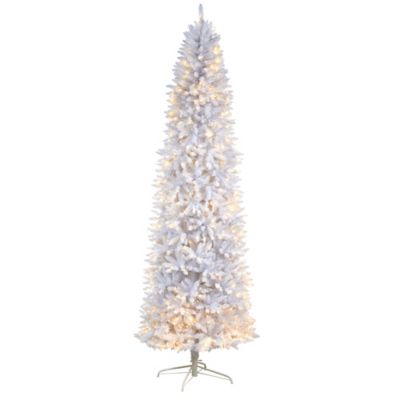
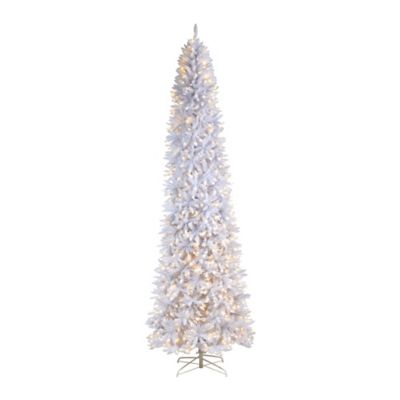
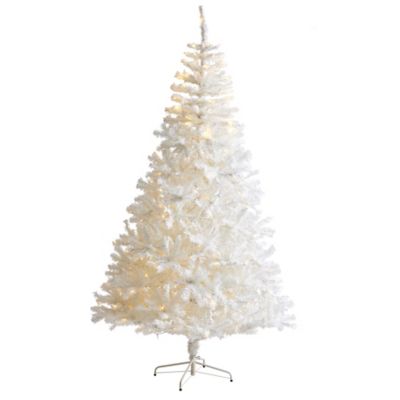
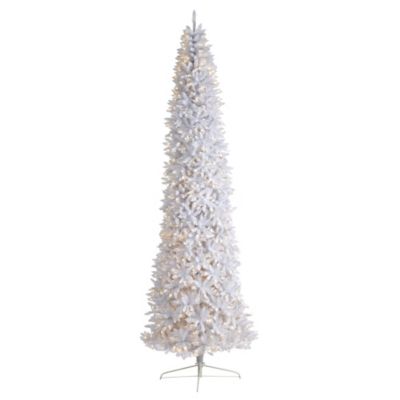
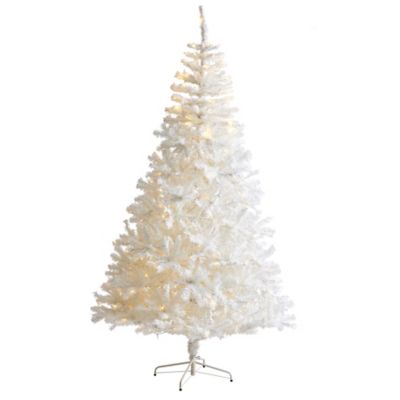
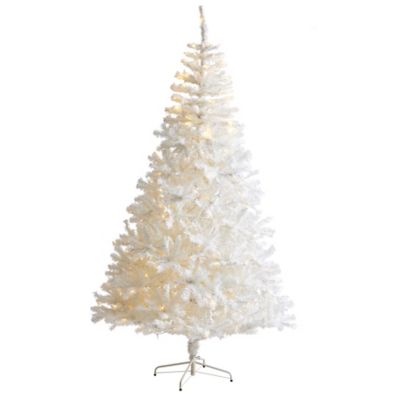
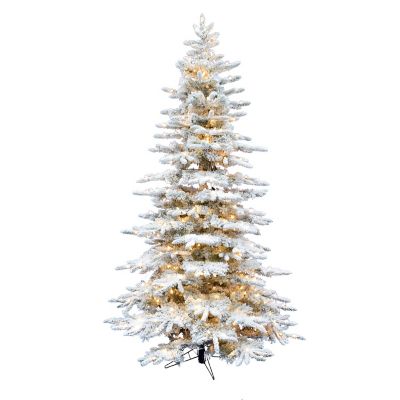
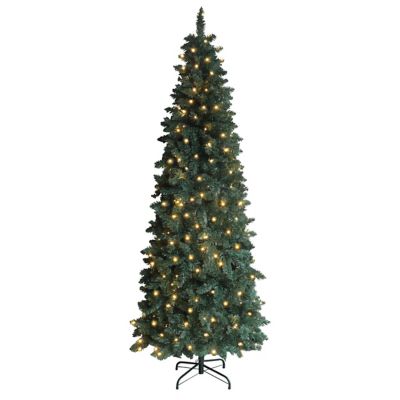
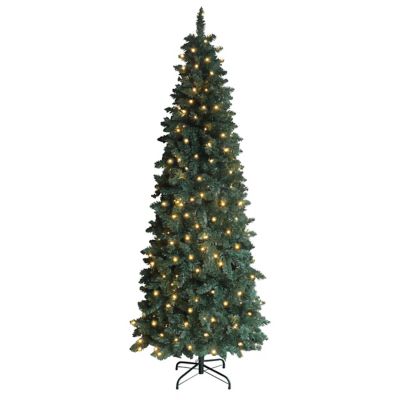
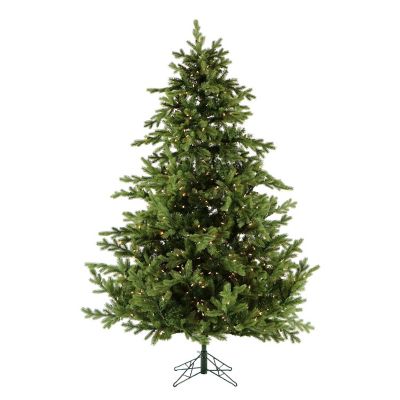
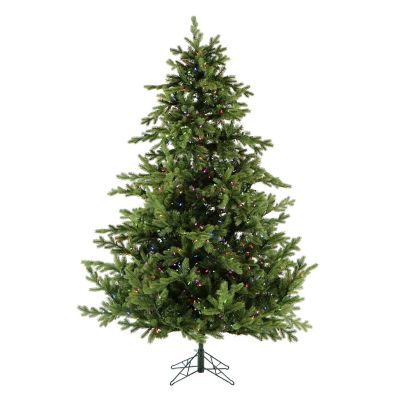
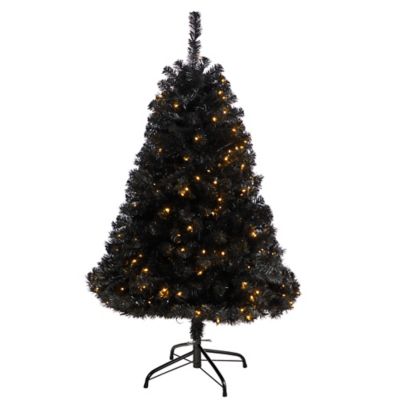
White artificial Christmas trees with lights combine white branches and preinstalled lighting in one ready-to-assemble holiday centerpiece. Common options include full, slim, and pencil-shaped trees, with branch styles ranging from soft, snowy-looking needles to reflective tinsel. Lighting may be warm white, cool white, or multicolor, depending on the design. That bright white backdrop gives ornaments a different look than green branches do: red ribbons stand out clearly, silver catches the light, and natural wood accents bring a little farmhouse warmth to the room. Branch materials help shape the overall appearance. PVC needles can create a soft, dense effect, while molded polyethylene, often called PE, can provide more defined needle shapes; some trees combine both materials. Tinsel branches have a shinier finish that reflects nearby lights. An all-white tree also differs from a flocked green tree, which has a snow-like coating over darker foliage. Those differences matter when the goal is a crisp white silhouette rather than the look of fresh snow on evergreen branches. Height and width deserve equal attention, especially in homes where the Christmas tree shares space with a recliner, a woodstove hearth, or the main path between the kitchen and living room. A full tree brings a broad, traditional outline to an open corner, while a slim or pencil profile leaves more floor space for everyday traffic. Smaller trees can suit an entry table, an apartment, or a second holiday display away from the main gathering room. Listed dimensions are worth checking carefully, including whether the stated height includes the stand and how wide the branches spread after shaping. Ceiling clearance needs to account for a topper, too. A tree that fits comfortably, rather than brushing the ceiling or crowding a doorway, gives the lights and ornaments room to show without getting in the way of boots, coats, and family coming through.
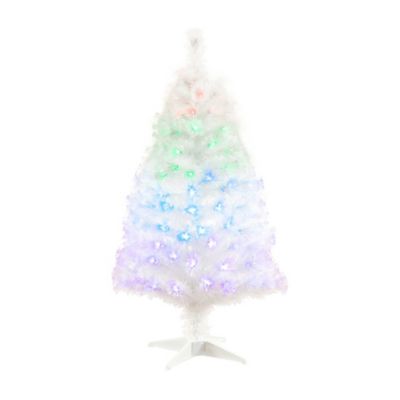
The lighting is a big part of what gives a prelit white Christmas tree its character. Warm white lights create a softer, golden glow that pairs easily with wood furniture, plaid ribbon, and red ornaments. Cool white lights give white branches a brighter, icier appearance, especially alongside glass, blue, or silver accents. Multicolor lights bring a cheerful, familiar look that works well with a collection of family ornaments gathered over the years. LED and incandescent lighting have different characteristics, so the light type belongs alongside tree size and branch style when comparing designs. LEDs generally consume less electricity and produce less heat than incandescent bulbs, although any lighted tree still needs placement and operation that follow its instructions. Some lighting systems offer steady illumination only, while others include selectable colors, dimming, or changing patterns. A foot switch or remote, where included, can make operation easier when the plug sits behind the tree. Power connections also vary: certain trees connect through the center pole, while others have separate cords between sections. These details affect assembly and the number of connections tucked among the branches. Light count alone does not tell the whole story, since a narrow tree and a wide tree can spread the same number of bulbs very differently. Even spacing, the position of lights near branch tips, and the fullness of the foliage all influence the finished glow. For a family room where the tree stays visible from several seats, lighting around the full outline matters more than a bright front with a dim back. Cord length and outlet location matter as well. A nearby outlet can help keep the setup away from walkways, while a secure stand and sensible placement help limit bumps from children or pets. Indoor-only trees belong indoors; a covered porch still requires a tree and lighting specifically rated for that setting.
Branch construction and care influence how a white artificial Christmas tree looks beyond its first holiday. Hinged branches generally fold down from the center trunk, while other construction styles may require attaching individual branches. Either way, the tree’s finished fullness depends partly on spreading and shaping the smaller tips, not just opening the main limbs. A dense arrangement can help hide the center pole and light wires, while more open spacing leaves room for larger ornaments to hang freely. Stronger inner branches are generally the better place for heavier ornaments, with lighter pieces near the outer tips, always within the manufacturer’s recommendations. A broad stand, secure section connections, and sound wiring are practical details worth considering alongside appearance. White foliage can show dust, handling marks, and discoloration more readily than darker branches, making gentle care and protected storage especially important. Cleaning methods depend on the branch material and electrical components; the manufacturer’s directions should determine whether a soft brush, dry cloth, or another method is appropriate. Sprays, soaking, and harsh cleaners can affect finishes or electrical parts. After the holiday, unplugging the tree before taking it apart and keeping cords from being pinched helps protect the lighting system. A properly sized storage bag or sturdy box keeps the sections together without crushing the tips, and a cool, dry storage space away from direct sunlight can help preserve the white finish. Within the room, a white tree can feel simple and quiet with a few meaningful ornaments or bright and lively with candy-colored accents. Burlap ribbon, wooden stars, and red gingham give it an easy country feel without hiding the branches. For another high-contrast holiday look,
Black Artificial Christmas Trees offer a darker backdrop for lights and ornaments. Whether the setting is a farmhouse living room, a small apartment, or a busy family gathering space, the best fit comes down to comfortable proportions, lighting that suits the room, and construction that makes setup and storage manageable year after year.