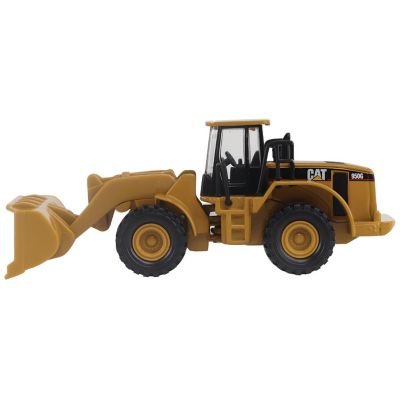
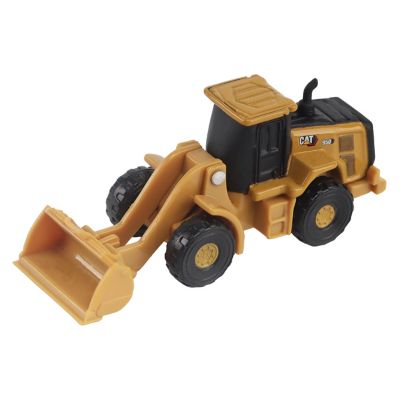
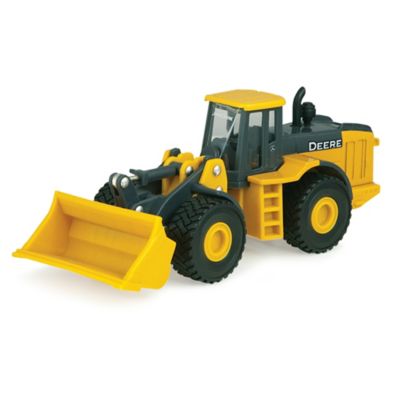
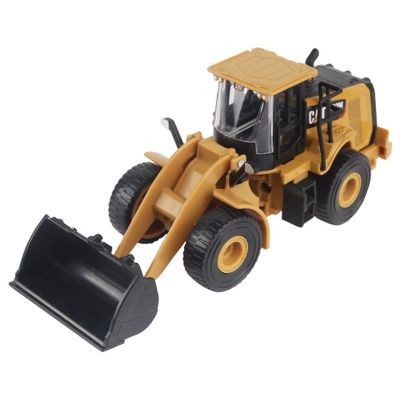
Wheel loader scale models bring a familiar piece of working equipment down to shelf, tabletop, or playroom size. The full-size machine earns its keep moving gravel, loading loose material, handling feed, and cleaning up around yards and job sites. Its broad front bucket, lifting arms, tall tires, and enclosed cab give it a shape that equipment fans recognize at a glance. A miniature captures that same hardworking character, whether it sits beside a row of farm tractors or anchors a small quarry scene. Unlike a tracked loader, a wheel loader rides on tires, and many full-size machines steer through an articulated joint near the center of the chassis. Models may recreate that joint along with bucket movement, tread patterns, cab steps, and engine covers. Common scale ratios across the hobby include 1:87, 1:64, 1:50, and 1:35. The ratio describes the relationship between the miniature and the real machine: at 1:50 scale, one inch on the model represents 50 inches on the full-size loader. A larger second number generally means a smaller replica of the same machine. The machine being represented matters, too, since a large quarry loader and a compact yard loader will not have the same dimensions even when their scales match. The 1:87 ratio fits naturally into many HO-scale railroad settings, while 1:64 works well alongside similarly scaled farm equipment. The 1:50 ratio is common in construction equipment collections, and 1:35 gives larger models and assembly kits more room for small details. Matching scales helps keep a loader, truck, building, and fence looking right together. Actual dimensions still matter for a bookshelf, display case, or tabletop scene, particularly when the bucket projects well ahead of the front tires. A loader with its arms raised can need considerably more clearance than its parked height suggests, so the displayed position is part of its overall footprint.
Materials and construction help shape how a wheel loader model feels in the hand and where it belongs. Die-cast metal can give the chassis and body a satisfying weight, while molded plastic allows for finer cab interiors, grilles, steps, and other small parts. Tires may be rubber or another flexible material, though construction varies by model. A metal body does not mean every component can take rough handling; mirrors, railings, hydraulic-line details, and bucket linkages can remain delicate. Ready-assembled replicas suit collectors who want a finished machine for the shelf, while assembly kits appeal to hobbyists who enjoy fitting parts, painting panels, and bringing out the details themselves. Kit contents and finishing requirements differ, and paint, adhesive, or tools may be separate from the kit. Moving features also vary. Rolling wheels, a pivoting center joint, lifting arms, and a tipping bucket can make a miniature more engaging, but some replicas favor fixed detail over frequent movement. A bucket that lifts is not necessarily meant to carry heavy material, and miniature cylinders and pins need gentle handling. For children, the manufacturer's age rating and intended-use description matter more than the machine's appearance. A collector model with tiny detachable parts belongs in a different setting from a toy designed for hands-on play. Care is usually straightforward: a soft brush lifts dust from tire treads and cab corners, and a clean, dry cloth helps keep broad surfaces tidy. Water, solvents, and abrasive cleaners can affect paint, printed markings, and glued parts, so care directions take priority. Loose soil and gritty sand can work their way into wheel hubs and joints, making an indoor display or a clean play surface a better match for detail-focused replicas. Storage with enough room around the bucket, mirrors, and handrails helps prevent bent pieces and chipped edges when the model is put away. A stable shelf also keeps a heavy miniature from rolling toward an edge or tipping against nearby collectibles.
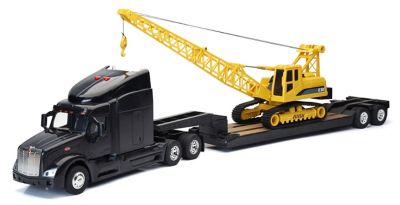
Part of the appeal of wheel loader scale models is the story they can tell without taking up a whole equipment yard. A loader parked beside a miniature aggregate pile suggests the start of a busy workday; one positioned near a feed shed brings a farm scene into focus. Construction equipment fans may prefer an orderly lineup that shows differences in bucket shape, cab design, and machine size, while railroad hobbyists may place a loader near a quarry siding or material-handling area. Transport adds another layer to that scene. A loader paired with
Scale Model Lowboy Transporter Sets can suggest a machine headed from the yard to its next job. Matching the scale is the starting point, but trailer deck length, deck width, ramp spacing, and the loader's tire width all affect how the pairing looks and fits. The bucket position matters as well, especially when the loading arms extend beyond the trailer deck. Not every miniature is designed for loading, unloading, or tie-down play, so a display arrangement should respect the movement and attachment points the model actually has. These replicas can make thoughtful birthday or retirement gifts for equipment operators, farm families, mechanics, and anyone who stops to watch a loader work. For a collector, a matching scale and enough shelf space can matter more than a larger size. For a child, an age-suited toy with manageable moving parts is a better fit than a finely detailed display piece. For a model builder, the enjoyment may come from the assembly process as much as the finished loader. A small display base or enclosed case can give a favorite replica a defined place and help keep dust off the details. Whether the interest comes from daily work around equipment or a lifelong fascination with big machines, a well-chosen wheel loader miniature puts that connection within easy view.