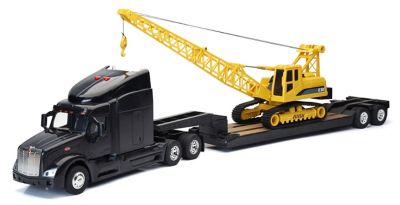
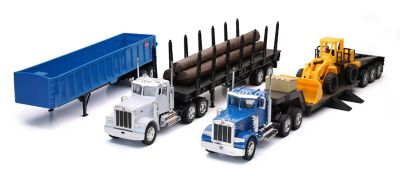
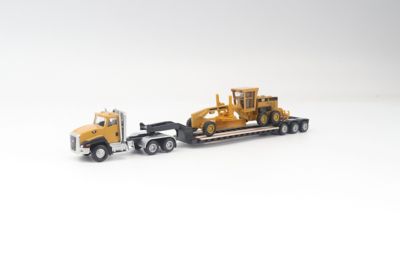
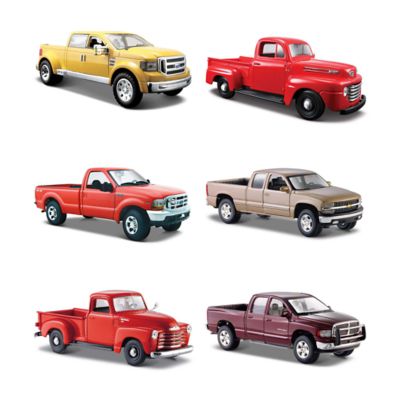
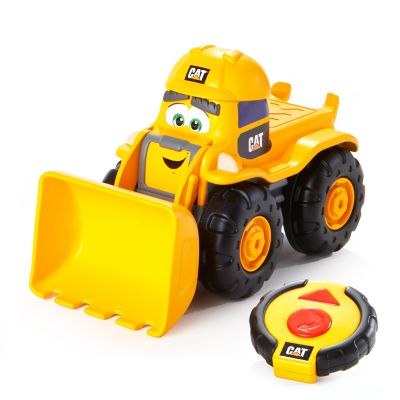
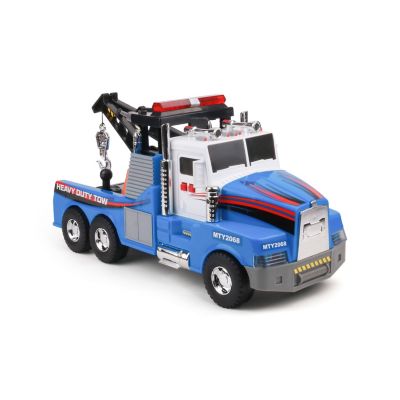
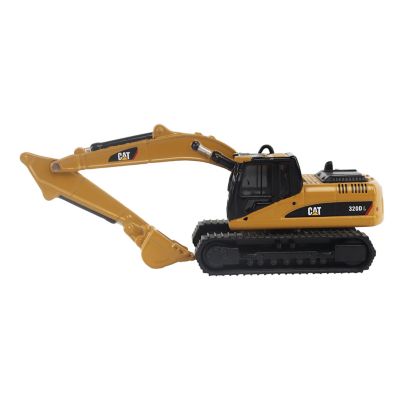
Scale model lowboy transporter sets bring the heavy-haul side of farm and construction work down to shelf size. These sets generally pair a model truck tractor with a lowboy trailer, sometimes with a matching equipment load, such as an excavator, dozer or tractor. The lowboy’s dropped center deck reflects the full-size trailer design that carries tall, heavy machinery closer to the road. That familiar shape gives a miniature hauling outfit its working character: a long deck between the raised front section and rear wheels, with room for equipment that would look out of place on an ordinary cargo trailer. Contents vary, so a truck-and-trailer combination is different from a trailer-only model or a set that also includes machinery. Scale matters just as much as the pieces in the box. Common scales across heavy-haul models include 1:87, often associated with HO layouts, along with 1:64 and 1:50; larger models and assembly kits may be marked 1:24 or 1:25. In a 1:64 model, one inch represents 64 inches on the full-size vehicle. A smaller scale takes up less shelf space, while a larger model generally provides more room to see cab details, trailer hardware and the machinery riding behind it. Matching the scale of the tractor, trailer and load helps the whole outfit look right together. Even within the same scale, though, a wide tracked machine may not fit between a trailer’s edges, and a long wheelbase can leave equipment hanging past the usable deck. Deck length, deck width, hitch height and the load’s footprint all matter when pairing separate models. For a farm scene, a transporter carrying a tractor can suggest a delivery out to the equipment shed. In a construction layout, a lowboy with tracked machinery looks at home beside a graded road or a small jobsite. The appeal comes from those recognizable working details, whether the set stands alone on a bookcase or joins a larger collection of trucks and equipment.
Materials and moving features help determine whether a scale model lowboy transporter set belongs mainly in a display or suits hands-on play. Die-cast metal can give a truck cab, chassis or trailer frame a solid feel, while molded plastic allows for finer shapes in mirrors, railings, engine parts and cab interiors. Many models combine both materials rather than relying on just one. Tires may be molded plastic or a flexible rubberlike material, and their construction can affect how the model rolls and rests on a surface. Metal construction alone does not make every part suited to rough handling; a narrow plastic mirror or small hinge still needs a light touch. Some transporters have freely rolling wheels and a pivoting connection between the tractor and trailer. Others add rear loading ramps, a removable gooseneck, folding supports or other working features that echo full-size equipment. Those details vary by model, and a part that looks movable may be fixed in place. A detachable front section can make a loading scene more convincing, while rear ramps offer a different approach to getting equipment onto the deck. Neither feature should be assumed from the trailer’s appearance alone. Connections also differ, so trailers and tractors from separate sets may not couple even when their scales match. For repeated play, the way ramps attach, wheels mount and the hitch connects deserves as much attention as the paint scheme. For display, crisp lettering, straight wheel alignment and neatly fitted parts may matter more than the number of moving features. Collector models can have small removable pieces and delicate fittings that are not meant for young children. The manufacturer’s age recommendation and safety labeling should guide suitability, especially where small parts could pose a choking hazard. Assembly kits are another distinct option: some require glue, paint and tools, while ready-assembled sets arrive with the main construction already done. That difference matters for anyone expecting a model that can go straight onto a shelf or into an age-appropriate play setup.
A good-looking hauling scene does not need much space, but the complete tractor-and-trailer length is worth considering before giving a set a home. A lowboy combination can stretch well beyond the footprint of the truck alone, and a turning tractor needs extra room beside the trailer. A shelf deep enough for the full model keeps tires and loading ramps away from the edge. Displaying the load centered on the deck helps the arrangement look believable, with enough clearance around tracks, tires and attachments to avoid pressure on small parts. Some models include restraints or attachment points for a load; these should not be assumed to secure equipment during carrying or storage. Moving the truck, trailer and machinery separately can spare the hitch and fittings unnecessary strain. Routine care is generally straightforward: a soft brush can lift dust from wheel openings and deck corners, while a soft, dry cloth suits many broad surfaces. Cleaning directions matter for painted finishes, printed markings and clear cab windows, since solvents and abrasive cleaners can damage them. Storage away from direct sunlight helps limit fading, and a fitted box or compartment keeps loose accessories from rubbing against the model. For hands-on setups, a clean tabletop or play mat is easier on axles and hinges than loose sand or gravel that can work into moving parts. These sets can make thoughtful birthday gifts for truck enthusiasts, farm families, equipment operators and collectors who enjoy seeing familiar machinery in miniature. A recipient’s existing scale is often the best starting point, particularly when the model will join a farm layout or construction fleet. For children whose play centers on loading, hauling and unloading, age-appropriate
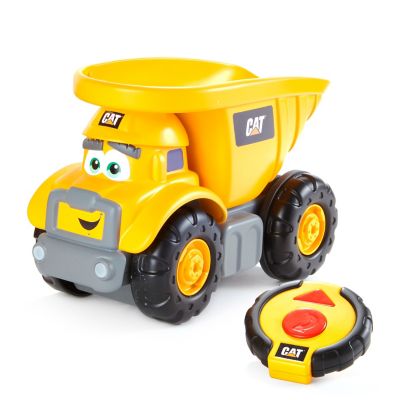
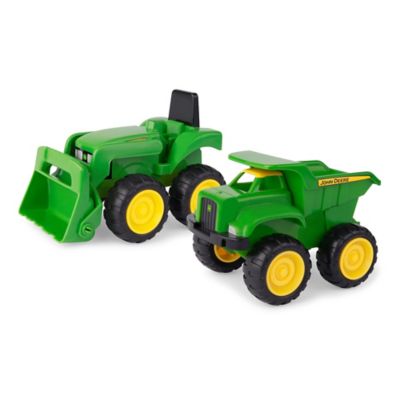
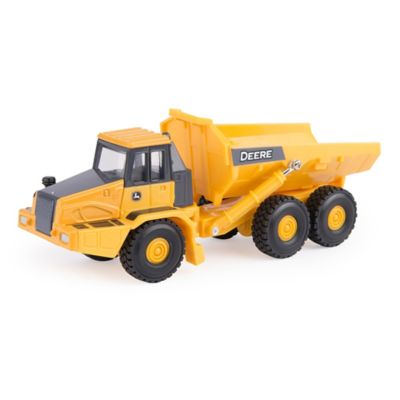
Dump Truck Toys can add another kind of job to the same scene. A lowboy brings equipment to the worksite; a dump truck carries material around it. Together, those different roles give a small setup the feel of a working yard, with each vehicle there for a reason.