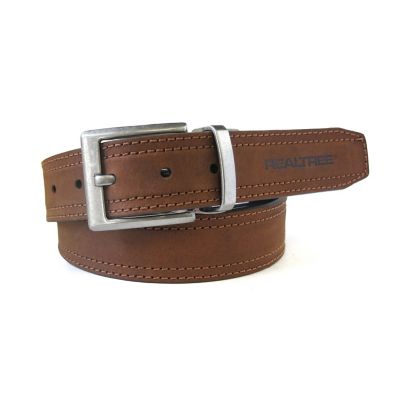
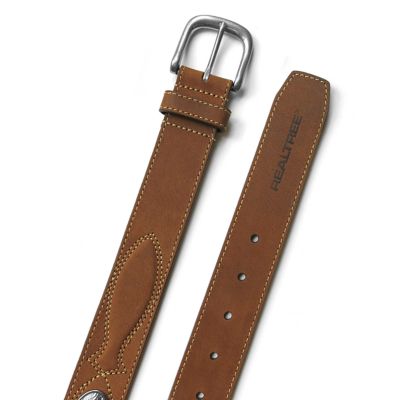
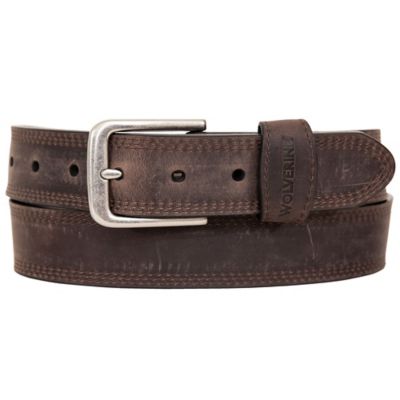
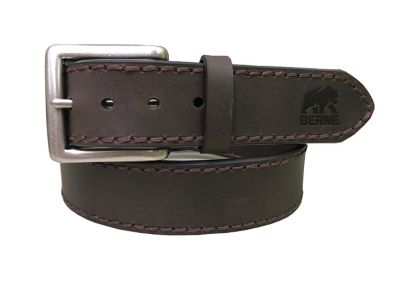
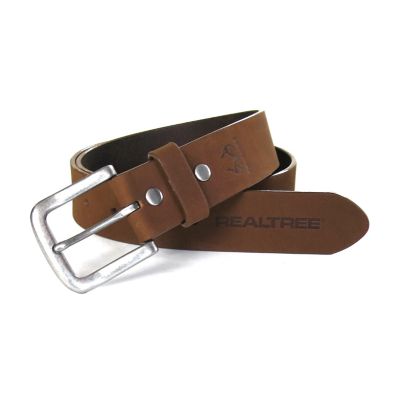
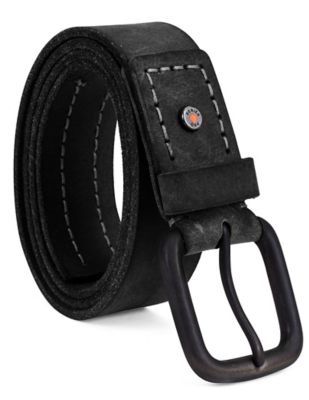
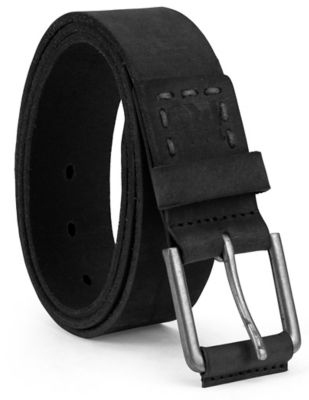
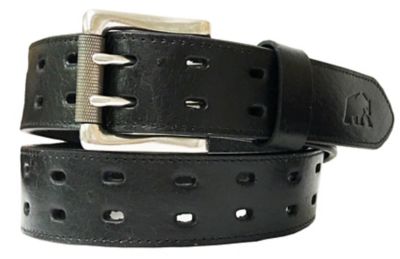
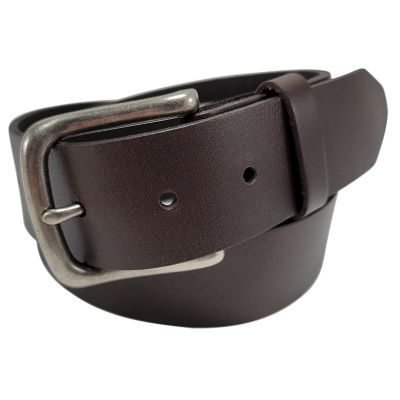
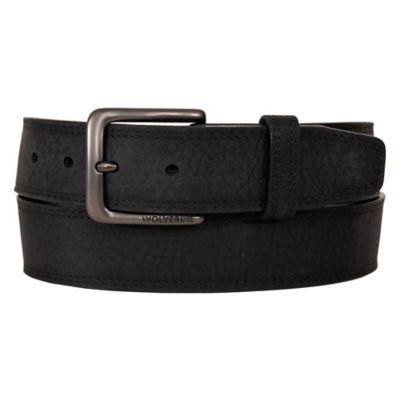
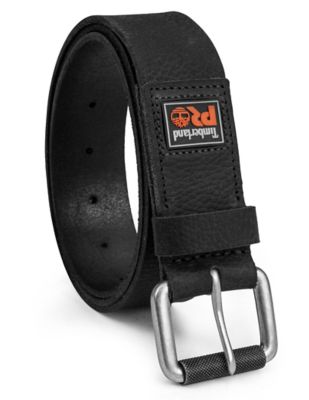
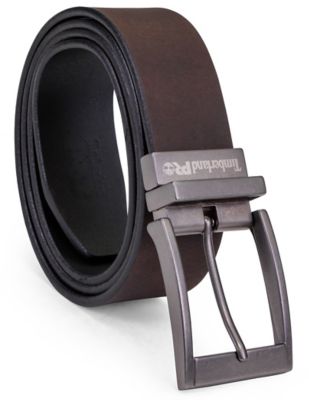
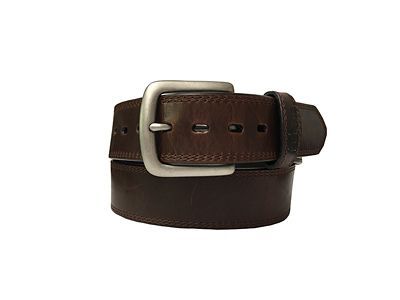
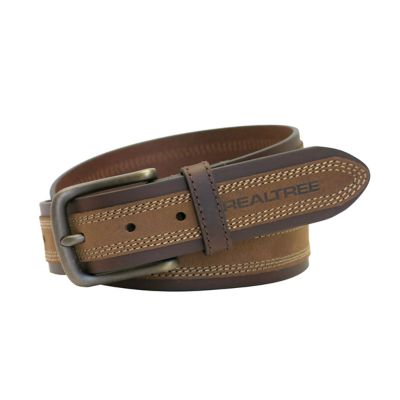
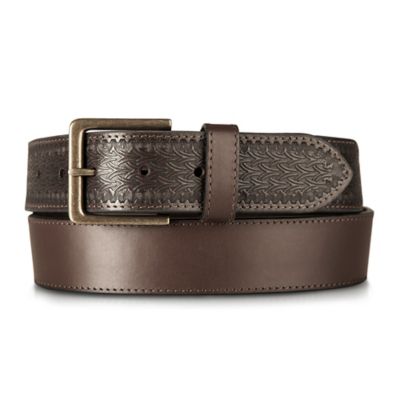
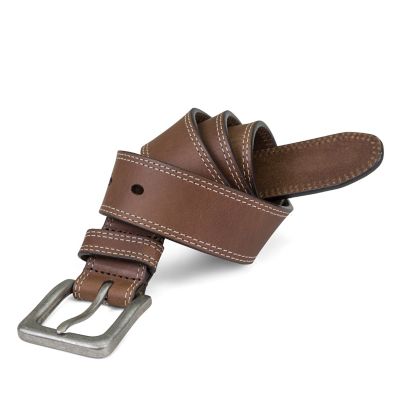
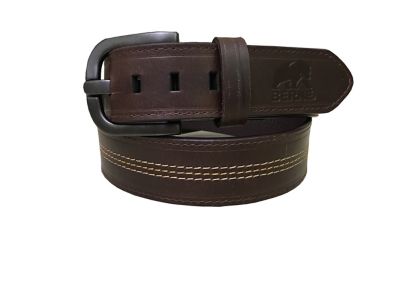
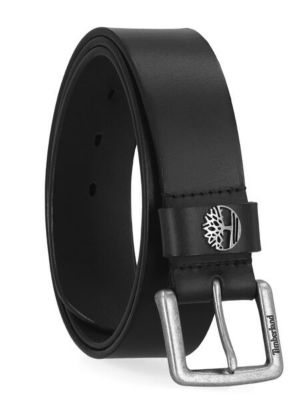
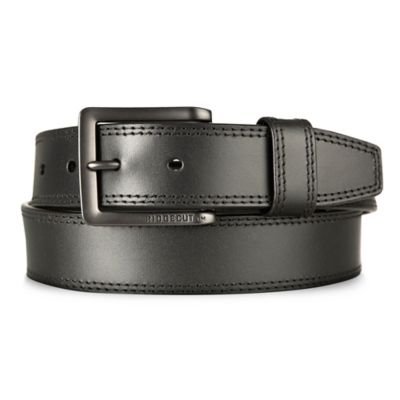
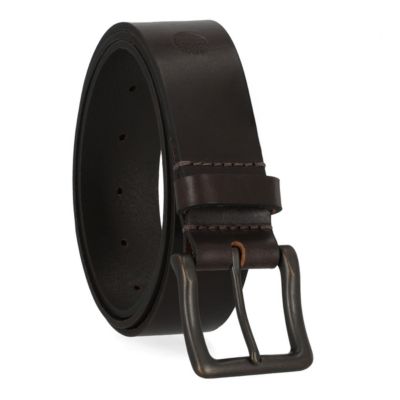
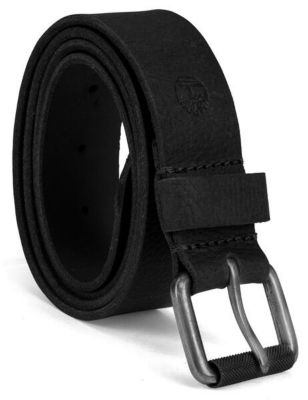
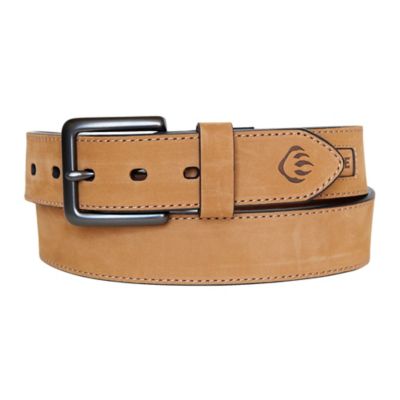
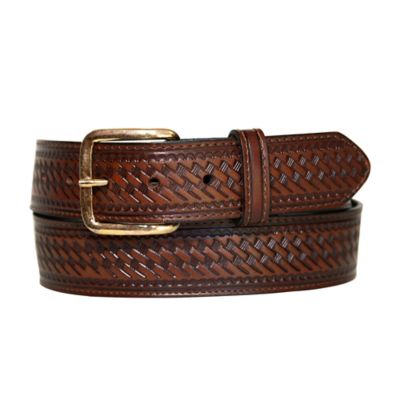
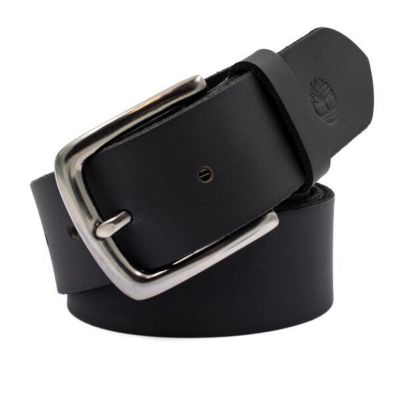
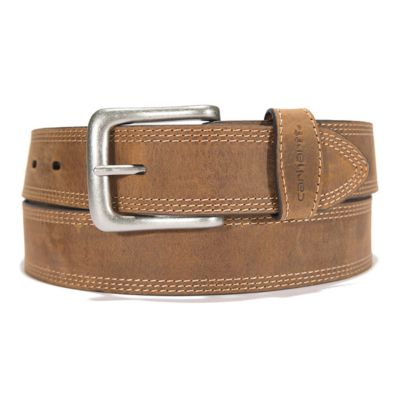
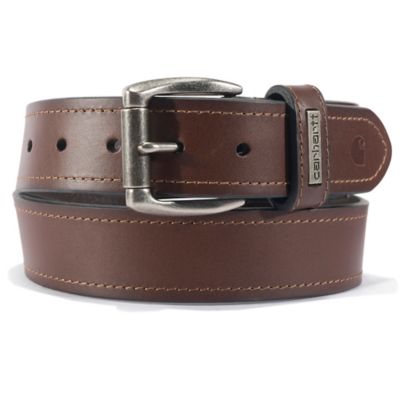
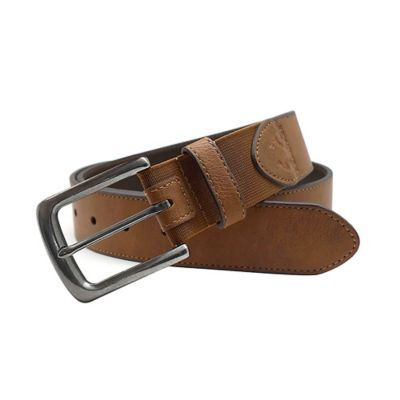
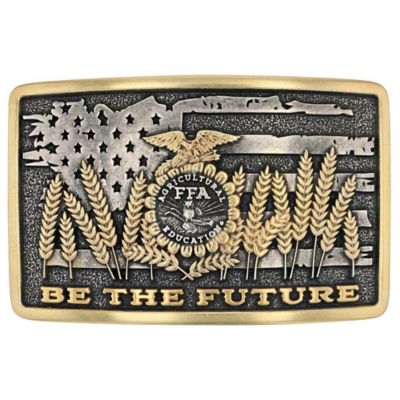
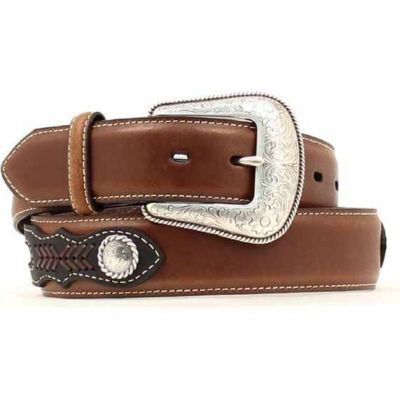
Men’s genuine leather belts bring together a practical fit and the kind of easygoing style that belongs with jeans, work pants and a tucked-in shirt. They help keep a waistband where it belongs through a day of walking fence lines, loading supplies or heading into town, while giving an outfit a finished look without much fuss. Real leather has natural variation in its grain and texture, and many leather straps soften and develop character with regular wear. A smooth brown belt can look right at home with scuffed boots and denim, while a simple black belt pairs easily with darker pants for church, family gatherings or a day at the office. The words “genuine leather” mean real leather, but they don’t establish a particular leather grade or tell the whole story about how a belt is built. Full-grain leather retains the hide’s outer grain, while top-grain leather has had its surface refined, often for a more even appearance. A belt labeled only as genuine leather may not identify the specific layer of hide or finishing process, so the material description matters more than the label alone. Strap thickness, backing, edge finishing and buckle attachment also help distinguish one belt from another. Some belts have a single leather strap, while others bring together several layers; neither appearance nor thickness alone tells you everything about their construction. For everyday wear, it makes sense to balance flexibility with enough structure to hold its shape through the belt loops. A firm strap can feel substantial with workwear, but a very stiff belt may take time to settle comfortably around the waist. During the cooler months, when denim, flannel and heavier pants get plenty of wear, a leather belt remains a useful everyday piece rather than something saved for special occasions. It’s a small part of getting dressed, but one that earns its place from the first chore to supper.
Fit is often the difference between a belt that gets worn every day and one that stays on a closet hook. Men’s leather belt sizing generally refers to the distance from the buckle area to a designated sizing hole, not the strap’s full end-to-end length, though measuring methods vary. Choosing a belt about two inches larger than the labeled pant waist is a common starting point, not a rule that fits every man or every pair of pants. The seller’s size chart and a measurement from a belt that already fits are better points of reference. When the chart calls for it, measuring from the buckle’s specified starting point to the hole worn most often helps narrow down the size. A comfortable fit usually leaves adjustment room in both directions, with enough tail to pass through the keeper without wrapping too far around the hip. That extra room comes in handy when switching between lighter everyday pants and heavier work jeans. Width matters just as much: the strap needs to slide through the loops without bunching or forcing them out of shape. Many everyday jeans belts measure around 1½ inches wide, while narrower profiles often suit dress pants, but checking the actual loop opening is worth the trouble. Buckle shape changes the feel, too. A low-profile buckle can be more comfortable when sitting behind the wheel or bending to pull on boots, while a larger buckle makes a stronger statement. Smooth hardware edges, a secure prong and neatly finished adjustment holes are useful details to look for in product photos and descriptions. Stitching should appear even, with no obvious loose ends, and the edges should look cleanly finished. Men who like to swap buckles will also want to check the attachment: a snap closure may allow a compatible buckle change, while a stitched or riveted attachment generally does not. Those details help make a belt suited to the way someone actually dresses and moves.
Color, texture and hardware give men’s genuine leather belts plenty of range without taking them far from their practical roots. Medium and dark brown shades work easily with blue denim, canvas pants and earth-tone shirts, while black offers a straightforward match for black boots and more dressed-up clothing. Matching a belt closely to footwear creates a pulled-together look for dressier occasions; everyday workwear leaves more room for different shades of brown and naturally weathered finishes. A plain strap and understated buckle keep the focus on the leather, while embossed patterns, contrast stitching and shaped hardware bring more Western character. Men who favor boots, pearl-snap shirts and a more noticeable buckle may also find a good match among
Western Style Belts. The best choice depends less on chasing a look than on what’s already hanging in the closet. Picture the fellow who changes from chore clothes into clean jeans before a family dinner: a well-fitting leather belt can make that switch without calling attention to itself. That versatility also makes a belt a thoughtful gift for a dad, husband, son or friend, especially when his preferred color, waist size and buckle style are already known. Someone who wears the same boots most days gives you a useful starting point for choosing the leather shade and hardware finish. Price is another practical consideration, and comparing material descriptions, construction and buckle details helps put different options in perspective. Leather type, finishing work and hardware can all influence cost, but a higher price alone doesn’t establish how well a belt will suit its wearer. Care requirements deserve a little attention as well, particularly for a belt that will see dust, damp weather and daily chores. Leather generally benefits from gentle cleaning, air-drying away from direct heat when damp and occasional conditioning when recommended for its finish. Too much conditioner can darken or oversoften some leather, so the maker’s care directions matter. With sensible care and a fit that feels right, a leather belt can become a familiar part of the daily routine, ready for workdays, weekends and gatherings throughout the cooler months and beyond.