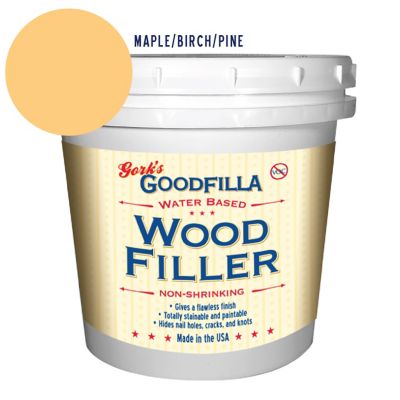
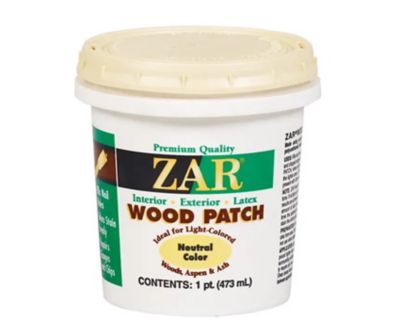
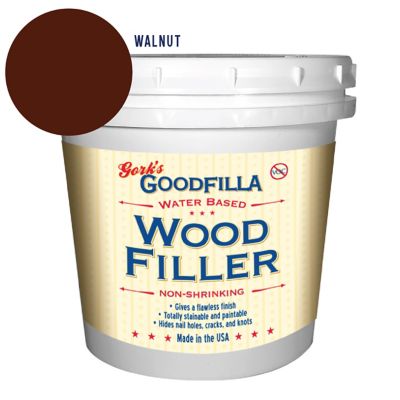
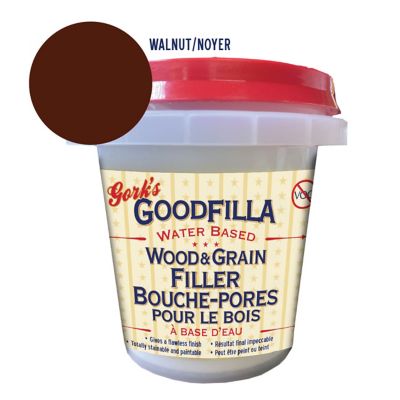
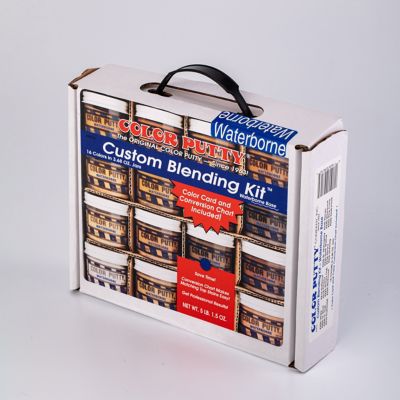
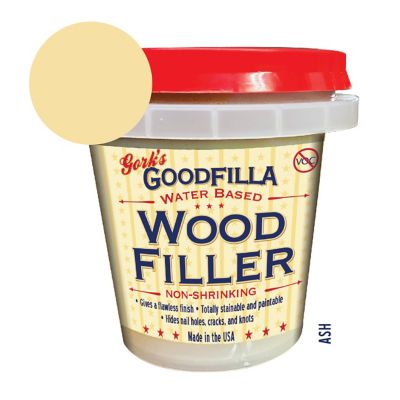
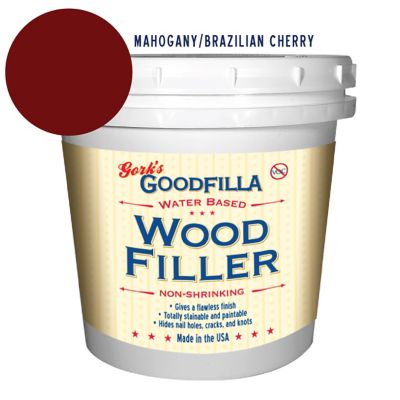
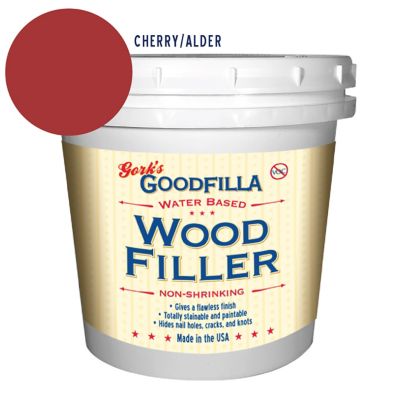
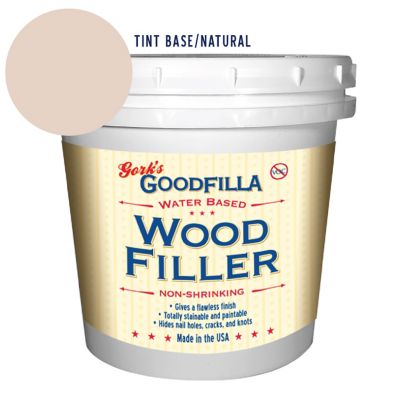
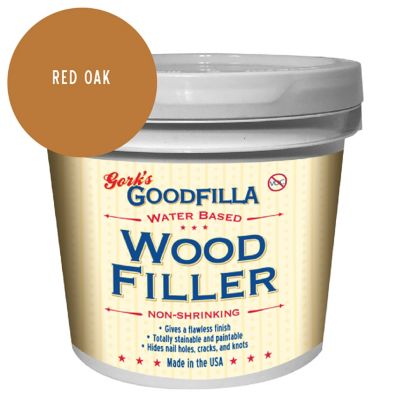
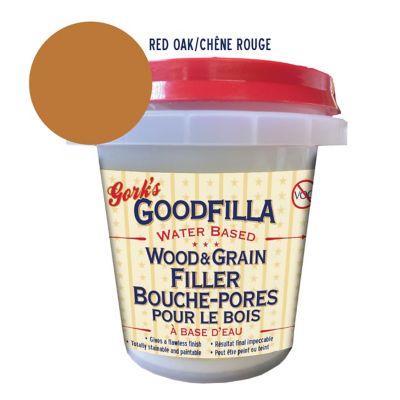
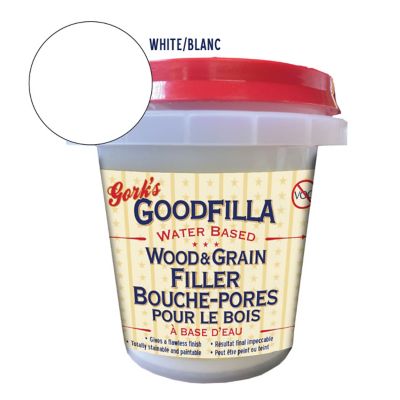
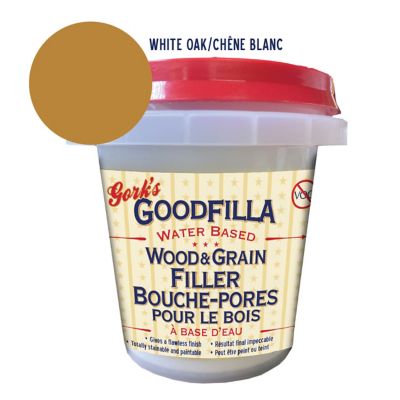
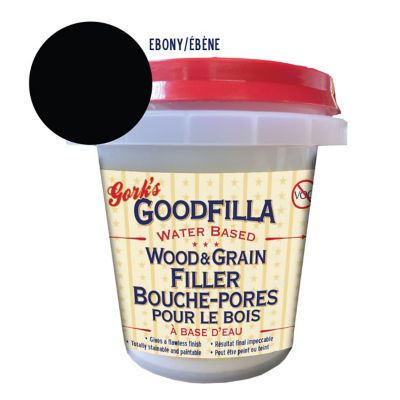
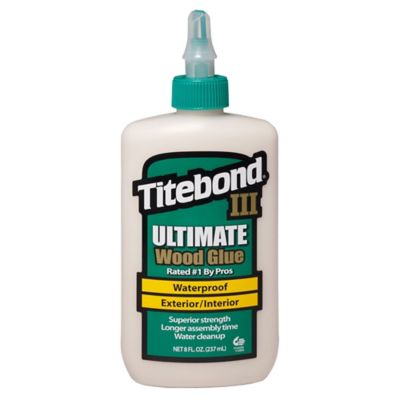
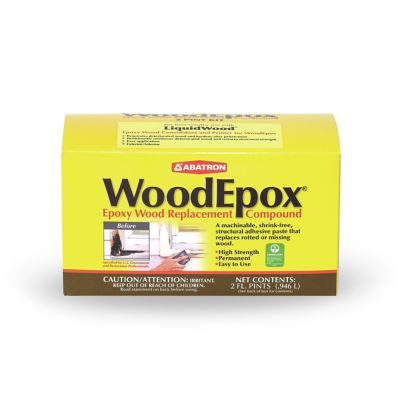
Water-based wood fillers are handy for cleaning up the little scars that come with everyday farm, shop and household use. A dropped tool can leave a dent in a workbench, a moved piece of furniture may show an old nail hole, and years of use can leave trim, cabinet doors, shelves or wooden handles looking rough around the edges. These fillers are made with water as the carrier, so they generally have a mild odor and are easy to clean from tools and hands with soap and water. That makes them a comfortable choice for indoor repairs, especially when a project is taking place in a mudroom, workshop, kitchen or other lived-in space. They can also be useful for outdoor wood pieces that will receive the right protective topcoat, such as a porch bench, garden box or small outbuilding repair. Choose a filler color that is close to the surrounding wood when possible, or plan to paint the finished surface for a uniform look. Natural wood tones can vary more than expected, even within the same board, so a small test spot on scrap wood or an inconspicuous area is a smart way to check the color and finish before tackling the whole repair. Look for a formula suited to the size and depth of the damage. Shallow nail holes, pinholes and fine cracks may dry in roughly 15 to 30 minutes, while deeper gouges generally need thinner layers and additional drying time. Press the filler firmly into the void, slightly overfill it, and allow it to dry completely before sanding flush. Trying to sand or paint over a repair that still feels cool, soft or damp can pull material back out and leave a dip. A putty knife works well for flat surfaces, while a small craft stick or fingertip can help press filler into rounded edges and carved details. For broader repairs, high wood-flour content can give the material a texture that sands much like wood. Some water-based formulas can also serve as a grain filler or sealer when the label says they are made for those jobs. That versatility is useful for furniture refinishing, turned wood projects, cabinetry and other work where a smooth surface matters.
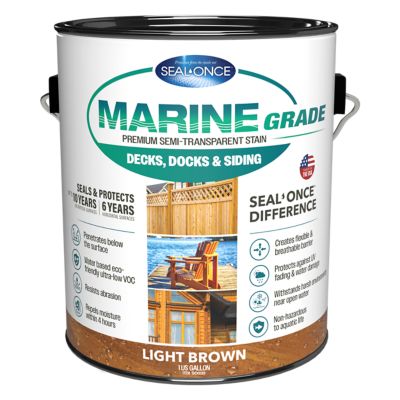
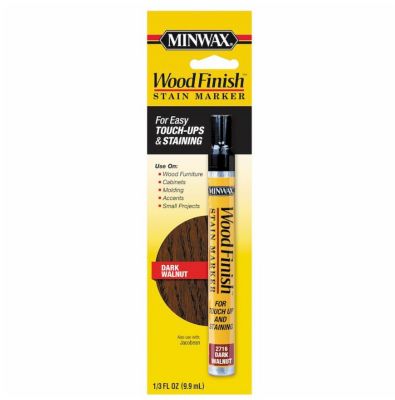
Before purchasing, consider the type of wood, the repair depth, the final finish and the amount of material you are likely to use. A small container makes sense for occasional household touch-ups, while a larger size may be worthwhile for restoring several chairs, preparing cabinets for paint or working through a stack of boards in the shop. Check whether the filler is paintable, stainable or tintable, and follow the recommended drying and sanding directions. Most water-based fillers accept paint after they are fully dry, but stains can behave differently on a filled spot than on bare wood. Filler may absorb stain more or less readily than the surrounding grain, creating a visible patch. For a stained project, testing the complete process—including sanding, stain and clear finish—on scrap wood is the best way to avoid surprises. Sand with care, starting with a medium grit if needed and finishing with a finer grit so the repaired area blends into the surrounding surface. Wipe away dust before applying stain, paint or a protective finish. Keep the container closed when it is not in use, and if the material thickens after storage, some formulas can be brought back to a workable consistency with a small splash of water and thorough mixing; always check the package directions before doing so. Do not assume that adding water will restore every product, and do not use filler to replace a structural repair where wood is rotten, loose or carrying a heavy load. During the cooler months, allow extra time for drying in unheated barns, garages and workshops, since low temperatures and damp air can slow the process. Once a repair is finished, a compatible topcoat helps protect it from moisture, dirt and repeated handling. For added information about protective finishes for wood projects, browse
Wood Sealants. Water-based wood filler can be a thoughtful addition to a housewarming gift for someone fixing up an older home, a practical present for a new woodworker, or a useful item to keep in a farm shop repair bin. It takes up little room, helps stretch the life of good wood and turns a rough-looking blemish into a smooth surface ready for paint, stain or another finish.