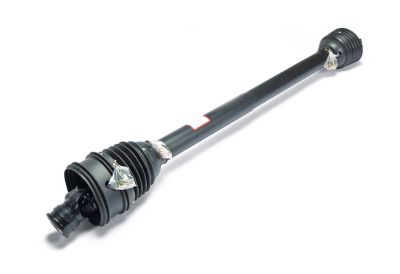
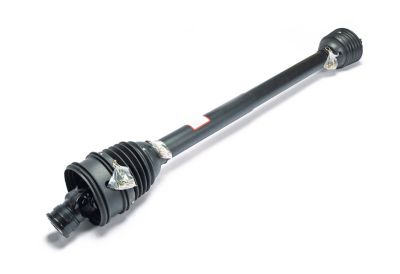
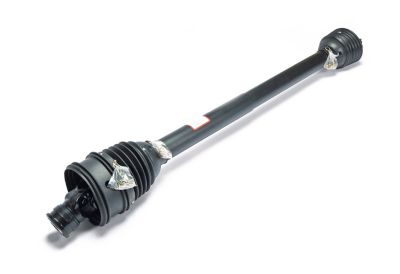
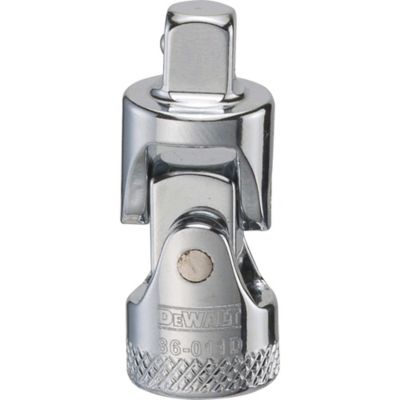
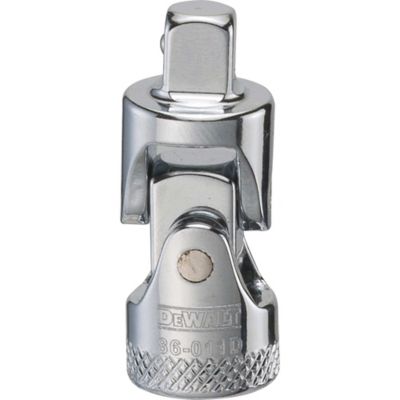
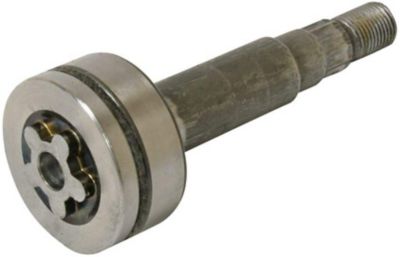
Universal joints, often called U-joints, are mechanical couplings that transfer rotary motion between shafts that do not stay perfectly straight with one another. You’ll find them in rear-wheel-drive, four-wheel-drive, and all-wheel-drive vehicles, as well as tractor PTO shafts, steering columns, and other equipment that has to send power around an angle. A standard Cardan-style universal joint uses two yokes connected by a cross-shaped center member, sometimes called a cross or spider, with needle bearings and bearing caps at each end. That setup lets a driveshaft or other rotating shaft flex as a vehicle moves over rough ground, a suspension travels up and down, or an implement shifts behind a tractor. A U-joint does not simply act like a hinge; it carries torque while turning, often under heavy load and in places exposed to mud, dust, road spray, and temperature swings. In a vehicle, the transmission or transfer case sends power through the driveshaft toward the differential and axle, while the universal joints accommodate changes in angle along the way. A single joint operating at an angle can create small speed fluctuations during each revolution, which is why many driveline arrangements use a pair of joints to help balance the motion and keep the shaft running smoothly. When you’re shopping for a replacement, fitment is the first thing to settle. Check the vehicle, tractor, machine, or implement application along with the year, model, drivetrain, and shaft location whenever that information is available. Physical measurements matter, too: compare the overall width, bearing-cap diameter, cross dimensions, snap-ring style, and the way the caps are retained in the yoke. A part that looks close on the workbench may still be wrong if the bearing cups, grease fitting, or retaining clips do not match the original assembly. If the old joint is already removed, clean away built-up grease and dirt before measuring, and take note of any stamped numbers or markings on the shaft. For PTO and agricultural equipment, match the joint to the shaft series and operating requirements rather than relying on appearance alone. The joint needs enough strength for the horsepower, torque, and working angle it will see, especially when equipment is used in heavy soil, tall grass, snow, or other conditions that make the driveline work harder. Greaseable designs can be helpful on equipment that receives regular service, while sealed designs may suit applications where routine lubrication is limited; either way, follow the maintenance instructions for the assembly and machine. It’s also wise to inspect the yokes, shaft, slip components, shields, and retaining hardware at the same time. Installing a new U-joint on a worn or bent shaft will not correct an underlying problem and may lead to vibration or premature wear.
A worn universal joint may give several warnings before it fails completely. A sharp clunk when shifting from reverse to drive, a rhythmic vibration that increases with road speed, squeaking during low-speed turns, or noticeable looseness at the joint can all point to trouble. Rust-colored dust around a bearing cap, damaged seals, missing grease, stiffness, or visible play are other signs worth taking seriously. On a tractor or PTO-driven implement, unusual knocking, shaking, or heat around the joint deserves attention before the machine goes back to work. Wear often begins when a rubber seal cracks or loses its grip, allowing grit and moisture to reach the needle bearings and letting grease escape. Once those small bearings become dry or pitted, the cross can no longer rotate smoothly inside the caps. Replacing a worn joint is generally preferred over trying to repair the internal bearing assembly, but the job still calls for care. A press or purpose-built U-joint service tool is usually safer and more controlled than striking the yoke with a hammer, and the bearing caps need to stay clean so the needles do not fall out of place. Before installation, compare the new part with the old one, confirm that every retaining clip or ring is seated fully, and make sure the grease fitting can be reached for future service. Marking driveshaft orientation before removal can help preserve the original balance, and the shaft should be supported rather than allowed to hang by a joint. On PTO equipment, shut down the tractor, disengage the PTO, remove the key, and wait for all moving parts to stop before inspecting or servicing anything; keep shields in place once the work is complete. During the cooler months, a little preventive attention can save a long walk back from a field, gravel road, or jobsite. Farmers, ranchers, fleet owners, weekend mechanics, and anyone maintaining older four-wheel-drive equipment may keep a spare universal joint on hand when a machine is essential to daily work, though the spare should still match the exact application. For related components that connect with the driveline, browse
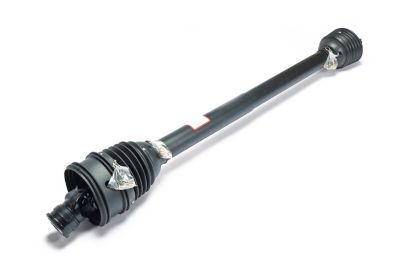
Driveshaft Parts and compare the complete setup before ordering. A well-matched U-joint helps power move smoothly from the engine or transmission to the part that needs it, whether that means turning an axle on a work truck, steering around an engine compartment, or running an implement behind the tractor. Correct sizing, sound installation, proper lubrication, and regular inspection all go a long way toward dependable service when the roads get rough and the work keeps coming.