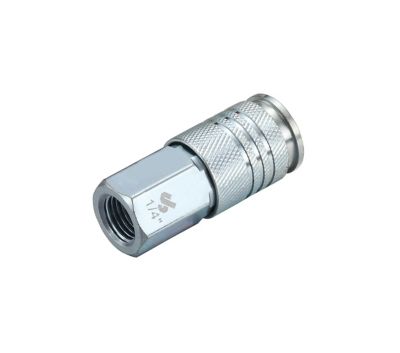
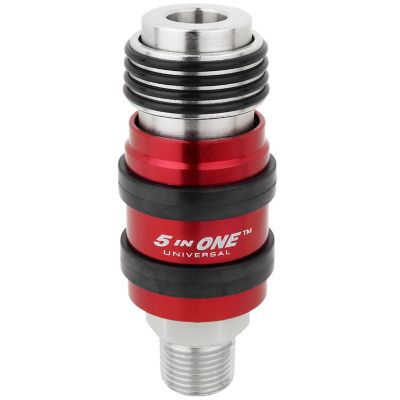
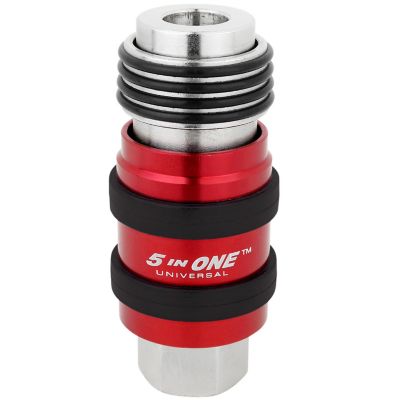
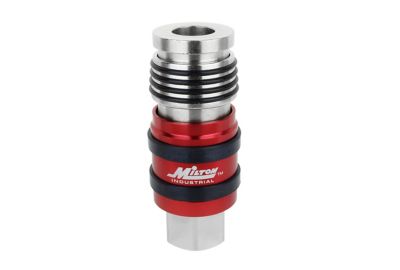
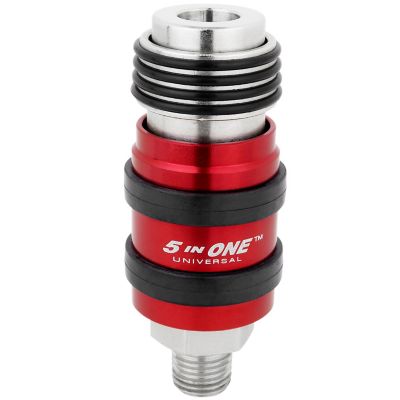
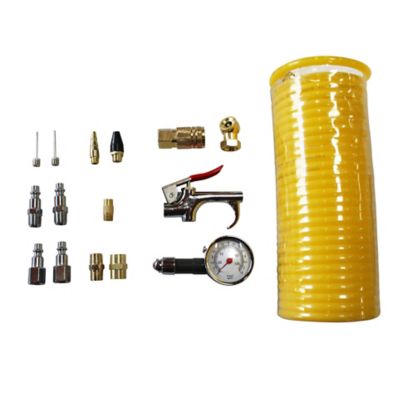
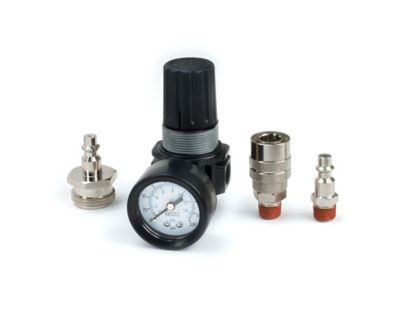
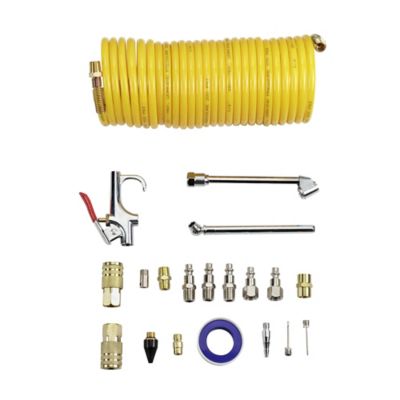
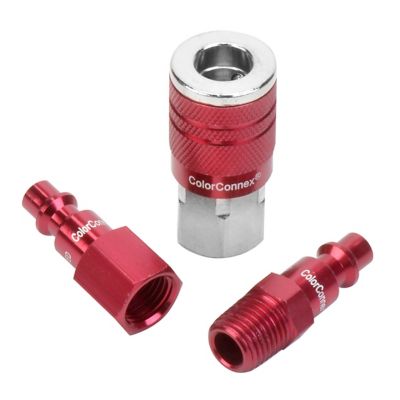
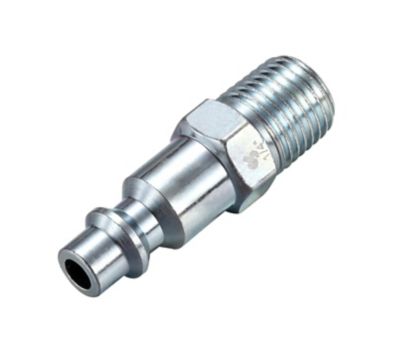
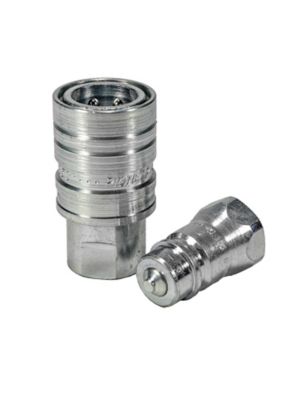
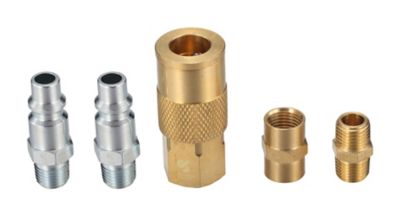
Universal couplers are handy connection fittings for jobs where different hose, tool or pipe ends need to work together without rebuilding an entire setup. In compressed-air applications, a universal coupler may accept more than one common plug style, including Industrial or M-style, Automotive or T-style, ARO or A-style and Lincoln or L-style connections. That multi-interchange design can save time in a farm shop, garage or maintenance shed where air tools and hoses have been collected over the years from different sources. Instead of sorting through fittings every time a tire needs air or a nailer comes out for a repair, a compatible universal coupler helps bring those connections together at one point. These fittings are useful for inflators, blow guns, impact tools, grinders, ratchets, staplers and other pneumatic equipment, though the exact connection styles and size should always be checked before purchase. A 1/4-inch body and thread are common for many air-tool setups, but larger air lines and high-demand equipment may call for a different size. Pay attention to whether the fitting has male or female threads, whether the threads are NPT or another standard, and whether the coupler is rated for the pressure and airflow your equipment requires. Thread sealant may be needed on tapered pipe threads, while quick-connect plugs should be seated fully and checked for leaks before work begins. Keeping a few matching plugs and couplers in the toolbox can be a real help when a hose gets damaged, a new tool is added or a neighbor’s equipment needs to be used for a weekend project. For more connection options, browse
Coupler Fittings and compare the details that matter for your setup.
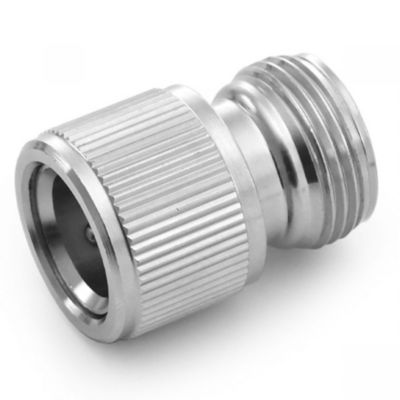
Some universal couplers are made for air lines, while universal pipe transition couplings serve a different purpose: joining pipes made from different materials or with slightly different outside diameters. Depending on the design, these transition fittings may connect PVC, copper, galvanized iron, PEX or polyethylene pipe in plumbing, irrigation, water-service and repair applications. They typically use a mechanical gripping system, such as gripper rings, along with internal rubber seals that tighten around the pipe as the fitting is secured. This can be especially useful when repairing an older line where the existing pipe material does not match the replacement section available at the hardware counter. Before selecting one, identify the pipe material, outside diameter and intended use. Nominal pipe size does not always equal the actual outside measurement, and a fitting made for one pipe standard may not fit another even when the printed size appears similar. Check whether the coupling is approved for potable water, buried service, irrigation or another application, and follow the manufacturer’s instructions for cutting, cleaning, deburring and insertion depth. A clean, square pipe end gives the seal a better chance to hold. For water lines, shut off the supply and relieve pressure before disconnecting anything, then inspect the completed connection for drips while the line is under pressure. These couplings can be useful for homeowners handling a quick outdoor repair, landowners maintaining livestock-water lines, gardeners extending an irrigation run and do-it-yourselfers working on older plumbing. They also make a practical gift for someone who enjoys keeping a homestead, workshop or rental property in good working order, especially when paired with a small tool kit and pipe-measuring supplies.
A dependable universal coupler should make a connection easier without becoming the weak point in the system. Look for sturdy construction suited to the work, corrosion-resistant materials when the fitting will see moisture, and seals made for the pressure, temperature and fluid involved. In compressed-air work, compare the coupler’s maximum working pressure, flow capacity and connection profile rather than choosing by size alone. A fitting with limited airflow can slow a tool down, while a coupler that does not match the plug style may connect loosely or not at all. Safety-exhaust versions are worth considering for air systems used often or at higher pressure. These designs vent trapped air before the plug fully releases, helping reduce the chance of sudden hose whip during disconnection. Even with that feature, wear eye protection, keep hands clear of the connection point and turn off the compressor when servicing a line. Inspect hoses, plugs, seals and locking sleeves regularly for cracks, flattening, rust or damage, and replace worn parts instead of forcing a poor connection. For pipe couplings, make sure the fitting is supported and protected from strain, freezing movement and sharp bends. During the cooler months, outdoor water lines deserve extra attention because trapped water can freeze and put pressure on fittings and seals. In a busy shop, label hoses by connection type and keep spare seals and plugs in a dry container so repairs do not turn into a long search through dusty drawers. Whether the task is airing up equipment before chores, connecting a tool for a fence repair or joining two different pipe materials around the property, the right universal coupler offers a practical way to keep work moving with fewer adapters and fewer interruptions.