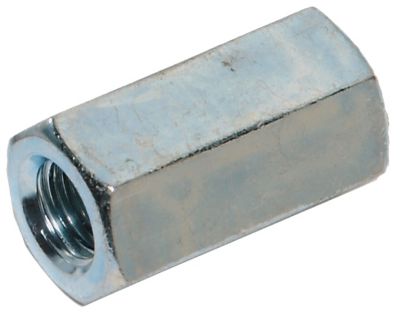
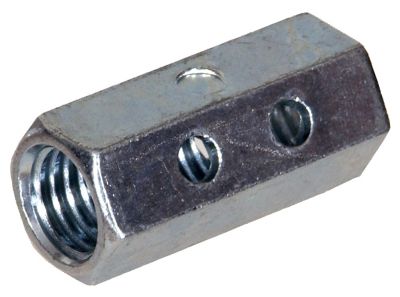
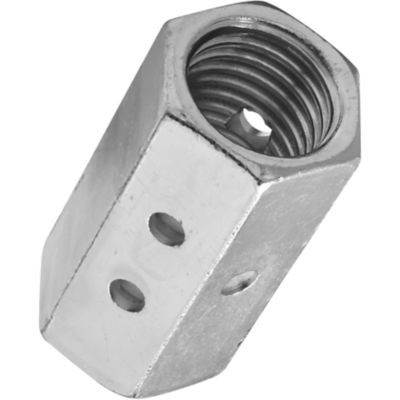
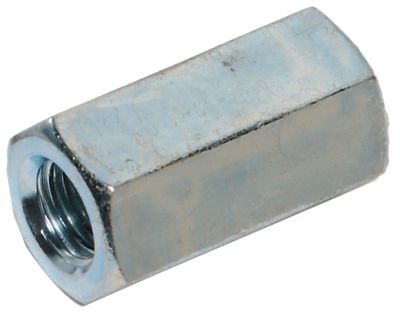
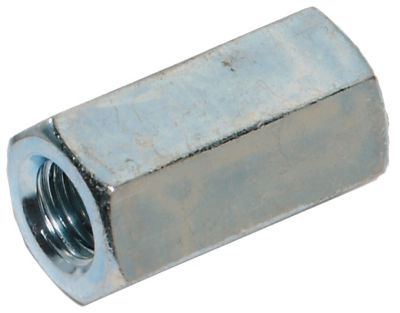
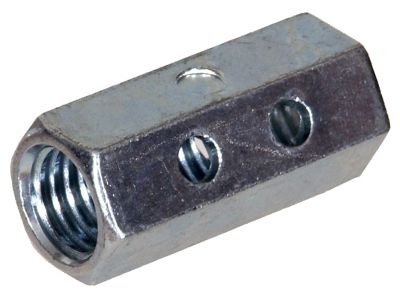
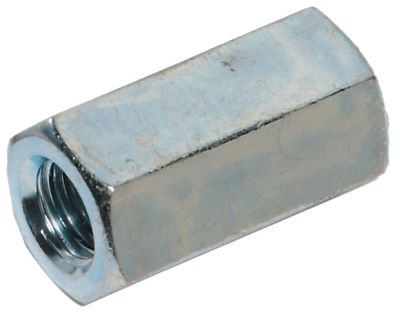
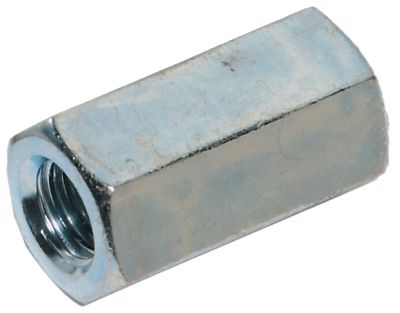
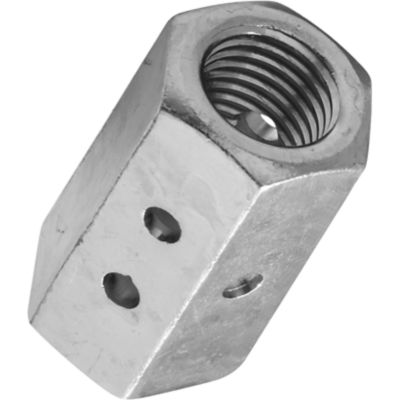
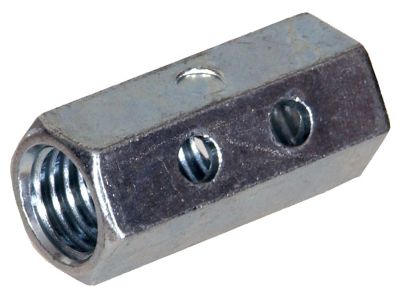
Coupler nuts give threaded rods and studs a way to join end to end, making them handy for repairs, fabrication, and projects around the shop, barn, or equipment shed. Also called coupling nuts or rod coupling nuts, these elongated fasteners have internal threads that grip the matching threads on each side of a connection. Their longer body sets them apart from an ordinary hex nut, while the exterior flats provide a place for a wrench when the assembly needs tightening or adjustment. A threaded rod that falls short of a bracket, a workbench fixture that needs a longer reach, or a shop assembly built in separate sections can all call for this kind of connection. Farmers, maintenance crews, welders, mechanics, and folks who keep their own equipment running may find them helpful wherever a removable threaded joint makes sense. They can also support a tidy layout when a continuous length of rod would be awkward to transport or maneuver into place. The important distinction is that a coupler nut connects compatible threaded fasteners; it does not turn mismatched rods into a sound assembly or straighten a bent stud. Its role also differs from a pipe coupling, since ordinary rod coupling nuts are not designed to seal a fluid line. Intended use matters as much as the shape of the nut. A fixture holding a machine guard in position has different demands from a suspended support carrying a substantial load. Any application involving overhead equipment, lifting, structural connections, or a safety-critical assembly calls for hardware with the appropriate specifications and approval for that job. For everyday repairs and fabrication, the appeal is straightforward: a compact connection, familiar wrench flats, and the ability to extend or join threaded components without welding the joint. That can make later disassembly and equipment access much simpler, provided the surrounding assembly leaves enough room to reach the fastener.
Material and finish help determine how a coupler nut fits into its working environment.
Steel coupling nuts are a practical consideration for many threaded-rod assemblies, with the particular steel grade, finish, and published specifications determining where a given fastener belongs. Plain steel, zinc-plated steel, and stainless steel each bring different considerations to the bench. Plain steel needs attention to corrosion protection when moisture or cleaning fluids are part of the setting. Zinc plating provides a protective coating, but scratches, wear, and chemical exposure can affect how well that coating holds up. Stainless steel may suit some damp or frequently cleaned locations, though the alloy and surrounding conditions still matter. Neither a bright finish nor a heavier feel establishes a fastener’s strength rating. Material grades and manufacturer documentation are better references for load-related decisions, and the rod, nut, brackets, and other connected parts all need to suit the same task. On a livestock building repair or a fixture near a washdown area, contact with moisture, cleaners, and nearby metals deserves attention before the assembly goes together. Dissimilar metals can introduce corrosion concerns, particularly when moisture is present. Stainless threads can also gall, or seize against one another, so any lubricant and tightening procedure should follow the hardware manufacturer’s recommendations. Care is generally about preserving the threads and protective finish rather than adding complicated upkeep. Clean, dry storage keeps loose fasteners from collecting grit before installation, while periodic checks can reveal rust, looseness, worn flats, or damaged threads in service. A nut packed with shop dust or metal shavings may feel tight before it has actually seated as intended. Protective coatings, lubricants, and threadlocking compounds can change the behavior of a threaded joint, so they need to match the application rather than serve as a catchall fix. Where vibration is part of the job, the assembly may require a specified locking method in addition to the coupling nut itself.
Fit starts with more than a quick comparison of hole size. Thread diameter, thread pitch, measurement system, and thread direction all need to match the rod or stud entering the nut. An inch-size coarse thread and an inch-size fine thread are not interchangeable, and a metric thread that looks close is still a different fit. Matching the markings or documented dimensions saves trouble when several similar-looking fasteners share a parts drawer. Overall nut length matters, too, because each connected section needs the thread engagement specified for the application. A longer body can provide more room for engagement, but length alone does not establish the joint’s capacity. Both rods need adequate engagement; having one threaded deeply into the nut does not compensate for too little engagement on the other side. Wrench size and clearance are worth considering wherever a connection sits close to a frame rail, bracket, wall, or neighboring component. A nut that fits the thread still needs enough surrounding space for installation and future service. Straight alignment helps the threads start cleanly, while resistance at the first turn can point to dirt, damaged threads, or a mismatch rather than a need for more wrench pressure. Rod ends cut to length need clean, properly finished threads so burrs do not damage the nut as it goes on. In a farm shop, where threaded rod may share a rack with angle iron and leftover project pieces, checking the condition of both mating parts is time well spent. Coupler nuts belong on sound threads, not as a patch over stripped or badly corroded sections. The finished connection also needs consideration as a whole: rod alignment, unsupported length, vibration, and the direction of the load can all affect how it performs. Keeping those details in view helps match the fastener to the work, whether the task is extending a threaded adjustment, connecting sections of a shop fixture, or putting a serviceable assembly back together.