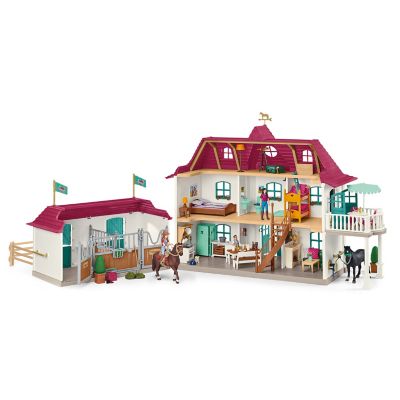
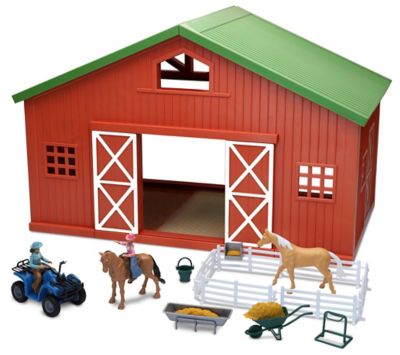
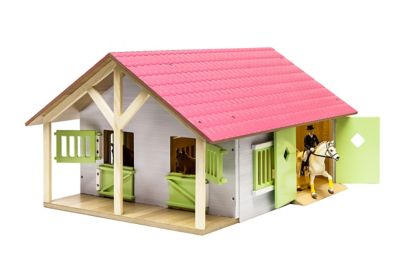
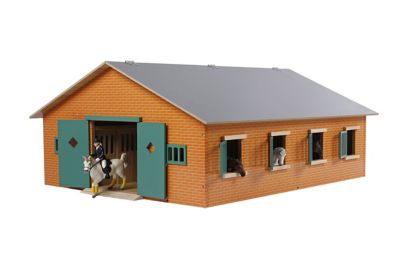
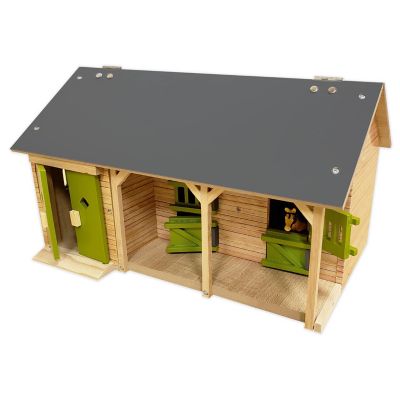
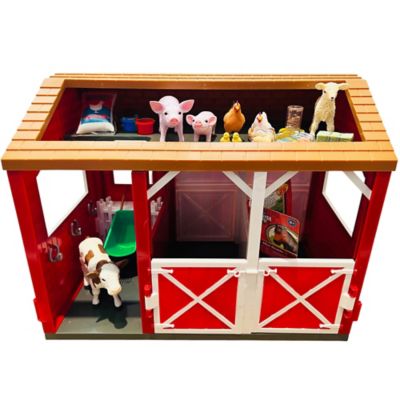
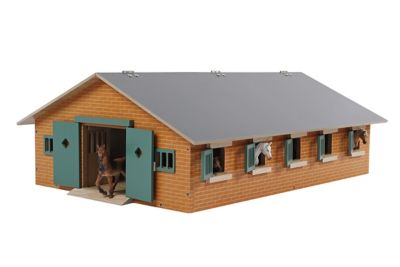
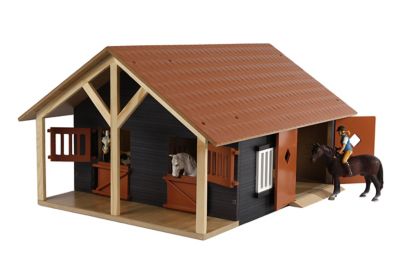
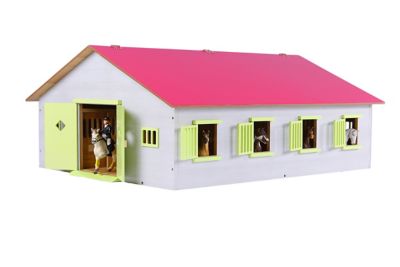
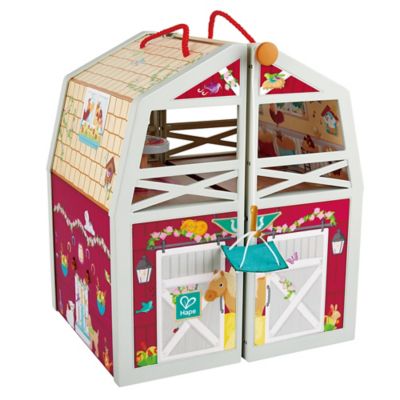
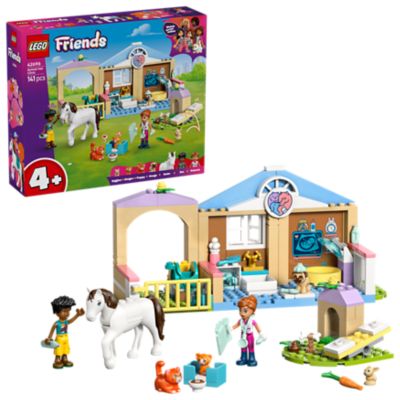
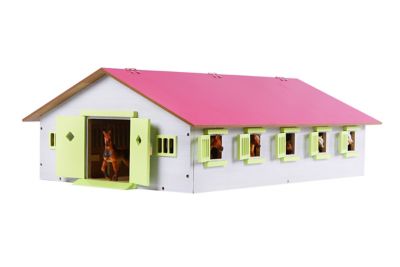
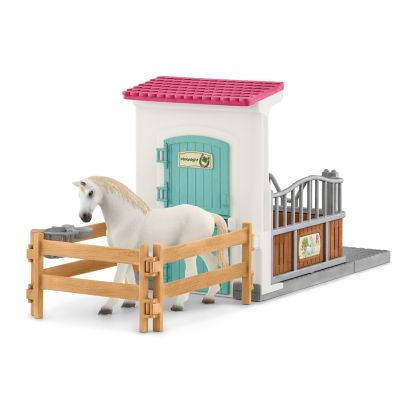
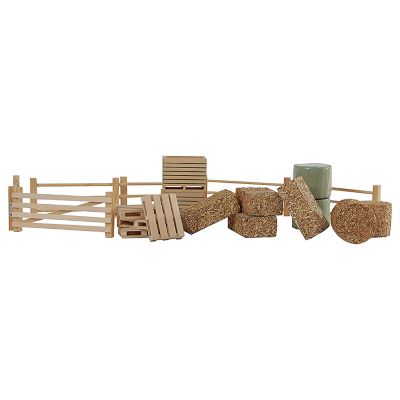
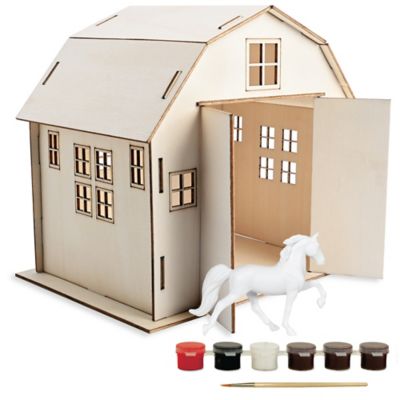
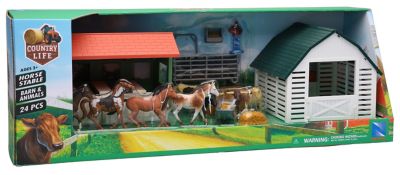
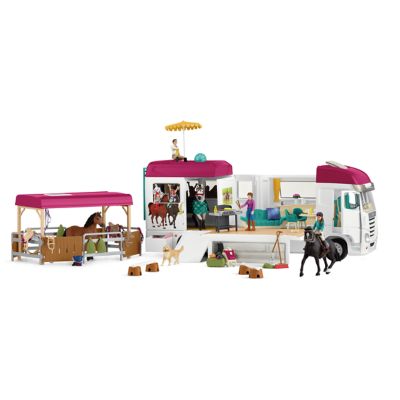
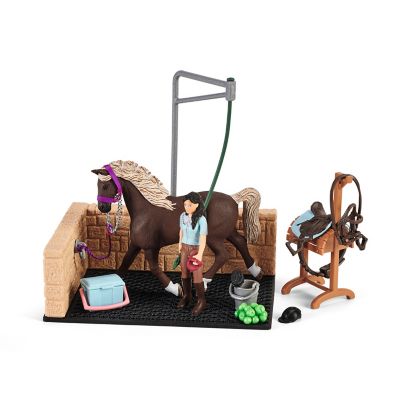
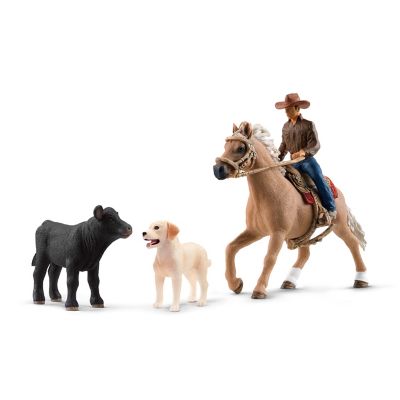
Toy horse barns and stable playsets bring the everyday bustle of a horse farm down to a size kids can spread out on the floor or a play table. A barn becomes the center of the action, with horses heading into stalls, a rider getting ready for practice, and a make-believe ranch hand carrying feed across the yard. Depending on the design, features such as opening doors, fences, haylofts, grooming areas, and tack storage give those stories somewhere to go. An open-front stable keeps the horses easy to reach, while a barn with a lift-off roof can make room for little hands to arrange stalls from above. Some layouts put the focus on caring for a few horses; others leave space for a whole spread with paddocks and paths between buildings. The appeal is in the small routines: settling a pony into its stall, setting a pretend water bucket beside the fence, or bringing a horse back to the barn after a ride. Kids who already spend time around horses may enjoy acting out familiar chores, while those just getting interested can explore the difference between a stall, a pasture, and a riding area through play. These sets also give siblings and friends room to share a story, with one child tending the barn and another taking horses out to the paddock. Moving figures through doorways, arranging fence sections, and handling small accessories offer chances to practice coordination and work through simple problems without turning playtime into a lesson. A horse that will not fit through a gate becomes a reason to rearrange the yard. A full stable leads to finding room for another stall. For children who return to the same horse characters day after day, a barn gives those favorites a home base, helping each new story pick up where the last one left off. That familiar setting can be just as engaging for quiet solo play as it is for a lively afternoon with friends.
The way a toy barn is built matters as much as how it looks, especially when play involves lots of opening gates, moving horses, and rebuilding the fence line. Wood can give a stable a solid feel and a straightforward farmyard look, while molded plastic can capture details such as siding, roof panels, and stall dividers. Some sets combine materials, so the frame, doors, fences, and accessories may each need a different kind of care. Smooth edges, securely attached parts, and hinges that move freely help keep the focus on play rather than fussing with the building. For younger children, a simple layout with larger pieces can be easier to handle than a tightly packed barn full of tiny fittings. Older kids may enjoy more detailed stalls, removable partitions, or room to arrange tack and feeding accessories. Age recommendations matter more than the size of the barn itself, since even a large playset can include small pieces that present a choking hazard. Fit is another practical consideration. Horses need enough clearance to pass through doors and stand inside stalls without catching their ears, tails, or legs on the frame. Scale labels can help, but measurements of the figures and the barn openings offer a clearer picture when pieces come from different sets. A barn intended for small figures may not suit larger model horses, even if the buildings look similar in photos. The full footprint matters, too: swinging doors, attached paddocks, and loose fencing often take up more room than the main building. A flat surface helps the scene stay steady, particularly when narrow fence sections tend to tip on thick carpet. Assembly requirements are worth noting for gifts, along with whether an adult needs to secure panels or fittings before play begins. For a set that travels between rooms or visits to family, a carry handle, closing case, or compact layout can make moving the whole stable less of a chore. Fixed buildings and loose accessories suit a dedicated play corner where the ranch can stay set up.
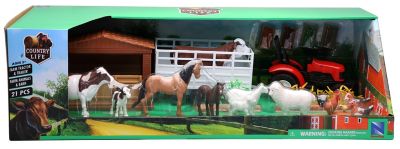
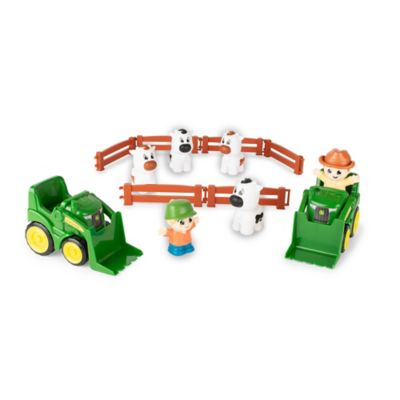
Keeping a horse playset ready for the next round of barn chores usually comes down to sensible cleaning and a place for the little pieces. Care directions should match the materials: many hard surfaces can be wiped with a lightly damp cloth, while wood, paper details, fabric parts, and painted finishes may need a gentler approach. Soaking a barn or sending accessories through a dishwasher is not a safe assumption unless the maker specifically allows it. Drying pieces before putting them away helps protect surfaces and keeps moisture from collecting inside closed storage spaces. Toy barns intended for indoor play are best kept away from outdoor conditions that their materials and finishes were not built to handle. Hinges, roof connections, and fence clips deserve an occasional look, especially after an enthusiastic play session or a tumble from the table. A cracked part or loose fastener needs attention before it goes back into the scene. Small bins or divided containers make it easier to keep grooming tools, feed tubs, fences, and horse figures together, and separating tiny accessories from larger pieces helps when children of different ages share a room. Storage that a child can manage independently also makes cleanup feel like the last chore at the stable rather than an interruption. For birthdays and other gift-giving occasions, a toy barn can be a thoughtful match for a child who loves riding lessons, farm visits, horse stories, or arranging animal figures into busy little worlds. The right size and level of detail depend on the recipient’s age, space, and favorite way to play. A simple stable may suit a child who wants to start a scene quickly, while a more involved layout can appeal to someone who enjoys carefully arranging every gate and stall. For play that stretches beyond the horse paddock, a
Toy Farm with Animals can add another setting to the story. With compatible figures and enough room to spread out, the horse barn can become one familiar stop in a much bigger make-believe farm.