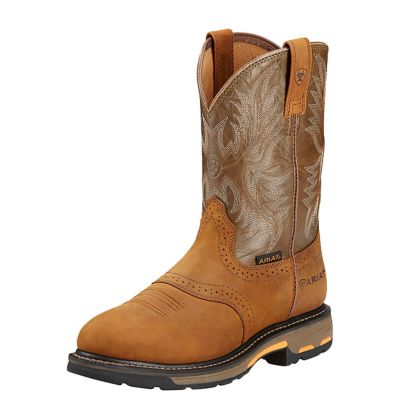
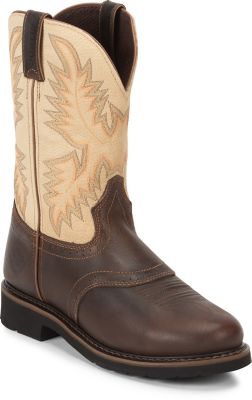
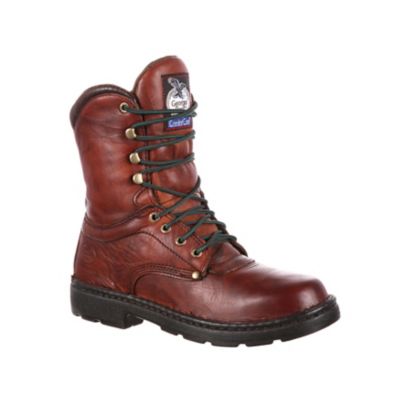
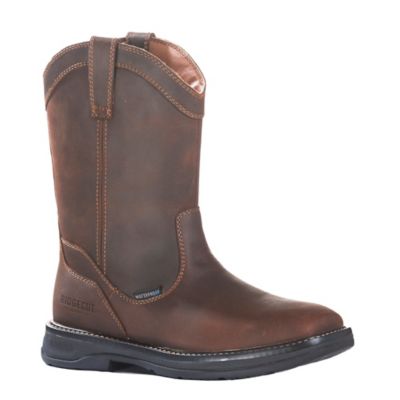
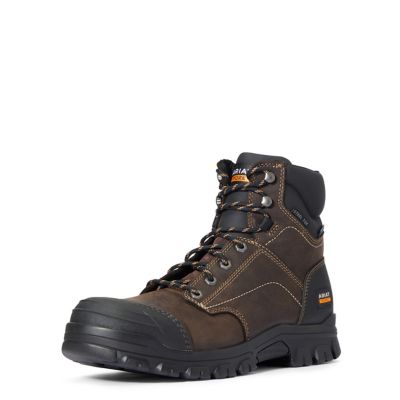
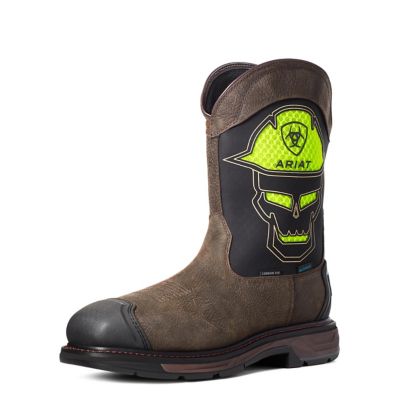
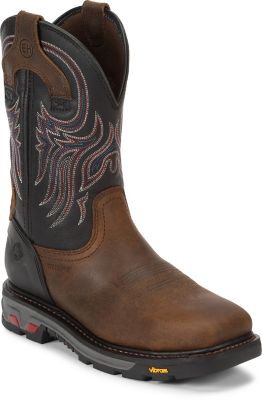
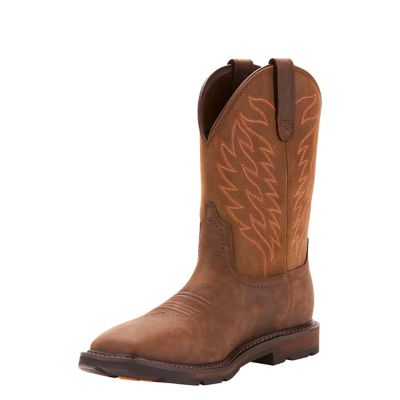
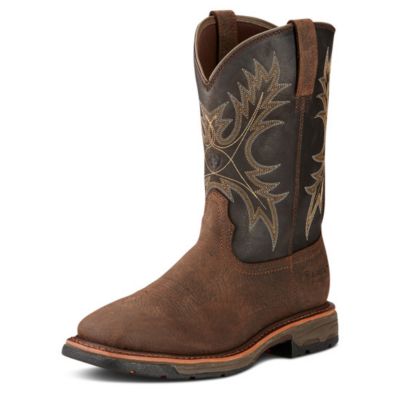
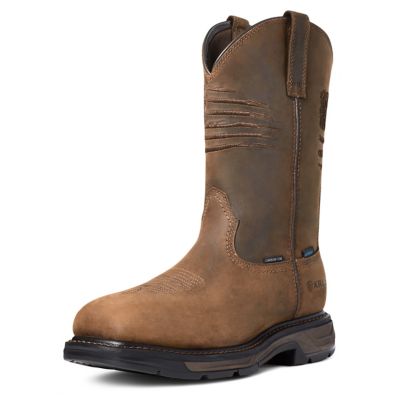
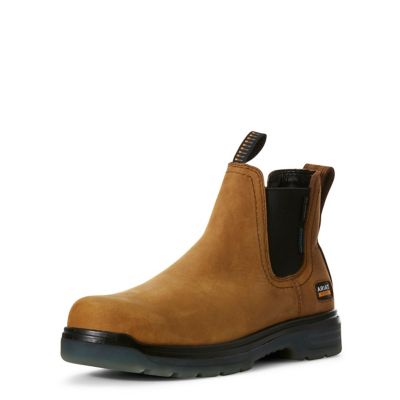
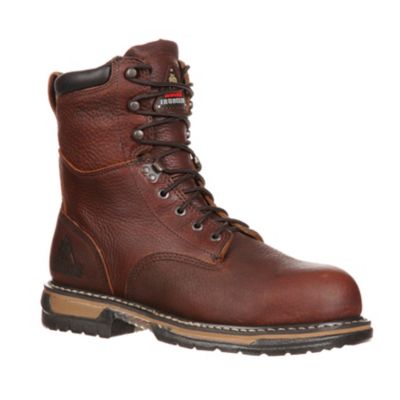
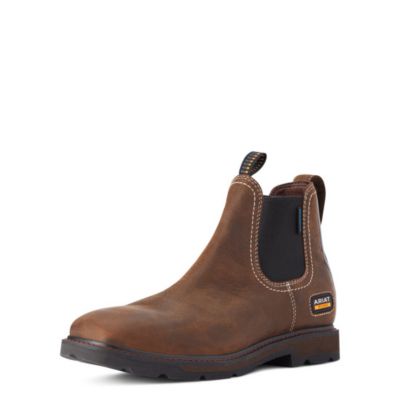
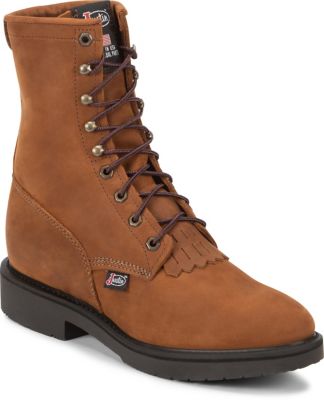
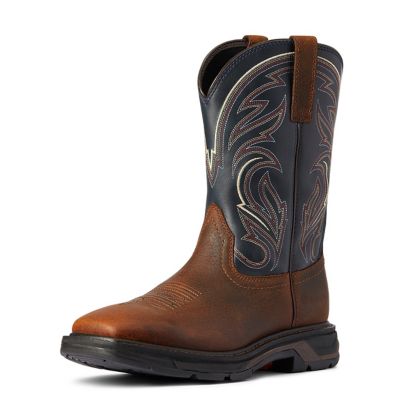
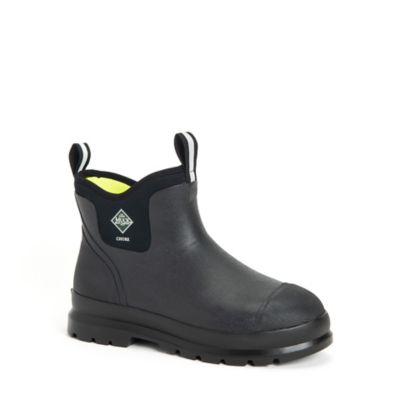
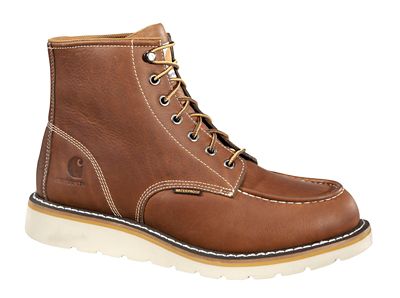
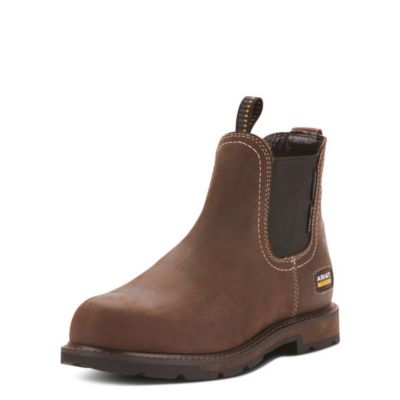
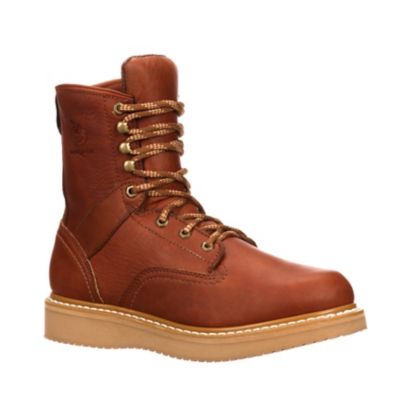
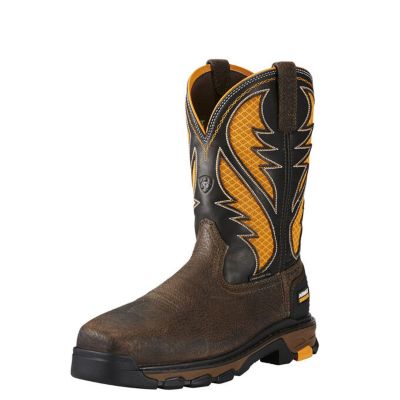
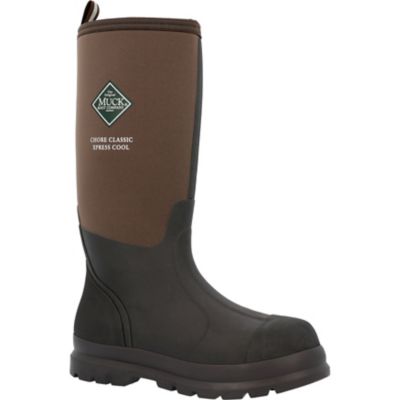
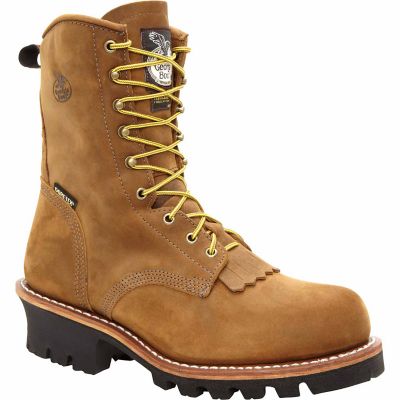
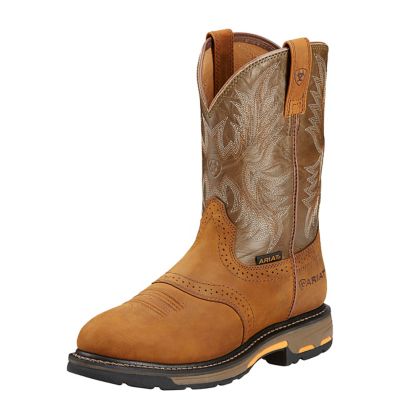
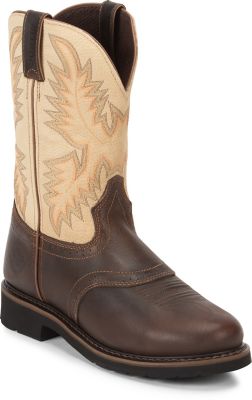
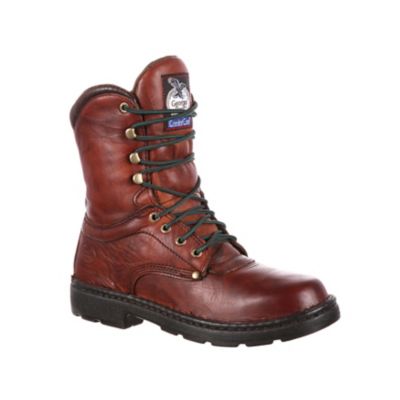
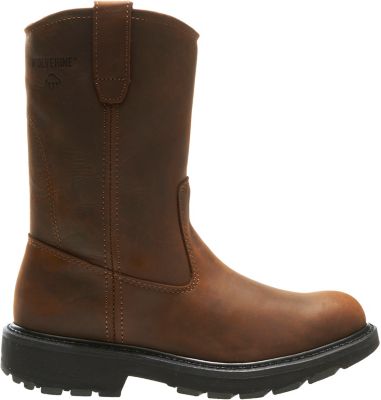
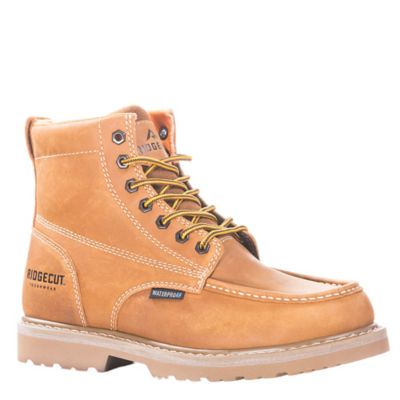
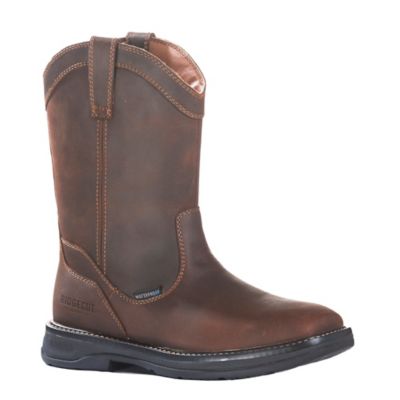
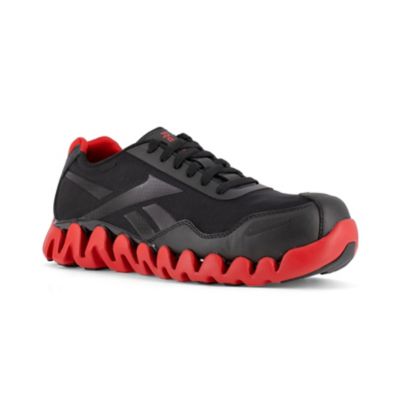
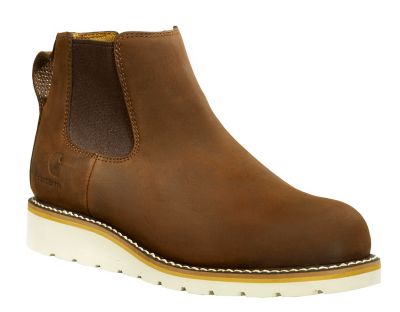
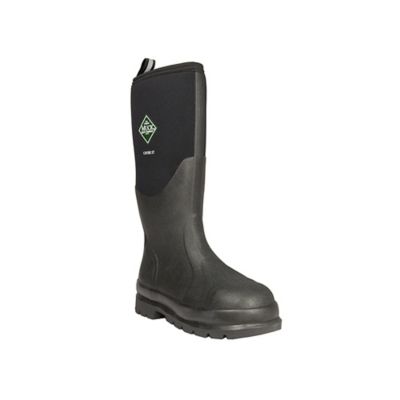
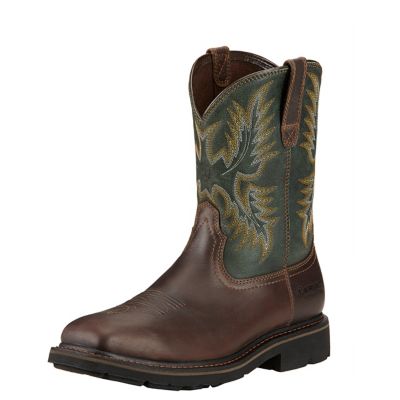
Summer work boots for men balance breathable materials, manageable weight, steady footing, and the protection a job calls for. For chores around the farm, fence repairs, landscaping, and long shifts on a jobsite, the right pair needs to handle more than heat. Gravel works its way underfoot, cut grass holds moisture, and a day that starts in the barn may end on a concrete shop floor. Uninsulated construction makes sense for many warm-weather tasks because it leaves out the extra warmth built into insulated boots. Unlined leather can offer a straightforward option with fewer interior layers, while textile panels and mesh linings can help moisture move away from the foot. Full-grain leather provides a substantial outer layer for demanding work, though thickness, lining, and overall construction affect how warm a boot feels. Breathable does not necessarily mean waterproof, and waterproof does not mean sweat-free. A waterproof membrane can help keep outside water out when chores involve wet pasture or irrigation runoff, but it may feel warmer than a comparable boot without that barrier. For mostly dry work, an uninsulated boot without waterproofing may be a better match. Moisture-wicking linings help move perspiration away from the skin, but socks and drying time matter, too. Merino wool blends and synthetic work socks generally manage sweat better than cotton that stays damp against the foot. Boot height also changes the feel: a shorter shaft covers less of the leg, while a taller shaft adds coverage against brush and loose debris. Neither height alone nor a mesh panel tells the whole story about comfort. The best summer work boots for a particular job bring the upper, lining, sole, and fit together without adding protection or weight that the work does not require. A ranch hand walking rough ground and a mechanic standing at a service bay may need very different builds, even when both spend the day on their feet.
Fit and underfoot support become especially noticeable after several hours of lifting, walking, and climbing. Men's summer work boots should leave room for toes to move without letting the foot slide forward on a slope. Trying boots with the socks worn for work, later in the day when feet may be slightly larger, gives a more realistic sense of the fit. The widest part of the foot should sit comfortably in the widest part of the boot, without pressure along the sides. A safety toe will not stretch to make extra room, so a cramped toe box is not something to count on breaking in. Lace-up boots allow adjustments across the instep and around the ankle, which can help when feet swell over a long shift. Pull-on work boots offer quick changes at the mudroom door and fewer laces to catch on brush, but they still need a secure fit through the instep. A little heel movement can be normal in a new pull-on boot; excessive lifting or rubbing points to a fit problem. Cushioning can take some of the edge off repeated steps on hard surfaces, while a supportive midsole and shank help the boot hold its shape underfoot. More cushioning is not automatically better if it leaves the foot feeling unstable. Wedge soles spread contact across a broad area and can suit work on flat floors, while defined heels and deeper tread may make more sense for uneven ground or tasks with particular footwear requirements. Mud-shedding lugs help on loose soil, but tread packed with clay can still lose grip. Slip resistance depends on the outsole, surface, and contaminants, not just an aggressive-looking pattern. For work that allows lower-cut footwear,
Men's Summer Work Shoes offer another direction when ankle coverage is less important. Boots remain a practical choice when the job calls for more coverage around the ankle and lower leg, though that coverage alone should not be mistaken for certified protection against every hazard.
Protection requirements should settle the safety-toe decision before weight or appearance does. Steel, composite, and other nonmetallic safety toes can provide impact and compression protection when the footwear meets the applicable safety standard. Composite toes generally conduct less heat than steel, but total boot weight and warm-weather comfort depend on the entire build, not the toe material alone. Soft-toe work boots suit tasks that do not require a protective toe; they are not substitutes where falling or rolling objects create a hazard. Electrical hazard protection, puncture resistance, and hot-contact resistance are separate features, so check the footwear markings and the employer's requirements rather than assuming one safety feature covers another. Roofing and paving can expose soles to intense surface heat, making a stated heat-resistance specification more useful than a general description of a tough outsole. Oil resistance also differs from slip resistance. Beyond safety features, long service life comes from construction suited to the work and regular attention after the boots come off. Reinforcement around the toe and heel can help in areas that scrape against equipment or rough ground. Welted construction may allow resoling, depending on the boot, while cemented construction can offer a lighter, more flexible feel; neither approach guarantees how long a pair will last. Brush away dry dirt, clear packed tread, and wipe off mud before it hardens around seams. Leather care should follow the maker's directions, with conditioner applied as recommended rather than piled on. Let wet boots dry with airflow, away from heaters and other direct heat that can affect leather and adhesives. Removing removable footbeds and opening the uppers helps the inside dry, and rotating pairs gives moisture more time to escape between shifts. Cracked soles, loose stitching, worn tread, and damage around a safety toe deserve attention before the next workday. Whether the day involves mending a gate, unloading feed, or walking a construction site, summer work boots earn their place through a sensible mix of comfort, coverage, and job-matched protection.