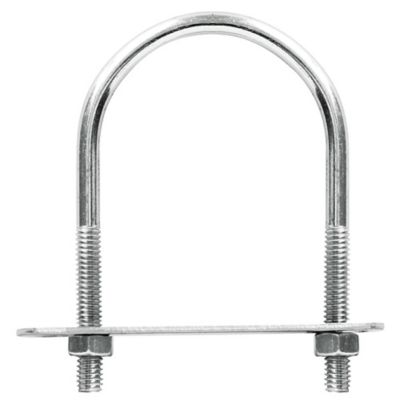
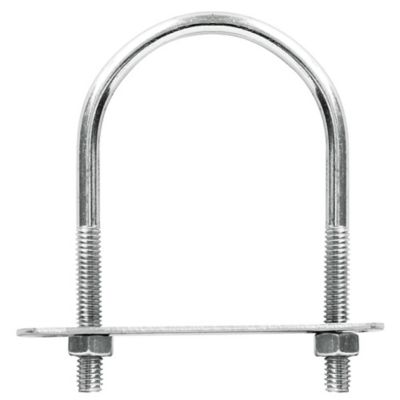
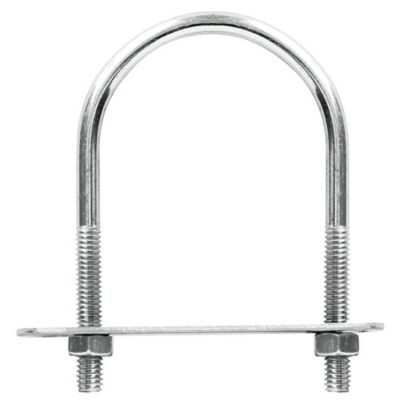
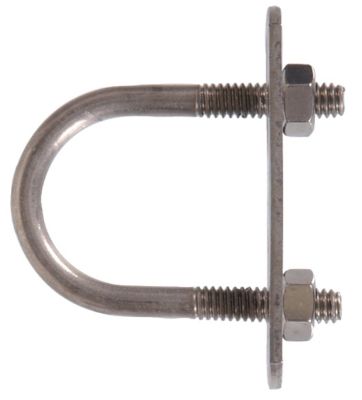
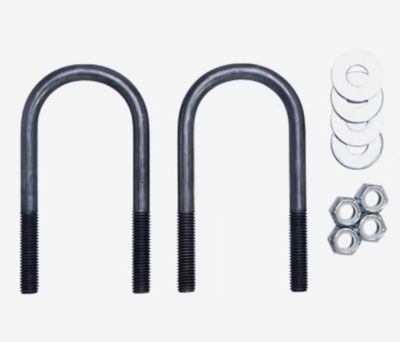
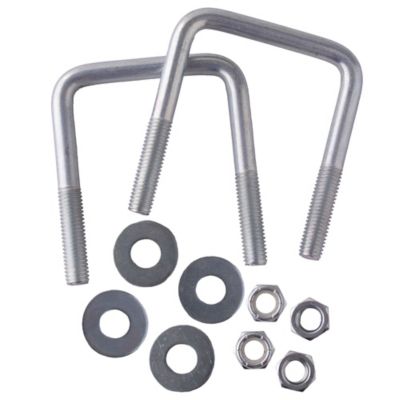
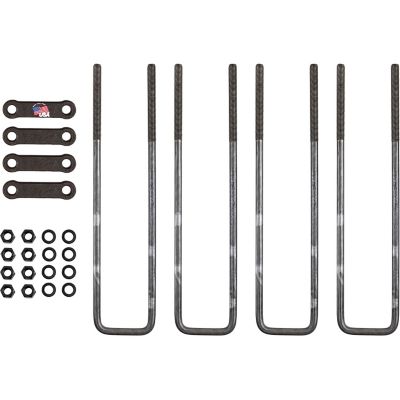
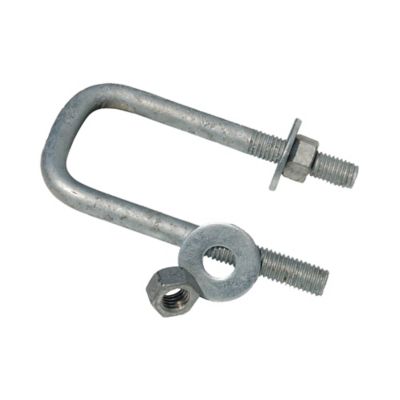
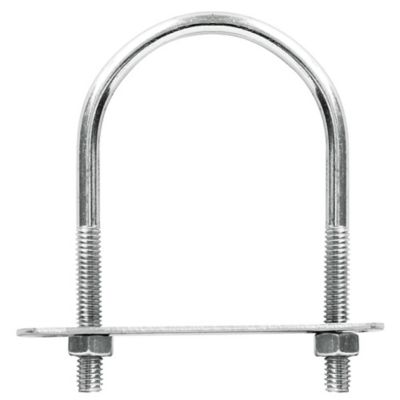
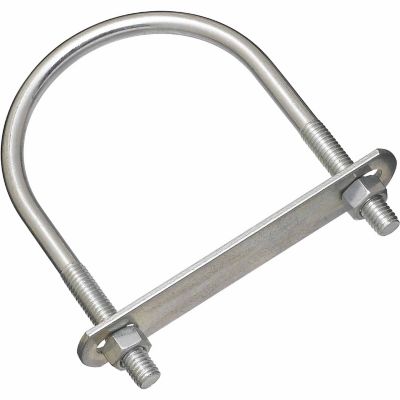
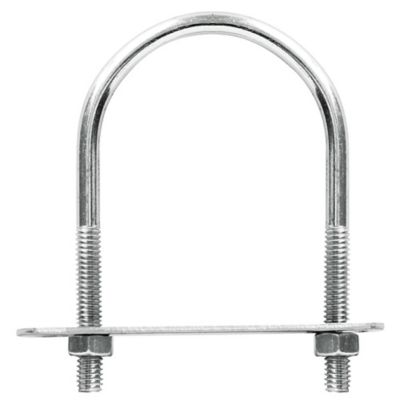
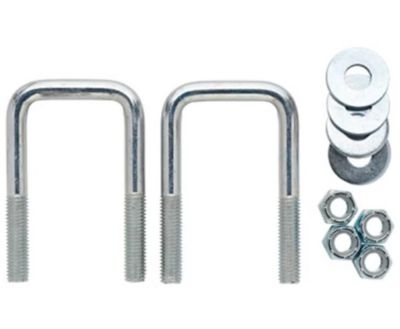
Steel U-bolts are U-shaped steel fasteners with two threaded legs that wrap around pipe, tubing or another component and secure it to a support with nuts and, where specified, a plate or bracket. Their shape makes them useful for connections where a straight bolt cannot reach around the part being held. Around a farm, ranch or workshop, that can mean supporting a water line, attaching a bracket to a tubular frame or holding a component against a mounting surface. Round-bend U-bolts generally fit round pipe and tubing, while square-bend versions suit rectangular shapes when the application calls for that style. The bend shape matters because a poor match can concentrate pressure instead of seating against the intended surface. Fit also depends on several separate measurements: inside width, inside height, rod diameter and threaded length. Inside width determines the space between the legs, while inside height helps establish how much room there is for the part, support and fastening hardware. Rod diameter affects both mounting-hole fit and the fastener’s load capacity, although diameter alone does not establish a load rating. Threaded length determines how much adjustment is possible and whether the nuts can engage fully once everything is together. A pipe’s nominal size may differ from its actual outside diameter, so a pipe-size label and a tape-measure reading do not always match. Product dimension drawings help clarify whether length refers to an inside measurement or an overall measurement. For someone replacing hardware on a shop fixture or equipment bracket, those details can make the difference between a connection that seats properly and one that needs the wrong kind of persuasion. Existing mounting holes, plate thickness and clearance around the nuts also affect fit. Enough room for a wrench matters just as much as enough room for the threaded legs, especially behind a tank stand or beneath a crowded support frame.
Material and finish help determine how steel U-bolts hold up in their intended surroundings. Carbon steel is common for fastening applications, but its strength depends on its grade, manufacturing specifications and dimensions rather than its appearance. Bare carbon steel can rust when exposed to moisture, making surface protection an important consideration for many installations. Zinc-plated steel has a zinc coating that helps protect the underlying metal from corrosion. Hot-dip galvanized steel also has a zinc coating, generally thicker than electroplated zinc, and is often specified where greater corrosion protection is needed. These finishes are not interchangeable in every assembly: coating thickness, thread fit and compatibility with the mating nuts all matter. Stainless steel offers corrosion resistance through the alloy itself rather than a zinc coating, though different stainless grades suit different exposures. Stainless steel is not rustproof in every setting, and it does not automatically carry a higher load rating than carbon steel. Around watering systems, wash areas or equipment that encounters fertilizers and other chemicals, the particular exposure matters more than a broad claim about rust resistance. Contact between different metals can also affect corrosion, especially where moisture remains trapped in the connection. The material of the pipe, bracket, plate and nuts belongs in the same conversation as the U-bolt’s finish. Projects with both wraparound supports and straight-through bracket connections may also call for
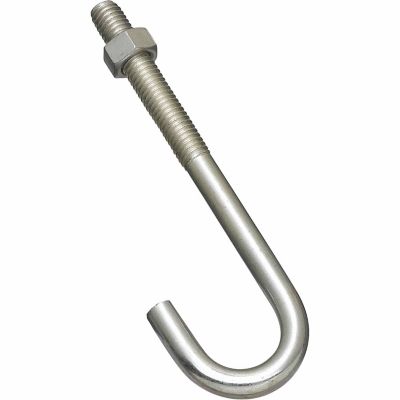
Zinc Bolts, with each fastener matched to its own connection. Strength requirements deserve the same attention as corrosion resistance. Steel grade, thread size, bend geometry and the manufacturer’s stated specifications all contribute to suitability. A heavier-looking U-bolt is not a substitute for a specified part, particularly where vibration, repeated movement or substantial loads are involved. Rolled or cut thread construction may appear in product specifications, but thread style alone does not establish the capacity of the finished fastener.
The rest of the hardware matters, too. A steel U-bolt connection may include nuts, washers, a backing plate or a shaped saddle, and package contents differ. A plate can bridge the threaded legs and spread force across the supporting surface, while a properly matched saddle can help support the contour of a pipe. Neither component makes an unsuitable U-bolt suitable for a heavier job. Nuts need to match the thread diameter and pitch, and washers need to fit the rod and bearing surface. Adequate thread engagement is important, but extra exposed threads do not make up for the wrong size or grade. Balanced tightening helps the assembly seat evenly; excessive tightening can distort a bracket, crush thin-wall tubing or damage threads. The appropriate torque comes from the equipment or fastener manufacturer, not from how far a wrench can turn. Lubricants and anti-seize compounds can change the relationship between tightening torque and clamping force, so their use needs to follow the applicable specifications. These details matter to maintenance crews working on pipe supports, landowners repairing utility frames and mechanics handling equipment attachments. They matter even more on trailers and vehicle suspension assemblies, where application-specific U-bolts, replacement requirements and torque procedures take priority over general hardware comparisons. Ordinary mounting U-bolts should not be treated as lifting hardware or assumed suitable for overhead loads. Once installed, accessible connections are easier to inspect for loose nuts, bent legs, worn contact points or corrosion around the threads. Dirt packed against a plate can conceal trouble, and deep pitting or damaged threads can call for replacement rather than another turn of the wrench. A pipe support may also need to allow movement specified by the system design instead of clamping everything rigidly. For everyday fastening work, the best match comes down to the whole connection: the shape being held, the support beneath it, the surrounding conditions and the load the assembly must carry. Getting those details lined up helps a small piece of hardware do its job without creating a bigger repair down the road.