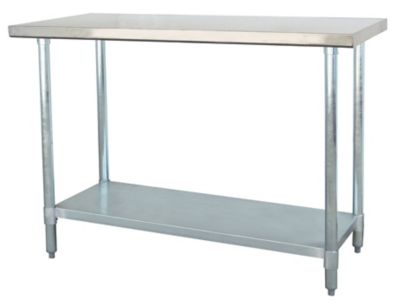
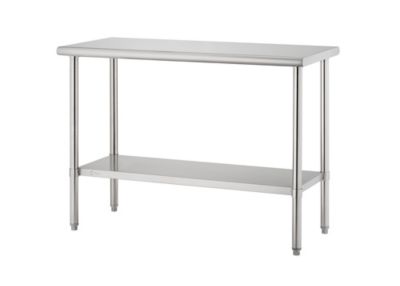
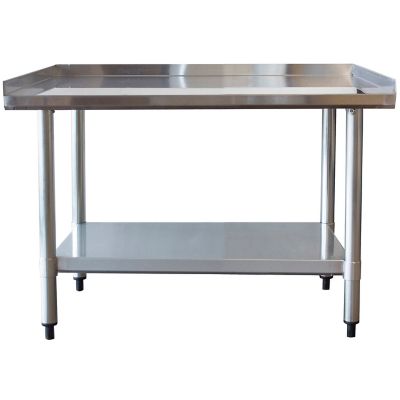
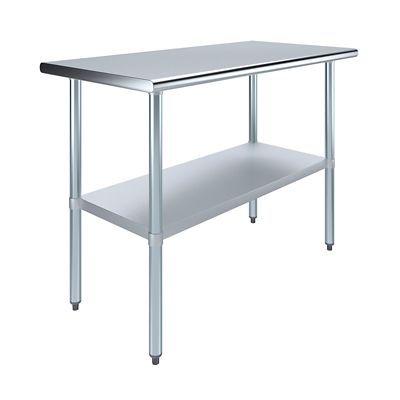
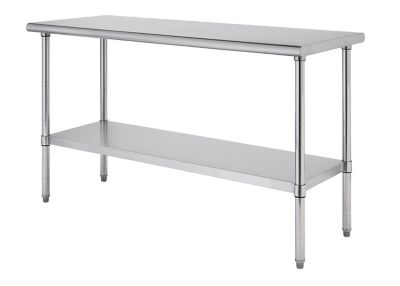
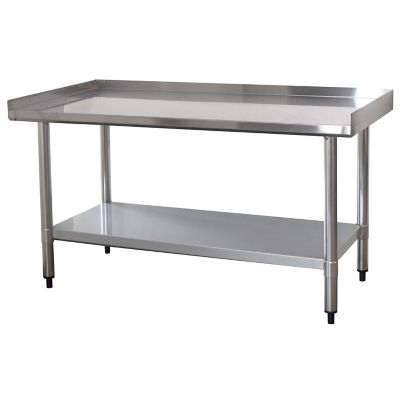
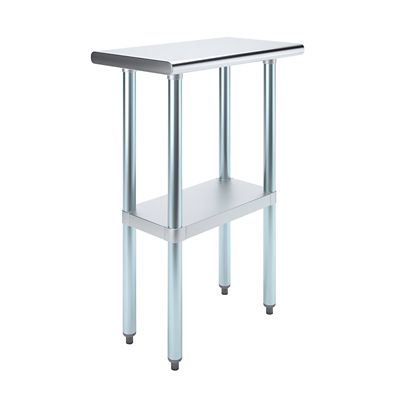
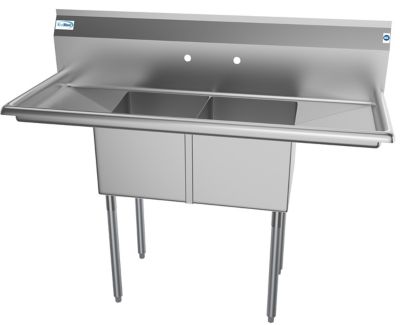
Stainless steel top tables provide a smooth, sturdy work surface for food preparation, project work, packing, and everyday chores. They fit naturally into kitchens, garages, workshops, utility rooms, and farm work areas where a little more elbow room makes the job easier. A broad top gives bread dough room to stretch, keeps canning supplies together, or provides a spot to sort hardware without taking over the kitchen counter. The right construction depends on the work at hand: a table for portioning ingredients has different demands than one supporting a heavy mixer or holding tools between repairs. Stainless steel resists corrosion, but the metal grade, thickness, finish, and supporting structure all affect how a table stands up to daily tasks. Common grades include 304 and 430 stainless steel; 304 generally offers greater corrosion resistance, while 430 is common in general-purpose applications. Neither grade makes a table immune to stains, scratches, or damage from unsuitable cleaners. Gauge describes sheet thickness, with a lower gauge number indicating thicker steel. Still, thickness alone does not tell the whole story. Reinforcement beneath the top, secure leg connections, and the frame design help determine how solid the surface feels while kneading dough or setting down equipment. A stainless steel top also does not necessarily mean the legs, shelves, and frame are stainless steel. Those parts may be galvanized steel or another material, so construction details matter wherever moisture or frequent cleaning is part of the routine. Smooth edges and rounded corners can make close quarters more comfortable, while a raised back edge helps keep small supplies from slipping behind the table. For food preparation, any required food-contact certifications need to apply to the table itself, not simply to the metal on top. A nonporous surface makes cleanup straightforward, but proper washing and sanitation still matter. Taken together, these details help distinguish a light-duty staging surface from a table suited to more demanding work.
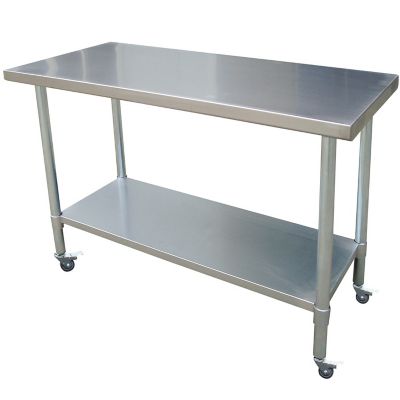
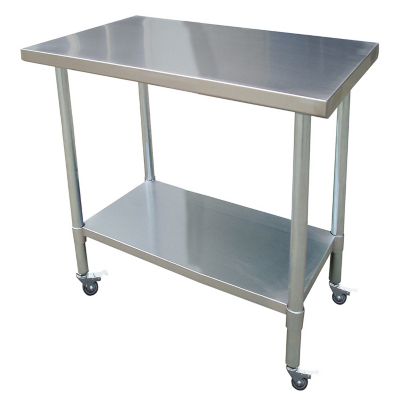
Size and layout have just as much bearing on everyday usefulness as the metal itself. Stainless steel top tables range from compact workstations that tuck beside existing counters to longer surfaces with room for several tasks. Width determines how much work can spread out side to side, while depth affects both reach and the amount of floor space the table takes up. A deep top can hold a countertop appliance with space in front for ingredients, but it may feel awkward against a wall if the back corners are hard to reach. Clearance around doors, drawers, walkways, and nearby equipment matters, too, especially in a busy farm kitchen or a shop where carts share the aisle. Table height influences comfort during repetitive work, whether that means trimming vegetables, labeling jars, or assembling small parts. Seated work also calls for knee room that a low shelf or cross brace may interrupt. Undershelves bring bowls, bins, and frequently reached-for supplies within easy reach without crowding the top. Adjustable shelves offer more flexibility for tall containers, while open space beneath the table can accommodate larger equipment when the frame allows it. Shelf capacity and tabletop capacity are separate considerations, and neither should be assumed from appearance alone. Weight limits depend on the complete assembly and how the load is distributed; a concentrated load from a machine is different from supplies spread across the surface. Stationary legs with leveling feet can help steady a table on a slightly uneven floor. For spaces where the layout changes from one job to the next,
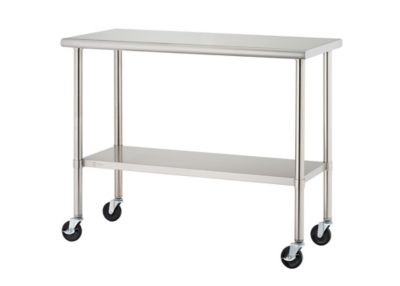
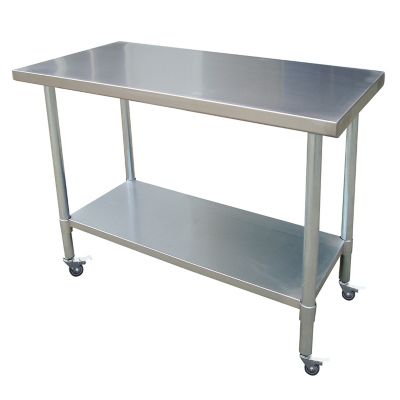
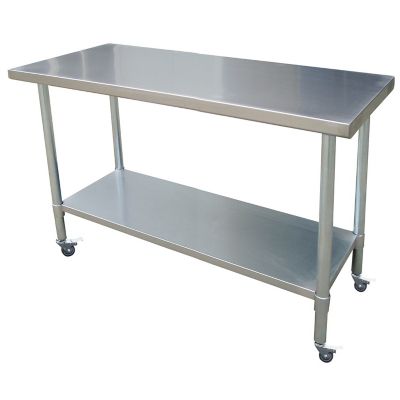
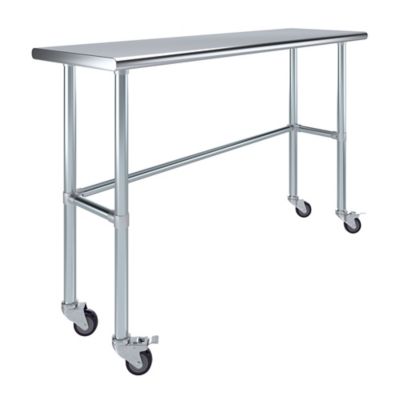
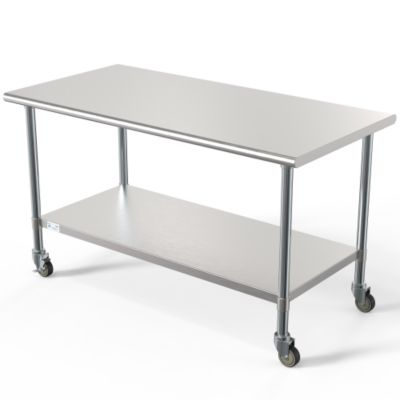
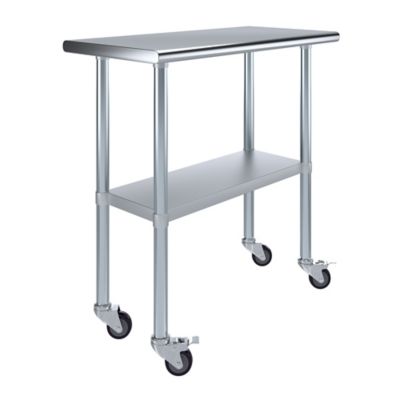
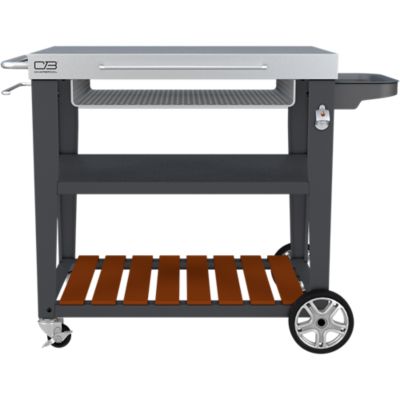
Stainless Steel Work Tables With Wheels offer the flexibility to reposition the work surface or move it aside for cleaning. Caster size, floor compatibility, locking mechanisms, and the manufacturer’s instructions all affect mobility. Locked wheels help limit movement, but a rolling table is not automatically suitable for forceful tasks such as hammering or heavy clamping.
Everyday care helps a stainless steel work surface keep its clean appearance and remain ready for the next job. Mild soap, water, and a soft cloth are often enough for ordinary residue, followed by rinsing and drying according to the manufacturer’s directions. Wiping with the grain can help maintain a brushed finish, while abrasive pads and steel wool can scratch the surface or leave particles that contribute to rust spotting. Chlorine-based cleaners and other harsh chemicals may damage some stainless steel finishes, so cleaner compatibility matters even when a surface looks tough. Food-contact work calls for an appropriate cleaning and sanitizing routine, including the correct sanitizer concentration and contact time. Raw meat preparation, animal-care supplies, shop chemicals, and household food preparation belong in separate work areas to limit cross-contamination. A cutting board protects both the tabletop and knife edges, and a suitable mat can keep rough-bottomed equipment from scuffing the finish. Standing water, salty residue, and spills left in seams deserve attention rather than being treated as harmless because the top is stainless steel. Legs, shelf corners, and the underside of the work surface also collect dust and debris, especially in rooms where flour, feed, or sawdust travels through the air. Fasteners and casters may need periodic checks as directed by the manufacturer, particularly when a table moves frequently or carries equipment. That routine upkeep supports the practical role these tables play: keeping the next task off the dining table, giving a busy kitchen another prep station, or bringing order to a crowded workroom. For a home baker, a roomy top can hold mixing bowls and cooling racks; for a small farm operation, a separate packing surface can keep cartons and labels together. In a garage, the same basic format provides a clear place for measuring parts and organizing tools. Matching the surface, frame, storage, and footprint to the job helps make a stainless steel top table a useful part of the workspace rather than another obstacle to work around.