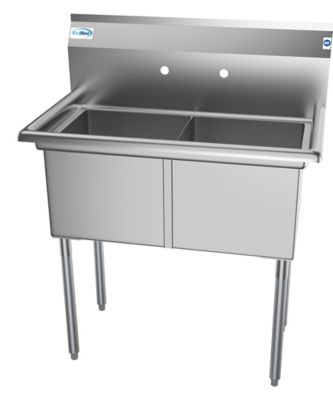
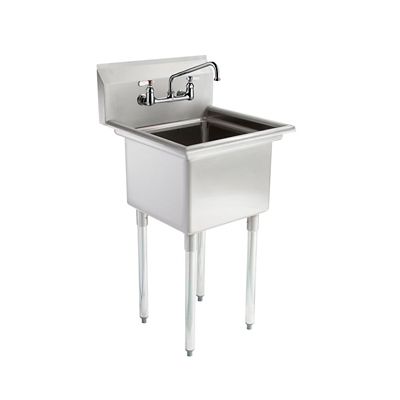
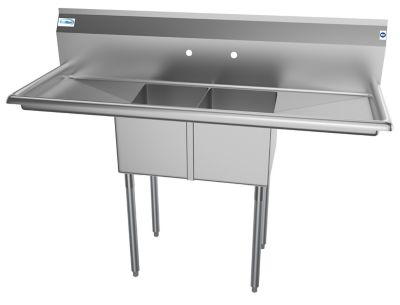
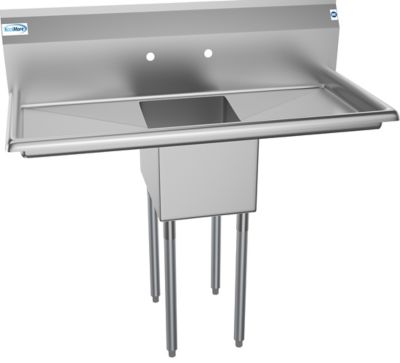
Heavy-duty stainless steel sinks give busy wash areas a sturdy place to handle dirty tools, muddy boots, pet bowls, and everyday cleanup. They typically feature thicker stainless steel, often 16-gauge or heavy-duty 18-gauge, along with a basin and support structure suited to frequent work. A lower gauge number means thicker metal when comparing the same material: 16-gauge stainless steel is thicker than 18-gauge. Type 304 stainless steel, also called T-304, contains chromium and nickel that help it resist corrosion, making it a common choice for sinks that see regular contact with water. Steel thickness matters, but so do the basin shape, welds, mounting system, and frame beneath it. Together, those details affect how a sink handles a full bowl of water, an awkward bucket, or the occasional bump from a wrench. In a farm utility room, a deep basin can keep splashes contained while feed scoops and chore gloves get rinsed. In a garage or workshop, a broad bowl leaves room to clean washable equipment without crowding the faucet. Stainless steel also fits laundry rooms, kennel wash areas, and food preparation spaces where the sink’s construction and required certifications match the job. Basin depth deserves a close look: a deeper bowl holds tall containers, but its bottom may require more bending, especially when paired with a low stand. Interior length and width matter just as much as the outside dimensions, since rounded corners and sloped walls reduce the room available for flat trays or wide pails. A single large bowl offers open working space, while divided basins can keep different tasks apart. Smooth interior surfaces and accessible corners make routine cleaning easier, and a well-positioned drain helps water move out instead of collecting around the edges. The best fit comes from matching the sink to the work that actually happens there, whether that means rinsing garden tools or tackling a stack of animal feeding dishes after chores.
The space around a heavy-duty stainless steel sink matters nearly as much as the basin itself. Overall width, front-to-back depth, working height, and clearance above the faucet all affect how comfortably the area works. A sink may fit between two cabinets yet leave too little room to lift a bucket over the rim or turn a long-handled brush. Doorways and delivery paths also deserve attention, particularly with a wide freestanding frame or an attached drainboard. Freestanding sinks generally need a level surface and suitable anchoring, while wall-mounted designs depend on a wall structure and fasteners capable of carrying the specified load. Drop-in and undermount configurations have their own countertop support and sealing requirements. Existing water lines, drain placement, and faucet connections can narrow the options, and plumbing changes need to follow local requirements. Faucet mounting is another practical detail: deck-mounted and backsplash-mounted faucets are not interchangeable without the right mounting arrangement, hole spacing, and connections. A raised backsplash helps shield the wall from splashes, while enough clearance behind the sink leaves access for cleaning and service. For workspaces where dripping equipment needs somewhere to land,
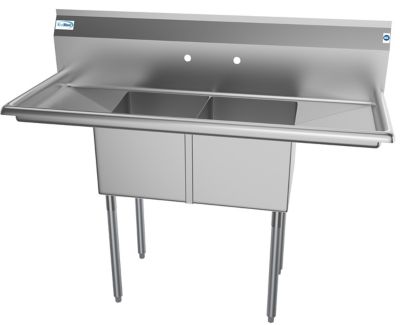
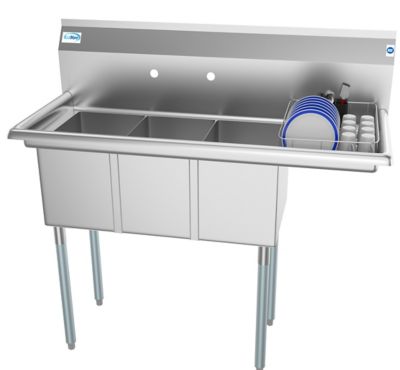
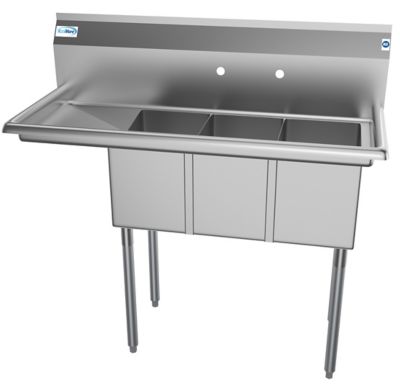
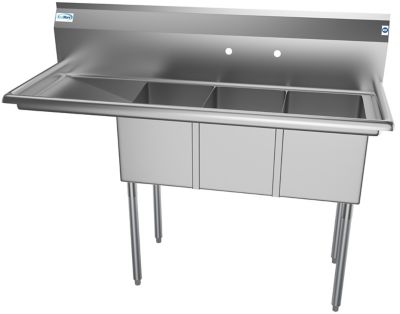
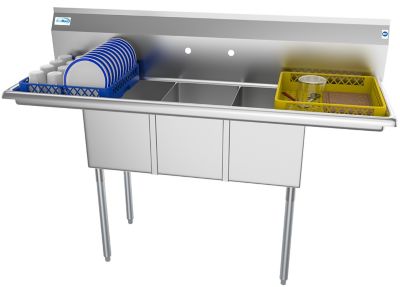
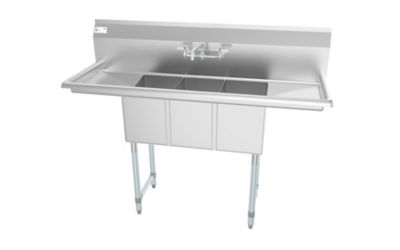
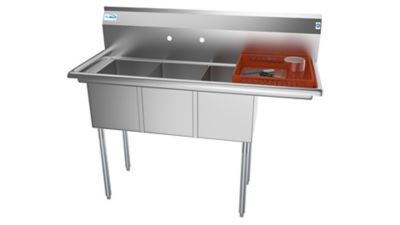
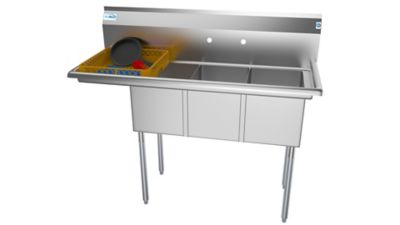
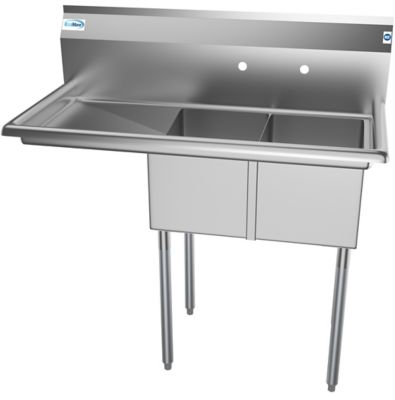
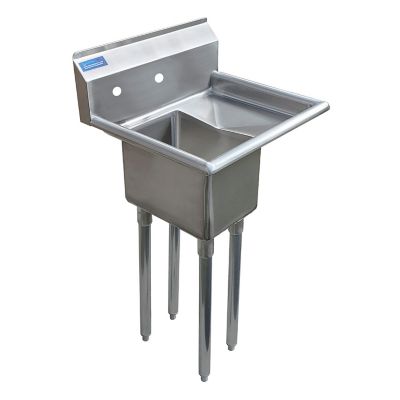
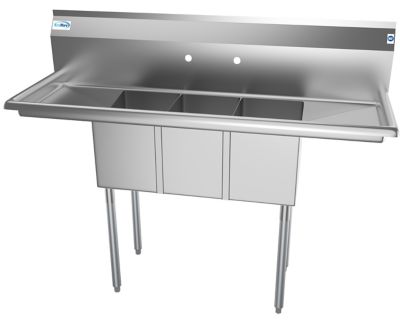
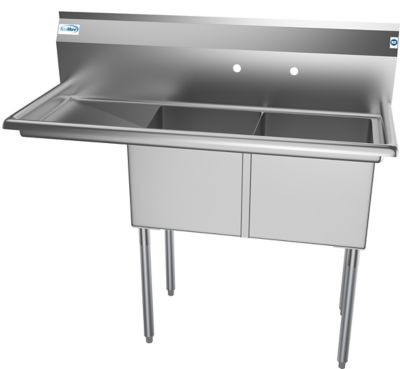
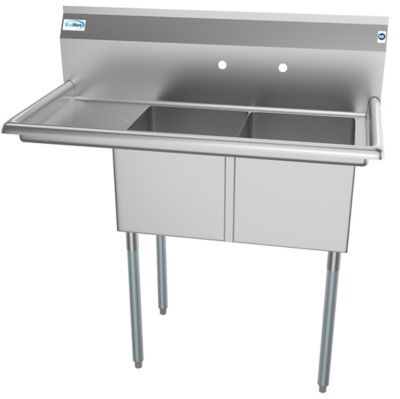
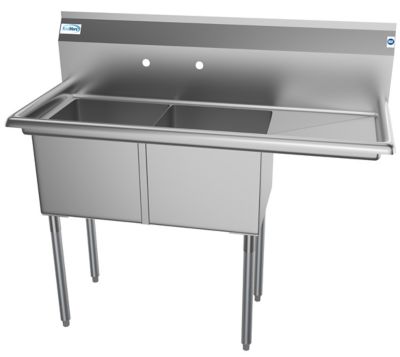
stainless steel commercial sinks with drainboards provide an adjoining surface that can direct runoff toward the basin. Drainboard length and orientation affect the whole setup; a left-side landing area may suit one room, while a right-side surface keeps wet work away from storage in another. Multiple compartments can support separate washing, rinsing, and sanitizing steps, although commercial food operations must meet the applicable health department requirements rather than rely on compartment count alone. Shelving beneath the basin can hold suitable cleaning supplies or empty containers, provided it does not block plumbing access or create an obstacle for feet. Sound-dampening pads or coatings, where included, can soften the clatter of dishes and the hollow ring of running water. These practical construction details help turn a basic wash station into a comfortable part of the workday, with less reaching across a wet counter and fewer drips along the floor.
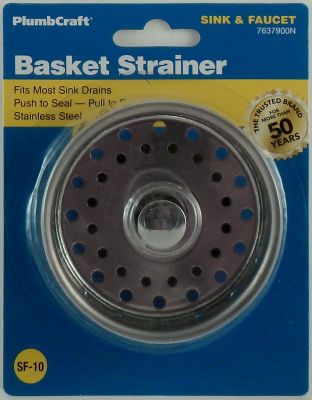
Stainless steel stands up well to regular washing, but it is not scratchproof, dentproof, or immune to corrosion. Thick metal can better resist denting than thinner metal of the same grade and shape, yet dropping a heavy motor part into any basin can leave a mark. Protective bottom grids or suitable mats can reduce direct contact with the basin, though they need regular lifting and cleaning so grit and moisture do not stay trapped underneath. Fine scratches may become part of a working sink’s appearance over time, especially where metal pails and tools slide across the bottom. Everyday care is usually straightforward: mild soap, a soft cloth or nonabrasive sponge, a thorough rinse, and a dry wipe help keep the surface clean. Wiping in the direction of a visible brushed grain helps preserve an even finish. Steel wool, harsh abrasives, and prolonged contact with bleach or other chloride-containing cleaners can damage the surface; cleaner labels and the sink maker’s care directions should govern what goes into the bowl. Plain steel tools left sitting in water can also leave rust stains on stainless steel, so a clean basin is not the place to store wet hardware between jobs. A removable strainer helps catch feed bits, soil, and other solids before they enter the drain, but greasy residue, paint, solvents, and chemical waste require disposal suited to the material rather than a trip down the plumbing. Food-contact tasks need a clean, suitable setup separate from animal waste and chemical cleanup. Around the sink, steady legs, sound seals, and accessible drain connections make small problems easier to spot before they become a puddle beneath the frame. For households with daily chores or workspaces with frequent washups, a well-matched stainless steel sink earns its place through usable bowl space, sensible support, and surfaces that can be cleaned without a fuss. Those everyday details matter long after the first bucket gets filled.