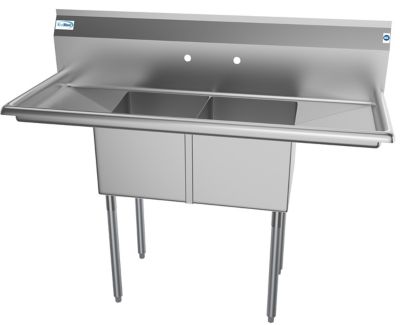
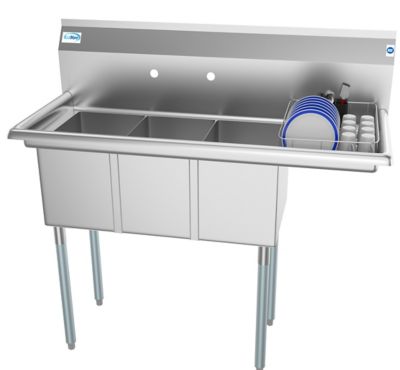
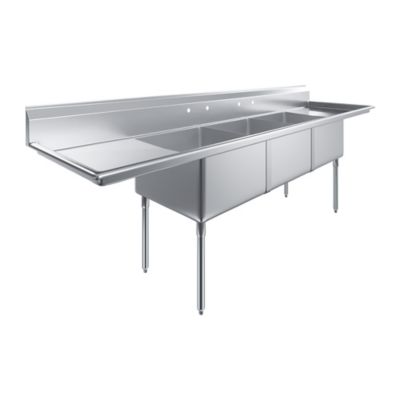
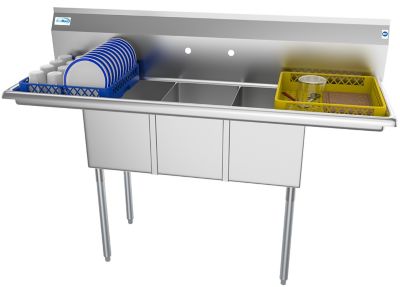
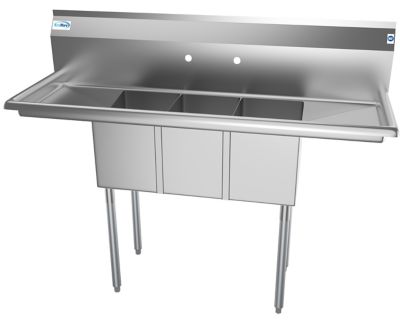
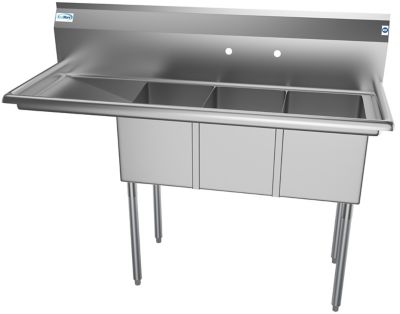
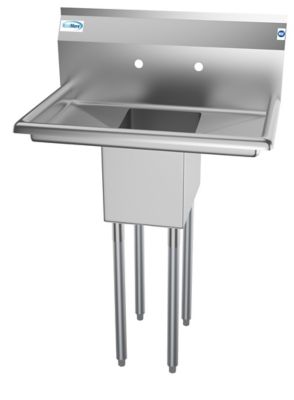
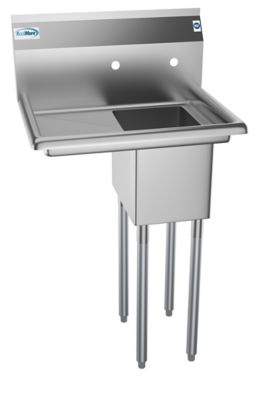
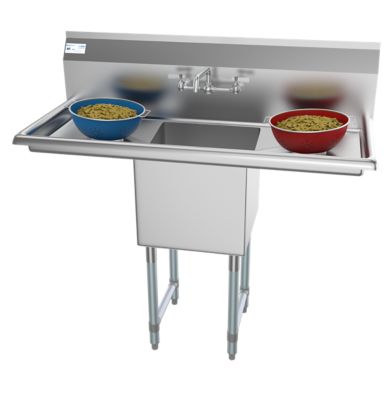
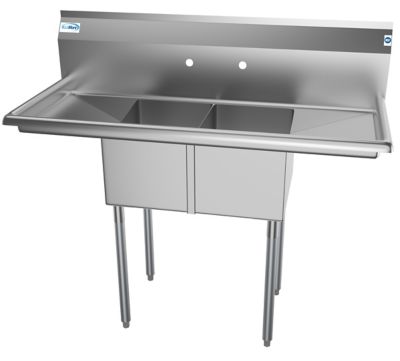
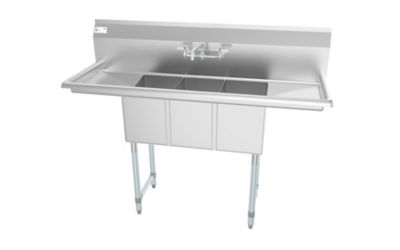
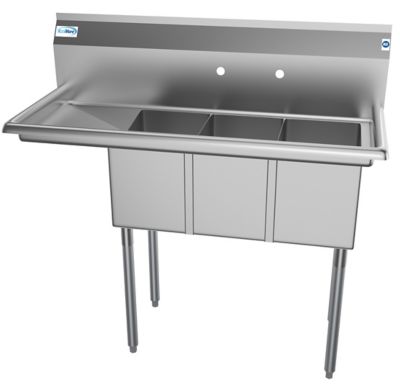
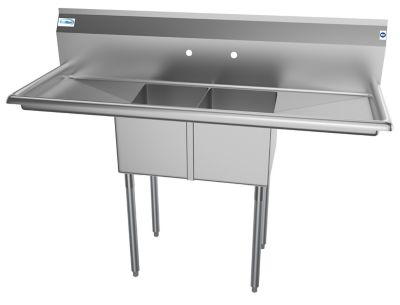
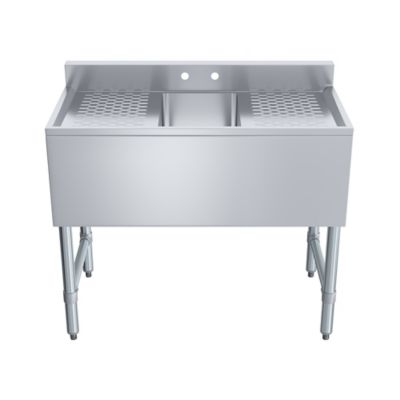
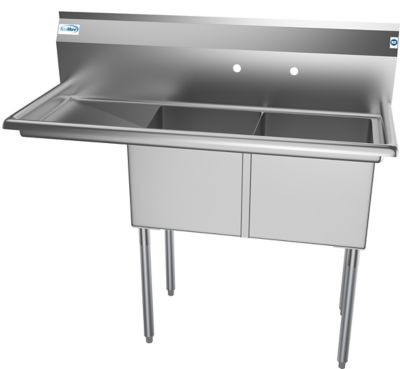
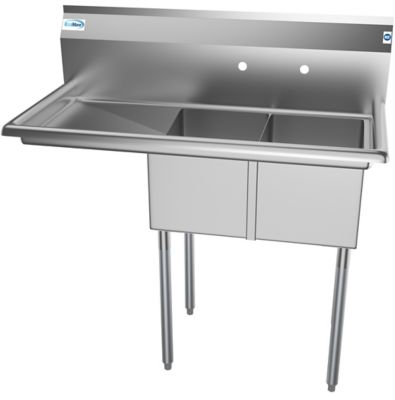
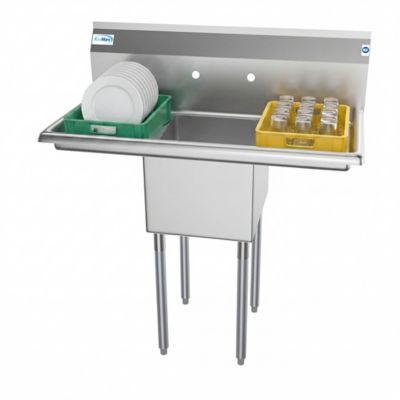
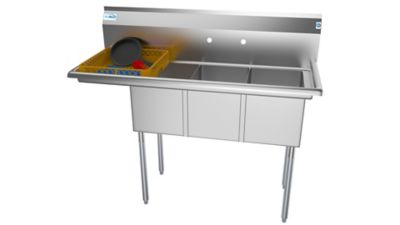
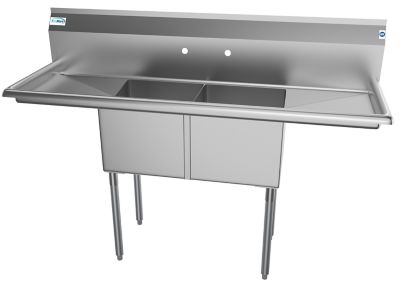
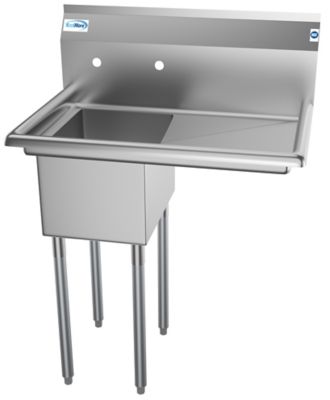
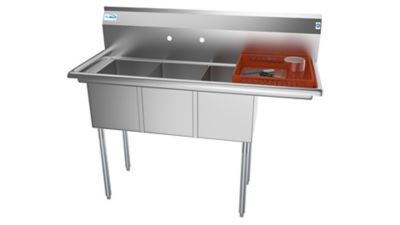
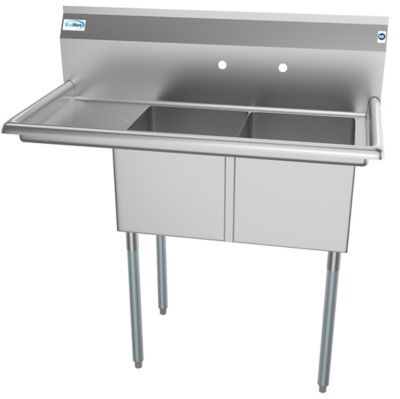
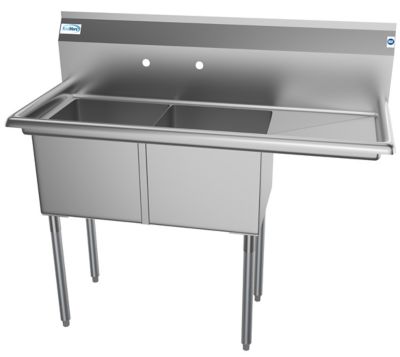
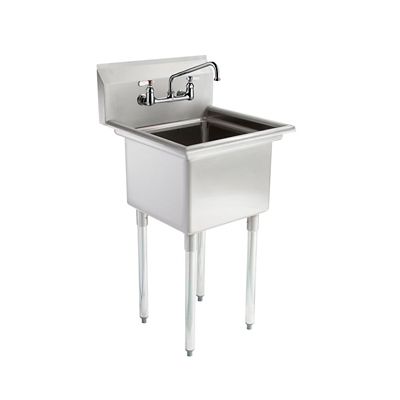
Stainless steel commercial sinks with drainboards bring washing space and a draining surface together in one fixture, helping busy kitchens and workrooms keep wet jobs contained. The basin holds wash water and accommodates dishes, pans, or equipment, while the adjoining drainboard gives rinsed pieces a place to shed water instead of dripping across a counter or floor. Drainboards commonly slope toward the sink, directing runoff back into the bowl. That arrangement makes sense in restaurant kitchens, farm processing rooms, community halls, and other spaces where cleanup involves more than a few coffee cups. Single-compartment sinks provide one open basin for tasks such as washing large pots or cleaning equipment. Two-compartment configurations create separate work areas, while three-compartment sinks can support a wash, rinse, and sanitize process when their size, installation, and operation meet applicable health requirements. A warewashing sink does not automatically take the place of a separate handwashing or food preparation sink. Left-side, right-side, and dual drainboards offer different ways to organize the work area. A board beside the incoming dish area can hold soiled pieces before washing, while a board on the opposite end can provide space for clean pieces to drain. Keeping those areas separate helps prevent dirty cookware from crowding freshly cleaned utensils. For a church supper kitchen handling stockpots and serving trays, that extra landing space can matter as much as the number of bowls. In a smaller prep room, a single drainboard may leave more room for a nearby table or an open walkway. Bowl dimensions also make a practical difference: a deep basin can accommodate tall containers, but a wide roasting pan still needs enough room from side to side. The most useful layout balances basin capacity, draining space, and a comfortable path between the sink and the rest of the work area, rather than simply filling every available inch along a wall.
Stainless steel is a common material for commercial sinks because its smooth, nonporous surface is straightforward to clean and resists corrosion with proper care. Type 304 stainless steel is frequently specified for foodservice equipment and offers corrosion resistance suited to many kitchen tasks, though no stainless steel is immune to damage from harsh chemicals or neglect. Metal gauge describes thickness; when comparing the same material, a lower gauge number means thicker steel. The difference between 16-gauge and 18-gauge construction can affect weight, rigidity, and resistance to dents, but gauge alone does not tell the whole story. Bowl construction, welds, support framing, and the way a drainboard is braced all contribute to how a sink handles a full stockpot or a stack of sheet pans. Rounded interior corners make it easier to reach food residue, and a backsplash helps keep splashes off the wall behind the basin. Edge shapes matter, too, especially where an apron or sleeve brushes the front during a long cleanup session. For shoppers comparing broader sink styles alongside drainboard configurations,
Heavy Duty Stainless Steel Sinks offers another related category to explore. Fit involves more than the overall width shown in a description. The full footprint includes the drainboards, front-to-back depth, backsplash, and room around the fixture for plumbing and cleaning. Bowl depth affects how low a drain outlet sits, which can matter when connecting to an existing waste line. Faucet mounting holes and their spacing need to match the intended faucet, while spout reach should place the water where it is needed without sending it over the rim. Legs, cross-bracing, and adjustable feet contribute to a steady installation, particularly on a floor that is not perfectly level. Support materials may differ from the stainless steel basin, so their suitability for a damp work area matters as well. Faucet, strainer, and drain assembly inclusions vary by configuration; the complete installation may also require separate plumbing components and professional work to meet local requirements.
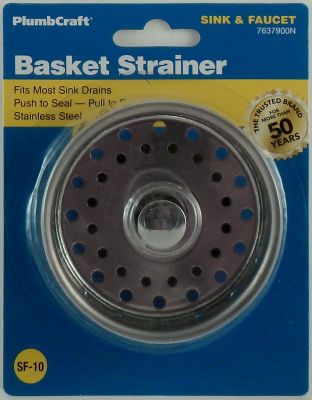
Day-to-day usefulness often comes down to small details that become noticeable once the sink is busy. A drainboard long enough for a tray or dish rack provides more workable space than one that leaves the load hanging over the edge. Raised edges help contain splashes, while clear space beneath and around the sink makes floor cleaning less awkward. A deeper bowl can help contain water when scrubbing a tall bucket, although it also means reaching farther down to lift a heavy pot. Working height, bowl depth, and faucet clearance all affect comfort during repeated washing. These considerations matter in a diner kitchen, a farm stand prep area, or a livestock facility washroom, but each setting has different sanitation needs. Equipment carrying soil or animal waste belongs in a separate cleanup area from food-contact utensils. For regulated foodservice spaces, an applicable sanitation certification, such as NSF certification, can be an important part of equipment selection, but certification alone does not establish that every installation meets local rules. Keeping stainless steel looking good is generally a matter of consistent, simple care. Mild detergent, a soft cloth or nonabrasive pad, and a thorough rinse help remove grease and food residue without scratching the surface. Wiping with the direction of the finish can reduce visible marks, and drying standing water helps limit mineral spots. Chlorine bleach left in contact with stainless steel, harsh cleaners, and ordinary steel wool can damage the surface or contribute to corrosion, so manufacturer care directions matter. Drain strainers help catch scraps before they reach the plumbing, and clear drainboard channels allow runoff to return to the basin. Clean dishes and equipment also need adequate space and airflow to dry rather than sitting in pooled water. With the right proportions and routine care, a stainless steel commercial sink with drainboards gives a hardworking room a defined place for washing, rinsing, draining, and getting ready for the next round of work.