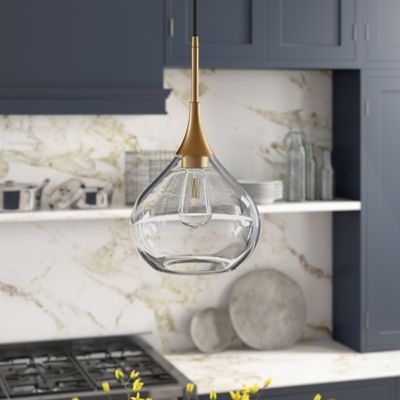
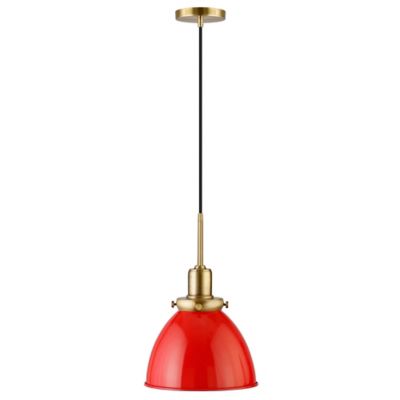
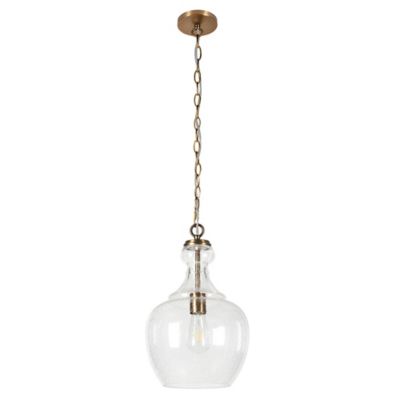
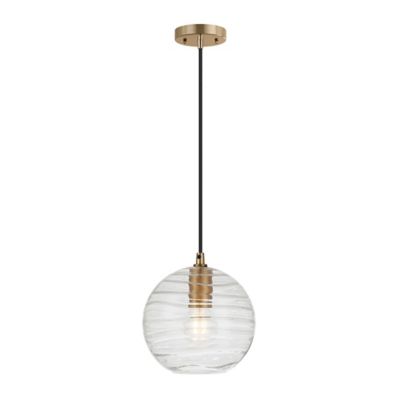
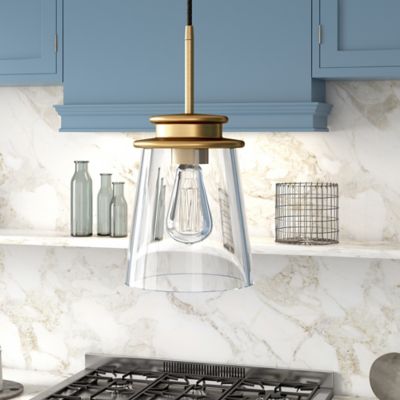
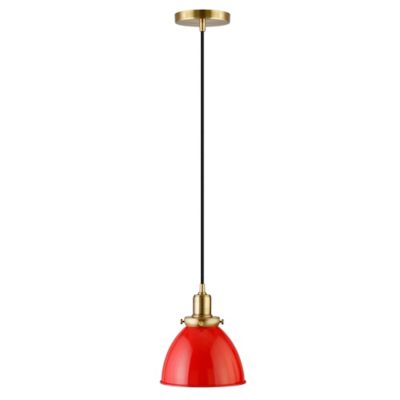
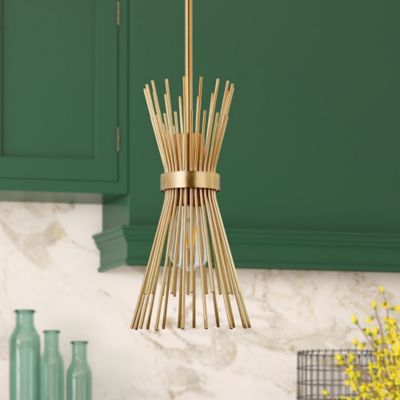
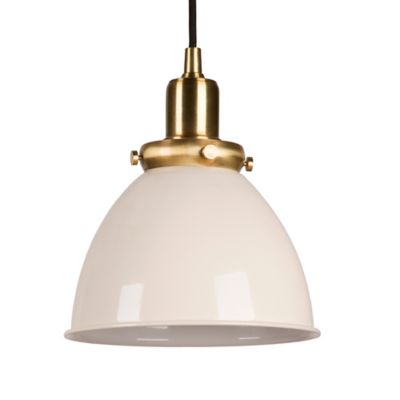
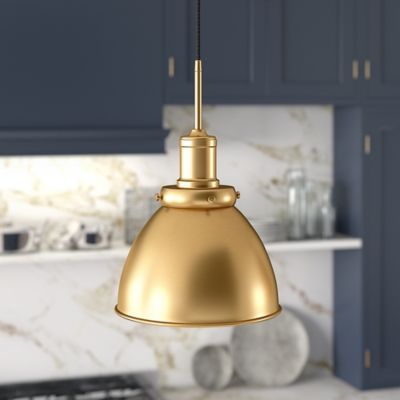
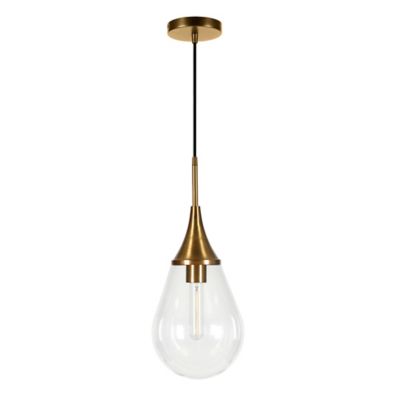
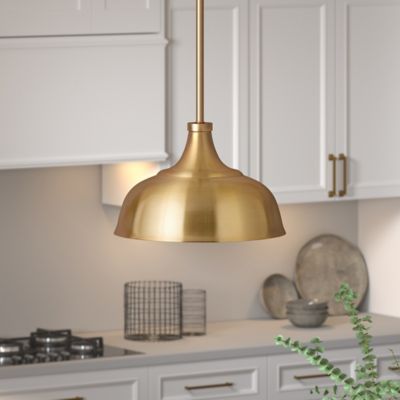
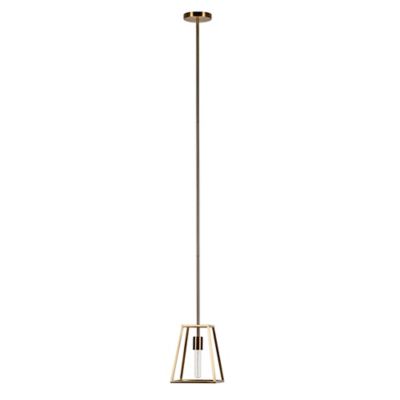
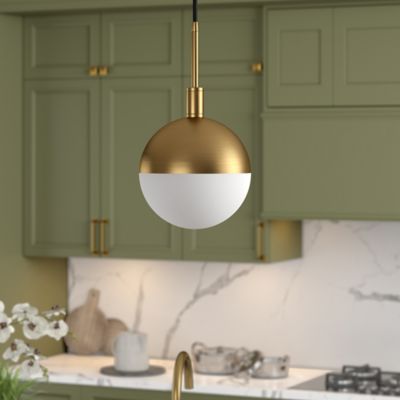
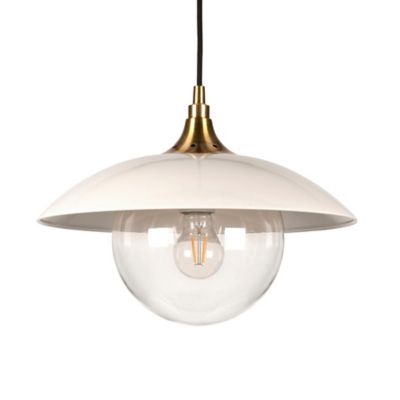
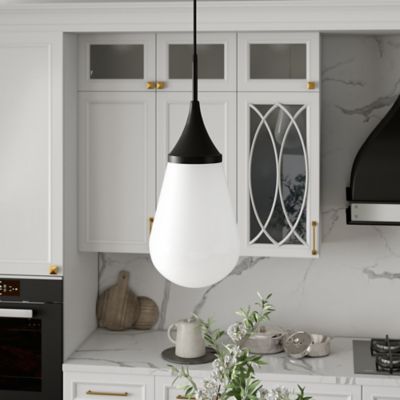
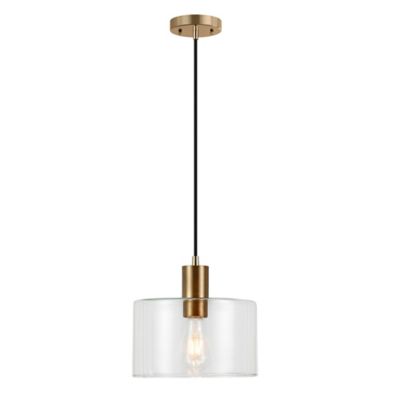
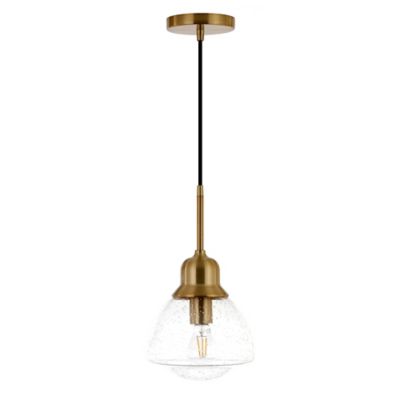
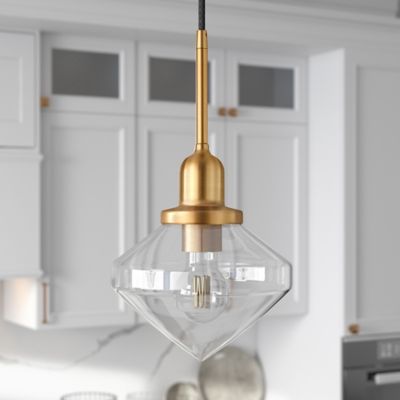
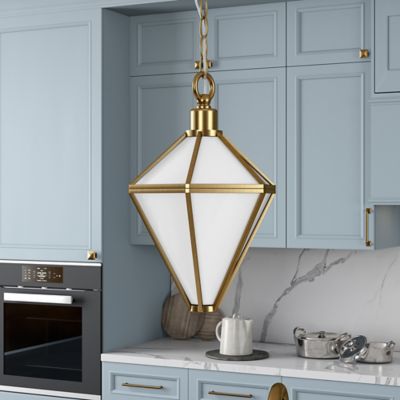
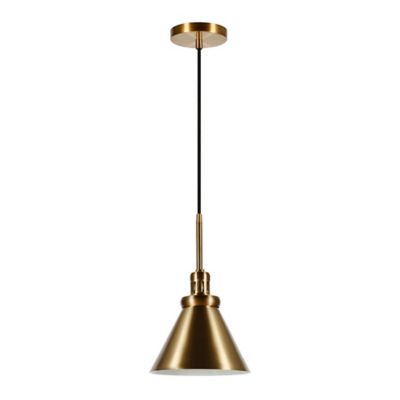
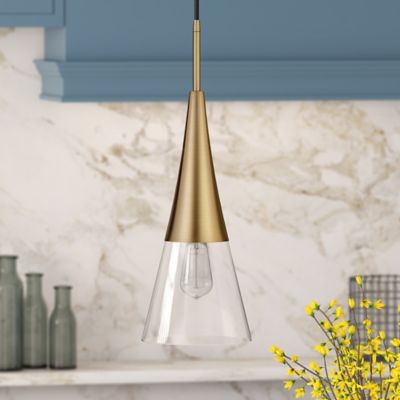
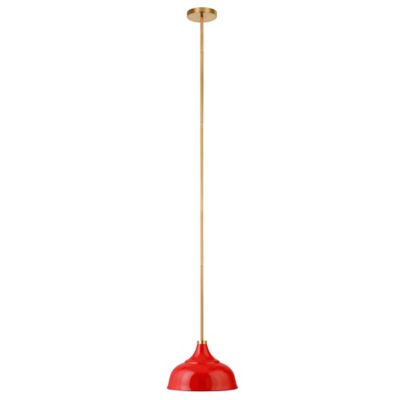
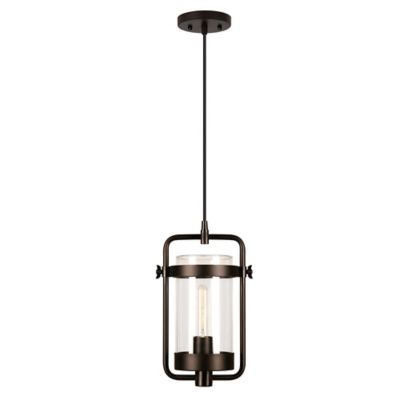
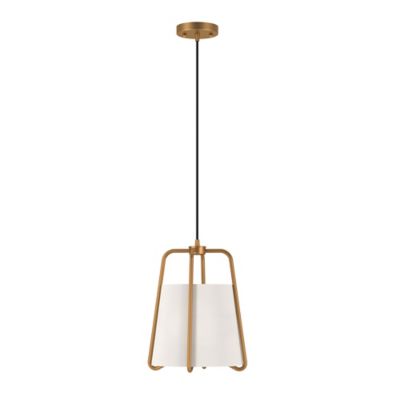
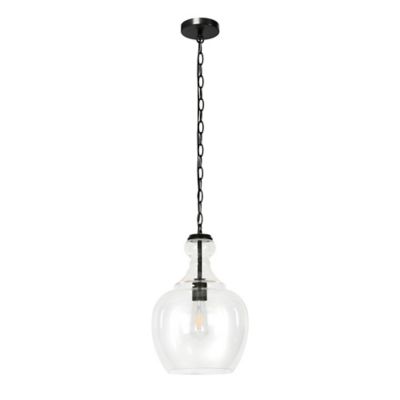
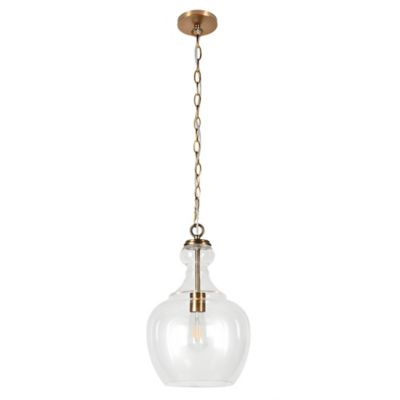
Small brass pendant lights bring a warm metal accent and a focused pool of light to spaces where a large fixture would feel crowded. Over a kitchen sink, beside a reading chair, or above a narrow breakfast counter, their compact size leaves room for the rest of the space to breathe. Brass pairs naturally with the materials found in many country homes: painted cabinets, oak tables, stone countertops, open shelving, and dark iron hardware. A soft brushed finish can sit quietly against wood grain, while a polished surface catches the light and adds a little shine. Aged and satin finishes offer other looks, though finish names can vary, so the description matters more than the name alone. The shade makes just as much difference as the metal. A bell-shaped metal shade generally directs light downward, making it a good fit for a small work surface. Clear glass lets more light spread into the room and keeps the fixture visually light, while frosted or opal glass softens the view of the bulb. An open frame puts more attention on the bulb itself and can cast shadows depending on its shape. These differences help a small pendant feel at home in anything from a tidy farmhouse kitchen to a simple entry with a bench and a row of coat hooks. One pendant can mark a spot for sorting mail or setting down keys; a pair can give a longer counter a balanced look without taking over the ceiling. For a kitchen that already has recessed or overhead lighting, small pendants add a closer layer of light where daily life happens, whether that means packing lunches, reading a recipe, or sharing coffee at the counter. They work best as part of the room’s lighting rather than carrying every task on their own, especially where cabinets or a person standing at the counter can block the light.
The right fit depends on more than shade diameter. Overall height, canopy size, hanging length, and the shape of the space all affect how a small brass pendant looks once it is in place. A narrow shade can still feel substantial if it has a long glass body or a broad ceiling canopy. Above an island or table, the fixture should leave clear sightlines between people sitting and standing nearby. A common starting point is about 30 to 36 inches between a countertop and the bottom of a pendant, with adjustments for ceiling height, shade shape, and glare. Walkways call for more clearance, and a pendant beside a cabinet needs enough room for the door to swing freely. Cord, chain, and downrod suspensions each have a different appearance and different adjustment limits. For a sloped ceiling, compatibility needs to be stated in the fixture specifications rather than assumed. With several pendants, spacing should account for both the width of the shades and how their light falls across the surface below. A row of small lights can look balanced yet still leave dim patches if the beams are too narrow or too far apart. Bulb choice helps shape the result: lumens describe light output, while color temperature affects whether that brass finish looks mellow or crisp. Warm-white light often suits wood cabinets and gathering spaces, but matching nearby lights keeps the room from looking patchy. Clear shades also make bulb shape and brightness more noticeable, especially at seated eye level. Dimming can make the same counter comfortable for food prep and a quiet supper, provided the fixture, bulb, and dimmer work together. Brass does not have to match every handle and faucet exactly; repeating a finish elsewhere can help mixed metals feel intentional. For a deeper brown metal tone over the main work surface,
Bronze Kitchen Island Pendant Lights offer a related look worth considering alongside brass accents.
Materials and construction deserve a close look because a brass-colored pendant is not necessarily solid brass. Some fixtures have brass components, while others have a brass finish over steel, aluminum, or another base material. Plated, painted, lacquered, and unlacquered surfaces can require different care and may change differently over time. Unlacquered brass can develop a patina through contact with air and handling; a protected finish is generally intended to hold its original appearance longer. Neither look suits every household, so it helps to decide whether a changing surface or a more consistent finish fits the room. Glass adds another practical consideration. Smooth, open shades tend to be easier to wipe than deeply ribbed glass or enclosed shapes with narrow openings, and kitchen fixtures may collect cooking residue along with dust. Care usually starts with switching off the power, letting the fixture cool, and following the maker’s cleaning directions. A soft cloth is often the safest starting point; metal polish or abrasive cleaners can damage coatings even when the surface looks like bare brass. Shade removal and bulb access matter, too, particularly above a deep sink or a wide counter where reaching the fixture is awkward. Electrical details should suit the location as well as the look. Socket type, maximum wattage, fixture weight, and the required mounting method belong on the checklist before installation. Hardwired pendants need proper electrical connections and secure support, with installation handled by a qualified electrician when needed. A bathroom or another moisture-prone location calls for the appropriate location rating; a brass finish by itself provides no assurance of moisture protection. For homeowners refreshing a breakfast nook, folks finishing a small cabin kitchen, or anyone making better use of a narrow counter, these compact fixtures combine a useful lighting role with an easygoing metal accent. The strongest choice is one that puts light where it belongs, leaves comfortable room around it, and stays manageable to clean and maintain through everyday life.