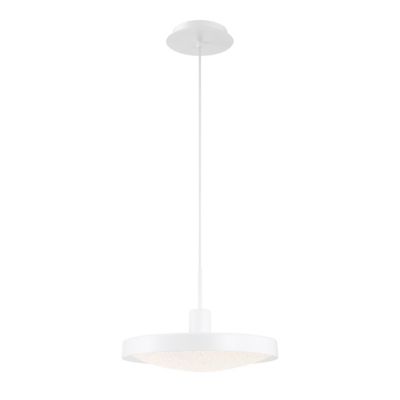
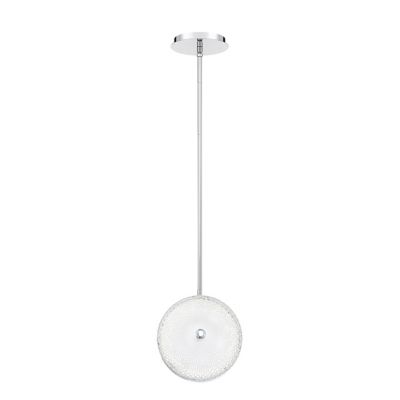
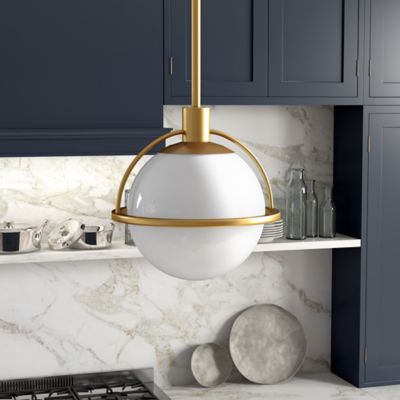
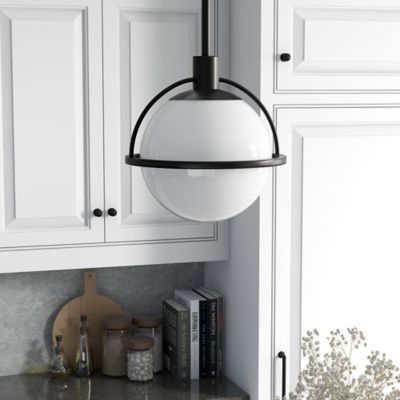
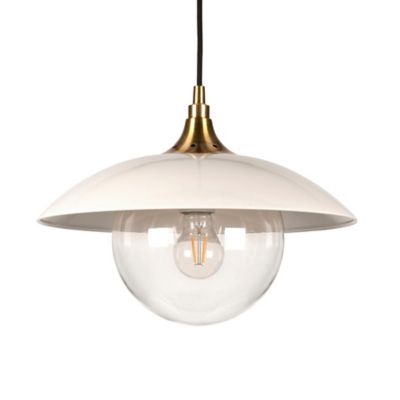
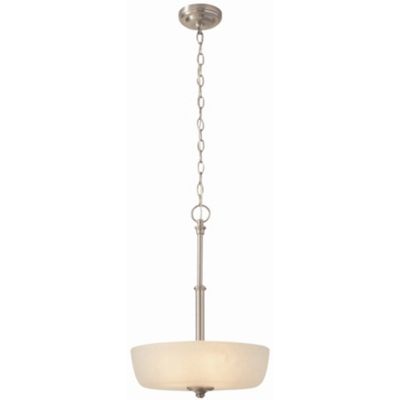
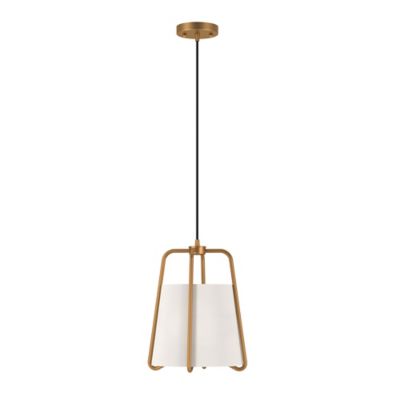
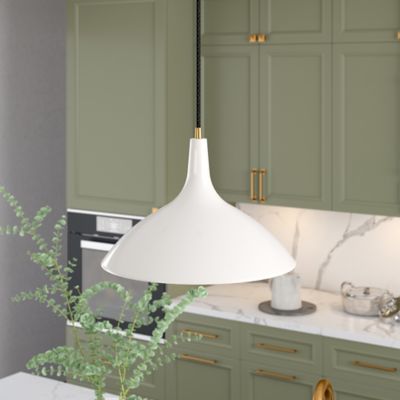
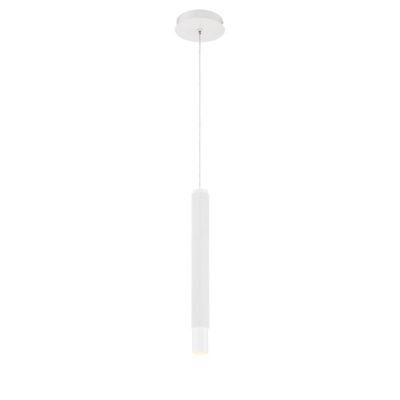
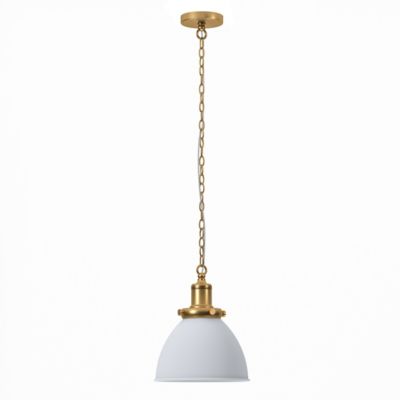
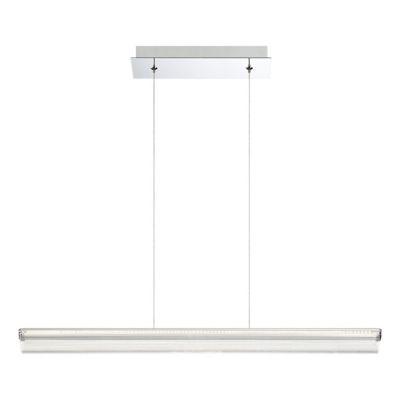
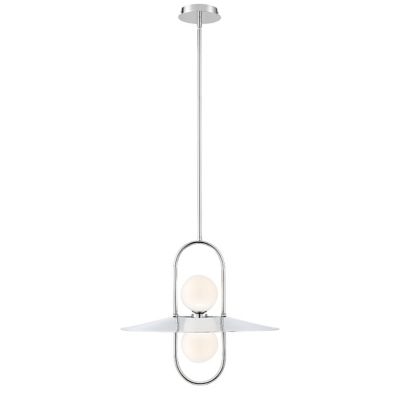
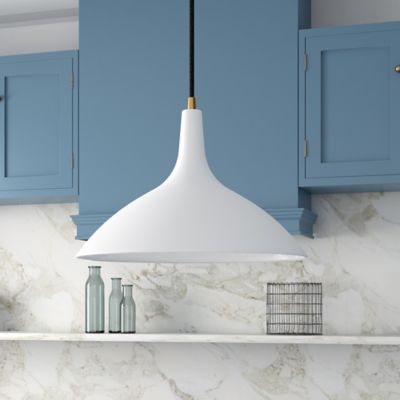
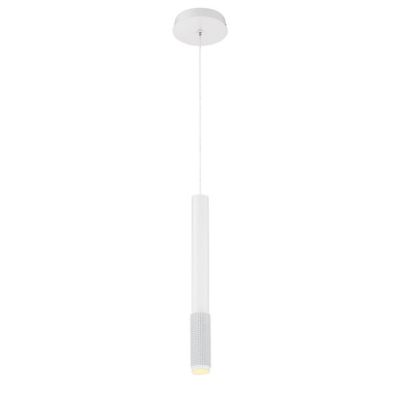
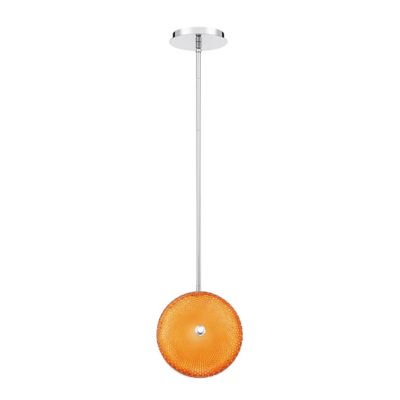
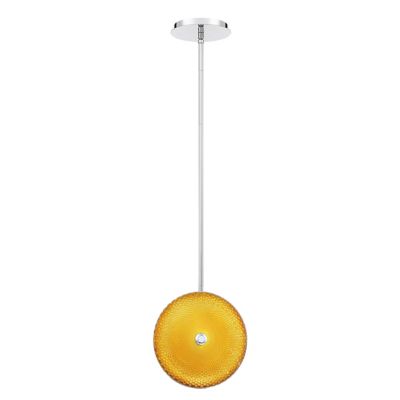
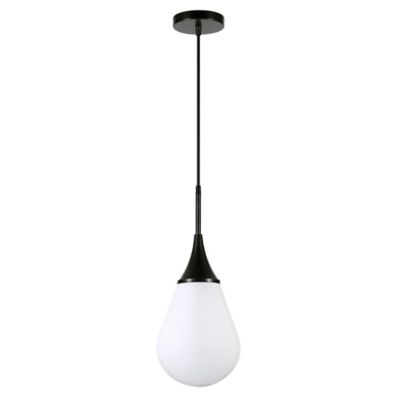
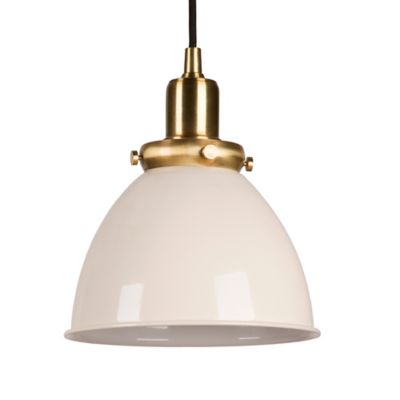
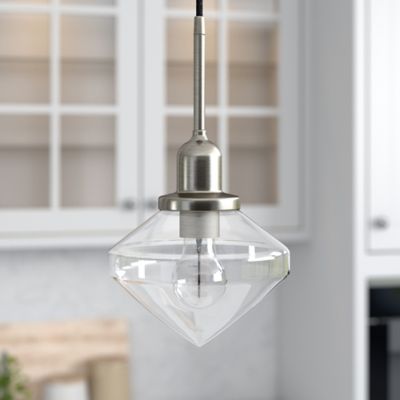
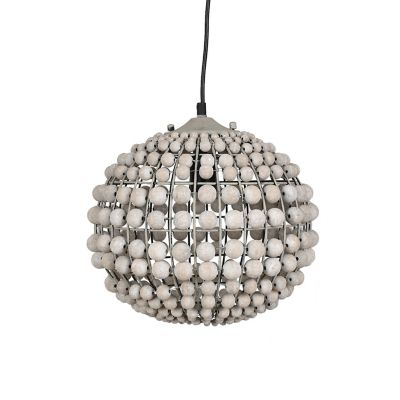
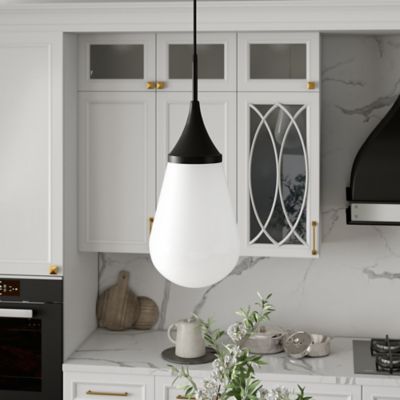
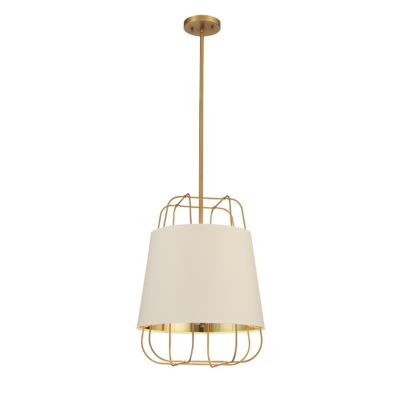
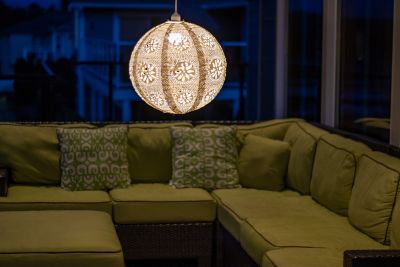
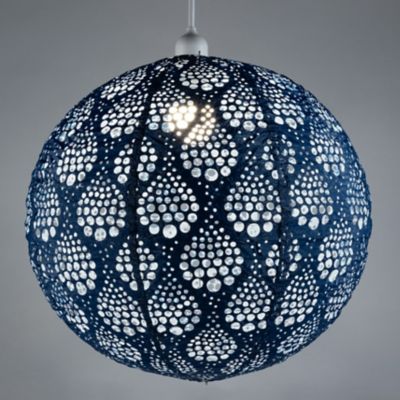
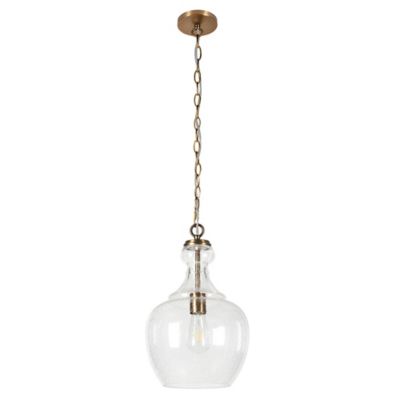
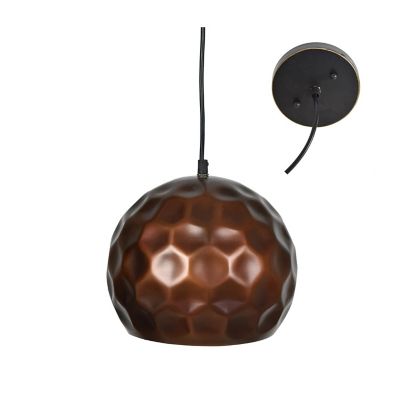
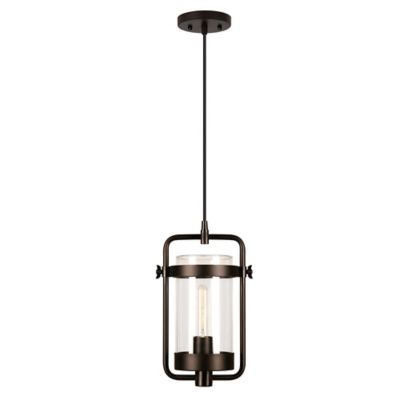
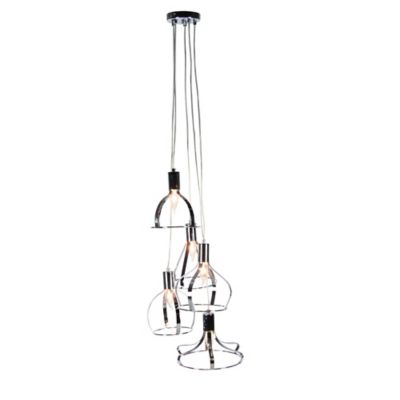
White hanging pendant lights are ceiling-mounted fixtures that suspend a light source from a cord, chain, or rod, bringing focused or softly spread illumination to kitchens, dining areas, entryways, and other indoor spaces. Their light-colored finish works comfortably alongside wood cabinets, painted beadboard, stone counters, and metal hardware, making them an easy fit for a farmhouse kitchen or a more pared-back room. A white shade can keep the space above a busy work surface looking open, while its shape gives the room a clear focal point. Broad dome shades tend to direct light downward, which suits a kitchen island where bread dough gets rolled out and grocery bags get unpacked. Globe shapes and translucent shades can spread light more broadly, depending on their construction and bulb placement. An opaque shade usually puts more emphasis on the surface below, while a diffuser can soften the view of the light source. Those differences matter at a dining table, where comfortable faces and a welcoming glow count just as much as seeing what is on the plate. White is not always the same shade from one fixture to another, either. A crisp white can sit neatly beside bright cabinetry, while an ivory or soft white may blend more easily with cream paint and natural wood. Matte finishes have a quieter appearance; glossy surfaces catch reflections and can feel a little livelier. The hanging hardware adds another layer, whether it blends into the shade or provides contrast through a darker chain, cord, or metal fitting. For homeowners refreshing a breakfast nook, finishing a family gathering space, or adding light above a hardworking counter, the appeal is straightforward: useful overhead light with a clean look that does not compete with everything else in the room. Even when the surrounding finishes change, a simple white pendant can remain an easy part of the space.
Size and placement have a big say in how white pendant lighting looks and feels once it is installed. A small shade may suit a narrow counter or compact entry, while a broader fixture can hold its own above a substantial dining table. Several pendants arranged over an island create a different effect from one large fixture: the repeated shapes establish a rhythm, and their light can reach separate parts of the work surface. The number of fixtures depends on shade width, island length, and the way each light spreads, rather than a fixed rule that every island needs the same arrangement. Enough room between shades helps prevent a crowded look, and keeping the fixtures within the working footprint can make the layout feel balanced. Above a table or island, about 30 to 36 inches between the surface and the bottom of the fixture is a common starting point for a room with an 8-foot ceiling. Taller ceilings, deep shades, and household sightlines can call for adjustments. A pendant should not block conversation across the table or hang where someone is likely to bump it while leaning over a counter. In a walkway, head clearance becomes the bigger concern. Adjustable cords, chains, or rods provide different ways to set the drop, and sloped ceilings may call for a canopy or adapter designed for that angle. Light output matters as much as the outline of the shade. Lumens describe brightness, while color temperature describes whether the light appears warm or more neutral. Bulbs around 2700K to 3000K generally create a warm setting for meals and conversation; higher color temperatures can give a work area a more neutral appearance. A white shade alone does not determine either characteristic. Shade opacity, bulb position, and the presence of a diffuser all influence the result. Dimming can help the same pendant serve meal preparation and supper, provided the bulb, fixture, and dimmer are compatible. Pendants also work alongside recessed lights, under-cabinet lighting, or wall fixtures rather than carrying every lighting task on their own.
Materials and construction affect both the appearance of a white hanging pendant and the attention it needs over time. Painted or powder-coated metal shades bring a solid, practical look that pairs naturally with wood and hardworking kitchen surfaces. Glass can range from clear to frosted or opaque, with each treatment changing how much of the bulb is visible and how the light travels. Ceramic shades add visual weight and texture, while fabric shades create a softer appearance that generally belongs away from cooking grease and splashing water. Finish condition matters in busy rooms: chips, scratches, and residue are easier to notice on some white surfaces than others, especially where strong light falls across them. Routine care is usually simplest when dust is removed before it mixes with airborne grease. A soft cloth and the cleaning method specified by the manufacturer help protect the finish; abrasive pads and harsh cleaners can damage coatings or leave marks. Glass components may need a different cleaning approach from painted metal, and removable parts should be handled according to their instructions. Power should be off and bulbs cool before cleaning begins. For households comparing lighting technology,
Hanging LED Pendant Lights bring the suspended profile together with LED illumination. Replaceable LED bulbs make future bulb changes straightforward when the socket and enclosure support them, while integrated LED fixtures have a built-in light source whose service options depend on the design. Socket type, maximum wattage, bulb dimensions, and enclosed-fixture ratings all deserve attention before installation. Location ratings matter, too: a fixture intended for a dry interior is not automatically suitable for a damp porch or a spot exposed to water. Hardwired installation calls for proper electrical connections, suitable ceiling support, and a qualified electrician when needed. Taken together, these details help white hanging pendant lights feel at home in everyday spaces, from the table where bills get sorted to the island where everyone gathers before supper.