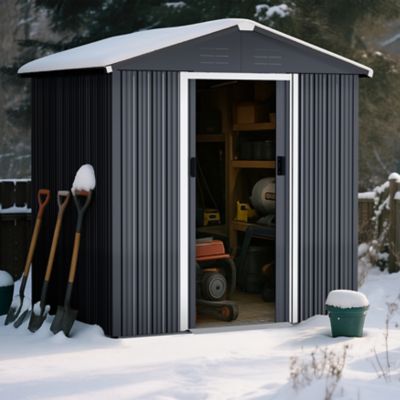
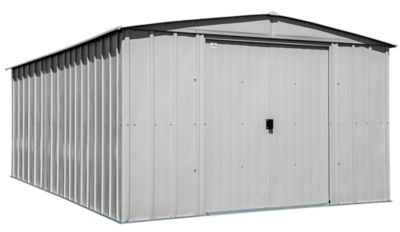
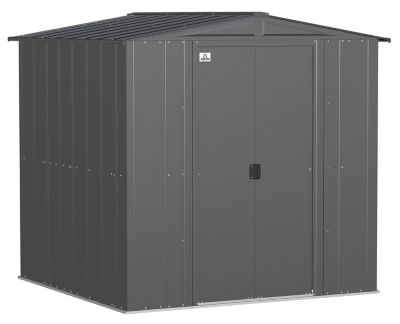
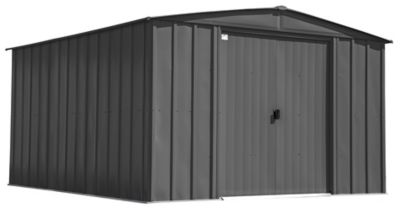
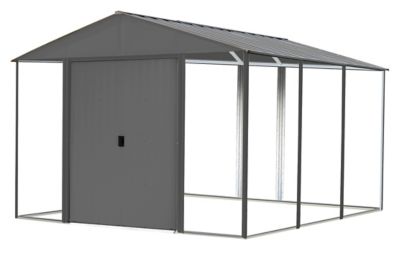
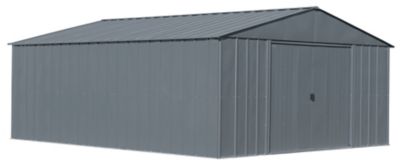
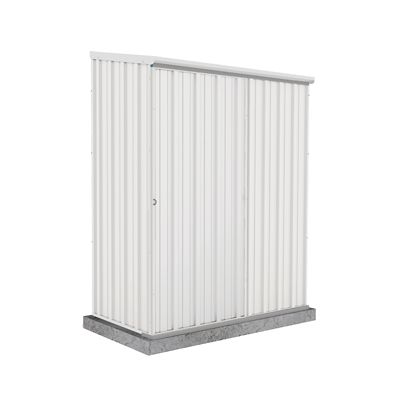
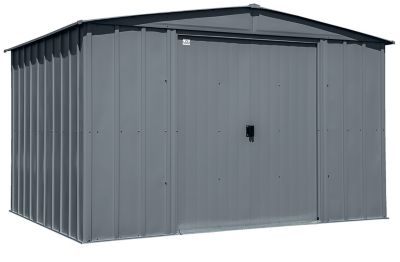
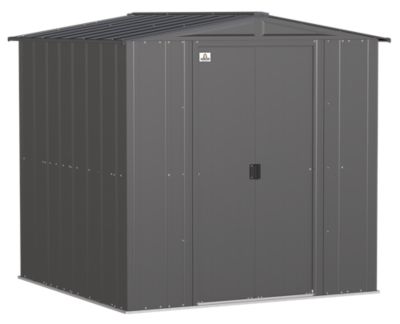
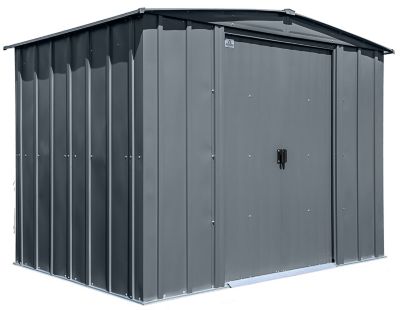
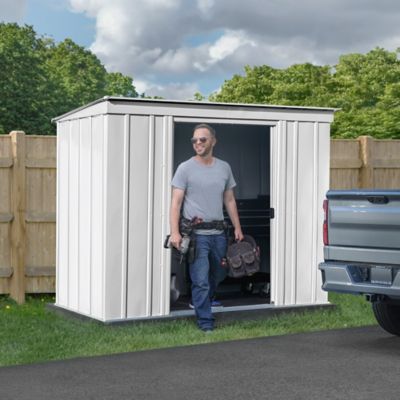
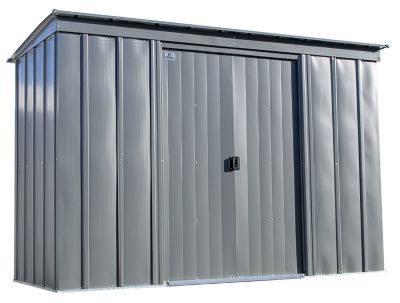
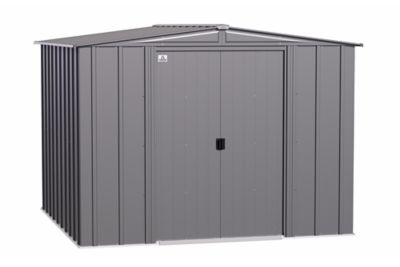
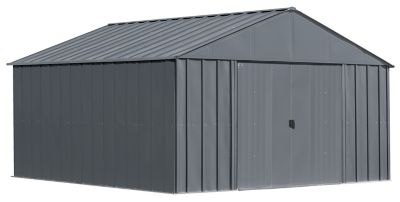
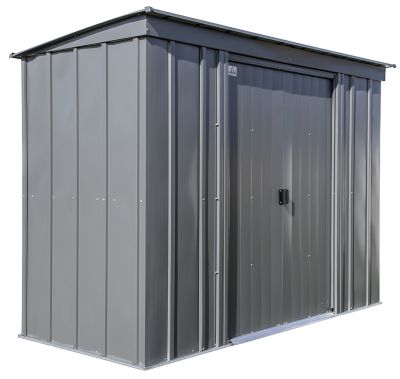
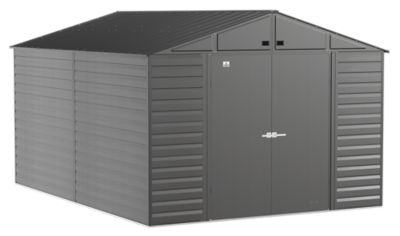
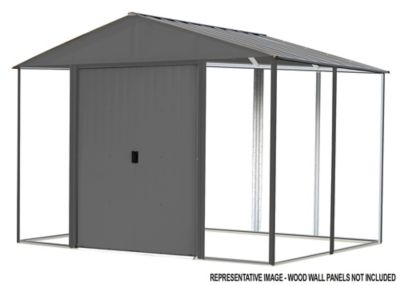
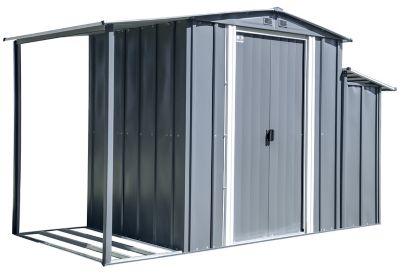
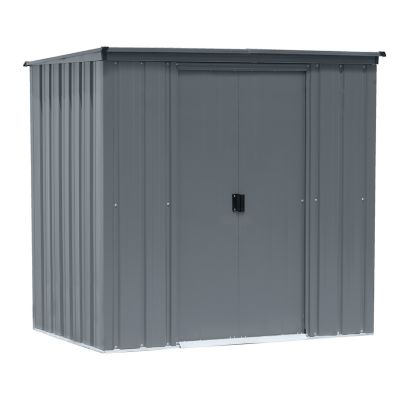
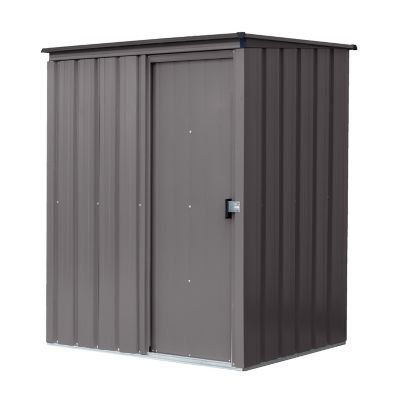
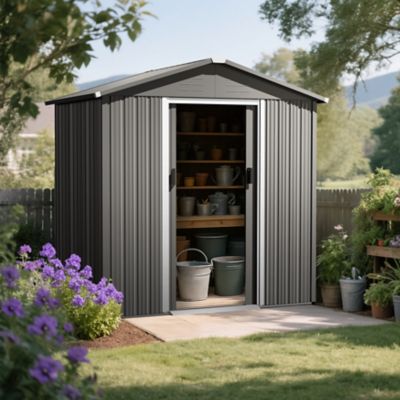
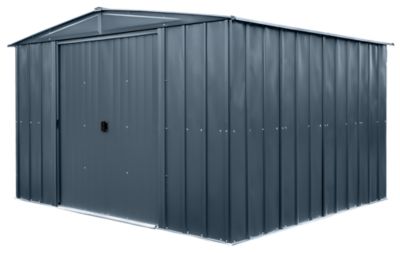
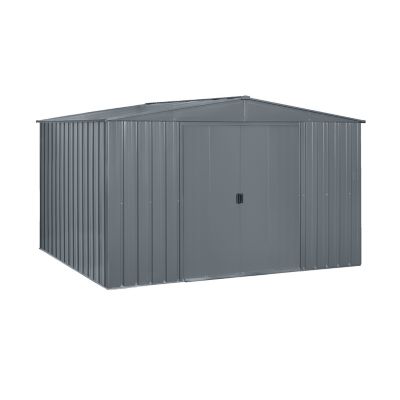
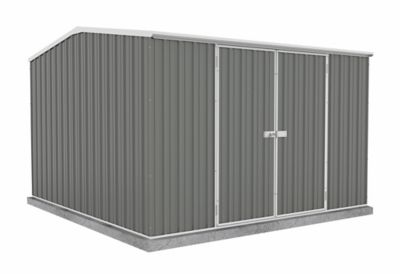
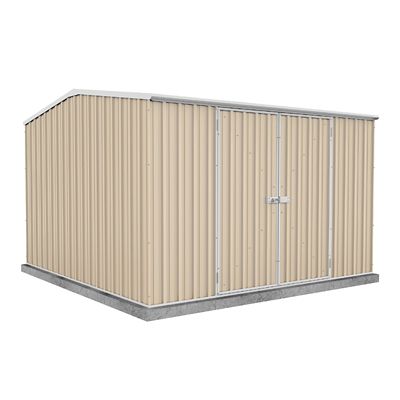
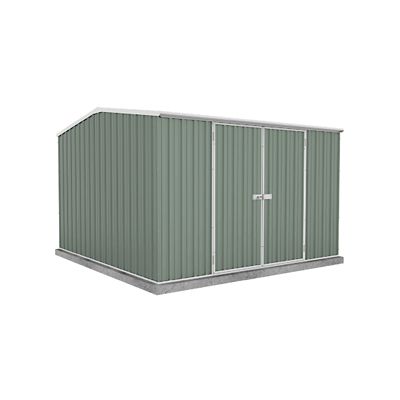
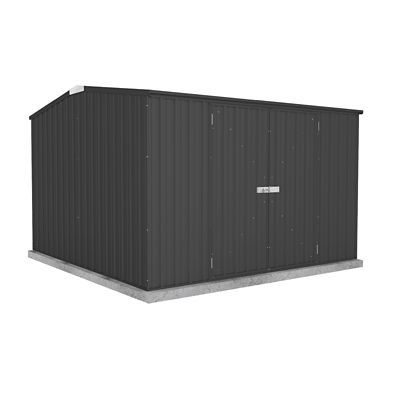
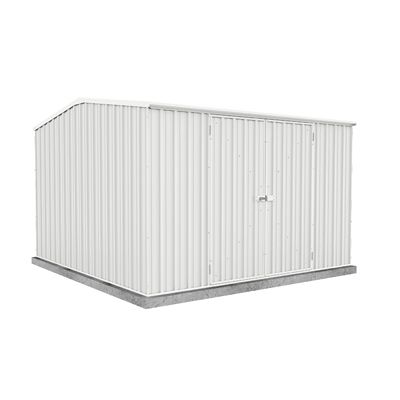
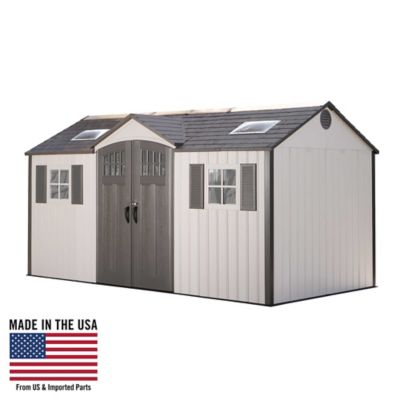
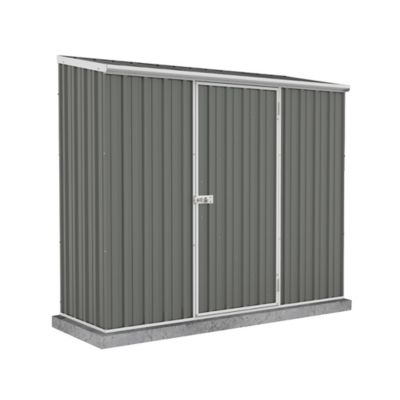
Sliding door garden sheds provide enclosed storage for yard and garden equipment without needing the outward door-swing clearance of a hinged shed. Their doors travel along tracks, making them a practical fit beside a fence, along a narrow side yard, or near a patio where every foot of open space counts. That space-saving design can leave more room for a walkway, a wheelbarrow, or the turn needed to bring a mower around a corner. The appeal of
sliding doors is especially clear when a shed sits close to another structure: access does not depend on having room to swing a door out in front. The panels still need room to travel along their tracks, and the doorway needs a clear approach. Overall shed width and depth tell only part of the story. The clear opening with the doors fully open determines whether a mower handle, garden cart, or wide piece of equipment can pass through comfortably. Some door arrangements expose most of the entrance, while overlapping panels may leave a smaller usable opening than the full width of the shed front suggests. Interior height matters, too, particularly for long-handled tools, upright shelving, and equipment with tall handles. A compact shed can suit a gardener with rakes, shovels, hand tools, and a few bags of planting supplies, while a larger footprint gives a homeowner or small-acreage caretaker room to separate equipment from everyday yard gear. Space to reach the back wall without unloading half the shed makes a real difference. The most useful layout balances the size of what goes inside with the room needed to lift, turn, park, and retrieve it. A low threshold may make wheeled equipment easier to move, while any raised sill or floor edge deserves consideration when comparing access.
Materials shape how a sliding door garden shed looks, feels, and holds up through everyday use. Metal construction, including galvanized steel where specified, can provide a firm enclosure with a straightforward appearance that fits alongside a garage, workshop, or utility area. Protective finishes help limit corrosion, though scratches, exposed edges, and the condition of fasteners remain worth watching. Resin sheds offer surfaces that generally need little more than cleaning, with construction details varying by model; wall reinforcement, floor support, and the way shelves attach can matter more than appearance alone. Wood brings a familiar outbuilding look and may allow painting or staining when the manufacturer permits it, but it also calls for attention to finish condition and separation from ground moisture. No material removes the need for a sound base. A level, properly supported foundation helps the frame stay square and the door panels line up with their tracks. Even a sturdy shed can develop awkward door movement if the base settles unevenly or the frame twists during assembly. Floor construction is another important distinction: some sheds include a floor, while others require a separate foundation or flooring system. The support beneath a parked mower or loaded storage rack should match the shed’s stated requirements, rather than relying on size alone. Interior space also depends on wall shape, roof framing, and reinforcement that may project into the storage area. Ventilation can help manage trapped moisture, especially when damp tools or equipment go inside, but vents are not a substitute for storing gear clean and allowing it to dry. Roof connections, wall joints, and door overlap deserve a close look because the enclosure works as a complete system. For gardeners who spend more time working the beds than tending buildings, the right material is the one whose care requirements fit comfortably into an ordinary property-maintenance routine.
Day-to-day convenience often comes down to the smaller details of sliding door garden sheds. Handles that are easy to grip, a latch that lines up without forcing the panels, and tracks that remain accessible for cleaning all make repeated trips less of a chore. Track arrangements differ: some systems carry the door from above, while others depend more heavily on lower rollers or guides. Soil, grass clippings, and stray gravel can interfere with movement, so accessible tracks are a useful feature around a working yard. Door hardware benefits from care that follows the manufacturer’s directions, including any guidance about adjustment or lubrication. A lockable handle or hasp can help control access, although the protection offered depends on the whole shed, its hardware, and its installation. Inside, organization works best when it respects the structure’s limits. Wall hooks and shelving need approved attachment points and suitable load ratings; thin panels alone may not support a row of heavy tools. Keeping rakes and shovels upright frees floor space, while placing heavier supplies low can make them easier to handle. A clear center aisle helps when a wheelbarrow rolls in with a little soil still on its tire or a mower needs parking after a long stretch of yardwork. Separate storage requirements still apply to fuels, chemicals, batteries, and other materials with specific safety directions. Placement deserves the same attention as the interior layout. Property-line setbacks, utility access, local building requirements, and manufacturer anchoring instructions can affect where a shed belongs and how it is installed. A firm approach and enough room to turn equipment into the doorway help preserve the advantage of the sliding entrance. For a busy household, a dedicated gardener, or someone keeping a small property in order, a well-matched shed puts the everyday tools close at hand without giving up extra yard space to an open door.