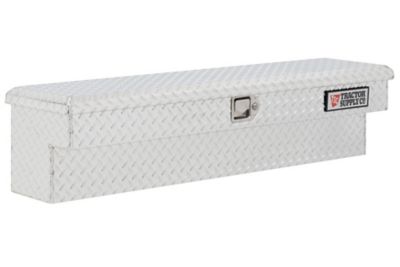
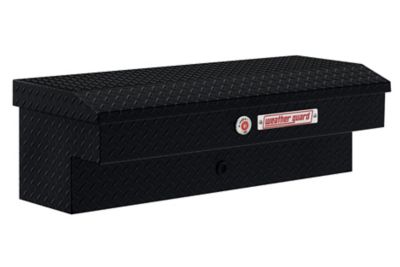
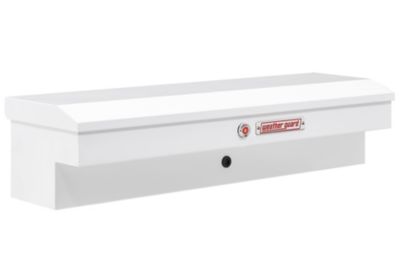
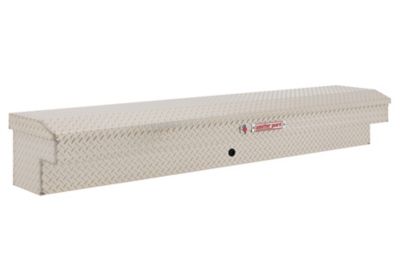
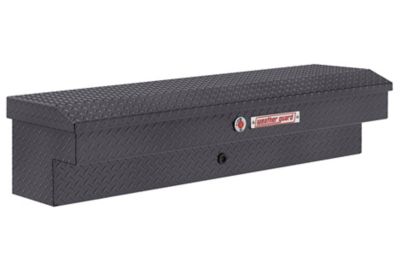
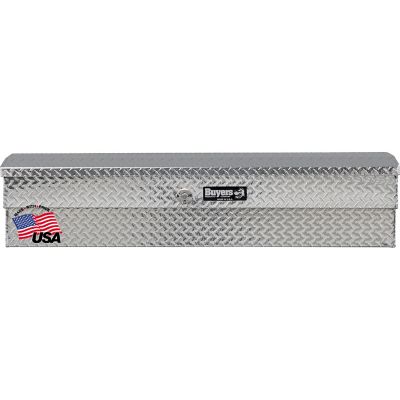
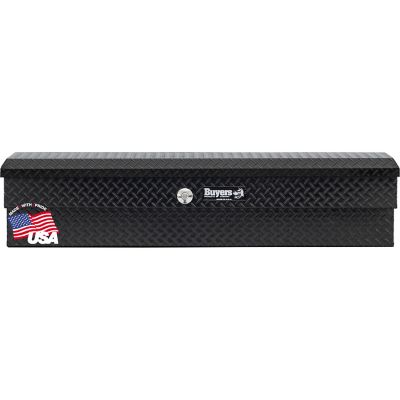
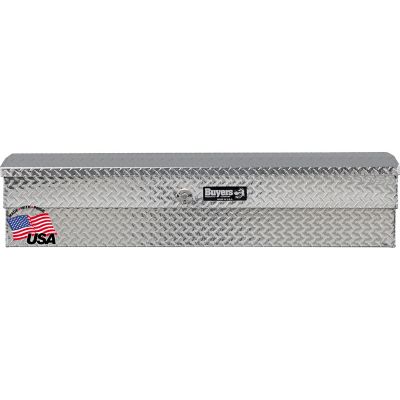
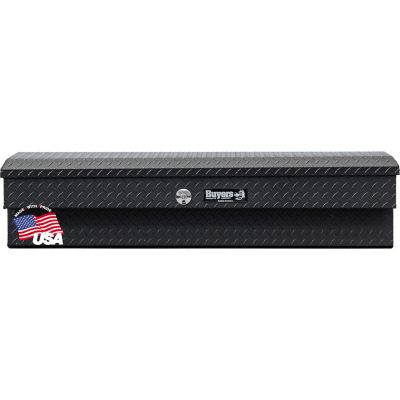
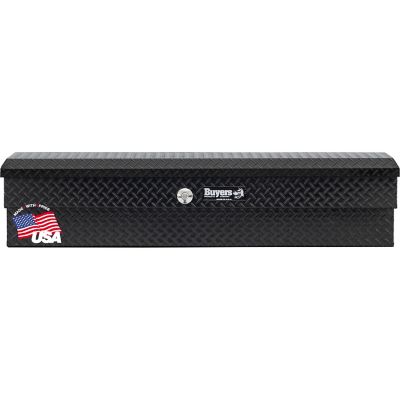
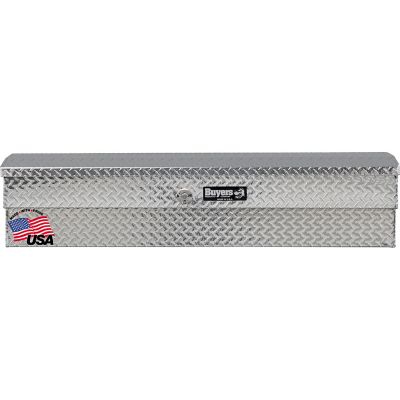
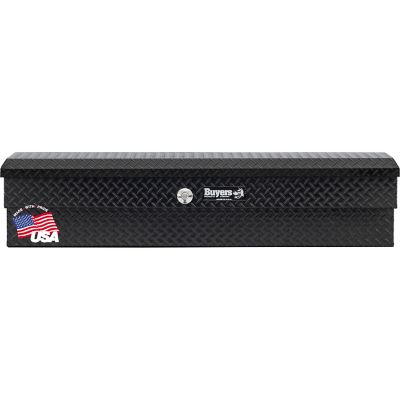
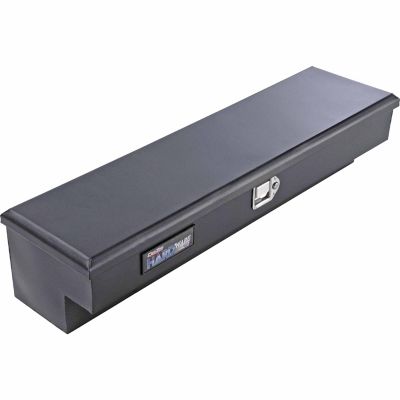
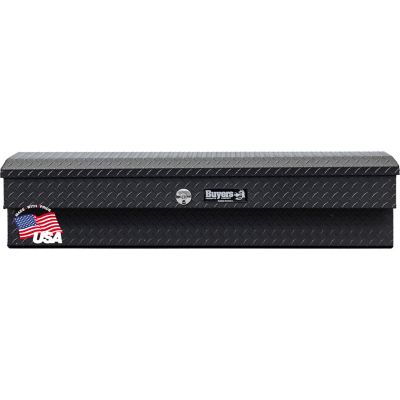
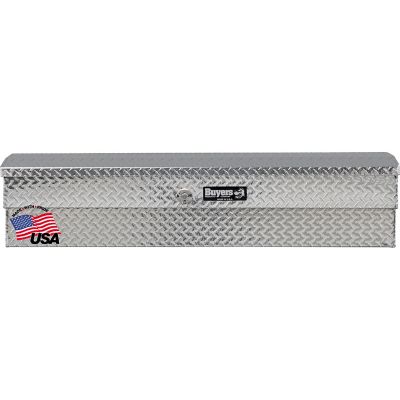
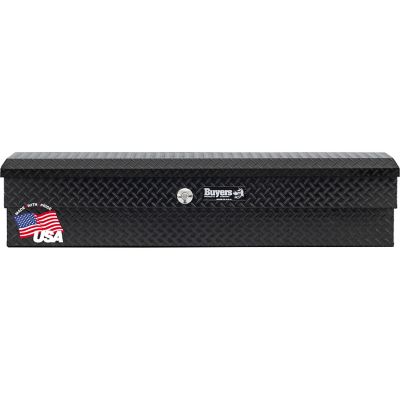
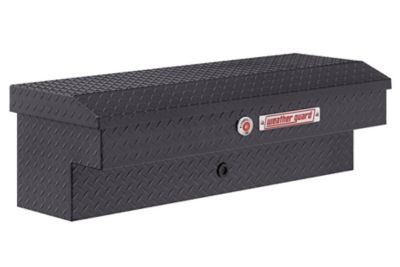
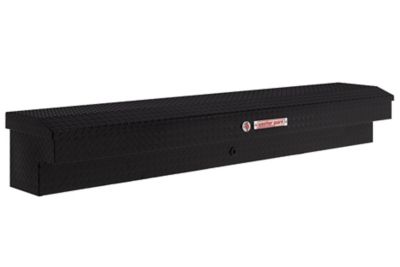
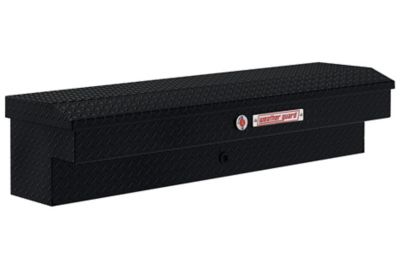
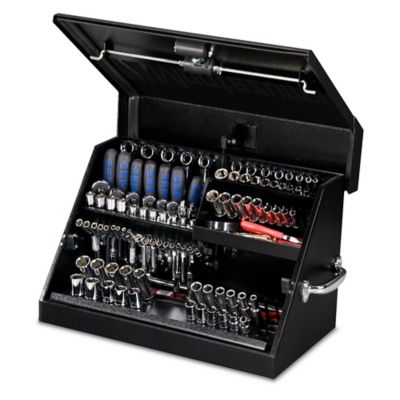
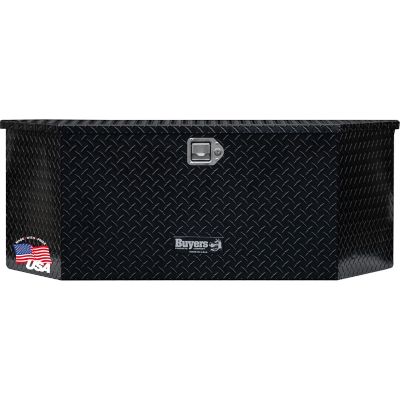
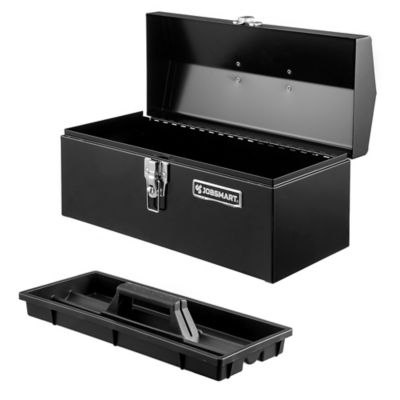
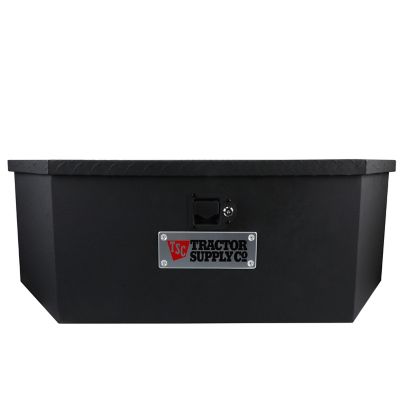
A side mount tool box is a truck storage box that mounts along a pickup’s bed rail, keeping tools accessible from the side while helping leave the center of the bed clear for larger cargo. Unlike a crossover box that spans the bed behind the cab, a side-mounted box runs lengthwise along one side. Low-profile versions are often called lo-side tool boxes. This layout suits a pickup that carries both working gear and loads that need open bed space, such as fence posts, lumber or bags of feed. For a rancher checking gates, a contractor moving between jobs or a landowner tending a long fence line, having pliers, sockets and repair supplies close at hand can save a trip back to the shop. Access from the ground is a big part of the appeal, though actual reach depends on the truck’s ride height, bed height and the box’s dimensions. A deep compartment may hold more gear, but smaller tools at the bottom can be harder to reach over a tall bed rail. Shallow storage, lift-out trays and divided compartments can make everyday supplies easier to find without digging through a pile of equipment. Longer compartments give pry bars and other lengthy tools a place to ride, while smaller sections help separate fasteners from hand tools. A single box keeps storage on one side; a matched pair adds room along both rails but also adds weight and takes up more space across the bed. Neither arrangement leaves every inch of the bed untouched, so the amount of room beneath and between the boxes matters when hauling wide loads. For trucks that handle chores all day and personal errands afterward, enclosed storage also keeps work gear together instead of scattered across the cab. The practical benefit is straightforward: tools have a dedicated place, and the pickup can still carry the things that will not fit inside a compartment.
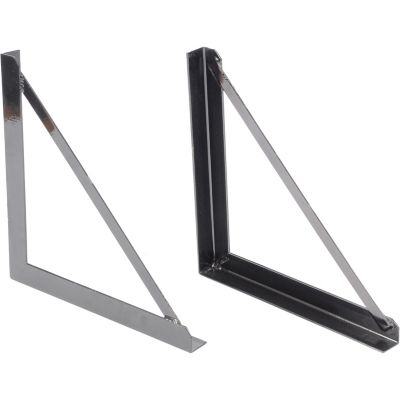
Fit involves more than choosing a side mount tool box that looks about as long as the truck bed. Bed length, rail shape, wheel-well position and the space behind the cab all affect how a box sits and how much cargo room remains. Published exterior dimensions help establish the footprint, while interior dimensions show whether the gear that needs a home will actually fit. Lid clearance deserves just as much attention. Depending on the design, an open lid may need room beside the cab, above the rail or near a bed rack. Tonneau covers, ladder racks, stake-pocket accessories and existing tie-down points can compete for that same space, and compatibility should never be assumed from appearance alone. A box that fits an uncovered bed may not work with a cover’s rails or folding sections. Mounting requirements also vary by truck and box design. Some arrangements attach with clamps, while others require brackets or drilled mounting points; the manufacturer’s directions establish the proper hardware and attachment method. Compatible
Truck Tool Box Mounting Kits can help provide the connection between the storage box and the pickup, but the kit must match the application rather than simply fit through an opening. Bed caps and liners may affect how mounting hardware seats against the rail, too. A secure installation helps limit movement, while the truck’s payload rating and the box’s load rating set separate limits that both matter. The weight of the empty box, mounting hardware and everything packed inside counts toward the truck’s carrying capacity. Concentrating a heavy collection of tools along one rail can also affect load balance. For a pickup that regularly hauls equipment, keeping access to cargo anchors and allowing room to secure each load is just as important as adding storage. A well-matched setup fits the work without blocking the features that make the bed useful in the first place.
Materials and construction help determine how a side mount tool box handles daily work. Aluminum keeps the box’s own weight lower than a comparable steel design and resists rust, making it a practical choice when payload and frequent loading matter. Steel brings greater weight and can stand up well to demanding shop and jobsite routines, though exposed areas need attention if the protective finish gets scratched. Metal thickness, reinforced edges, lid construction and hinge design all contribute to how a box handles vibration and repeated opening; material alone does not tell the whole story. A lid that closes evenly, supported hinges and latches that engage without forcing are worth a close look. Depending on the design, lid supports can make opening easier and hold the lid up while tools move in and out. Seals help limit dust and debris entering around the opening, but an enclosed truck box should not be treated as a guarantee that every item inside will stay protected under every condition. Lockable storage adds a barrier against casual access, not a substitute for sensible security practices. Inside, a tray or liner can help keep sockets from rolling and reduce metal-on-metal rattling along gravel lanes. Separating sharp tools from cords, gloves and straps also helps keep the contents ready for the next job. Care is generally straightforward: clear grit from the lid edge, wipe away spills, keep drainage features open where provided and follow the manufacturer’s recommendations for hinges, locks and finishes. A periodic check of mounting hardware is especially worthwhile on a truck that travels rough access roads. Overloading a tray or forcing a lid down over protruding tools can strain parts that otherwise have plenty of service left. For someone buying a box as a gift, knowing the recipient’s truck measurements and existing bed accessories matters more than guessing at storage size. Whether the regular work is fixing gates, maintaining equipment or carrying tools between properties, the best fit is a box with enough usable space, comfortable access and construction suited to the way the truck earns its keep.