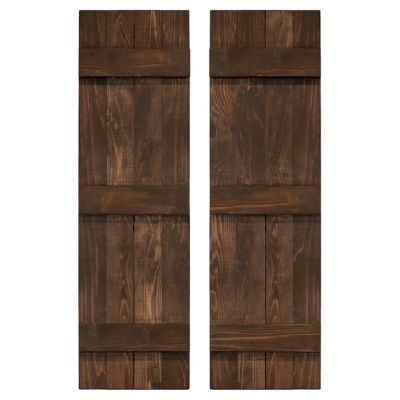
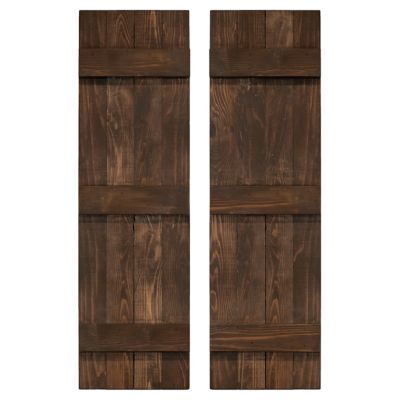
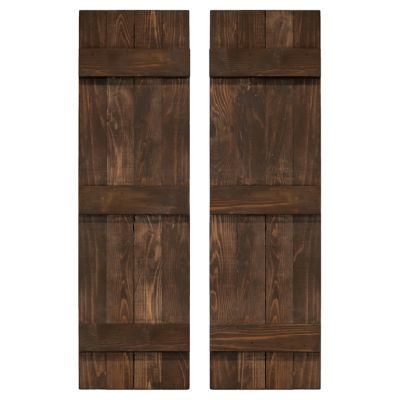
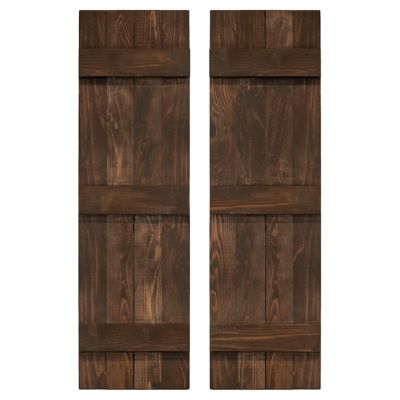
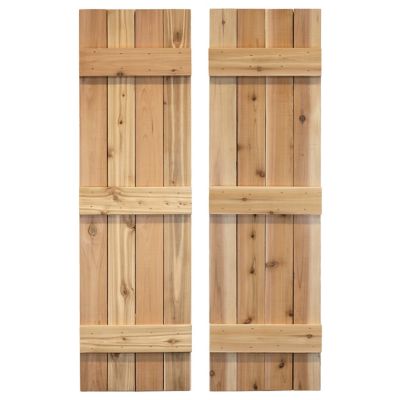
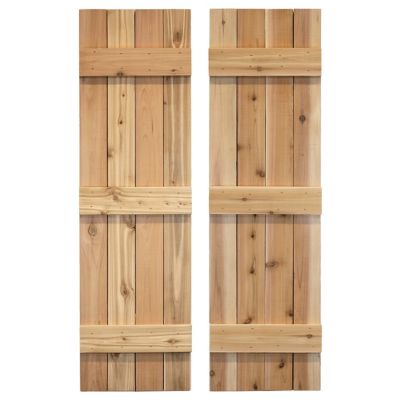
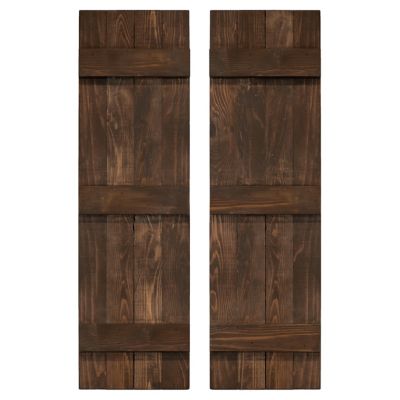
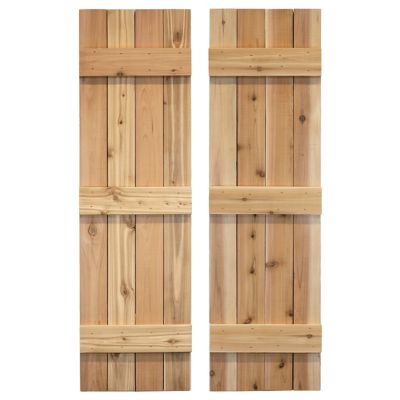
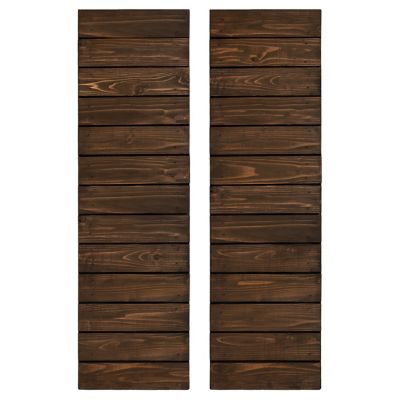
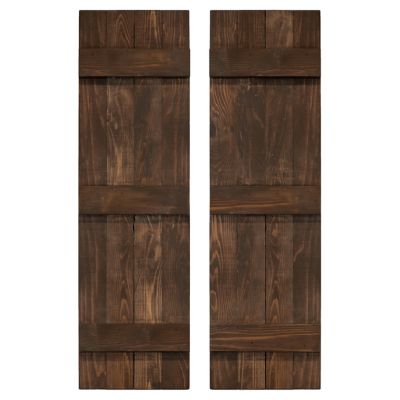
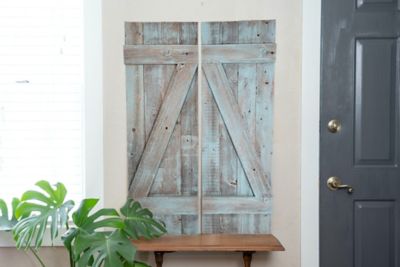
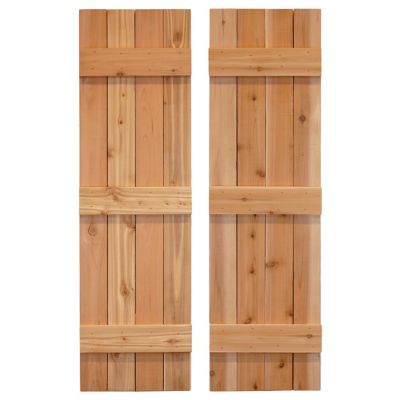
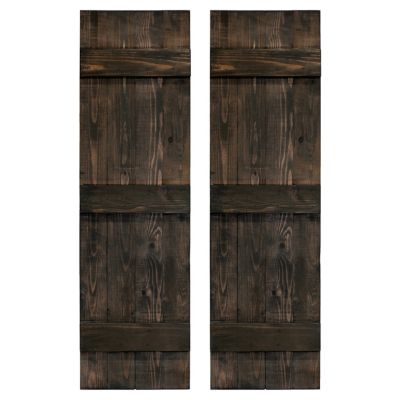
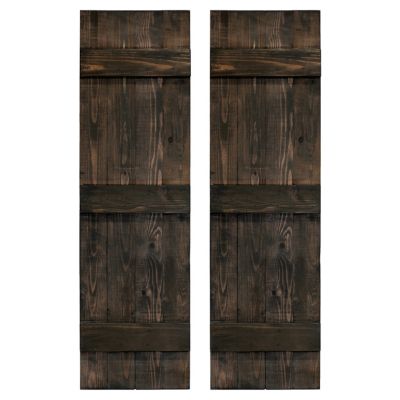
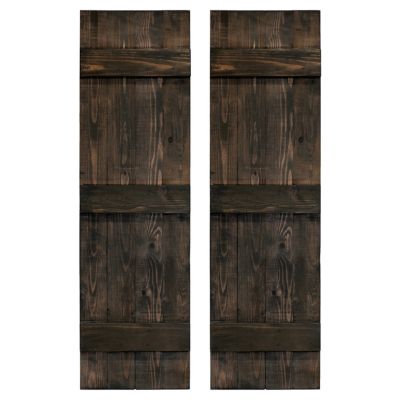
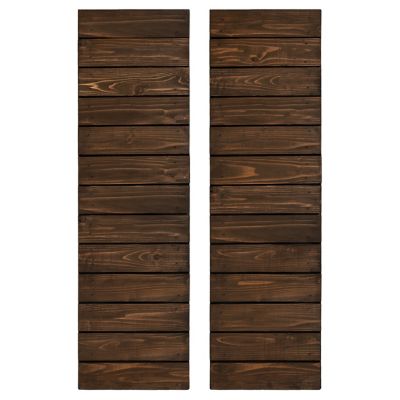
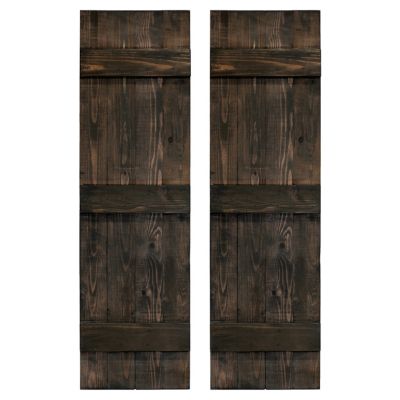
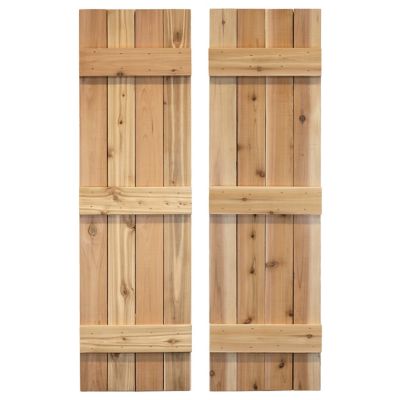
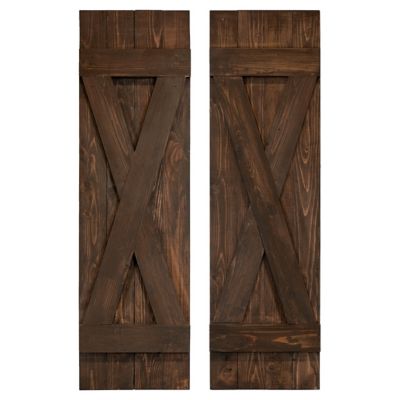
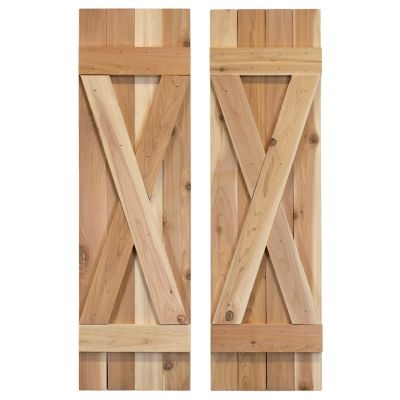
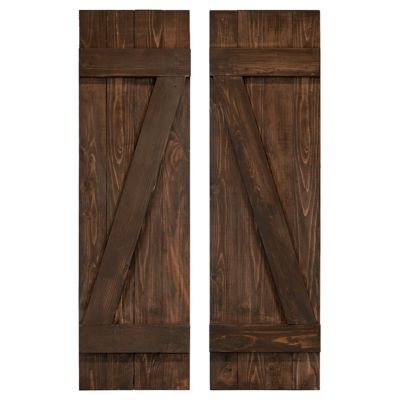
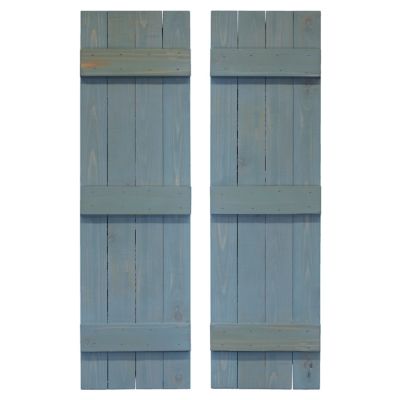
Rustic wood exterior shutters bring natural grain and texture to a farmhouse, cabin, or ranch house. Knots and saw marks show up nicely against plain lap siding or painted brick, where there’s not much else competing for attention. Board-and-batten shutters have upright planks with crosspieces that give them the straightforward lines of a barn door. A raised-panel shutter has a more finished look that fits a traditional front porch, while the narrow slats of a louvered shutter can keep a smaller window from looking boxed in. Rustic doesn’t have to mean rough all the way around, either. Smooth boards with a stain that lets the grain show can pick up the character of a timber porch post or a wood front door. A dark finish gives pale siding a strong outline, while a color close to the window trim lets the grain do more of the work. Cedar is a common choice because it’s relatively light for solid wood and its heartwood naturally resists decay. If both of those traits matter for the house, the
Cedar Wood Exterior Shutters page is a good place to look at that material on its own. Pine often has more noticeable knots and takes paint well when properly prepared, but it’s worth checking whether the wood is meant for exterior use and what kind of finish it calls for. With natural wood, some variation in grain and color is normal, even within a matched pair. That’s part of the appeal at porch level, where someone standing by the door can see the lines in each board. On an upper story, the shape of the shutter and the way it frames the window tend to stand out more than the grain. A simple plank face may be just enough alongside stonework with a lot of texture, while crosspieces and deeper shadows can add some definition to a broad stretch of plain siding.
The main distinction is whether the shutters stay fixed beside the window or swing shut. Fixed shutters frame the opening without needing room to swing. Working shutters rely on hinges and fasteners suited to their weight, plus hardware that holds them in place when open or closed. Solid working shutters can give a room more shade and privacy when closed, while slatted designs may let some light through. For a working pair, each side generally covers about half the opening, with the final fit depending on the hinges, clearances, and how the two shutters meet. That same proportion can make fixed shutters look as though they belong to the window, even though they won’t close over it. An older farmhouse might have two front windows that look alike from the road but differ just enough in height or width for the difference to show once the shutters are up. Measuring each opening and looking at the trim separately helps account for that, especially where a sill projects or the casing is wider at the top. The space next to the window matters just as much. A downspout, porch post, or outside corner can squeeze one side of a pair, and a wide picture window may not leave room for shutters that look in proportion to the glass. Weight matters, too: thick boards and heavy crosspieces can add up fast on a tall shutter. Mounting against brick is different from fastening over lap siding, and a layered wall surface may need spacers or a fastening point behind the siding so the shutters sit flat and stay secure. Visible hardware is part of the look as well. Dark strap hinges can draw out the barn-door lines of a plank shutter, while less visible fasteners keep the focus on the wood and the window trim.
How long wood shutters hold up outdoors depends on the wood itself, the finish, and whether moisture can drain and dry rather than sit against the boards. A sound exterior finish helps protect the face, but the cut ends and bottom edges deserve just as much attention. Those spots can take up moisture, and they’re easy to miss when the shutters are already on the wall. Bare shutters may need finishing on the backs and edges before they go up, according to the maker’s directions. Painted shutters give an even color across the face, while a penetrating stain leaves more of the grain visible. Either finish will need attention over time, and even cedar benefits from a finish suited to outdoor wood if the goal is to keep more of its original color. Day-to-day care is mostly a matter of brushing cobwebs from the crosspieces and wiping away dust with a soft cloth or brush. A little peeling at the bottom edge is worth a closer look, since brushing on another coat won’t solve the trouble if moisture is collecting behind the board. On working shutters, loose hinges or a latch that no longer lines up may be an early sign that the shutter is starting to sag. Fixed shutters suit a lot of projects, from framing a single gable window on a cabin to bringing mismatched trim together across the front of a ranch house. Working shutters make more sense where someone will actually open and close them and can reach the hardware without a stretch. They can also be a fitting housewarming gift for someone fixing up a place, provided the recipient has already settled on the measurements, mounting style, and finish. Whether it’s one pair by the porch or a row across the front of the house, shutters look most at home when the proportions suit the windows and the finish picks up a color or texture that’s already there.