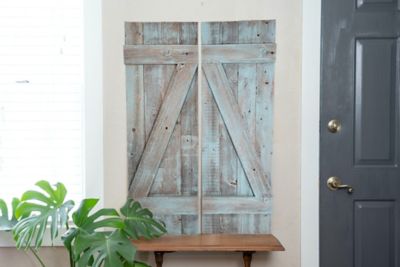
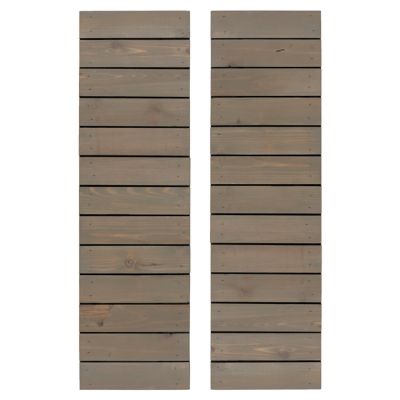
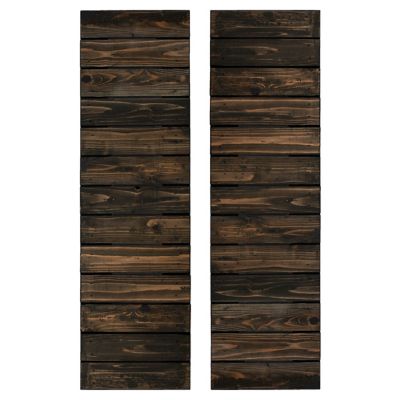
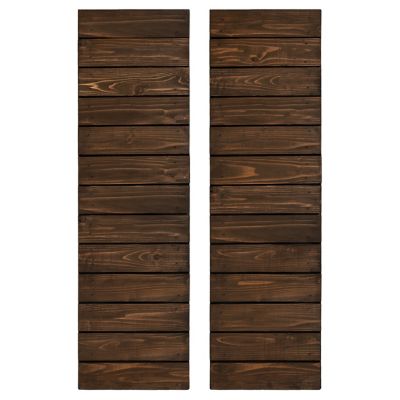
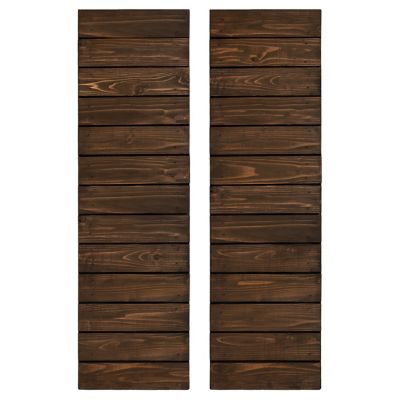
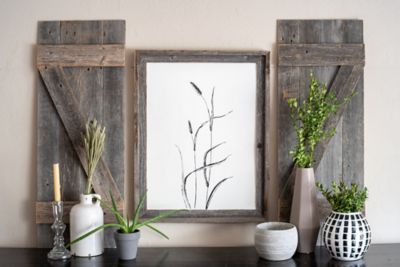
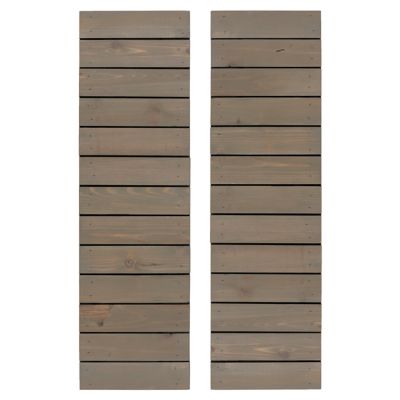
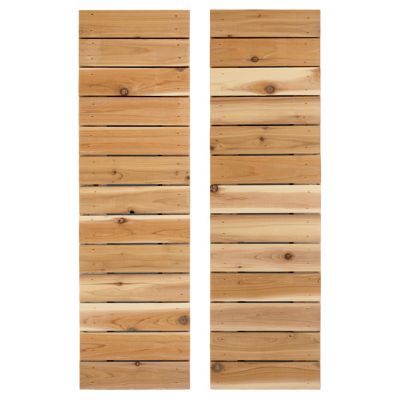
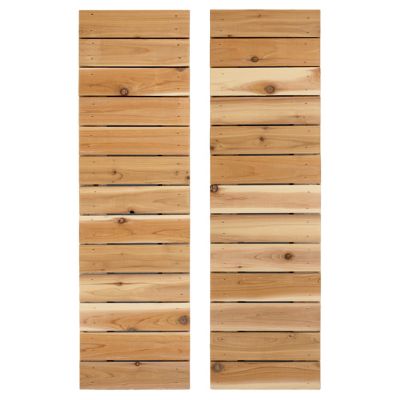
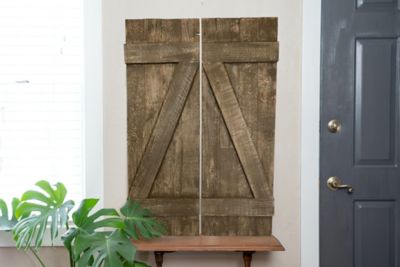
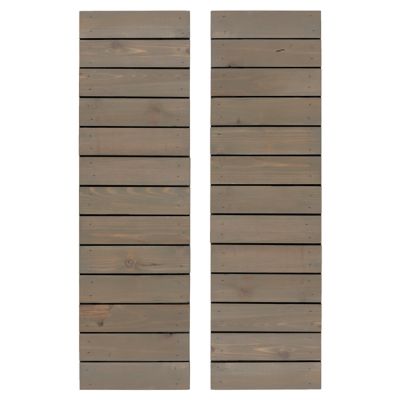
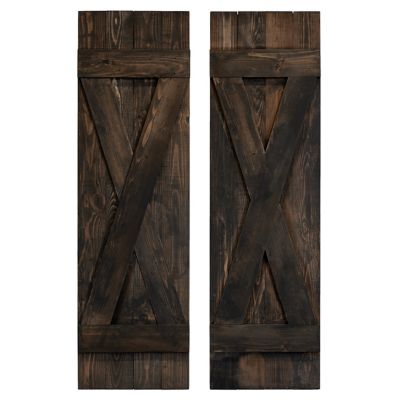
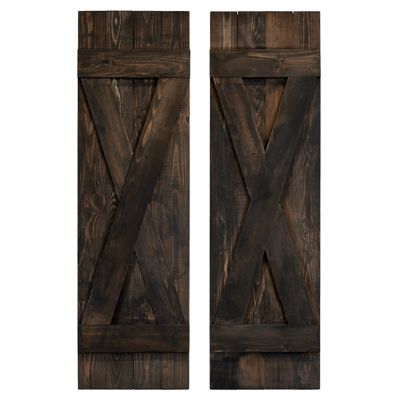
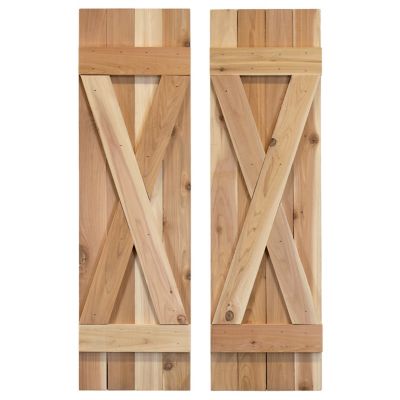
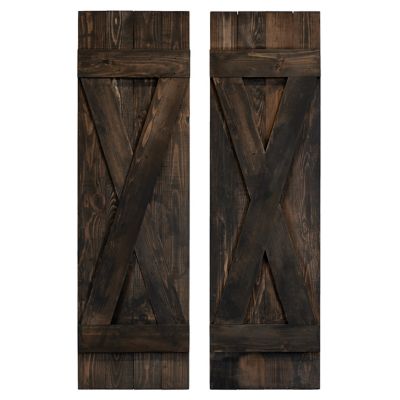
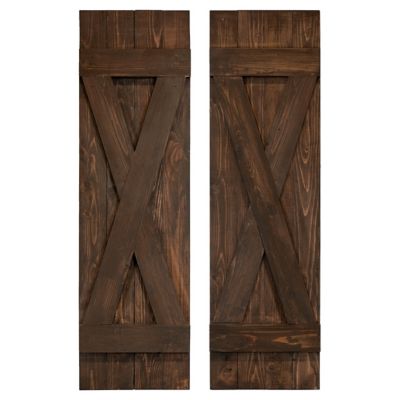
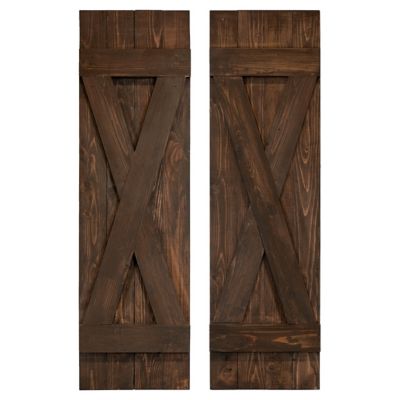
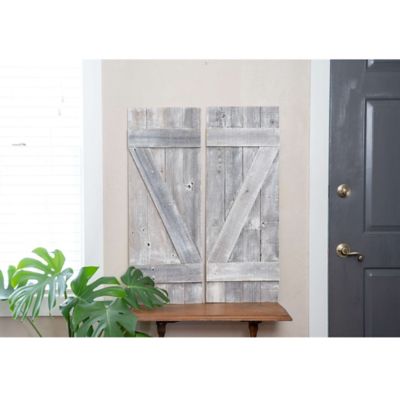
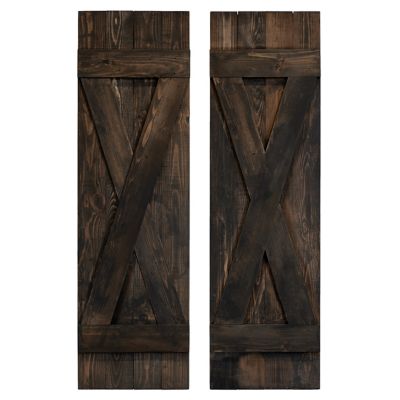
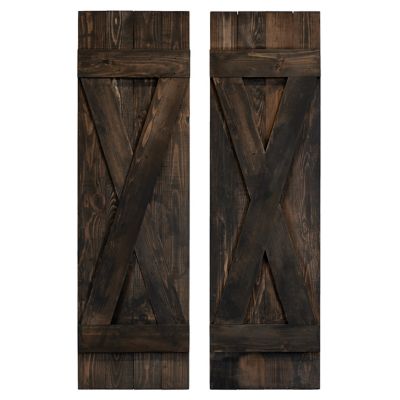
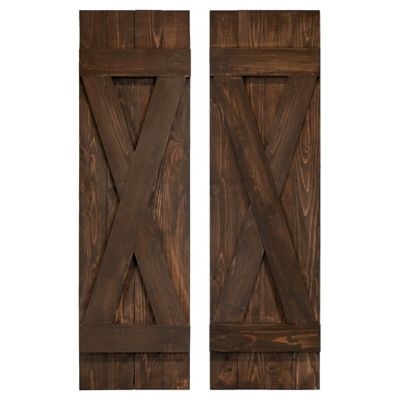
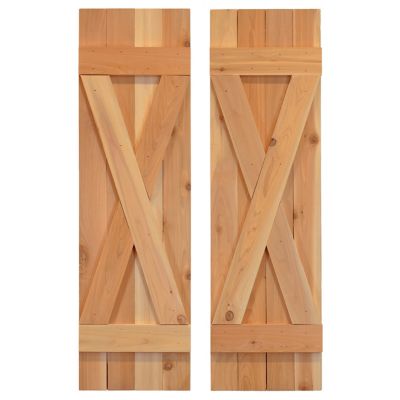
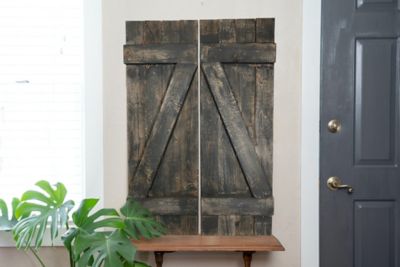
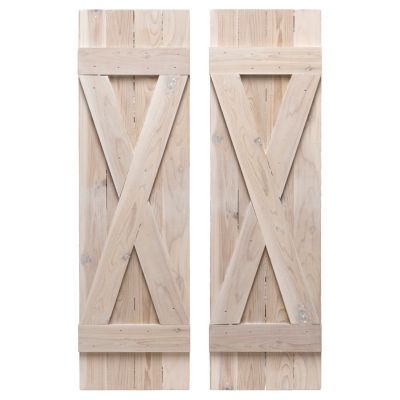
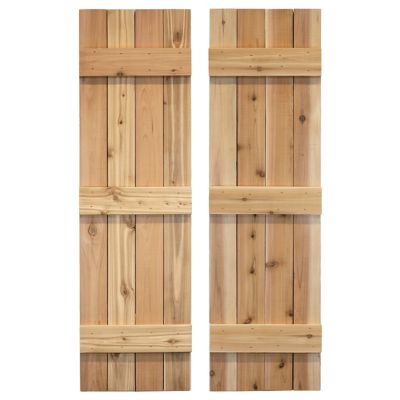
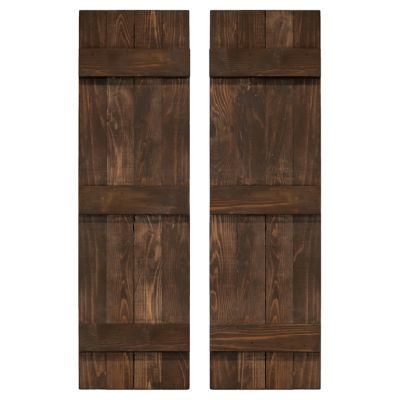
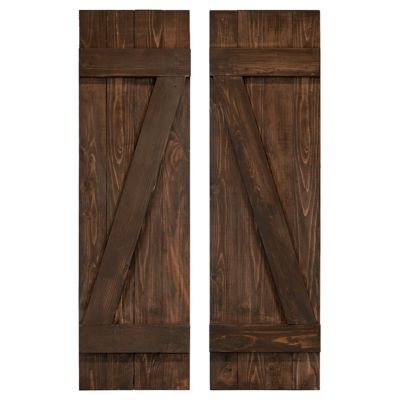
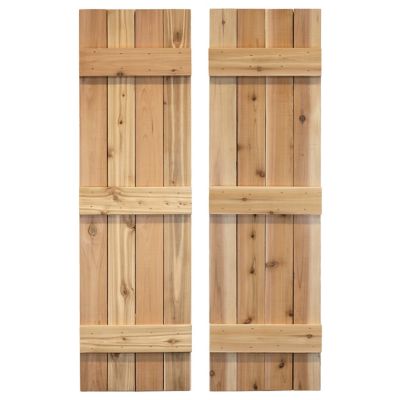
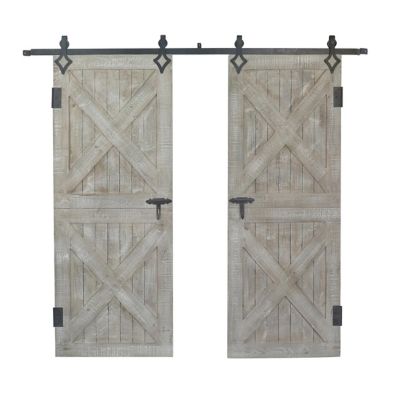
Modern farmhouse exterior shutters pair straightforward country character with clean lines, giving windows a finished look without making the front of the house feel busy. The style works well with board-and-batten siding, lap siding, brick and stone, whether the setting is a farmhouse down a gravel lane or a ranch house with a broad front porch. Board-and-batten shutters are a familiar choice: vertical boards joined by horizontal battens create a simple pattern that echoes barn doors and traditional farm buildings. A diagonal brace adds a stronger barn-door look, while an unbraced design keeps the face quieter. Shaker-style shutters take a different approach, framing a recessed flat panel with straight rails and stiles. That restrained shape fits homes where the windows, porch posts and entryway already have crisp, square details. Louvered designs bring more texture through repeated horizontal slats, while chevron and herringbone patterns add angled lines that can become a stronger focal point. The best match depends as much on the rest of the house as on the shutter itself. A small window beside a substantial porch column may benefit from a plain panel rather than another bold pattern. On a broad, simple wall, board spacing and visible wood grain can add welcome depth. Color changes the effect, too. Black and charcoal create a clear outline against white or pale siding, while brown and natural wood tones connect shutters with timber porch posts, exposed beams or a stained front door. Muted green, gray and off-white offer a softer contrast. Matching every exterior surface is not necessary; repeating one wood tone or dark accent can help the whole front elevation feel connected. A shutter finish also looks different beside warm brick than it does beside cool gray siding, so the surrounding materials matter. Consistent proportions and a limited mix of patterns generally do more for the farmhouse look than adding extra trim to every window.
Material choice shapes the appearance, upkeep and long-term performance of exterior shutters. Real wood offers visible grain and a solid, natural look, with cedar being a familiar option because its heartwood has natural resistance to decay. That resistance does not eliminate the need for suitable construction, finishing and care. Wood can absorb and release moisture, and changes in that moisture content can cause movement, checking or separation at joints. Exterior paint, stain or a compatible clear finish helps protect the surface, though each finish has its own maintenance needs. Paint provides color coverage, while stain leaves more of the grain visible; a clear coating may require more attention where sunlight breaks down the finish. For a project where the shutter color needs to coordinate with an existing porch or entry,
Unfinished Wood Exterior Shutters provide a starting point for an exterior finish suited to the wood and installation. Unfinished does not mean ready to mount without preparation, and coating requirements may extend to the back, edges, joints and cut ends. Vinyl, cellular PVC and polyurethane offer alternatives for homeowners who prefer a painted appearance with different upkeep demands. Vinyl shutters are generally lightweight, but construction and color limitations vary. Cellular PVC resists rot and moisture absorption, although expansion, fastening methods and paint compatibility still deserve attention. Polyurethane can form defined panels and trim details without exposed wood grain, with handling and finishing requirements that depend on the design. Composite shutters vary widely in their ingredients, weight and finish, so the material description matters more than a broad category name alone. No material makes care disappear completely. Dust, pollen and residue can collect around battens, louvers and mounting points. Gentle cleaning according to the maker’s directions, along with occasional checks for loose fasteners, open joints or peeling finish, helps small problems stay manageable. For a tall second-story window, the effort involved in reaching the shutters can make maintenance needs especially important.
Fit and intended use are just as important as style. Fixed exterior shutters serve as stationary window accents, while operable shutters need suitable hinges, clearance and hardware that allow them to open, close and stay secured. A shutter that looks substantial is not automatically designed to swing, cover a window opening or provide impact protection. Those functions depend on its construction, tested ratings where applicable and the complete mounting system. For fixed pairs, proportions that suggest the shutters could cover the window tend to look more natural than narrow strips beside a wide opening. Each side often looks balanced at roughly half the opening’s width, though trim, shutter design and the maker’s sizing instructions affect the final choice. Height should relate to the window opening and surrounding casing rather than nearby siding seams. Operable shutters require more precise measurements because the leaves must fit the opening, meet correctly and clear handles, screens and other obstructions. Closely spaced windows, projecting sills and porch roofs can limit the room available, especially when shutters swing outward. A wide picture window may call for a different treatment than the smaller windows beside it rather than an identical pair squeezed into the remaining wall space. Mounting also needs to suit the house. Wood siding, vinyl siding, brick and stone require different fastening approaches, and a screw that holds an accent in place is not necessarily suitable for a heavy hinged shutter. Appropriate spacers and attachment points help avoid crushing siding or interfering with drainage behind it. For homeowners updating an entry, finishing a new exterior or bringing a farmhouse-style addition into step with the original house, these details help the shutters look like part of the building instead of an afterthought. The most convincing result comes from a manageable combination of sensible proportions, a material suited to the application and a finish that connects with the rest of the property. Plain board-and-batten shutters beside a wood porch, or flat-panel shutters against simple siding, can make that connection without overwhelming the windows themselves.