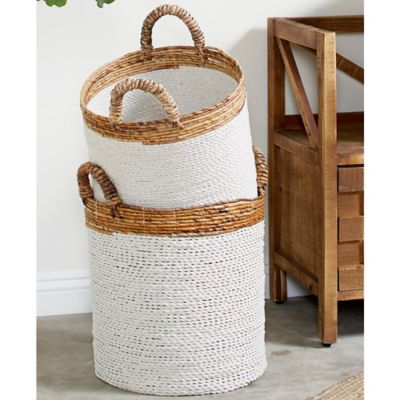
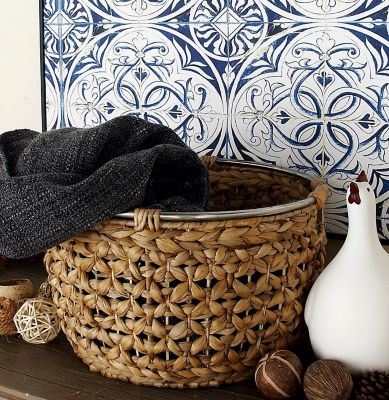
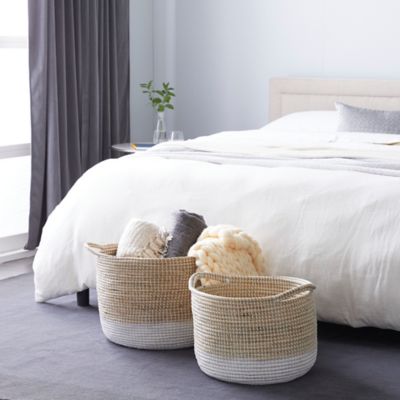
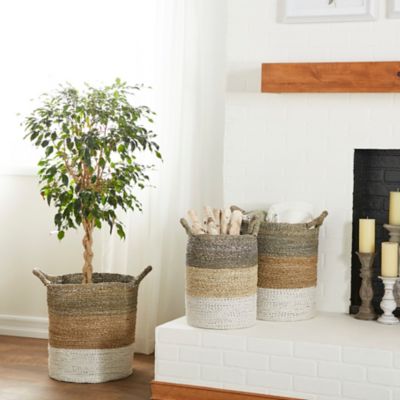
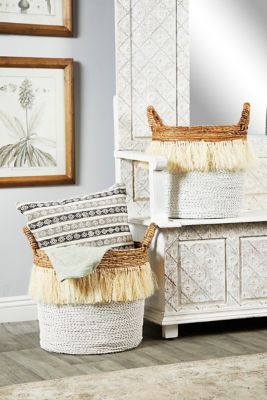
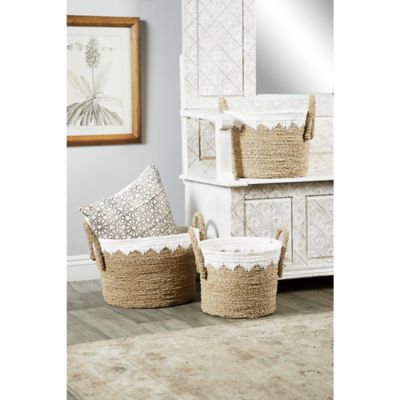
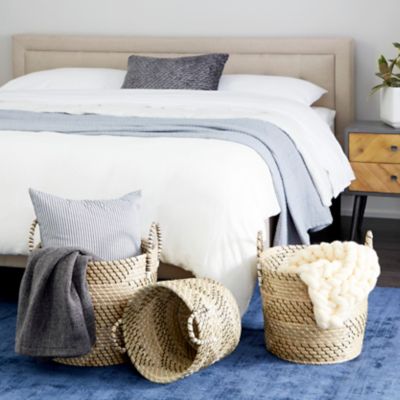
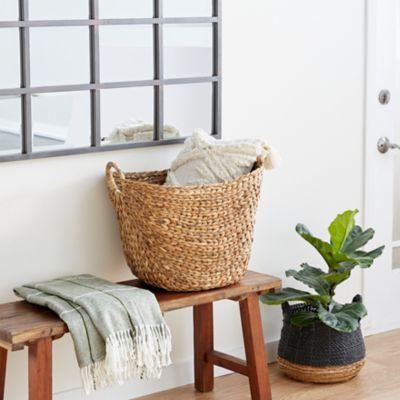
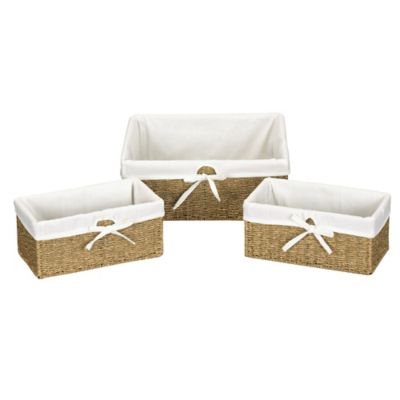
A round seagrass basket brings a little order to the everyday things that tend to gather around a house, from throws beside the couch to clean hand towels waiting on a bathroom shelf. Its curved shape softens the look of straight-sided furniture, while the woven surface adds texture without needing a bright pattern or a bold finish. Seagrass is a plant fiber that can be twisted or braided and woven into baskets, giving the finished piece a mix of natural tones and a slightly uneven surface. Depending on the fiber and finish, those tones may lean toward straw, tan, or soft brown, with small variations throughout the weave. That down-to-earth appearance fits just as comfortably beside a painted bench in a farmhouse entryway as it does beneath a simple side table. The round profile works well where a basket stays out in the open, since there are no sharp corners to interrupt the shape. A low, broad basket can keep folded linens within easy reach, while a taller shape makes room for rolled throws or other lightweight household belongings. Small round baskets help corral the odds and ends that otherwise spread across a dresser or console. Natural woven fibers also offer a nice contrast to wood, metal, and painted surfaces, making it easy to work a basket into a room without changing everything around it. For a busy household, that balance of storage and appearance is a big part of the appeal: the basket has a job to do, but it still looks at home when company stops by. A round seagrass basket can also make a thoughtful housewarming gift, especially with a few folded towels tucked inside. Its purpose can change as the household does, moving from an entryway catchall to a linen basket or a resting place for a favorite throw. For anyone who likes belongings close at hand but not scattered across every surface, that flexibility makes sense.
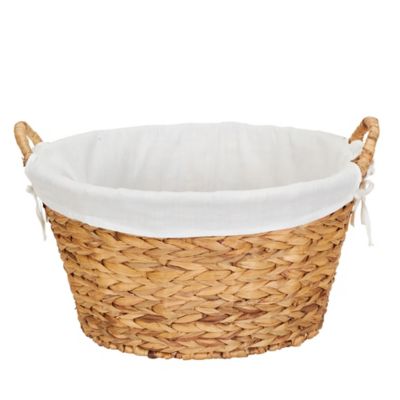
Size and shape have a lot to do with how a round basket fits into daily routines. The widest outside diameter determines whether it will sit comfortably on a shelf or slide beneath a bench, but the inside opening determines what can actually go in it. A basket with a narrow mouth and a rounded belly may look roomy while making a broad folded blanket harder to tuck inside. Straight-sided shapes offer a more consistent opening from top to bottom, while tapered shapes may leave extra clearance around the base. Handles and lids deserve a little room, too; a shelf that fits the basket body may not leave enough space to lift a lid or get a hand around a handle. Round baskets naturally leave gaps in the corners of square cubbies, so their appeal is often easy access and a softer outline rather than filling every inch. Construction matters just as much as measurements. Some seagrass baskets have a flexible woven body, while others have an internal frame that helps hold their form. A reinforced rim can help the opening keep its shape, and securely attached handles matter when the basket will move between rooms. Even so, carrying capacity varies, and a basket meant for lightweight linens should not be treated like a hauling tub. Supporting the bottom is a sensible habit when moving a filled basket, particularly if its handles are small or intended mainly for appearance. An open top makes it easy to reach for a throw from a favorite chair, while a fitted lid can keep everyday clutter out of sight. A fabric liner, when included, separates contents from the weave and may be helpful for delicate fabrics that could catch on rough fibers. Households sorting storage by room, size, or material can also look through
Woven Storage Baskets for a broader view of woven forms. The best fit comes down to the space it occupies, the belongings it holds, and how often somebody reaches inside.
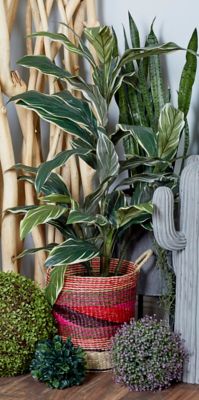
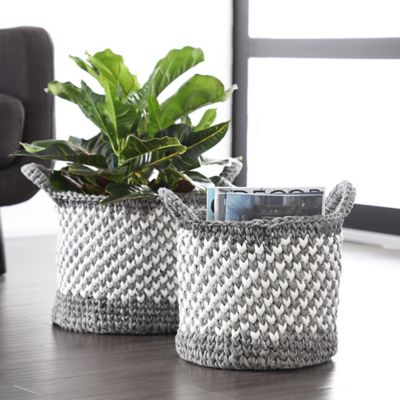
Seagrass baskets are generally best suited to dry indoor storage, where their woven fibers can stay clean and hold their shape. They make sense beside a reading chair, along a bedroom wall, or on a roomy linen shelf, but standing water and persistent dampness can damage natural plant fibers and encourage mildew. In a bathroom, a basket is better suited to clean, fully dry towels than damp washcloths or wet laundry. When paired with a houseplant, it serves as an outer container rather than the planting vessel itself; a separate watertight liner or saucer helps protect the weave and the surface underneath. Removing the plant for watering and checking for trapped moisture can help prevent trouble that is easy to miss beneath a pot. Everyday upkeep is usually simple, though the care directions for the basket should come first. A soft brush or a vacuum brush attachment on gentle suction can lift dust from the woven surface and the spaces around the rim. When spot cleaning is permitted, a lightly dampened cloth is a better starting point than soaking the basket, followed by thorough air drying before belongings go back inside. Harsh cleaners and hard scrubbing can affect the fibers or finish. Direct sunlight may also change the color over time, so placement matters when an even appearance is important. For baskets holding blankets or clothing, an occasional check inside can catch a rough end before it snags a knit. Removable liners have their own care requirements and should be completely dry before being put back. A round seagrass basket can handle plenty of everyday organizing when its load and surroundings match its construction, but it is not a substitute for a heavy-duty tool carrier or a moisture-resistant laundry container. Keeping its role simple lets the material do what it does well: gather lightweight belongings, add a warm woven surface, and make a lived-in room feel a little more settled without making it feel fussy.