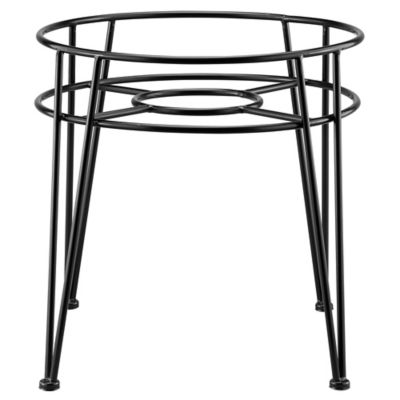
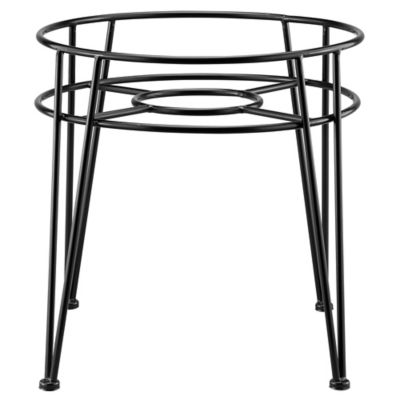
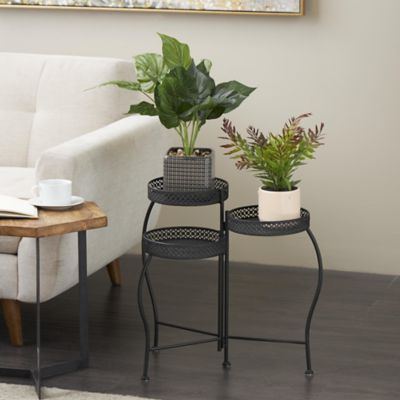
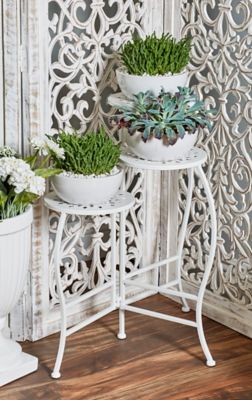
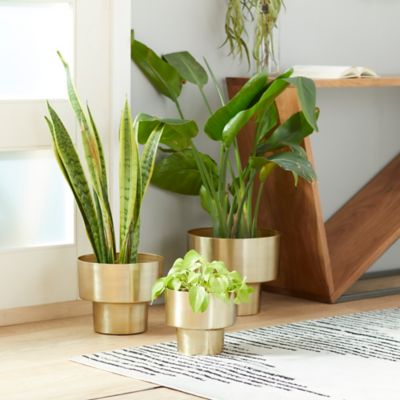
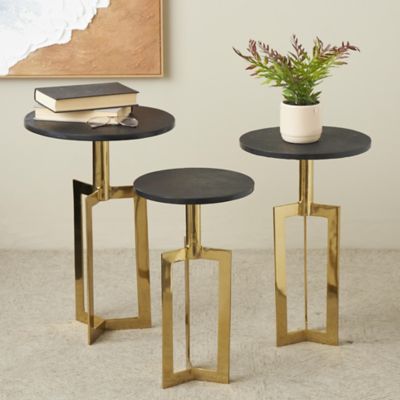
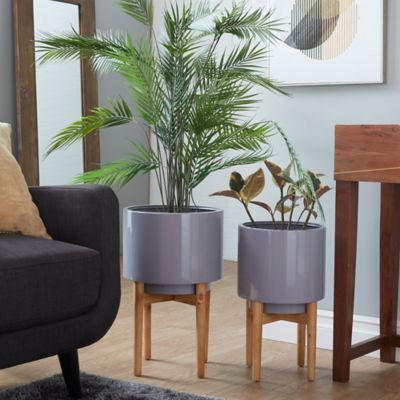
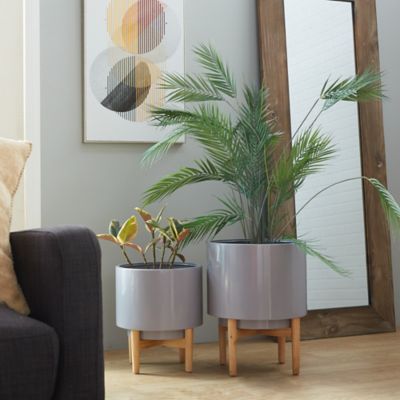
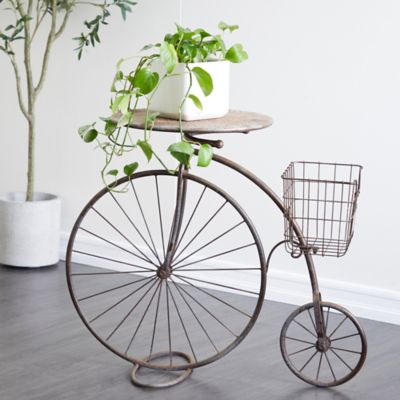
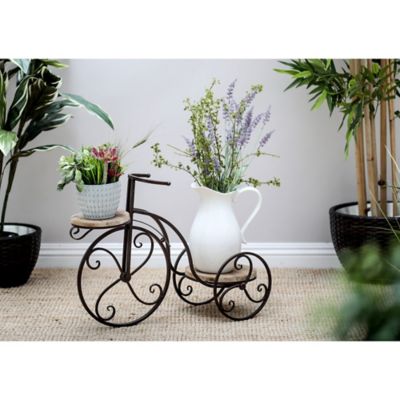
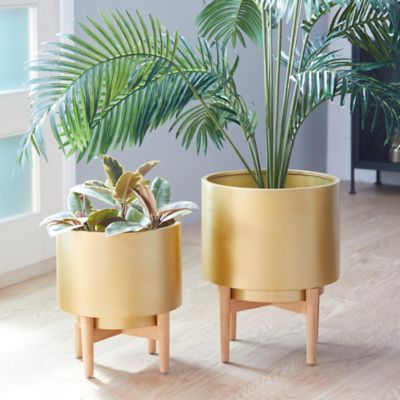
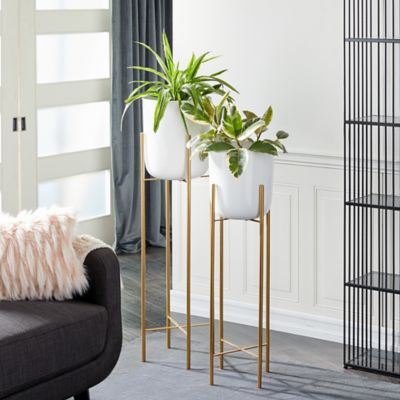
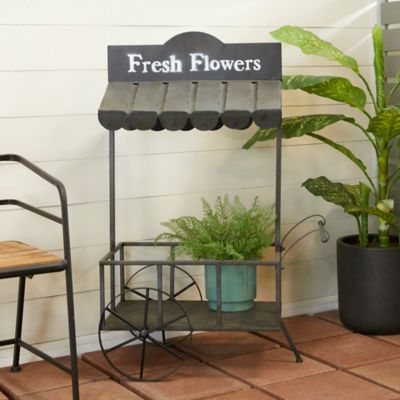
Round metal plant stands give potted greenery a place of its own without taking over the room. Their curved shape works naturally with round pots, softening the lines of a square window, a straight porch rail, or a row of cabinets. A fern beside a reading chair, a trailing pothos near a bright window, or a leafy plant tucked into a farmhouse entry can feel more settled when its container sits on a stand that fits. Raising a pot also makes the container part of the display, whether it is plain terra-cotta, glazed ceramic, or a lightweight planter with a textured surface. Metal brings structure to that arrangement, with options ranging from slim wire frames to heavier iron forms and broad, solid platforms. Steel offers firm support in a wide range of frame styles, while aluminum generally keeps the stand lighter and easier to move. Iron can bring more heft, though the overall frame, joints, and base matter just as much as the metal itself. Powder-coated and painted finishes add color and help protect the surface, but their suitability for indoor or outdoor placement depends on the stand’s stated rating. A dark finish can blend quietly beside wood furniture or make the outline of a pale planter stand out. Lighter finishes can keep a small corner feeling open, while simple openwork lets the pot and foliage do most of the talking. Some round tops have a rim that helps contain the planter’s base; others have an open ring that supports a pot at its sides. Those shapes are not interchangeable, so the way the container meets the stand matters as much as the look. For someone tending a few houseplants in a small home or filling a broad porch with greenery, the appeal is straightforward: a defined spot for each pot, a little lift off the floor, and a frame that does not compete with the plant.
A good fit comes down to more than the diameter printed beside a stand. The usable support area needs to match the part of the planter that actually rests on it, especially when the pot tapers sharply toward the bottom. A wide upper rim does not tell the whole story, and a curved or rounded pot base may need a different support surface than a flat-bottomed container. For ring-style stands, the opening and the planter’s shape determine how securely the pot sits and how far it settles into the frame. Weight matters, too: the load includes the pot, plant, soil, saucer, and water held after watering. A large ceramic container filled with damp soil can weigh considerably more than its empty appearance suggests, making the stated load limit an important consideration. The stand’s height changes both the view and the footprint of the arrangement. A low round stand can lift a substantial floor planter just enough to show off its shape, while a taller frame can bring smaller foliage closer to eye level beside a chair or bench. Broad bases and balanced proportions are especially important for tall plants or containers with heavy foliage extending to one side. There also needs to be room around the leaves, not just the legs, so a plant does not crowd a doorway, brush against a passing shoulder, or block a cabinet. On a porch, evenly spaced floorboards and a level resting place help every foot make firm contact. Indoors, the base should sit steadily without rocking on a rug edge or uneven tile. For several pots sharing one corner,
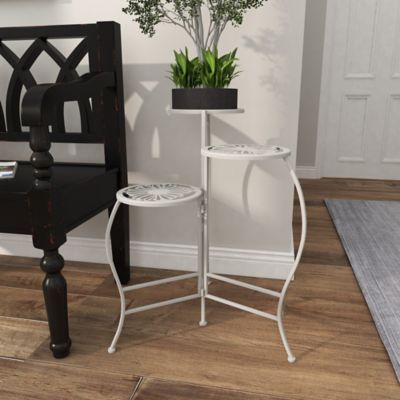
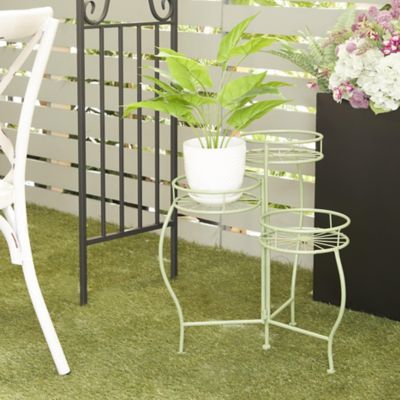
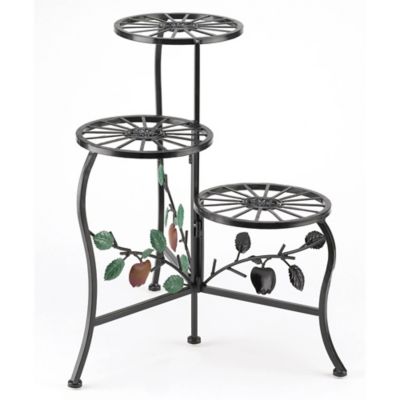
Tiered Metal Plant Stands offer another layout to consider, with planting space at different heights. A single round stand, by comparison, gives one planter breathing room and makes it easier to position that plant according to its light needs rather than squeezing it into an existing group.
Everyday care is part of how well a round metal plant stand holds up over time. A sound finish, secure connections, and a design that suits the setting all contribute to a long service life, but watering habits have a role as well. An open metal top is not a catch tray, and lifting a planter off the floor does not by itself protect the surface underneath. A properly sized saucer or watertight outer container helps catch drainage, provided excess water is emptied instead of left around the pot or against the metal. That is particularly useful over wood flooring, beside a rug, or anywhere a small spill could go unnoticed. Solid trays need attention, too, since standing water can collect beneath a container where it is hard to see. A soft cloth and mild soap are often enough for routine cleaning when the care directions allow them; abrasive scrubbers can scratch painted or coated surfaces. Keeping soil off the frame makes those surfaces easier to inspect, and checking joints or fasteners from time to time can catch looseness before the stand begins to wobble. Floor-contact points deserve a look as well. Suitable protective pads can help limit scuffs indoors, while small feet need a firm surface rather than loose gravel or soft ground. When rearranging a room, removing the planter before lifting the stand keeps the load manageable and reduces strain on the frame. These practical details make a difference in homes where plants share space with work boots, pets, and the regular traffic through a busy entry. Round metal plant stands can also make thoughtful housewarming gifts for plant lovers, especially when the recipient’s space and planter size are known. For a first apartment, a longtime gardener’s sitting room, or a quiet corner beside the kitchen window, a well-matched stand gives a favorite plant a settled home while keeping everyday care within easy reach.