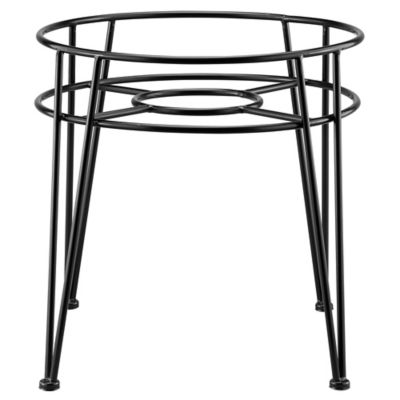
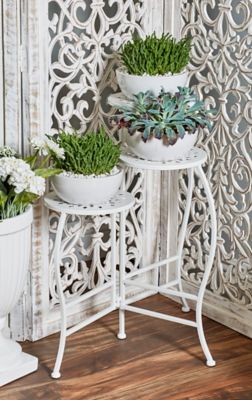
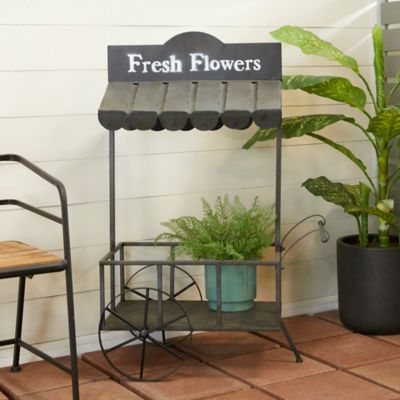
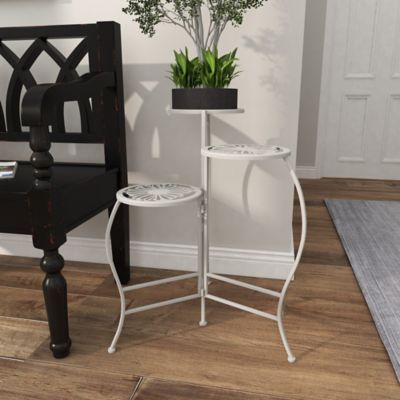
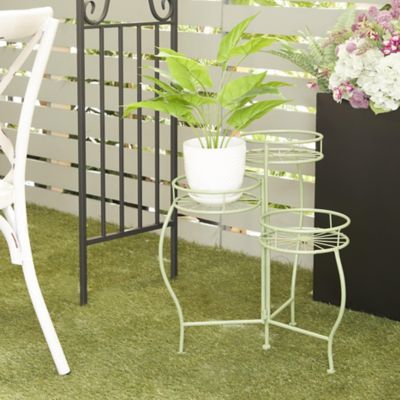
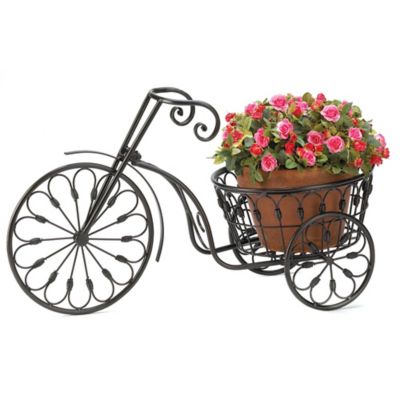
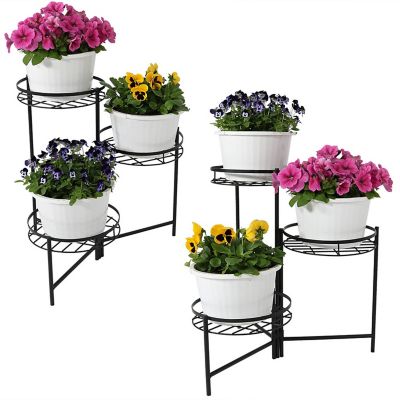
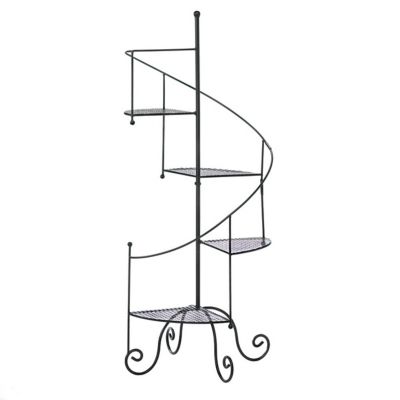
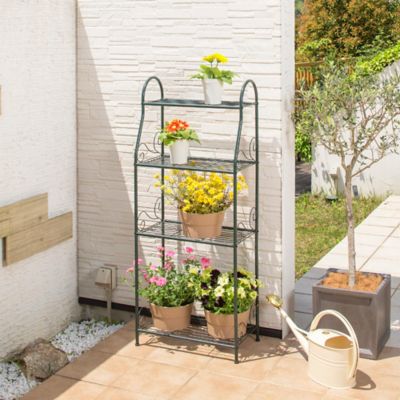
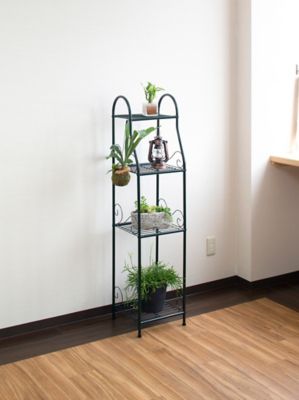
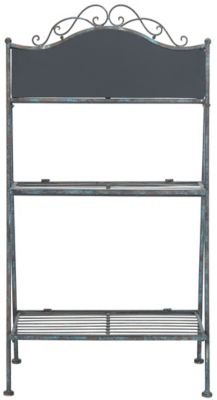
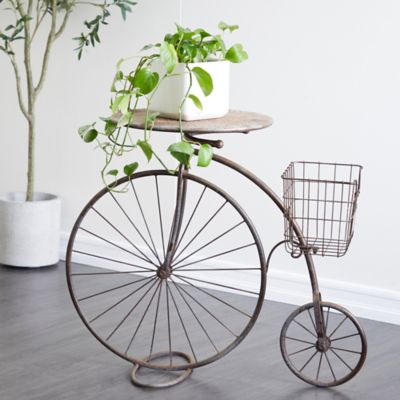
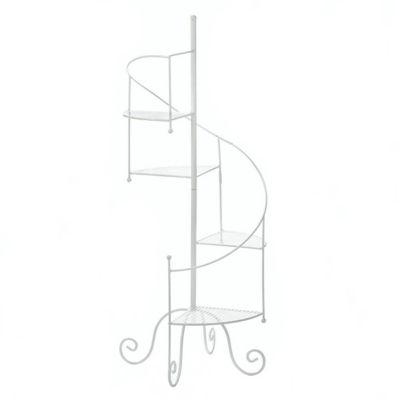
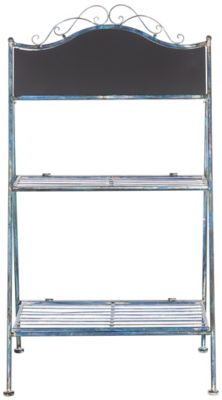
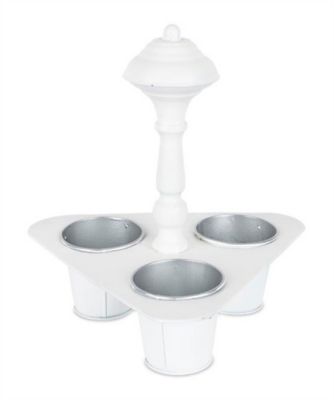
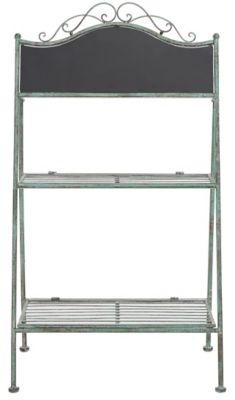
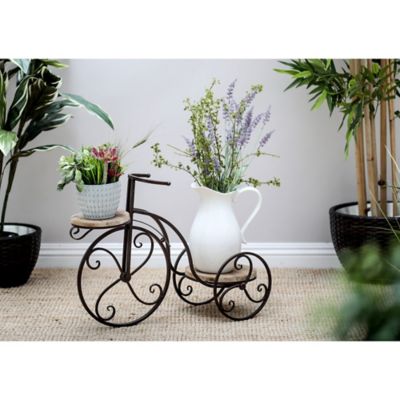
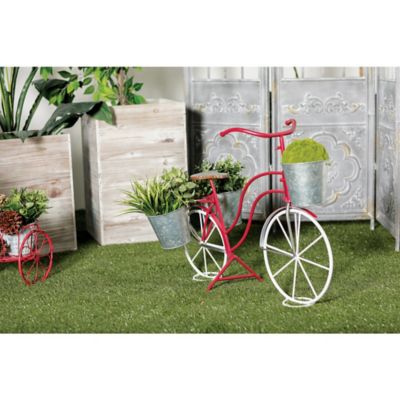
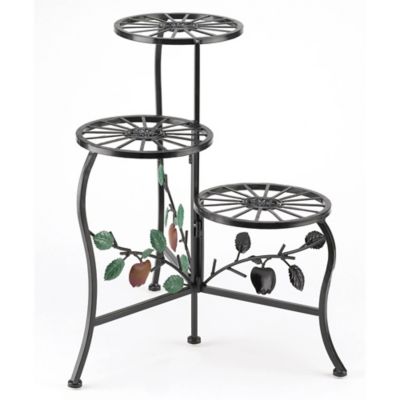
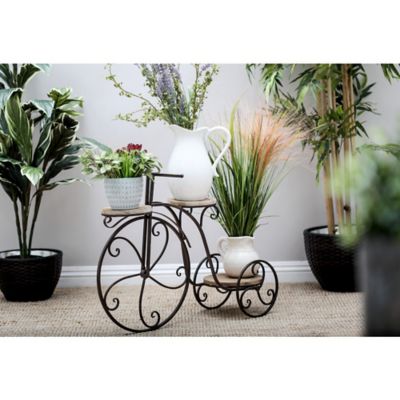
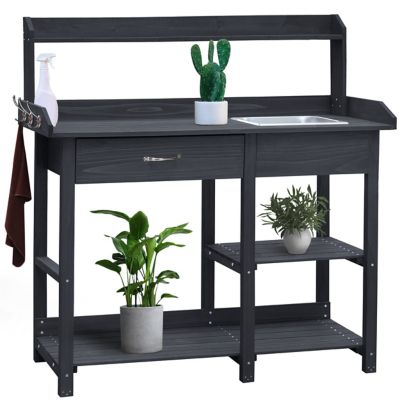
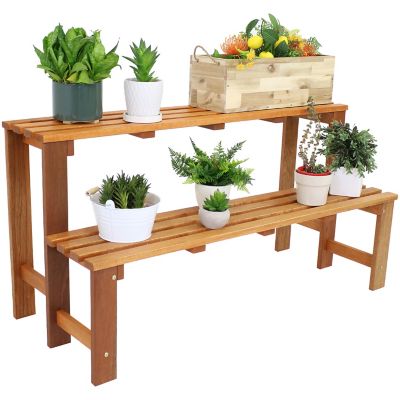
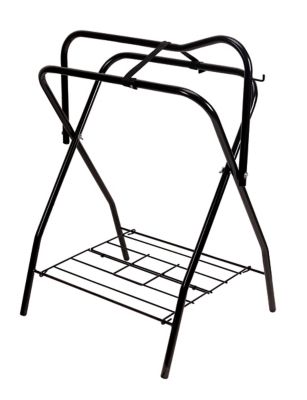
Metal stands for flower pots are raised supports that hold planters above the floor or ground, making room for plants without giving over an entire table or bench. A stand can lift a trailing vine clear of the floor, bring a flowering pot closer to eye level or group several containers in one tidy spot. Single-pot stands work well beside a chair, near an entry or along a porch wall, while tiered metal plant stands put several pots on shelves at different heights. A narrow, upright frame makes good use of a corner; a wider rack spreads plants out so their leaves have room to grow. The right shape depends as much on the space around the plants as it does on the number of pots. Broad leaves need elbow room, trailing stems need open edges, and a tall plant needs clearance above its top growth. Elevation can help position a plant near a suitable light source, but a stand does not replace the light each plant needs. Open-frame designs keep the view around a plant airy, while shelves with a fuller surface give small containers more contact underneath. Straight legs and simple rings suit a clean, practical setup, and curved supports add a softer look beside wood furniture or a brick hearth. Matching stands can tie together pots with different colors and textures, while a mix of heights gives each plant its own space. For a houseplant keeper, a porch gardener or someone making room for a few favorite blooms, the appeal is straightforward: plants stay part of daily life without taking over the work surfaces. Among
Metal Stands, flower pot supports serve a particular job, balancing display height with the steady footing that a filled container needs. That balance matters whether the setting is a roomy sunroom or a small kitchen corner.
Metal choice, construction and finish all play a part in how a flower pot stand handles everyday service. Steel and iron frames can provide substantial support, while aluminum generally keeps the frame lighter to move. Hollow tubing, solid rod, welds and bolted joints each affect the feel and strength of the finished stand, so material alone does not establish its load limit. Powder coating provides a protective outer finish, and galvanized steel has a zinc layer that helps limit corrosion. Those finishes still need care, especially where a pot rubs against the frame or watering leaves moisture behind. For indoor or outdoor placement, the manufacturer’s stated application matters more than appearance alone. Fit begins with the pot’s base, not just the diameter across its rim. A planter with tapered sides may have a narrow footprint even when its upper opening is wide, and a retaining ring needs to hold the container as intended without leaving it perched on an edge. Flat platforms should support the base securely, with any saucer sitting level rather than hanging over an open gap. Shelf spacing also matters: the container, foliage and room to reach in with a watering can all need to fit. Weight capacity should cover the pot, plant, soil, saucer and water together, since a freshly watered container can weigh much more than an empty one. On a tiered rack, individual shelf limits and the total frame limit both matter; extra room on one shelf does not mean another shelf can carry more than its rating. Wider feet and a lower center of gravity help with stability, particularly for substantial ceramic containers or tall plants. The heaviest pots generally belong on lower shelves, provided the stand’s instructions allow that arrangement. Adjustable-width holders need secure connections within their stated size range, and rolling stands need casters rated for the full load. A frame that fits the planter and its setting is far more useful than one chosen for height alone.
Day-to-day care is mostly about managing water, keeping contact points clean and checking that the frame stays steady. Drainage holes still need somewhere to send excess water, so a properly sized saucer or tray is important when a stand sits on an indoor floor. Raising a pot does not make watering messes disappear, and an open shelf can let drips fall onto plants, furniture or flooring below. Empty standing water as appropriate for the plant, wipe up spills and lift the container now and then to check for trapped moisture. Rubber or plastic feet can help reduce scuffs, but grit caught underneath can still scratch a surface. Feet should sit flat on a firm, level area, with enough clearance for sweeping or mopping around the base. On a porch or patio, the stand’s outdoor rating and the condition of its protective finish deserve attention; exposed steel or iron at a chip or scrape may need treatment following the manufacturer’s directions. Mild soap and a soft cloth are often suitable for routine cleaning, while abrasive pads can damage a coated surface. Fasteners may need periodic checks, especially after a stand has been moved. A loaded stand should not be dragged across the floor, and a rolling design needs its wheels secured whenever it is parked. Placement also matters in homes with children or pets: keep climbing temptations, hanging stems and narrow walkways in mind, and follow any anchoring instructions for taller racks. For someone who enjoys tending plants, a pot stand can make a thoughtful housewarming or birthday gift when its dimensions and intended setting are known. A compact stand may suit a favorite flowering plant by a bright window, while a tiered frame can gather a small collection beside a potting bench. With the right proportions, a sound frame and a little routine care, metal flower pot stands give plants a settled place without crowding the rest of the room.