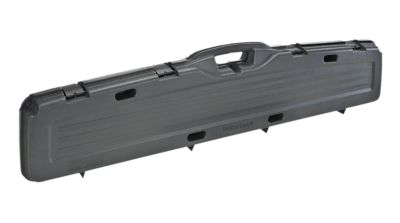
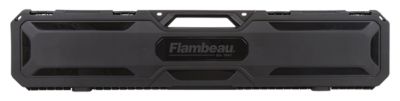
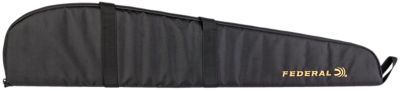
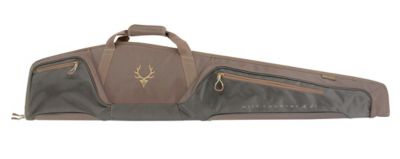
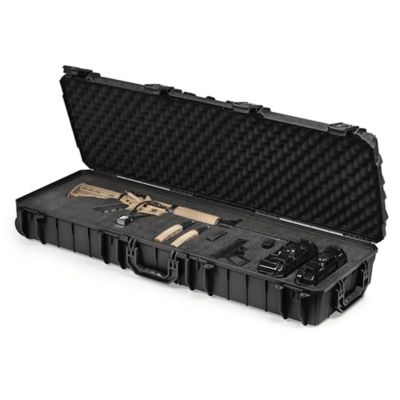
Rifle cases for scoped rifles provide room for a mounted optic while helping shield the firearm from scuffs, bumps, and dust during transport. That extra space matters: a case that fits a rifle without a scope may pull tight across the optic, press against adjustment knobs, or keep the zipper from closing comfortably once a scope is mounted. Soft rifle cases generally offer padded, flexible protection for everyday carrying, while hard rifle cases surround the firearm with a rigid shell and cushioned interior. Both styles need enough interior length for the rifle and enough height and width for the complete setup. Overall rifle length, scope size, mounting height, and any attached accessories all affect the fit. A long sunshade or tall adjustment turret can take up more room than the scope’s main tube suggests, and a bolt handle adds width that is easy to overlook. Interior measurements are more helpful than exterior dimensions because padding, seams, and molded edges reduce the space inside. A comfortable fit leaves clearance around the optic without allowing the rifle to slide freely from one end to the other. Too much open space can let the firearm shift during a truck ride, while an overly snug case can place pressure where it does not belong. Scoped hunting rifles, rimfire rifles, and longer target rifles can have quite different profiles, even when their overall lengths are close. Within the broader category of
Protective Gun Cases, designs intended for mounted optics account for that taller shape. For someone carrying a rifle from the house to the truck and then to the range, a well-fitting case also makes handling simpler. The firearm, optic, and small essentials have a designated place instead of sharing loose space with tools, bags, and other gear. That organization is useful whether the trip is across the county or several hours down the road.
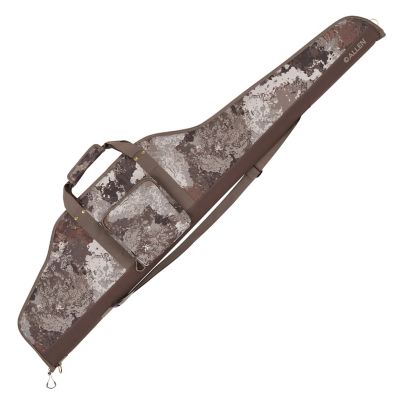
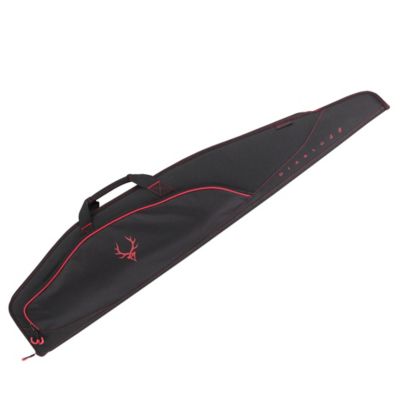
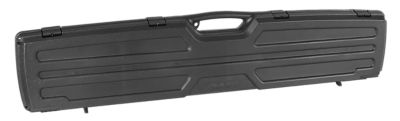
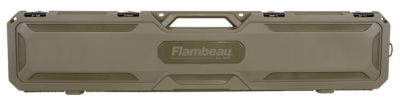
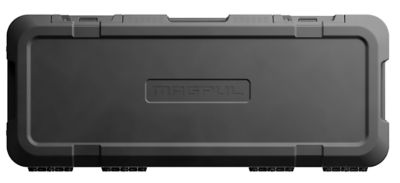
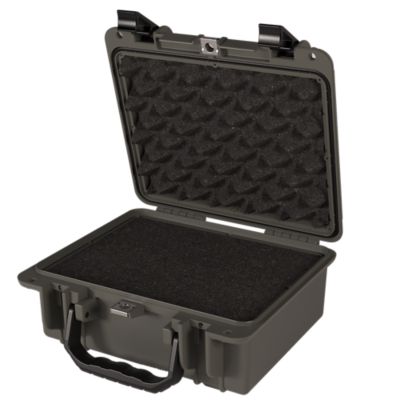
Soft scoped rifle cases often feature nylon, polyester, or canvas exteriors over layers of padding. Tightly woven fabric helps resist abrasion, while reinforced seams and a sturdy lower edge support areas that see repeated contact with benches, floors, and truck seats. Canvas offers a substantial feel, and synthetic fabrics can be easy to wipe clean, though care requirements depend on the material and finish. Inside, a smooth lining helps reduce rubbing against the stock and metal surfaces. Padding thickness matters, but so do its placement and ability to cushion the rifle without crowding the scope. Dense foam along the bottom and around the muzzle end serves a different purpose from a thin, soft lining. Zippers that open along a generous portion of the case make loading and unloading less awkward, particularly with a tall optic. Carry handles positioned near the loaded case’s balance point help keep one end from dipping, and a padded shoulder strap can leave a hand free for a range bag. Hard cases take a different approach, using molded polymer or another rigid shell to resist compression and help separate the rifle from surrounding cargo. They make sense for trips where gear may be stacked nearby or the case will face more handling along the way. Foam interiors, adjustable dividers, and internal straps can help limit movement, depending on the design. Any foam arrangement needs to support the rifle without forcing the scope against the lid. Hinges, latches, and handle attachments deserve attention because they take the strain each time a loaded case is lifted or closed. Gasketed closures can help keep dust out, but protection claims vary by case. Neither a thick shell nor heavy padding makes a case indestructible; secure placement during transport still matters. A case resting flat and secured against sliding has a different job than one wedged beneath a pile of equipment.
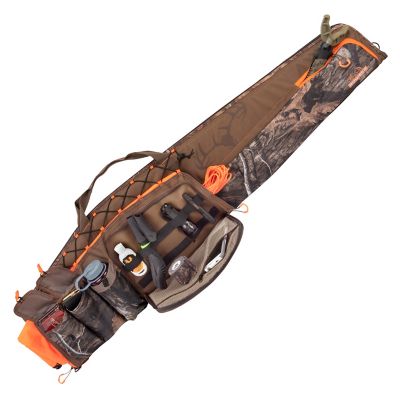
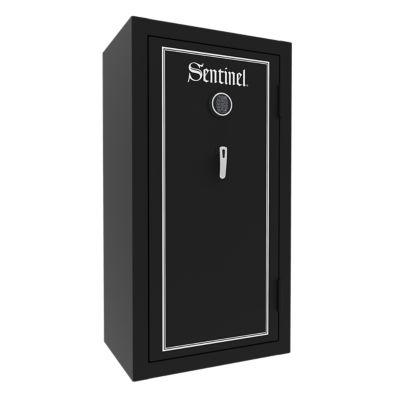
Storage pockets and interior organization can make a scoped rifle case easier to live with, provided those features do not interfere with the firearm’s fit. Exterior pockets offer room for hearing protection, paperwork, a lens cloth, or small maintenance supplies, while separate compartments help keep hard objects from rubbing against the stock or scope. A full pocket should not push inward far enough to press against the optic. Double-rifle cases need particular attention to separation: a padded divider and individual restraints help keep the two firearms from contacting each other, but overall capacity still depends on their dimensions. For a hunter, landowner, or regular range visitor, the right carrying setup comes down to how the case will travel and what else needs to come along. A padded soft case may suit short vehicle trips and straightforward carrying, while a locking hard case may better match travel involving more handling. For air travel within the United States, firearms must travel unloaded in locked, hard-sided containers as checked baggage, with TSA and airline requirements governing the details. A hard shell alone does not establish compliance. Cases also do not replace secure firearm storage, and a zipper lock is not equivalent to a dedicated locked cabinet or safe. Between trips, simple care helps preserve the fabric, lining, hardware, and foam. Grit caught in a zipper can interfere with closure, and debris inside a case can rub against a firearm’s finish. Cleaning methods should match the case manufacturer’s directions, with the interior allowed to dry completely before the unloaded rifle goes back inside. Foam and fabric should not hold moisture against metal surfaces during extended storage. Handles, straps, stitching, hinges, and latches benefit from an occasional check for wear. As a gift for a rifle owner, a scoped rifle case is most practical when the recipient’s firearm dimensions and carrying habits are known. A comfortable handle, sensible pocket layout, and proper clearance around the optic can make more difference on an ordinary trip than extra compartments that never earn their keep.