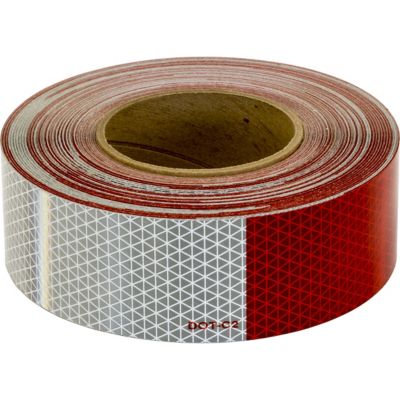
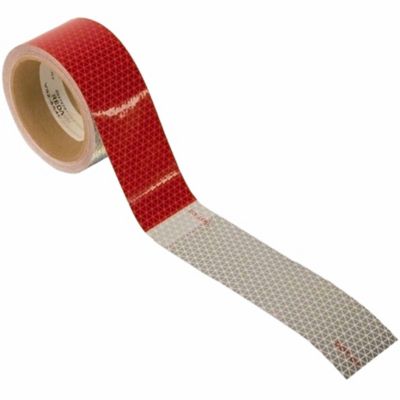
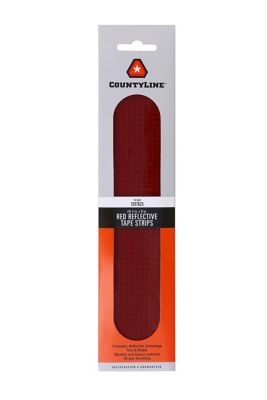
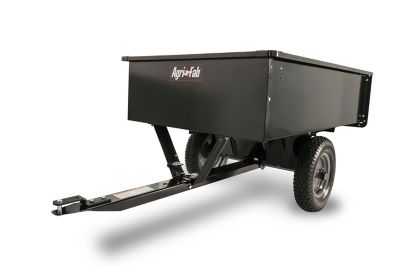
Red reflective tape helps make vehicles, trailers, equipment, and property features easier to spot by sending incoming light back toward its source. When headlights sweep across a marked trailer corner or farm gate, the reflective surface can stand out against the darker surroundings. Unlike glow-in-the-dark material, reflective tape needs an outside light source; it does not make its own light or replace working vehicle lamps. That distinction matters around a busy equipment yard, where a parked utility trailer, loading area, or gatepost can be hard to pick out beyond the reach of a fixed light. The red color provides a clear visual marker, while the tape’s reflective construction adds visibility when light strikes it from a suitable angle. Common constructions include tiny glass beads or molded prism patterns within a film, with a backing that attaches the material to a compatible surface. Reflective performance varies by construction, viewing angle, and the condition of the tape, so color alone does not tell the whole story. For many property owners, the practical choice comes down to the surface being marked, the amount of space available, and the distance from which that marking needs to be noticed. Narrow tape can fit a slim metal upright, while a wider strip provides more reflective area on a broad, flat trailer panel. Rolls make sense for several marking jobs or longer runs, while precut strips can suit smaller applications with clearly defined dimensions. Solid red tape also has a different role from alternating red-and-white conspicuity tape, particularly on road-going equipment where marking requirements may specify colors and patterns. A bright-looking strip on a workbench is only part of the picture; its placement and visibility once mounted matter just as much. On a gate, for example, a strip facing approaching headlights serves a different purpose from one wrapped around the side of a post. Red reflective tape works best as a deliberate visibility aid, not simply a patch of color wherever there happens to be room.
The material underneath red reflective tape has a big say in how well the adhesive holds. Smooth painted metal, suitable rigid plastic, and other clean, sound surfaces generally offer better contact than rough lumber, flaking paint, or heavily textured finishes. Adhesive formulas vary, and some plastics or coated surfaces need a tape specifically rated for that material. A flat trailer rail presents a different job from a rounded tube, a ribbed panel, or a tight corner, where the film’s flexibility and ability to stay down at the edges become important. Tape thickness can affect that fit, too: a heavier construction may offer added resistance to wear but may not follow a small curve as readily as a more flexible film. Width, total length, backing material, and adhesive compatibility are useful details to compare alongside reflectivity. A little planning around hinges, handles, fasteners, and moving parts helps keep a reflective marking visible without putting it where regular contact will scrape it away. Surface preparation also affects the bond. Dust, grease, wax, and loose residue can leave adhesive attached to contamination rather than the equipment itself, while moisture beneath the tape can interfere with contact. Cleaning methods and application conditions should follow the tape manufacturer’s directions and the care requirements of the mounting surface. Once attached, reflective tape benefits from routine attention rather than being treated as a permanent, maintenance-free marking. Mud or a film of grime can hide the reflective face even when the adhesive still holds firmly. Gentle cleaning with compatible supplies helps preserve visibility, while harsh solvents, stiff scraping, and close-range pressure washing may damage the film or loosen its edges. Peeling corners, cracking, deep scratches, and sections that no longer reflect well are signs that a marking needs attention. Service life depends on the tape’s construction, exposure, surface preparation, and everyday wear, so a stated lifespan is not a promise for every fence line, trailer, or machine. Keeping the reflective face clean and intact is part of keeping the marking useful.
Around a farm, acreage, or working yard, red reflective tape can help define objects that someone approaching with a light needs to recognize. A gatepost beside a gravel lane, the rear-facing corners of a parked trailer, or a fixed barrier near a shed entrance each presents a different marking need. Farmers, livestock owners, contractors, trailer owners, and folks maintaining their own property may all have a reason to keep reflective markings in good shape. Placement should account for how people actually move through the space: a pickup entering a drive sees a post from a different angle than someone backing a stock trailer toward a barn. The marking also needs to remain visible when a gate swings, equipment is parked nearby, or a trailer carries a load. On equipment, tape should not cover lights, identification plates, warning labels, or required markings, and it should stay clear of controls and moving components. For vehicles and trailers traveling on public roads, red reflective tape is not automatically a substitute for required conspicuity markings, reflectors, lamps, or a slow-moving vehicle emblem. Applicable rules can specify certification, color, pattern, coverage, and placement, making the intended road use an important part of the selection. Similar care applies to roadside mailboxes, posts, and entrances, where local requirements may govern markings. Reflective tape adds visibility, but it does not turn a poorly placed obstruction into a safe one. Visibility needs extend beyond equipment, too. For dogs joining chores or walking along the lane,
reflective dog collars provide a purpose-built option rather than relying on adhesive tape attached to fur or an unsuitable collar surface. Whether the job involves a gate, trailer, or piece of stationary equipment, the most useful reflective marking is one that suits its surface, faces the approaching light, and stays clear enough to do its job. Those practical details help red reflective tape earn its place among everyday property and equipment supplies.