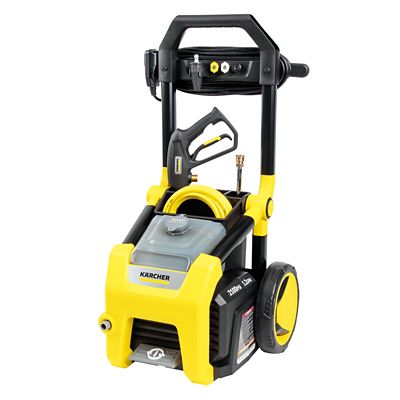
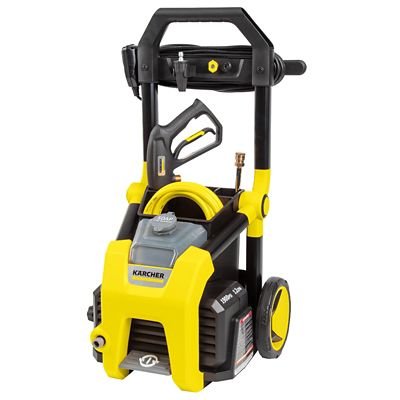
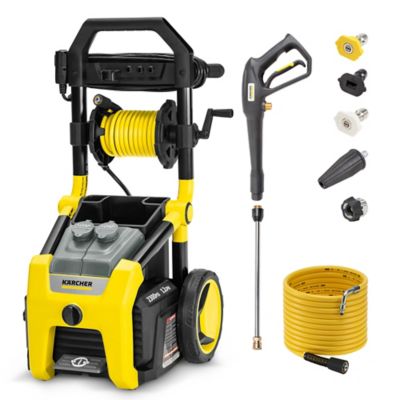
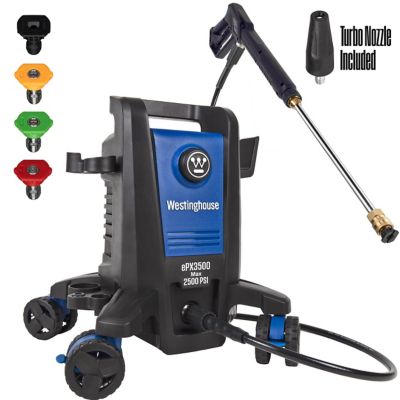
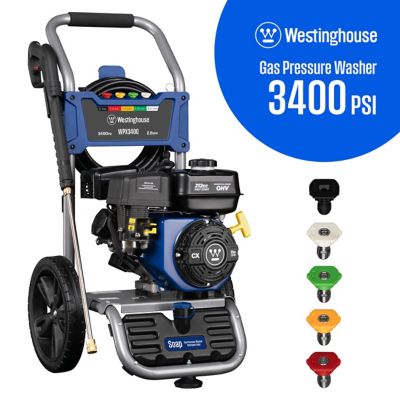
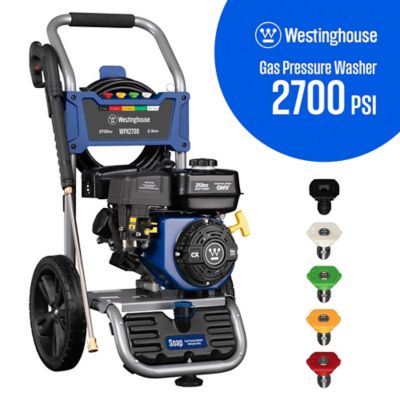
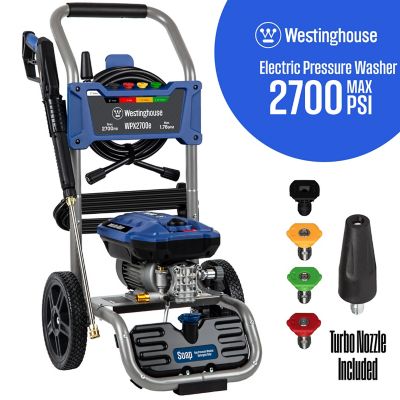
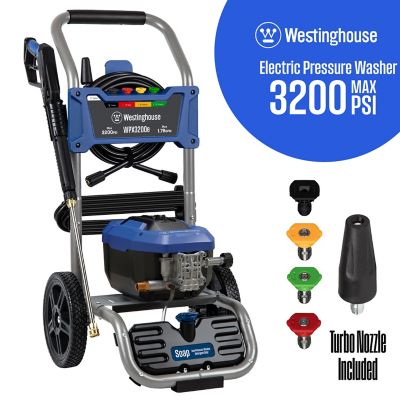
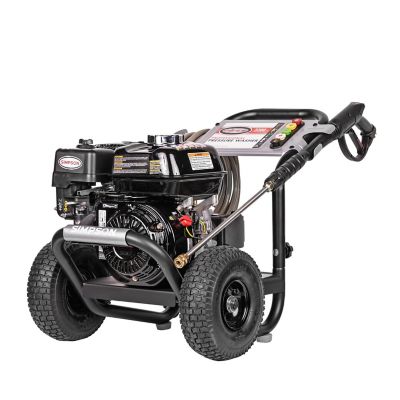
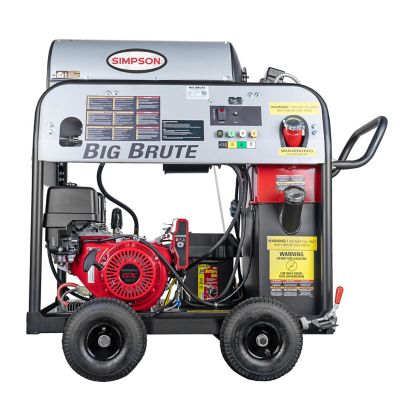
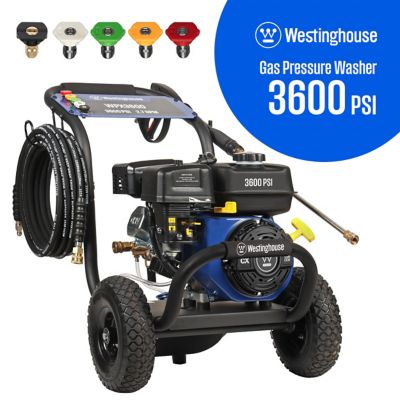
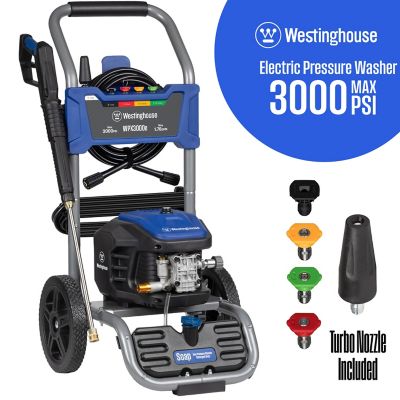
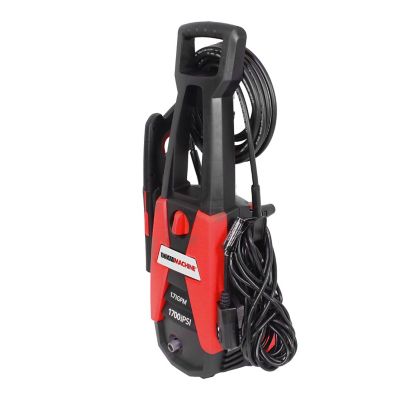
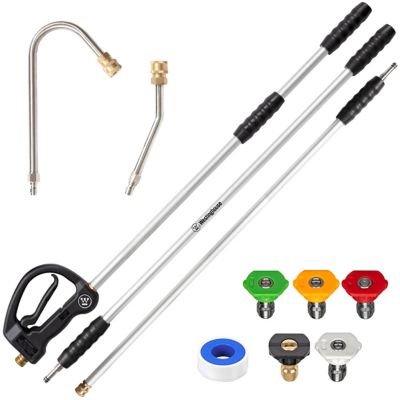
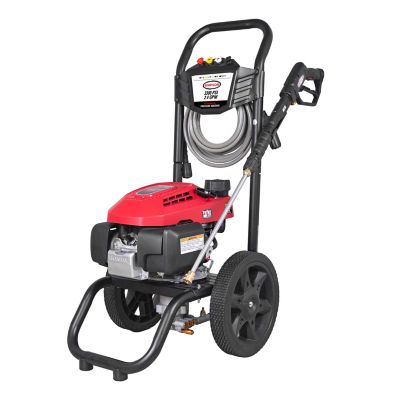
Pressure washers with soap dispensers bring detergent and water together to tackle the dirt that a rinse alone can leave behind. Around a country home, garage or small acreage, that might mean road film on a pickup, muddy splash marks along a utility trailer or grime on washable siding. The dispenser gives cleaning solution time to loosen buildup before rinsing, helping reduce the temptation to blast every surface with more pressure than it can handle. These machines come with several detergent arrangements, including onboard tanks, siphon tubes that draw from a separate container and compatible foam attachments. An onboard detergent tank keeps the solution close at hand as the washer rolls between jobs, while an external siphon setup can make switching containers simpler. Tank capacity, fill-opening size and access for rinsing all affect how convenient the system feels after a long afternoon outside. With most siphon-style detergent systems, soap flows only when a designated low-pressure soap nozzle or detergent setting is engaged. A high-pressure spray tip generally prevents those systems from drawing detergent, so a full tank does not necessarily mean soap will come through every nozzle. Soap tips are often black, but markings and the machine’s manual matter more than color alone. A foam cannon works differently, mixing detergent, water and air through its own attachment to spread foam over a surface. It needs a compatible connection and a pressure and flow range that match the washer; a matching fitting alone does not guarantee proper performance. Foam thickness also depends on the detergent, dilution and equipment settings, and a thicker layer is not automatically a better clean. For shoppers comparing pressure washers with detergent tanks, the useful distinction is how the system delivers soap for the work ahead: a broad application over siding, a foaming attachment for vehicle washing or a simple tank-and-wand arrangement for everyday cleanup. The right setup fits the property’s chores without adding unnecessary handling.
Cleaning performance depends on more than the soap dispenser. Pressure, measured in pounds per square inch, or PSI, describes the force of the spray, while gallons per minute, or GPM, describes water flow. Both figures matter, along with nozzle choice, spray distance and the condition of the surface. Higher pressure is not always a benefit on painted panels, weathered wood or siding with loose edges; enough water flow to carry loosened dirt away can be just as important. Electric pressure washers can suit routine cleanup near a suitable electrical connection, with no gasoline handling and generally less operating noise than gas machines. Cord reach, circuit requirements and protection from wet connections deserve attention around a wash area. Gas-powered pressure washers offer flexibility where an outlet is out of reach, though they still need an appropriate water supply and require engine upkeep. Gas engines belong outdoors, away from doors, windows and other openings where exhaust could enter a building. For bigger stretches of concrete,
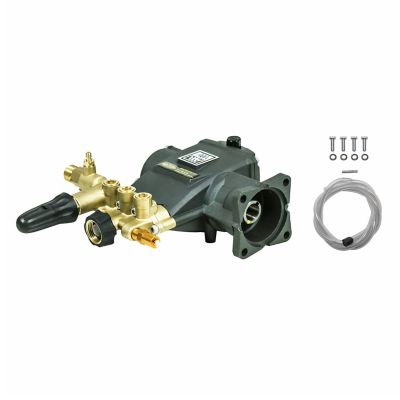
Power Washers for Driveway offer a related category to explore, with pressure, flow and attachment compatibility worth comparing for the surface at hand. Across these jobs, practical construction details can make a noticeable difference. A sturdy frame, well-supported wheels and a handle at a comfortable height help when crossing gravel or moving past a barn apron. Larger wheels can roll more easily over uneven ground, while a compact footprint may fit better in a crowded shed. Hose length determines how often the machine needs moving, and hose flexibility affects how readily it follows around a trailer or porch post. Pump design, fitting materials, hose reinforcement and access to service points all influence long-term upkeep. Brass or stainless steel fittings can offer corrosion resistance, while polymer detergent tanks avoid rust and keep weight down. Every component still has pressure, temperature and chemical limits, so materials should be considered alongside the manufacturer’s ratings rather than treated as a promise of service life.
A well-matched detergent system also depends on the cleaning solution and the surface receiving it. Pressure-washer detergents come in formulations intended for different chores, and the machine’s instructions and detergent label should agree on compatibility and dilution. Household dish soap, solvents and chlorine bleach are not substitutes unless the equipment manufacturer specifically permits them. Many washers introduce detergent downstream of the pump, but that arrangement does not make every chemical safe for the injector, seals, hose or surrounding area. For vehicle owners, a soap dispenser can help loosen ordinary road grime while a suitable spray pattern protects sound finishes; peeling paint, damaged seals, electrical connections and exposed bearings call for extra caution. On siding, the direction of the spray matters because water driven behind panels can create problems well beyond the visible dirt. Wood deserves care, too, since an aggressive spray can raise fibers or leave marks. A small, out-of-the-way test area helps confirm that the detergent and spray setting suit the material. Detergent generally needs a brief dwell time to loosen soil, but it should not dry on the surface. For many vertical surfaces, detergent labels recommend application from the bottom upward and rinsing from the top down, with the specific label taking precedence. Rinsing calls for a nozzle, pressure and distance appropriate to the material, not automatically the machine’s strongest setting. Keeping wash water away from storm drains, wells, animal drinking areas and sensitive plants is part of planning the job. After cleanup, flushing the detergent circuit as directed helps prevent residue from clogging small passages, and rinsing a removable tank keeps leftover solution from sitting between chores. During cooler weather, draining water and following the pump’s winter-storage instructions are especially important wherever temperatures can fall below freezing. Even a machine parked inside an unheated shed can suffer freeze damage. For homeowners, folks maintaining outbuildings and anyone who regularly washes vehicles or outdoor equipment, accessible controls, manageable weight and straightforward detergent-system care can matter as much as headline power figures. Those everyday details help a pressure washer fit into the work, from muddy cleanup to putting equipment away clean.