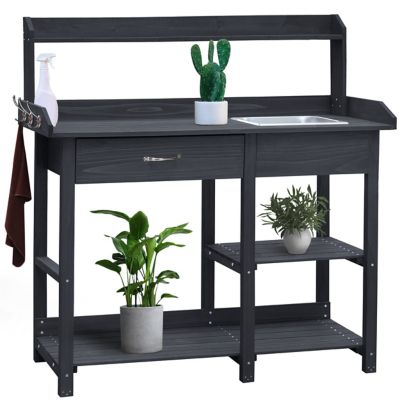
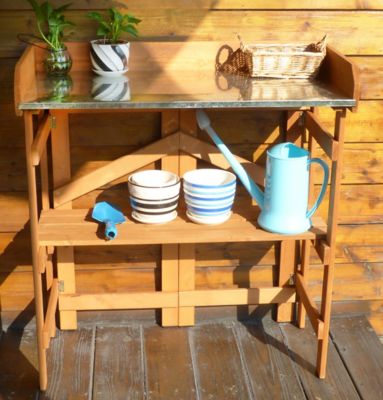
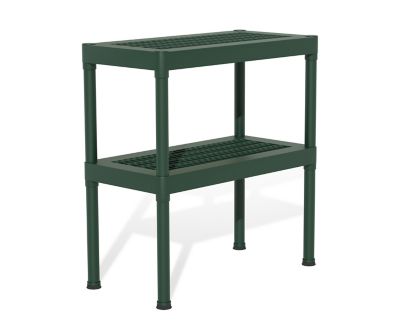
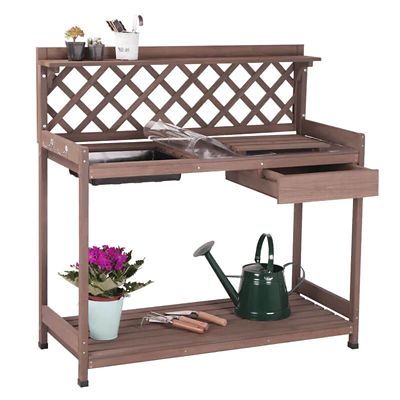
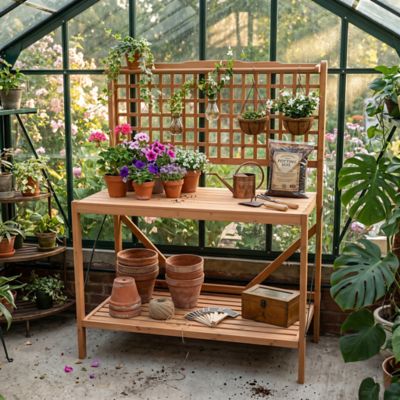
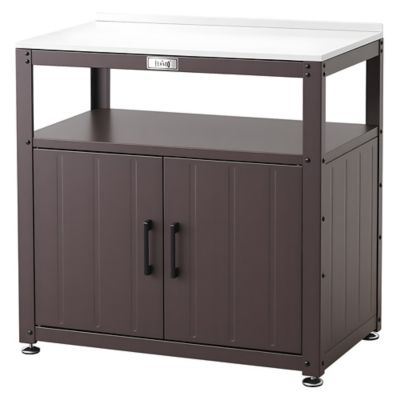
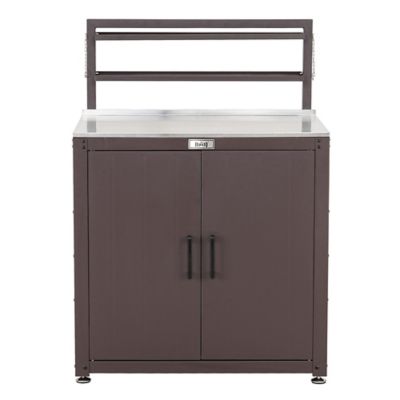
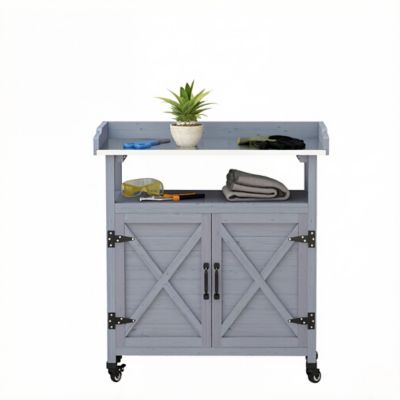
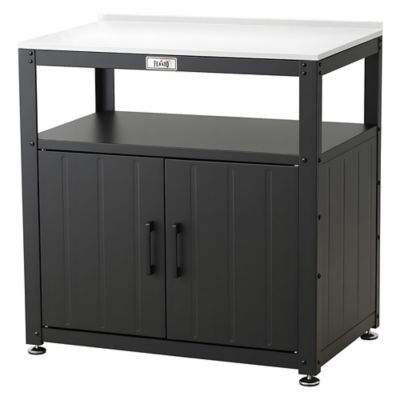
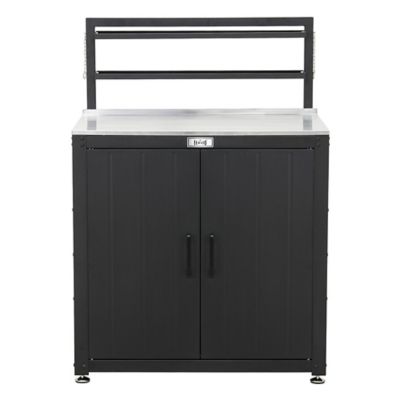
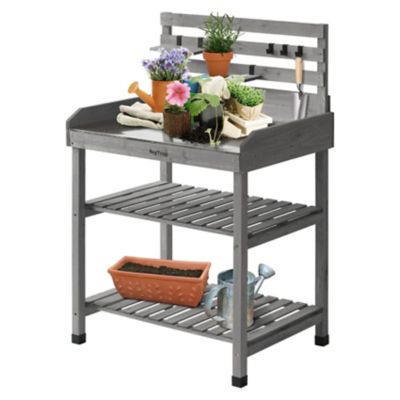
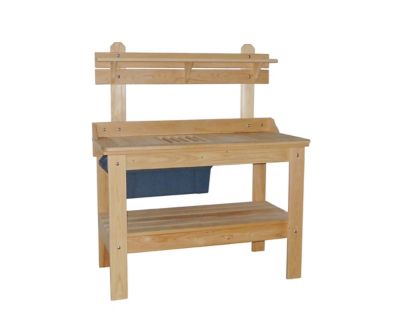
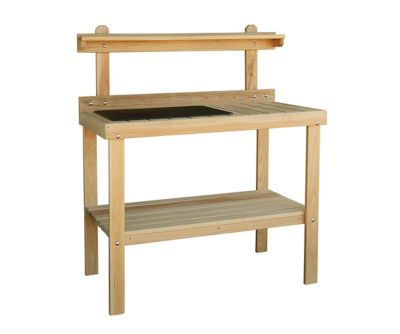
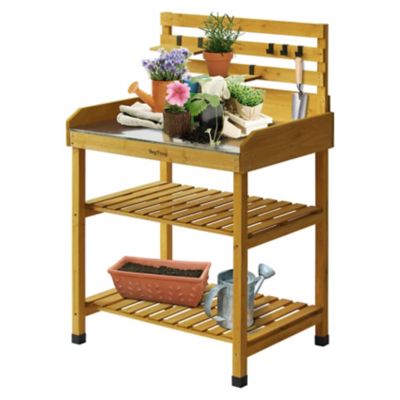
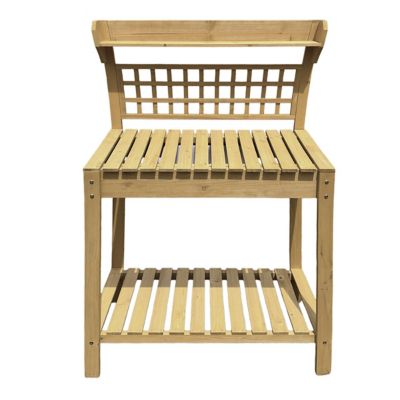
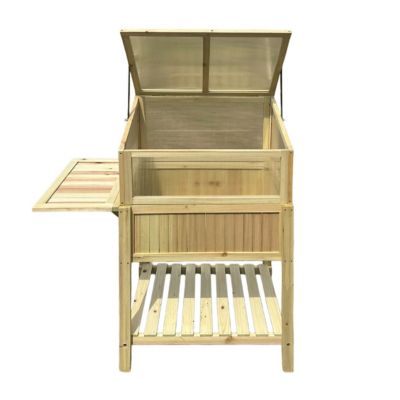
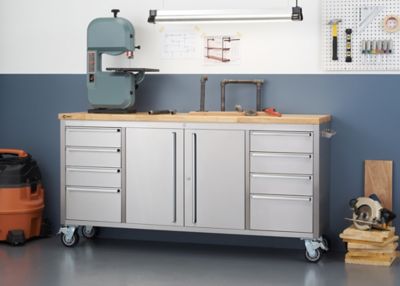
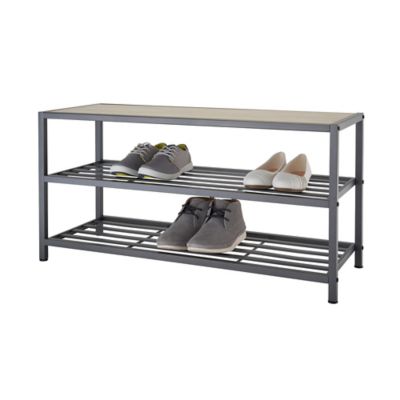
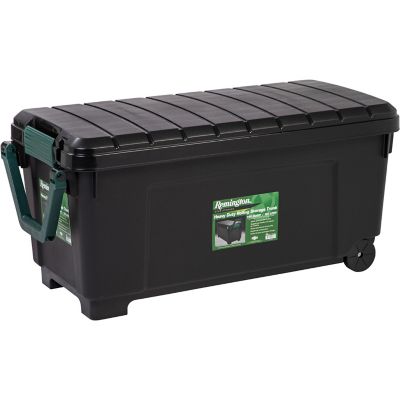
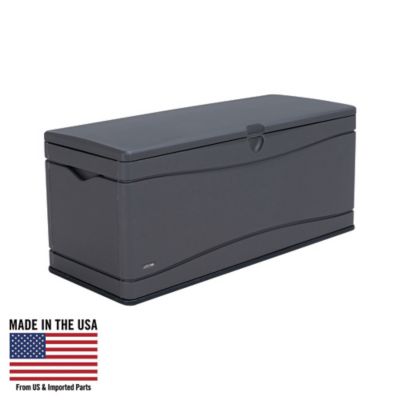
Potting benches with storage combine a raised gardening work surface with shelves, drawers, hooks, or cabinets that keep supplies close to the job. Instead of balancing a flowerpot on a bucket or spreading soil across a table, there’s a dedicated spot for filling containers, dividing plants, and getting roots settled into fresh potting mix. The storage layout matters just as much as the tabletop. An open lower shelf can hold empty planters, a watering can, or a lidded soil container, while a shallow drawer keeps plant markers, twine, and small tools from disappearing beneath a pile of pots. Upper shelves make room for lightweight supplies without taking over the main work area. Side hooks give hand trowels and brushes a place to hang, though sharp tools belong where children cannot reach them. Enclosed cabinets keep visual clutter tucked away, but a cabinet door does not automatically make the space waterproof, pestproof, or child-resistant. Seeds need dry storage, and fertilizers should stay in their original labeled containers wherever their labels direct. For gardeners who work with several container sizes, adjustable shelves can make room for a tall watering can beside a stack of nursery pots. Fixed shelves offer a simpler arrangement, provided the spacing suits the supplies going underneath. A clear stretch of tabletop is especially helpful when a root ball comes out larger than expected and there needs to be room for both the plant and its new container. Raised back edges can help contain loose mix, while a smooth front edge makes brushing crumbs into a collection tray easier. Keeping the heaviest supplies low and lighter supplies up top helps make the storage practical. A bench that holds everything within easy reach can turn a scattered corner of the shed or garden workspace into a place where the next planting job starts without a search for the scoop.
Materials affect how a potting bench feels to work on, how much attention it needs, and where it belongs. Wood brings a familiar look to a garden workspace and is easy to pair with shelves, drawers, and a slatted lower rack. Cedar has natural resistance to decay, while other woods may depend more heavily on an appropriate protective finish. No wood surface benefits from standing water or wet potting mix left against it. Manufacturer care directions should determine whether a finish needs refreshing and which cleaners are suitable. Metal worktops offer a surface that is often easier to wipe down after a messy transplanting job, although seams, fasteners, and exposed edges still need attention. Galvanized steel and coated metal components have protective layers that can be compromised by scratches, so abrasive scrubbing is not always the best approach. Resin components may be straightforward to clean, but their load limits and placement requirements still matter. For any material, suitability for outdoor placement should come from the manufacturer's specifications rather than appearance alone. Fit starts with the space around the bench, not just its listed width. Cabinet doors need room to swing, drawers need clearance to open, and a gardener needs space to turn with a full planter without bumping a wall or railing. Tabletop depth should leave room for the containers at hand without putting the back edge beyond a comfortable reach. Working height matters, too: shoulders should not stay hunched upward, and routine potting should not require a constant bend at the waist. Published weight capacities deserve attention because damp soil and filled containers can get heavy fast; shelf limits may differ from the main surface limit. A level, firm base helps keep the frame steady. Wheels can make repositioning easier on a suitable surface, and locking casters help hold a mobile bench in place while work is underway.
The best storage arrangement fits the way the gardening actually gets done. Someone tending a few porch containers may need little more than a clear tabletop, a drawer for snips and labels, and a shelf for extra pots. A gardener caring for a larger collection may appreciate separate spaces for different container sizes, propagation trays, and tools that need to stay easy to find. A removable soil tray or recessed bin can help keep loose mix contained, provided it can be lifted and emptied without an awkward reach. A sink-style basin adds a place for rinsing containers or catching debris, but it does not necessarily include a faucet, water connection, or drain hose. Those details matter before planning a washing station around it, and soil should stay out of household drains. Care is generally simpler when the work surface is cleared after each task, loose mix is brushed away, and damp spots are wiped before supplies go back into storage. Removable bins make it easier to clean shelf corners where spilled mix collects. Fasteners, drawer slides, hinges, and wheel locks also benefit from periodic checks according to the manufacturer's directions. For a gardener who enjoys working with plants, a potting bench can make a thoughtful gift when the workspace measurements and preferred working height are known. It gives everyday tasks a home without requiring a full shed or greenhouse. Near the entry,
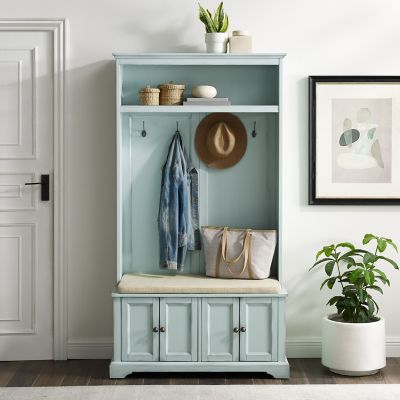
Mudroom Benches With Storage can provide a separate spot for sitting down to pull off boots and keeping entryway essentials together; a potting bench remains a work surface rather than a seat or step. With sensible storage and enough elbow room, the gardening area can stay ready for everything from topping off a hanging basket to moving a root-bound plant into a larger pot.