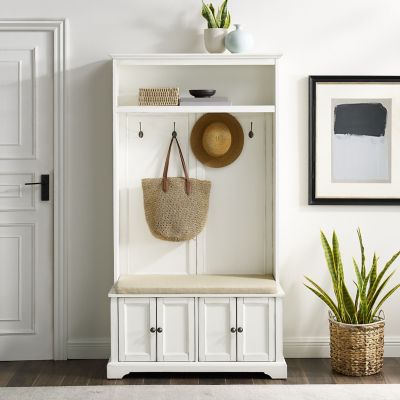
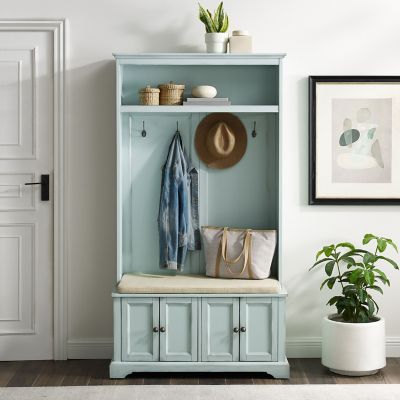
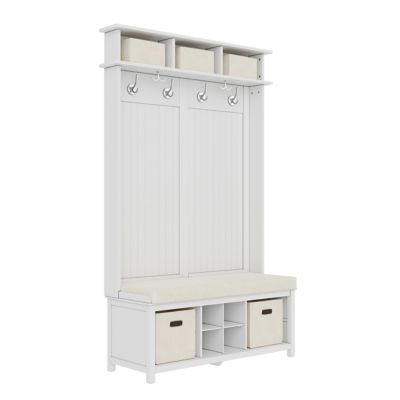
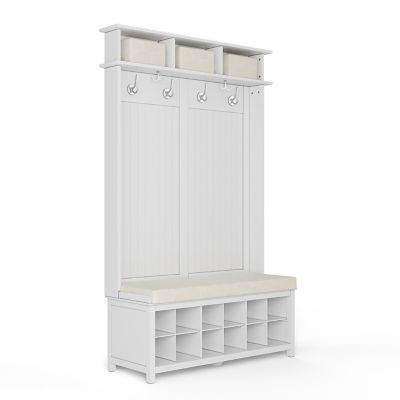
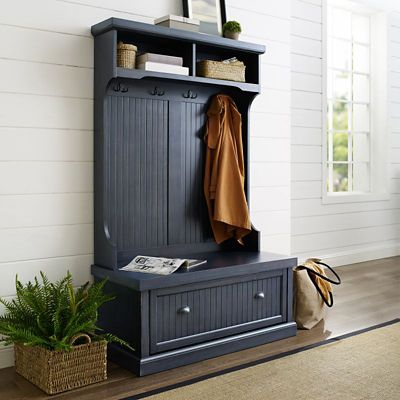
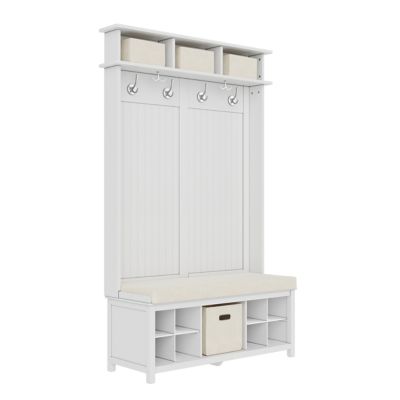
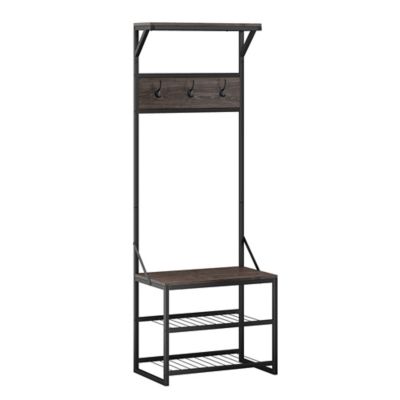
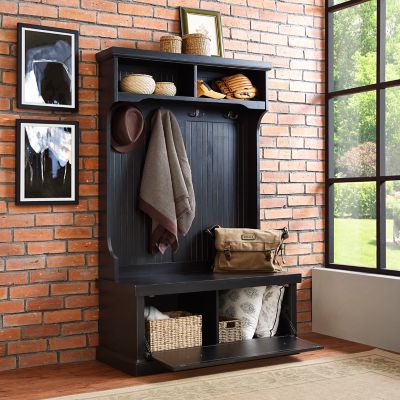
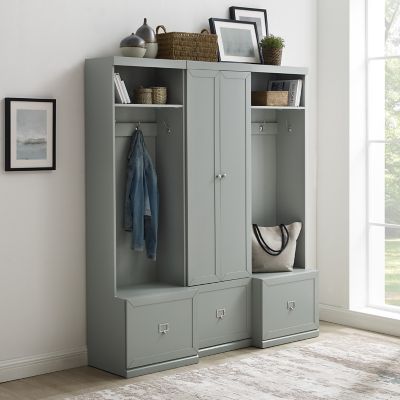
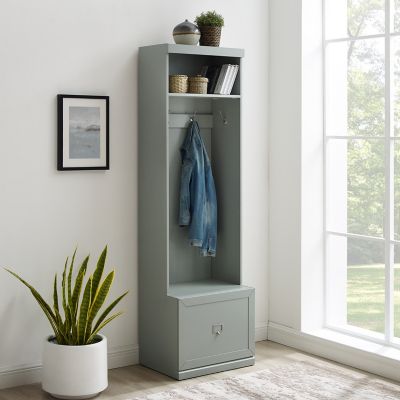
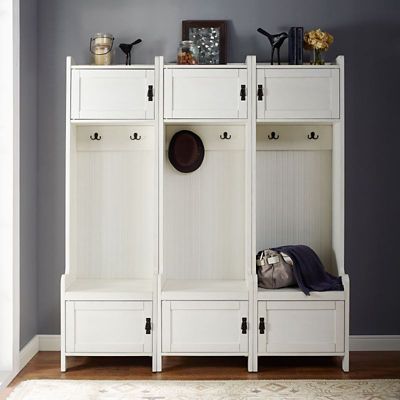
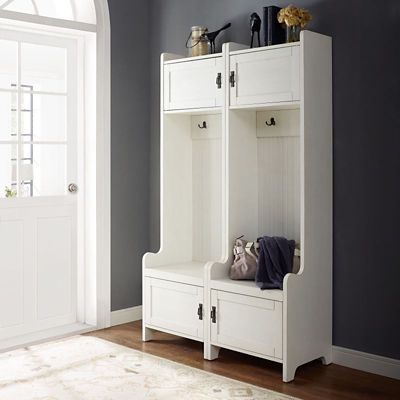
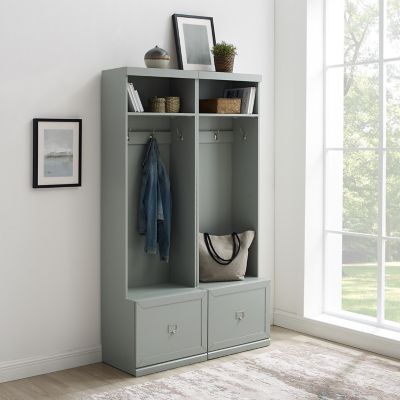
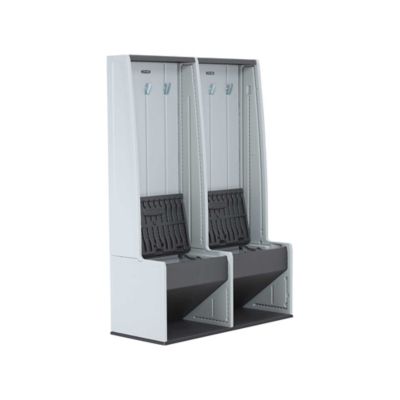
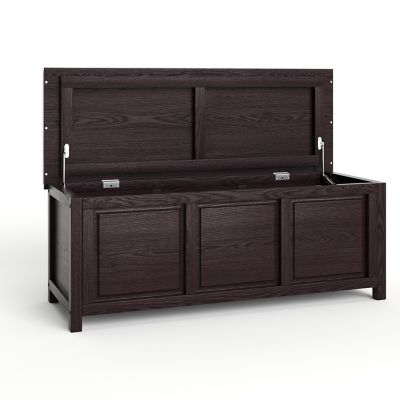
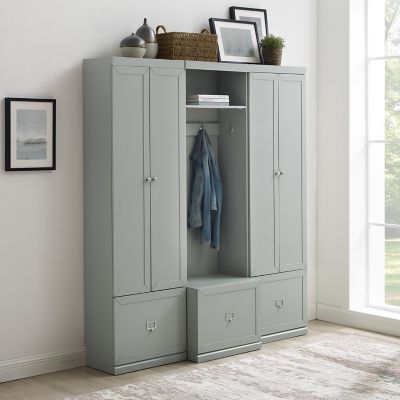
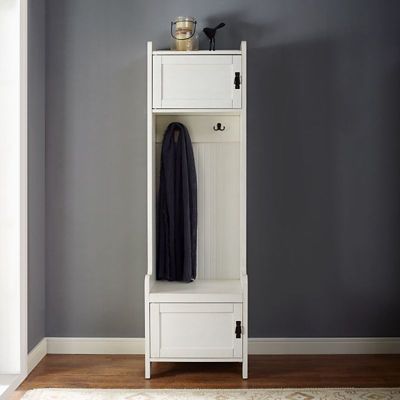
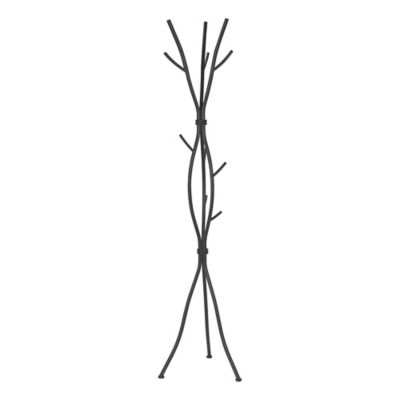
Hall trees with storage benches bring coat hooks, a sitting spot, and storage together in one piece of entryway furniture. They give everyday belongings a place to land without spreading separate racks, chairs, and shoe shelves across the room. In a farmhouse entry, a mudroom off the garage, or a hallway beside the front door, that combination can help keep the path through the house clear. A chore jacket hangs within reach, work boots sit below the bench, and a tote bag stays off the kitchen table. The layout varies: some hall trees have open shoe shelves beneath the seat, while others have divided cubbies, drawers, cabinet doors, or a lift-top storage compartment. Hooks may attach to a full back panel or sit along an open frame, and upper shelves can hold baskets or belongings that do not need to be within daily reach. These differences matter more than the number of compartments alone. Open shelves make footwear easy to spot, while enclosed spaces keep loose belongings out of sight. Individual cubbies can give each person a landing place, although tall boots and larger work shoes need more room than sneakers or slippers. A bench adds a practical place to sit while tying laces or pulling on boots, provided the seat is designed and rated for sitting. For households with children, adults heading out to work, or frequent visitors, having a seat and hanging space together makes the doorway easier to share. Hall trees also suit laundry-room entries and other indoor spaces where bags, hats, and footwear tend to collect. Their main purpose is everyday organization, not just filling an empty wall. A well-matched layout keeps the belongings that leave the house each day close to the door, with enough separation that finding a leash or a second shoe does not mean emptying a whole basket.
Materials and construction affect both the appearance of a hall tree and how it handles regular household wear. Solid wood brings visible grain and a substantial look, though its surface still needs protection from standing moisture and rough treatment. Engineered wood, including particleboard or medium-density fiberboard, often has a painted, laminated, or veneered surface that determines much of its care routine. Keeping edges and seams dry helps protect these materials from swelling. Metal frames give many entryway hall trees a more open profile, often paired with wood or engineered-wood seats and shelves. A frame with fewer solid panels may feel less imposing in a small room, while a full back panel provides a defined backdrop for coats and bags. Neither appearance alone nor the weight of the furniture tells the whole story about strength. Seat weight limits, shelf capacities, hook ratings, connection points, and the maker’s assembly directions are better measures of suitability for daily use. A backpack full of books places a different load on a hook than a baseball cap, and a shelf meant for shoes should not be treated as another seat. Upholstered or cushioned benches soften the sitting surface, while an unpadded seat is generally simpler to wipe down. Removable cushion covers can make cleaning easier when the care label allows washing. Painted finishes, visible wood grain, woven baskets, and dark metal can all work alongside country-style furnishings without needing to match every cabinet or table exactly. Light finishes create a softer look against a dark wall, while deeper wood tones give a pale entryway more contrast. For routine upkeep, loose dirt can be brushed or vacuumed from shelves before surfaces are wiped with a cloth suited to the finish. Harsh cleaners, abrasive pads, and soaking-wet cloths can harm some surfaces. Following the listed care directions, checking fasteners periodically, and keeping grit from building up beneath footwear help the piece stay ready for everyday traffic.
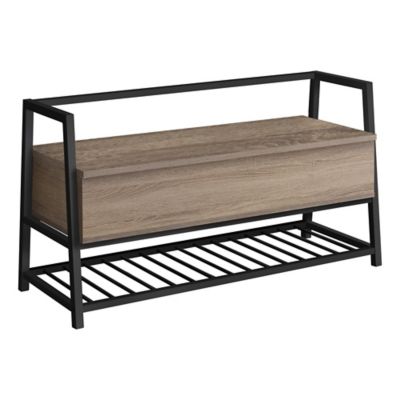
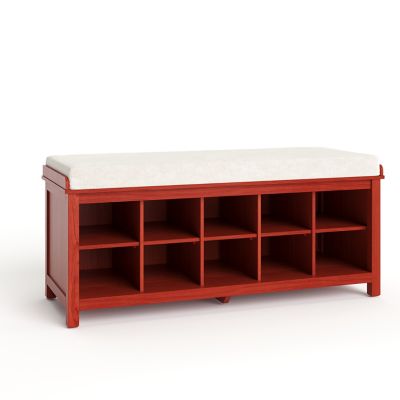
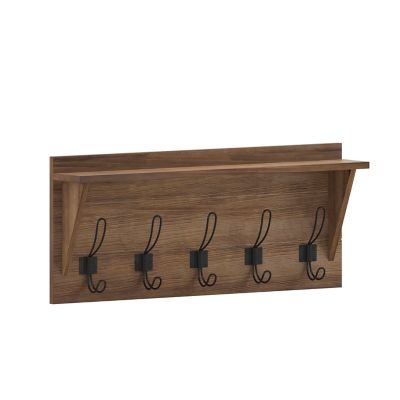
Fit includes the space around the hall tree, not just the wall behind it. Overall width, height, and depth determine whether the furniture fits beneath a ceiling feature, beside a light switch, or between door trim and a corner. Baseboards may keep the frame from sitting flush against the wall, and a nearby door needs room to swing without striking the bench or hanging coats. The space taken up by everyday belongings matters, too: a heavy jacket can project beyond the hooks, and boots may extend past a shallow shelf. A comfortable sitting area leaves room for feet and knees, with enough clear floor space for someone else to pass. Bench height and depth should suit the people who will sit there; a tall seat can be awkward for a small child, while a shallow seat may feel cramped for an adult fastening work boots. Storage access also changes the way the furniture functions. A lift-top bench needs clearance above the lid, and anything resting on the seat has to move before the compartment opens. Drawers and cabinet doors require space in front, whereas open cubbies remain accessible without a swing path. Long coats need sufficient hanging room so hems do not bunch on the bench or cover the shoe storage. Upper shelves work well for lighter, less frequently reached belongings, subject to their stated load limits. Tall furniture should be secured according to the manufacturer’s directions with anchoring hardware appropriate for the wall, especially in homes with children or pets. Hooks and shelves are not climbing supports, even when the frame looks substantial. Where wall hooks or a coat closet already handle hanging storage, a
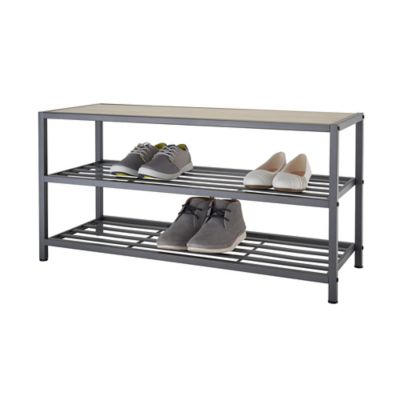
Shoe Bench offers a lower-profile way to combine seating with footwear storage. A full hall tree with a storage bench makes sense when both hanging space and a place to sit are needed in the same small stretch of floor. It can also be a thoughtful housewarming gift when the recipient’s measurements and preferences are known. The best fit is furniture that suits the doorway and the daily routine, from setting down a feed-store tote to leaving boots neatly out of the walking path.