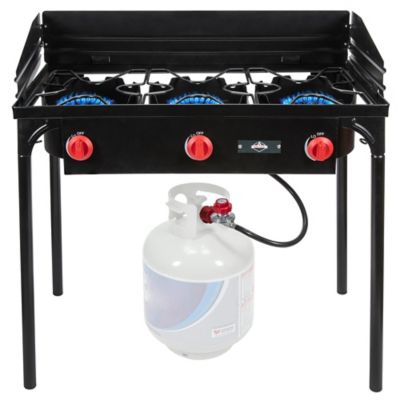
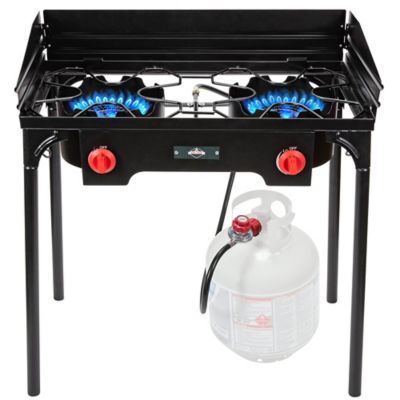
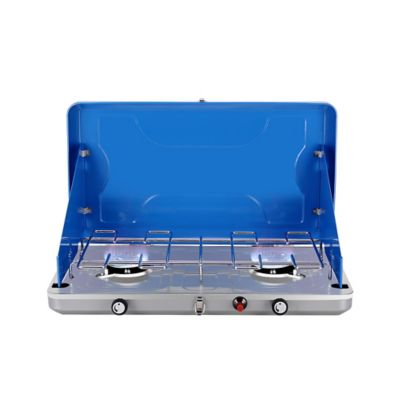
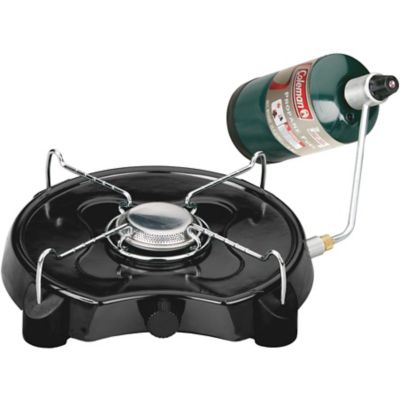
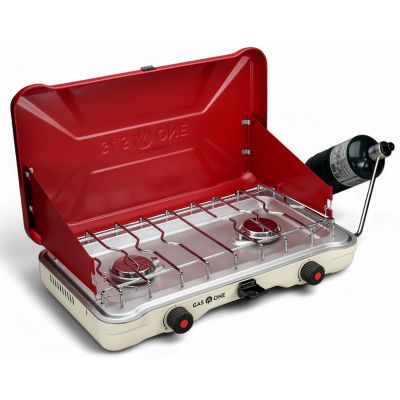
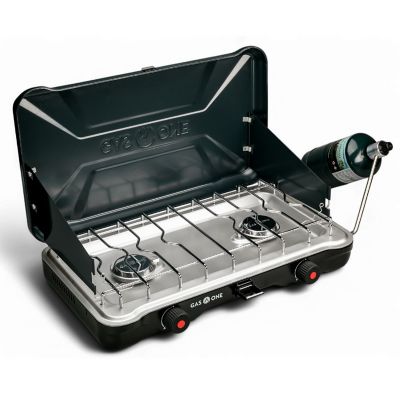
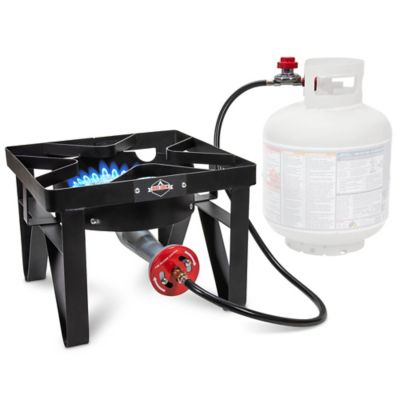
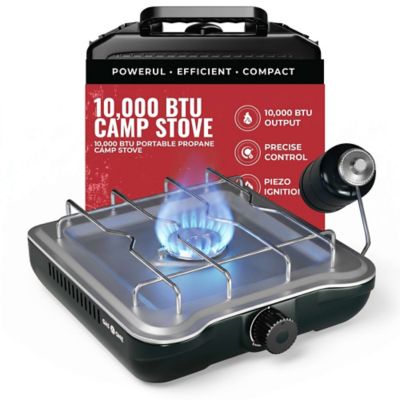
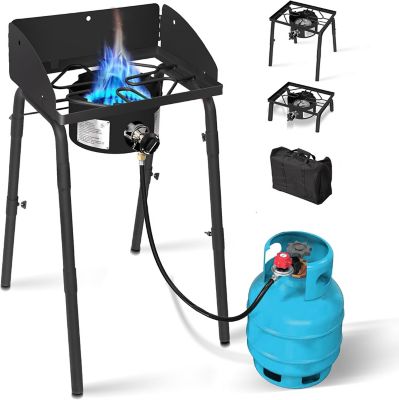
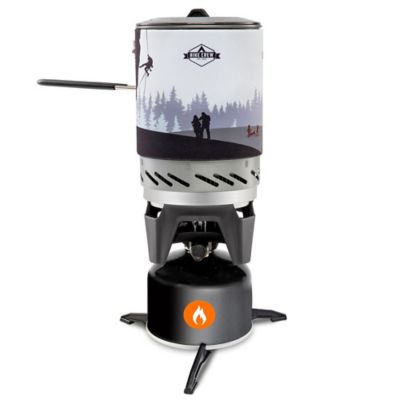
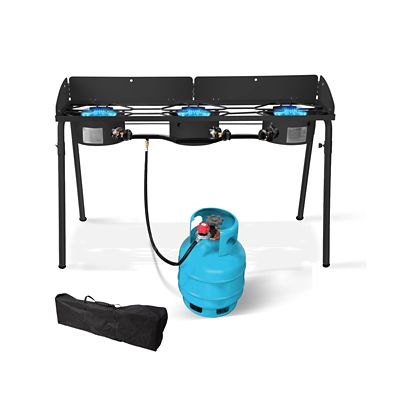
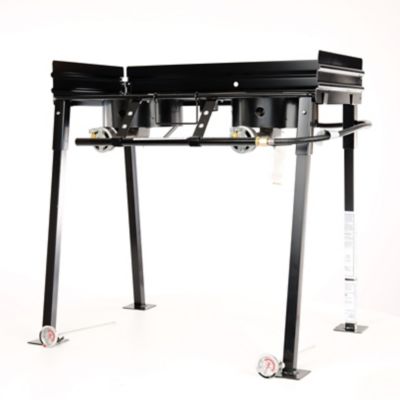
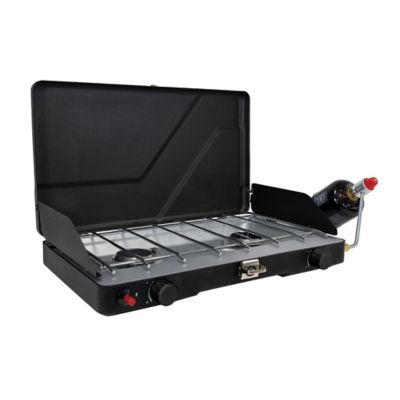
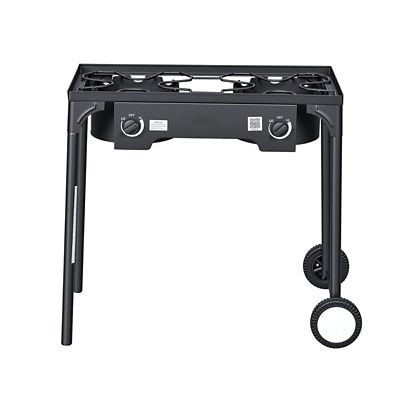
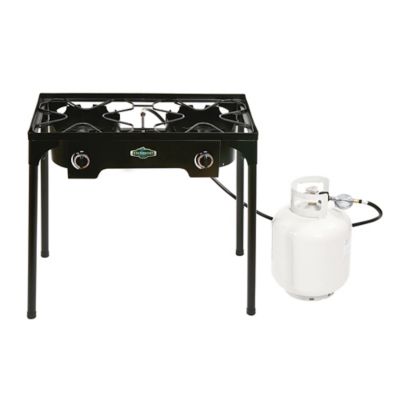
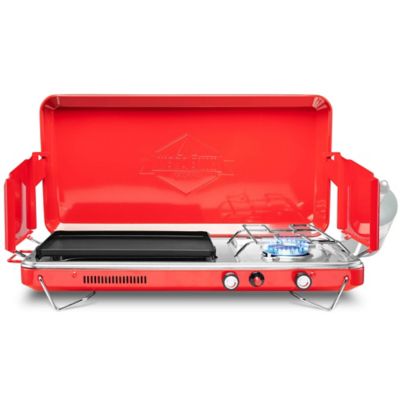
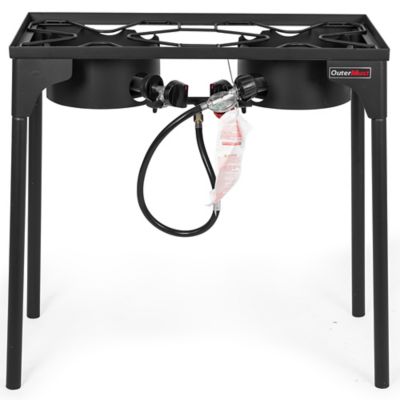
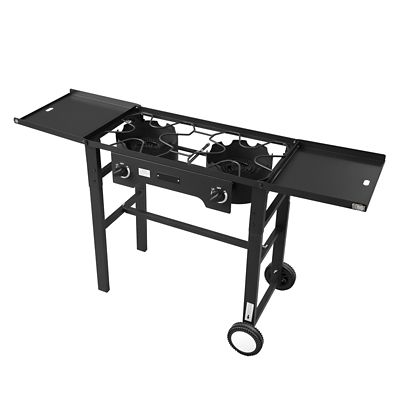
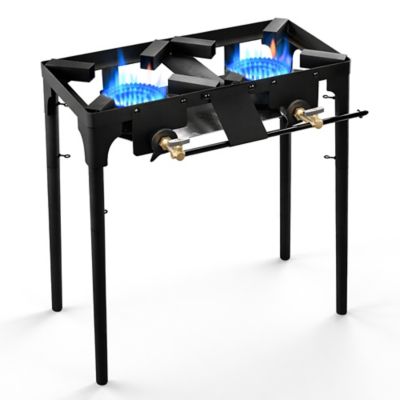
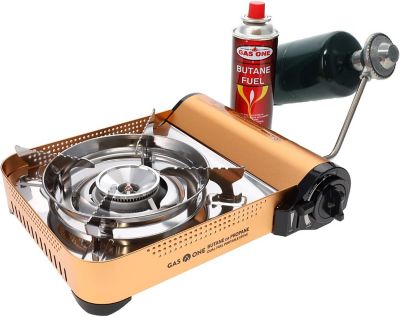
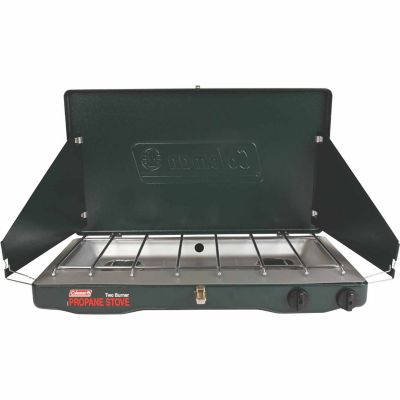
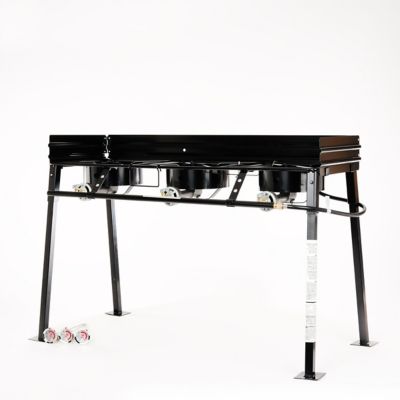
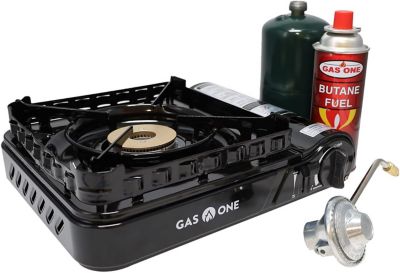
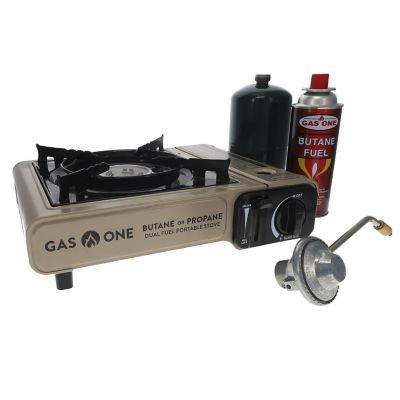
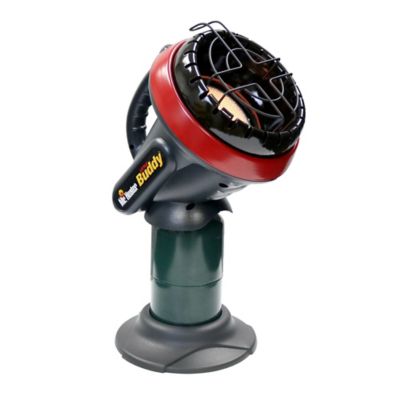
Portable propane camp stoves put a controllable cooking flame on the picnic table, at a campsite or beside the truck, without needing an electrical hookup or a wood fire. They’re made for outdoor meal preparation, from boiling water for coffee to cooking eggs in a skillet or heating a pot of beans after a day on the trail. Single-burner stoves keep the cooking setup compact and make sense for one-pot meals, smaller groups and trips where packing space matters. Two-burner camp stoves give each pan its own spot, so breakfast potatoes can cook while the coffee water boils. Independent burner controls also let a skillet stay hot while a saucepan simmers alongside it. Larger, freestanding propane cooking setups offer more room for group meals, though their size and weight call for more cargo space. Burner output is measured in British thermal units, or BTUs, and a stove’s advertised total may combine the output of all its burners. Per-burner ratings give a clearer picture of how that heat is distributed. High output can help with a large pot of water, but steady low-flame adjustment matters just as much for oatmeal, sauces and food that scorches easily. Many portable propane stoves accept a 1 lb. propane cylinder. Some also connect to a larger refillable tank, such as a 20 lb. cylinder, with the hose, regulator and fittings specified by the stove manufacturer. That larger fuel supply can suit an established camp kitchen, while a small cylinder keeps the setup easier to carry. Connections aren’t universal, and propane and butane containers aren’t interchangeable unless the stove is expressly designed for both fuels. Within the broader
Camp Stoves category, portable propane models offer a practical balance of adjustable heat, packable size and straightforward fuel handling. The best fit depends on the meals being cooked, the number of hungry people waiting and how far the equipment needs to travel from the vehicle.
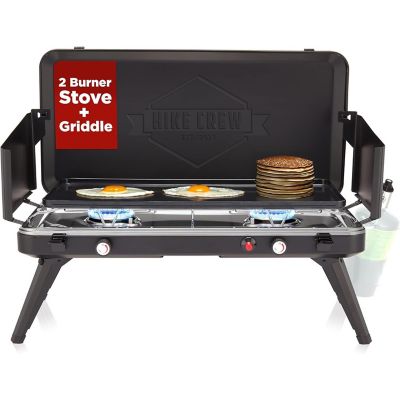
Construction and cooking space make a noticeable difference once the pans come out. Steel bodies, stainless steel components and aluminum parts each affect a stove’s carrying weight, resistance to corrosion and cleanup needs. Painted or powder-coated housings benefit from careful packing that keeps loose tools and cookware from scraping against the finish. Stainless steel surfaces wipe down readily, though they still need cleaning and drying after meals. Cooking grates may be steel or cast iron, depending on the design; their shape and support matter when balancing a narrow coffee pot or a full skillet. A broad grate and a stable base help keep cookware seated, but the stove’s stated pan-size and weight limits still apply. Overall width alone doesn’t tell the whole story. Burner spacing determines whether two everyday pans can sit side by side without crowding the controls or hanging too far over the edges. For a family breakfast, room for a frying pan and a saucepan may matter more than a higher total BTU rating. A griddle can expand the menu to pancakes, bacon and toasted sandwiches when the stove manufacturer permits that accessory. Hinged lids and folding wind guards can help shelter the flame, and their clearance requirements belong in the space calculation, too. Push-button or piezo ignition saves reaching for a match at every meal, although an approved backup lighting method is worth having along when the manufacturer allows one. Carry handles, secure latches and neatly stowed fuel connections make the trip between the truck and cooking area less awkward. Removable grates and accessible drip trays help with the less glamorous part of camp cooking: wiping away bacon grease, spilled soup and crumbs before everything goes back in the vehicle. Cleaning methods vary by material and construction. Gentle cleaning, thorough drying and storage away from moisture help protect the body, burner openings and fittings. A fitted carry bag or case can also keep the stove and its approved accessories together without leaving the regulator loose among the pots.
Portable propane camp stoves suit car campers, fishing crews, hunters and folks who would rather cook a full meal outside than settle for another sandwich. They also make a practical gift for someone building a camp kitchen, especially when the stove’s size matches that person’s cookware and usual group. A solo angler heating soup has different needs from a family turning out several rounds of breakfast, and a stove that lives near the truck doesn’t need the same packing priorities as equipment carried farther down a trail. Tabletop models need a stable, level, noncombustible support with the clearances specified in their instructions; freestanding models need firm footing and enough room around their legs and fuel supply. Propane camp stoves are for outdoor use only. They must never operate inside a tent, camper, vehicle, garage or other enclosed space, even with a door or window open, because combustion can produce carbon monoxide. A clear cooking area also keeps hot cookware and flames away from bedding, dry grass, loose clothing and curious hands. Manufacturer-approved wind protection matters here: improvised enclosures or oversized cookware can trap heat around parts that aren’t meant to get that hot. Fuel cylinders need upright, secure placement as directed, away from the stove’s heat and out of traffic where someone could trip over a hose. Sound fittings and a leak-free connection are part of every propane setup. Connections should be checked with an approved leak-detection solution or soapy water as directed by the manufacturer, never with a flame. Disposable cylinders aren’t intended for refilling, and refillable cylinders require the proper filling service and handling. Once cooking is finished and the equipment has cooled, clean surfaces and protected connections make packing easier. With the right cooking area, compatible fuel equipment and enough room for the pans, a portable propane stove can turn a simple campsite into a comfortable place to feed the crew.