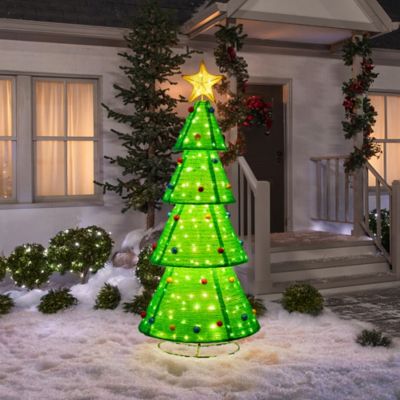
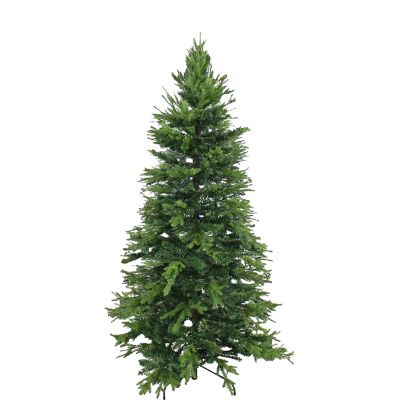
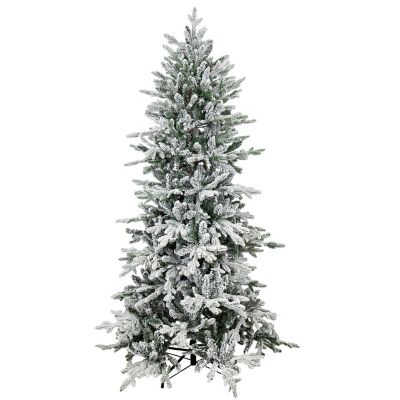
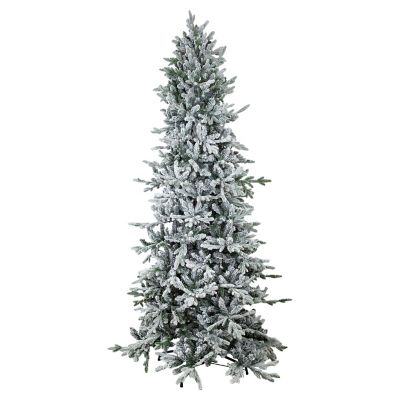
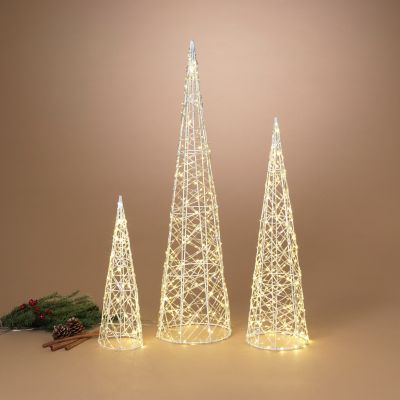
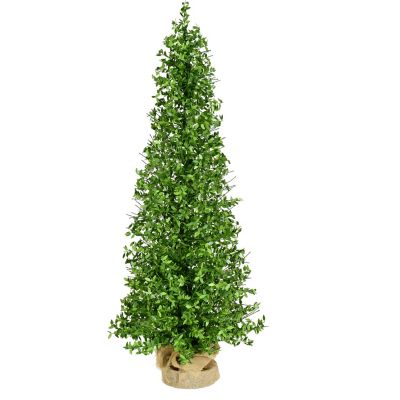
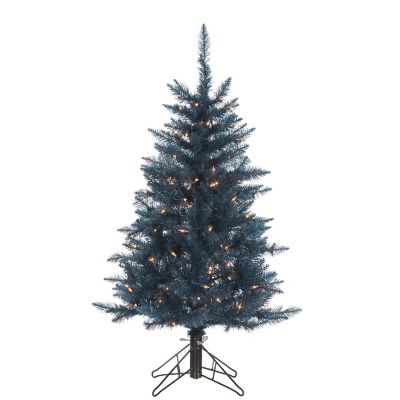
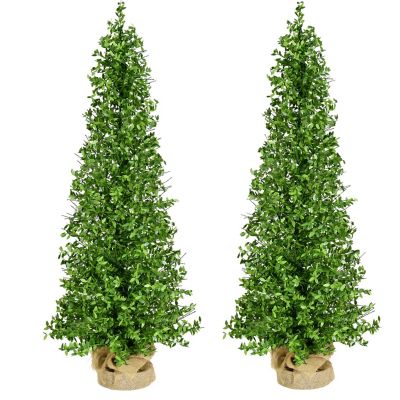
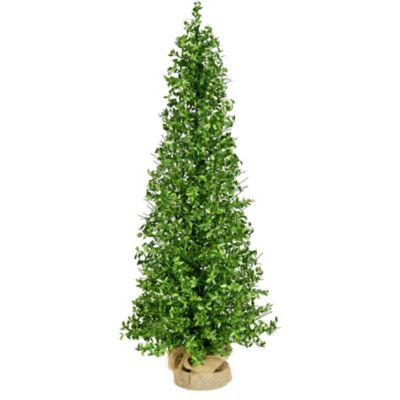
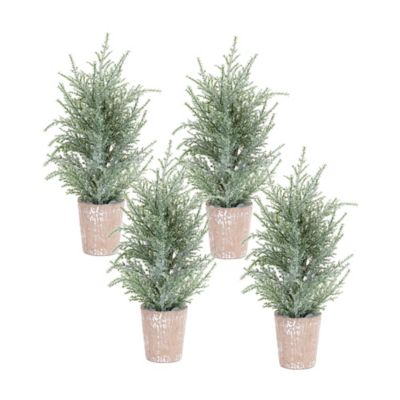
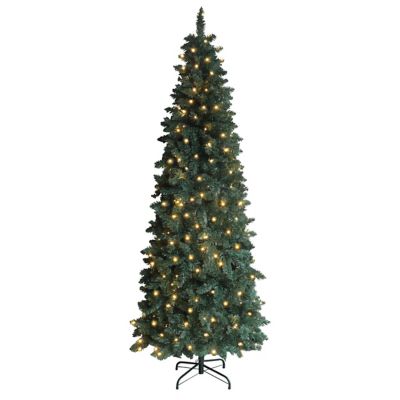
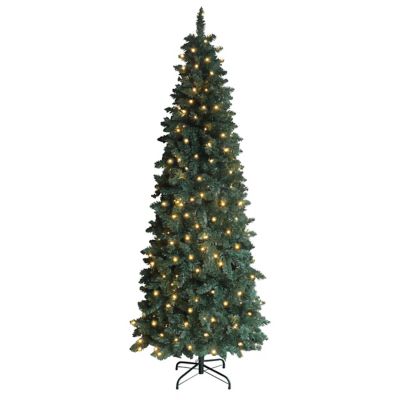
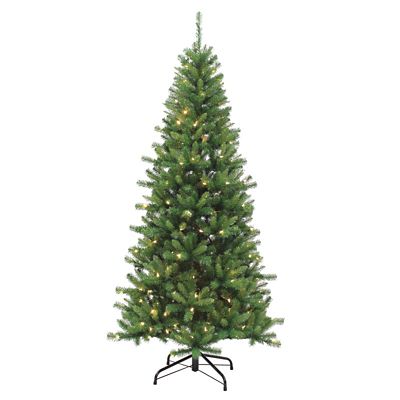
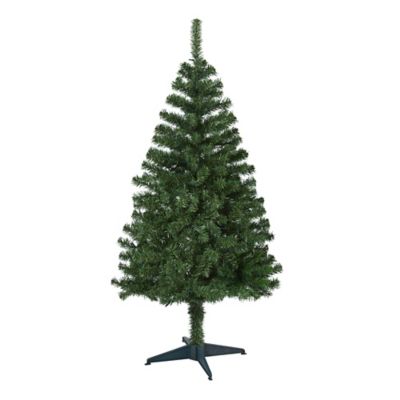
Porch Christmas trees bring the familiar shape of an evergreen to front steps, covered entries, and the space beside a farmhouse door. These compact trees are often around 2 to 5 feet tall, with artificial branches or living greenery set into a pot, planter, or supported base. Their smaller footprint makes them a good fit for places where a full-size Christmas tree would crowd the entrance. A matching pair can frame a wide doorway, while a single narrow tree can brighten the corner beside a bench or porch rocker. Height tells only part of the story, though. The total measurement should account for the base, and the branch width matters just as much when there’s a storm door to swing open or a load of firewood to carry inside. A slim profile leaves more walking room on shallow steps; fuller branches have more presence against a broad wall or deep porch. Artificial porch Christmas trees commonly feature PVC needles, molded polyethylene tips, or a blend of materials supported by wire branches and a central frame. Molded tips can capture the shape and texture of evergreen growth, while layered branch styles help create a full outline without taking up much floor space. Some trees have an open, woodsy look with visible spaces between branches, and others have a denser shape that suits a more finished entry. Plain green foliage keeps the look simple, while pinecones, berry accents, or snowlike flocking add detail without requiring many extra ornaments. Bases change the overall feel, too: an urn creates a more formal entrance, while a straightforward planter looks at home beside work boots and a wooden bench. Pot appearance alone doesn’t establish outdoor suitability, so the tree, base, and any attached accents need to match the intended placement.
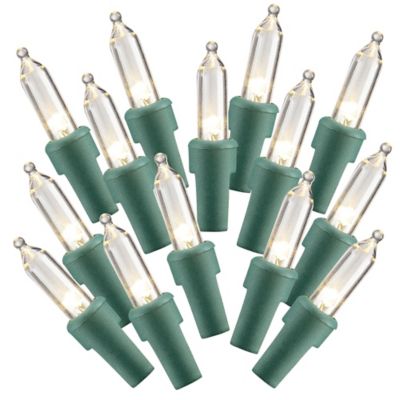
Lighting is another big difference among porch Christmas trees, especially when the entrance sits back from the road or the porch light doesn’t reach both sides of the door. Pre-lit trees keep the wiring tucked among the branches and save the work of arranging a separate strand. Unlit trees leave more room to choose the light color and spacing or enjoy the greenery on its own. Warm white lights give an entry a soft glow, while multicolor lights bring a more playful Christmas look. LED lights generally draw less electricity than comparable incandescent lights, but the power source still needs to suit the porch. Plug-in trees work best where an outdoor-rated connection can stay clear of foot traffic, swinging doors, and standing water. Outdoor electrical connections should have GFCI protection, and extension cords need an outdoor rating and the right capacity for the connected lights. Battery-operated porch trees offer more placement flexibility where an outlet isn’t close by. A built-in timer can simplify evening lighting, although timer schedules, battery requirements, and runtime vary by design. Battery compartments also need the protection specified by the manufacturer; battery power by itself doesn’t make a tree suitable for rain or snow. The same distinction applies to pre-lit foliage: a covered-porch rating isn’t the same as approval for a fully exposed location. Wind deserves attention even under a roof. A weighted base can help with balance, but it doesn’t make a tall tree windproof, and any anchoring should follow the tree’s instructions without blocking steps or railings. Wide bases need enough flat surface to sit securely rather than perch along a stair edge. For homes with curious pets or visiting children, tucked-away cords, firmly attached accents, and a clear path through the entrance make the setup easier to live with throughout the Christmas season.
The right arrangement depends on how the porch works day to day, not just how it looks from the driveway. Two evenly sized trees suit a centered doorway, but an entry with a bench on one side may feel less crowded with one tree on the other. A short tree can sit beside a low railing without hiding the house number, while a taller, narrow shape can hold its own near porch posts. Keeping the mailbox, doorbell, and package drop spot within easy reach helps the entrance stay welcoming for guests and everyday deliveries. Smaller connected spaces can carry the same Christmas feel with
Artificial Tabletop Christmas Trees on an entry table or indoor windowsill, with placement matched to each tree’s rating. Porch trees can also make a thoughtful gift for someone settling into a new home, especially when the tree’s size and power needs suit the recipient’s entry. For artificial trees, care usually centers on gentle cleaning, protecting electrical parts from moisture, and letting branches dry before storage. Dust and loose debris can often be removed with a soft brush, but flocked finishes and attached accents may need a lighter touch according to their care directions. Branches that fold or separate into sections can simplify packing, provided they aren’t forced into a container that crushes the tips or strains the wiring. A dry storage spot and a protective cover or properly sized box help keep the tree ready for another Christmas. Living potted evergreens have different needs: they require suitable light, drainage, and soil moisture, and roots in containers can be more exposed to freezing than roots in the ground. A species suited to the local climate matters, as does the amount of sun the porch receives. Whether the preference is living foliage or an artificial tree that packs away after the holiday, a good fit leaves room for muddy boots, visiting family, and a front door that opens freely.