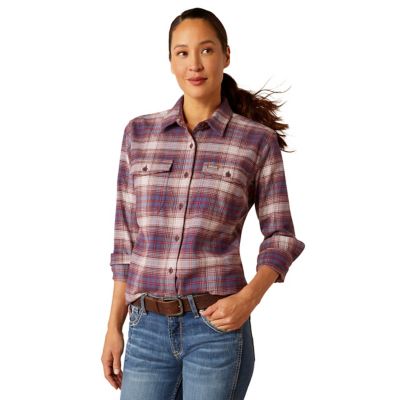
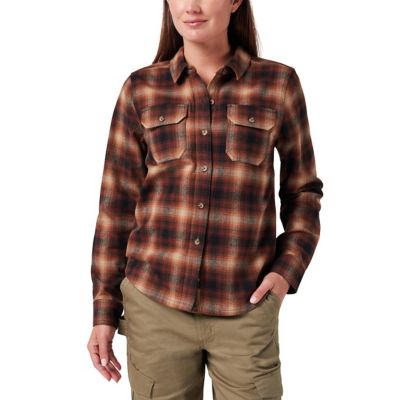
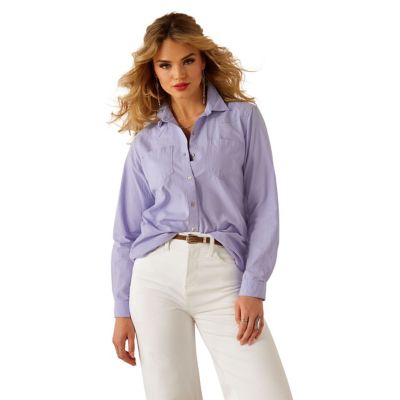
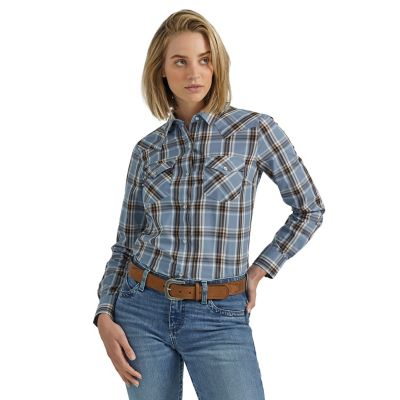
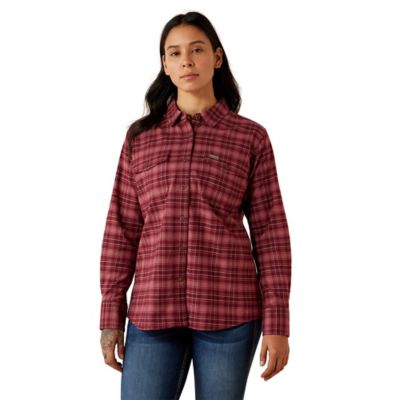
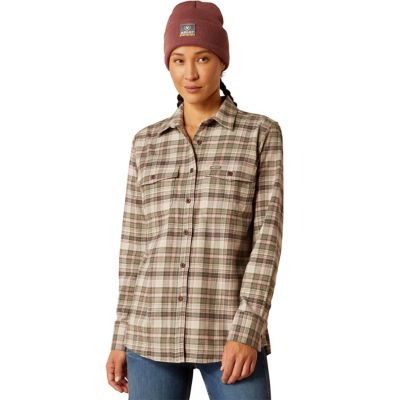
Plus-size flannel shirts for women pair a soft, brushed feel with an easygoing look that fits everyday life, from feeding animals before breakfast to heading into town for errands. Flannel describes the fabric, while plaid describes a pattern, so the two terms do not mean the same thing. The familiar crossed lines of plaid give many flannel shirts their country character, but the fabric’s texture matters just as much as its colors. Brushing lifts fine fibers from the surface, creating the slightly fuzzy feel that makes flannel comfortable against the skin. Cotton flannel brings a natural, absorbent feel, while cotton blends may include fibers that help limit wrinkling, support shape retention, or add stretch. Fiber content alone does not tell the whole story, though. Fabric weight, weave, and finishing all affect how a shirt hangs and feels. A lighter fabric tends to drape more freely and tuck into jeans without as much bunching. A heavier fabric has more body and can give an untucked shirt a more structured outline. Neither is automatically the better choice; the right feel depends on whether the shirt will spend the day buttoned on its own or open over a favorite tee. A softly brushed inside can be especially pleasant against bare arms, while the outer surface gives the shirt its familiar texture. Color and pattern change the overall look without changing that practical appeal. Small checks read differently from broad blocks of plaid, and a mix of several colors gives more options for pairing with denim, canvas pants, or a simple knit top. Muted shades can blend easily into an everyday wardrobe, while stronger contrasts make the shirt the main feature of an outfit. For women who split their time between the house, barn, and a trip down the road, that combination of comfort and straightforward styling makes flannel an easy piece to reach for.
Fit makes a real difference in how a plus-size flannel shirt wears through a full day. Plus sizing and an oversized silhouette are not the same thing: plus sizing addresses body measurements and proportions, while oversized describes a deliberately roomy shape. A shirt can fit close through the shoulders and still offer enough room across the bust, waist, and hips. Comparing body measurements with the size chart gives a better starting point than assuming every shirt with the same size label will fit alike. Bust room deserves particular attention on a button-front shirt. The placket should lie reasonably flat when standing, sitting, or reaching forward, rather than pulling apart between buttons. Shoulder placement and upper-arm room matter, too, especially when lifting a feed scoop, carrying a basket, or reaching across a truck seat. Stretch can help with movement, but it does not replace enough room through the back and sleeves. A back pleat or a roomier cut may also make reaching more comfortable. Hem length changes both coverage and styling. A curved shirttail can sit neatly over jeans, while a longer back hem provides extra coverage when bending. Side slits may give the hem more room to move over the hips. For a deliberately relaxed shape,
Women's Oversized Long Sleeve Shirts offer another silhouette to consider alongside a more closely fitted flannel. The intended layer underneath matters when deciding how much room feels right. A thin tank takes up less space than a substantial knit top, and a shirt worn open does not need to sit the same way as one worn fully buttoned. Sleeve length and cuff adjustment are worth a look as well. A cuff that fastens comfortably at the wrist helps keep the sleeve in place, while an adjustable opening makes it easier to settle on a comfortable fit. Chest pockets add familiar work-shirt character, though their placement and size also affect the look across the front. Those small construction details can matter as much as the plaid itself.
Everyday wear also calls for a little attention to construction and care. Even stitching, neatly finished seams, and firmly attached buttons help a flannel shirt stand up to repeated dressing, washing, and movement. Areas that take extra strain, including cuffs, pocket corners, and the bottom of the button placket, deserve a closer look. Flannel’s raised surface can show friction over time, especially beneath bag straps or where sleeves rub against the body. Some pilling is possible, and gentle handling can help preserve the fabric’s feel. The care label should set the washing and drying routine because cotton content, dyes, and fabric finishes vary. Sorting by color helps protect lighter clothing from dye transfer, and fastening buttons loosely enough to avoid strain can help keep the shirt from twisting around other laundry. Following the recommended drying method matters for fit, particularly with cotton-rich fabrics that may shrink. Removing the shirt promptly and smoothing the collar, placket, and cuffs can make it easier to wear again without much fuss. A flannel shirt works hard in a wardrobe without needing complicated styling. Button it over straight-leg jeans for a trip to the feed store, leave it open over a plain top for a relaxed afternoon, or tuck the front into pants when a more defined waist feels right. Longer cuts pair comfortably with fitted bottoms, provided the hem gives the coverage the wearer wants when sitting and bending. For gifting, a plus-size flannel shirt makes sense for someone who enjoys practical clothing with a soft feel, whether that person spends time tending animals, walking the property, or visiting family. Knowing the recipient’s preferred fit, usual measurements, and favorite colors is more helpful than guessing from a size label alone. A familiar pattern and a comfortable cut are often what turn a shirt from an occasional layer into a regular part of getting dressed.