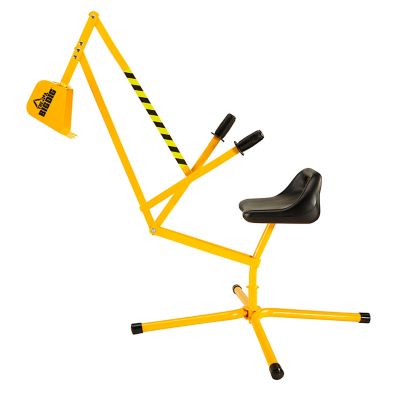
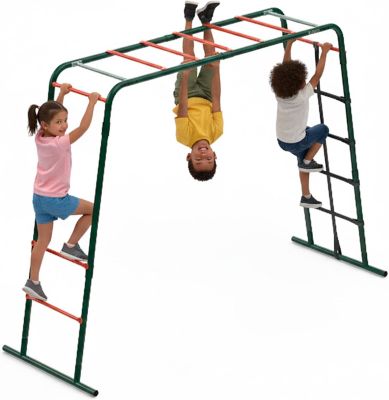
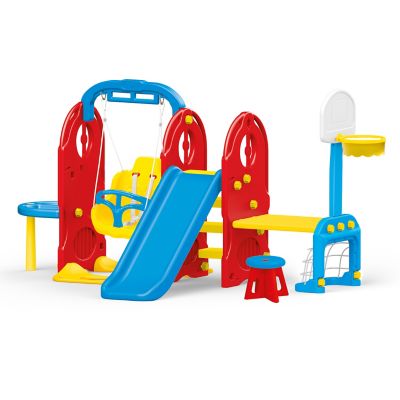
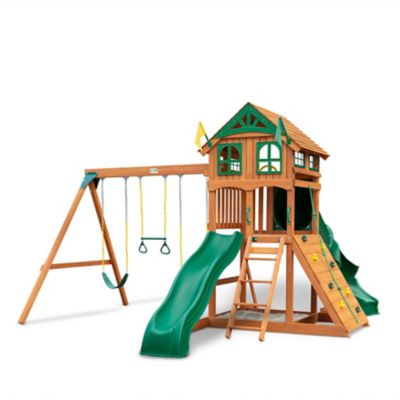
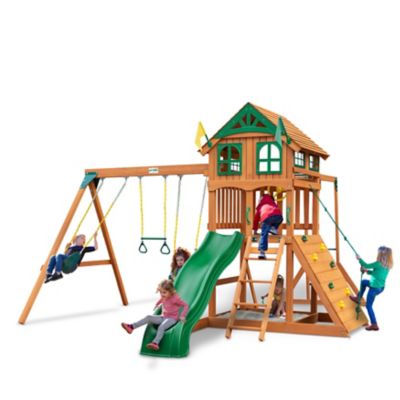
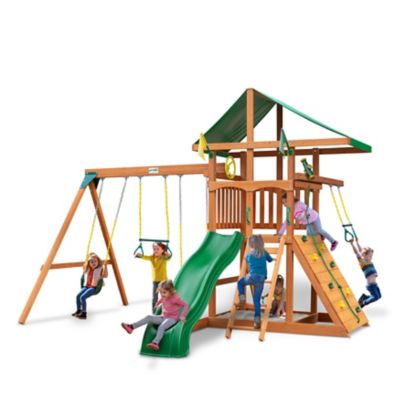
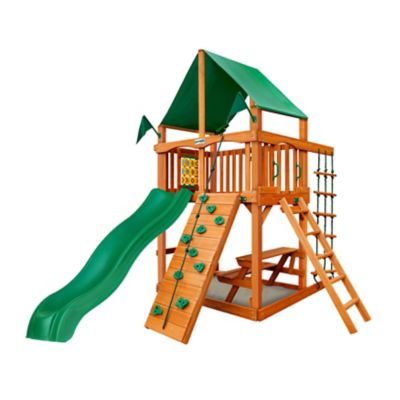
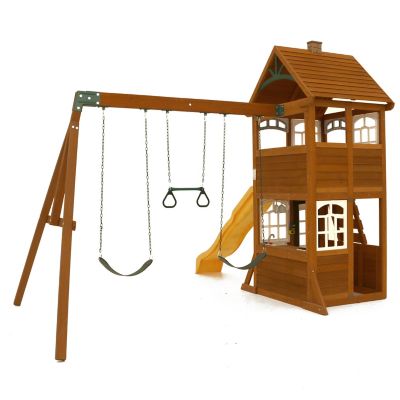
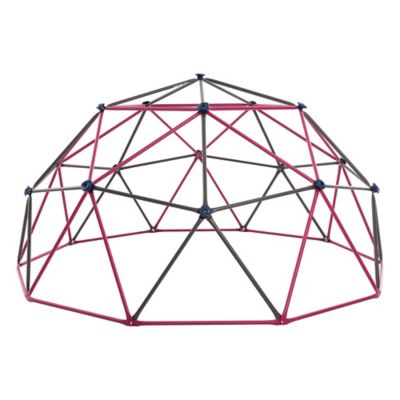
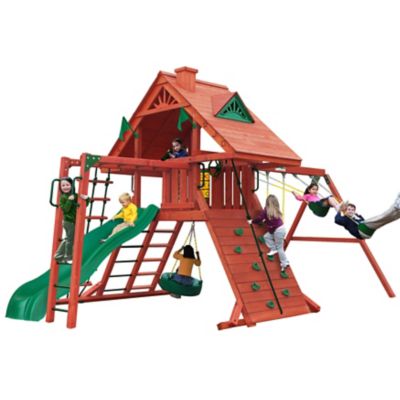
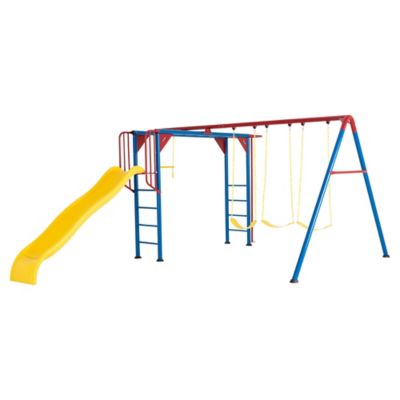
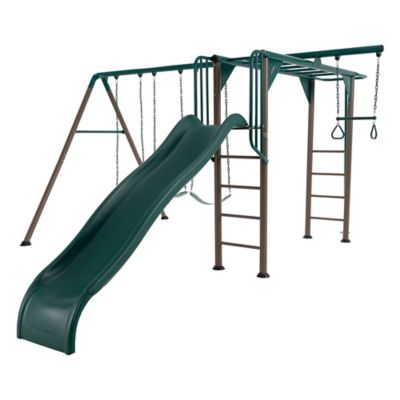
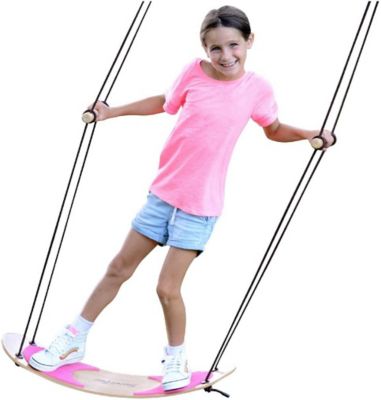
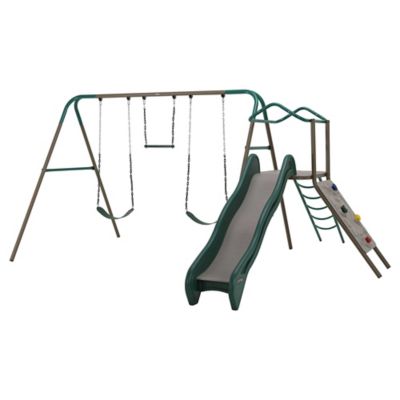
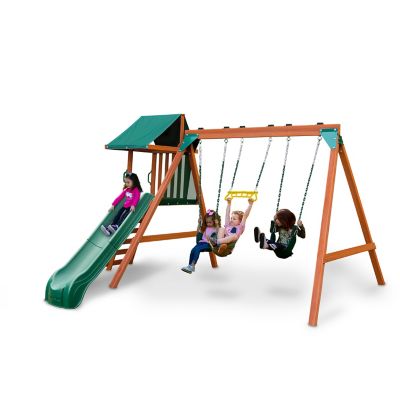
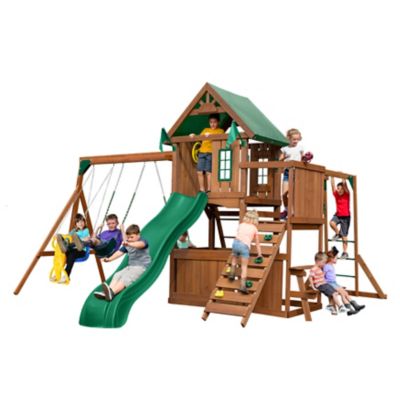
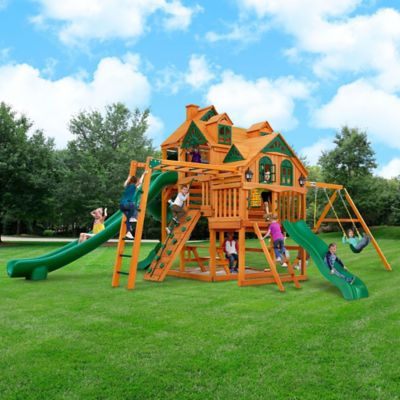
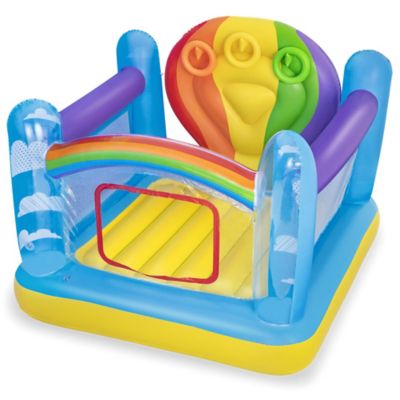
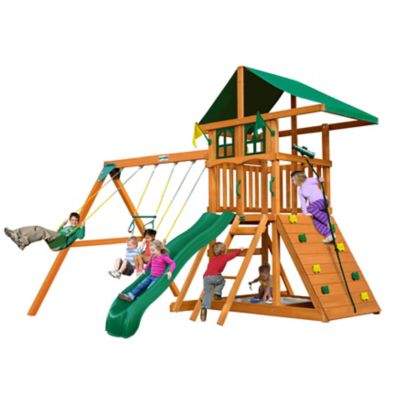
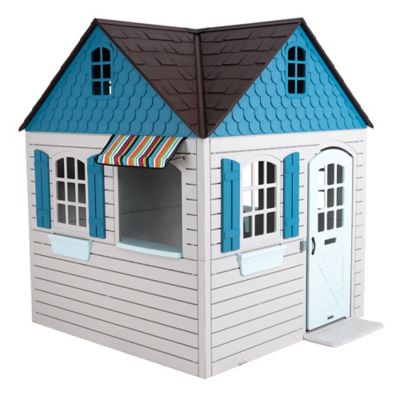
Playground toys give kids a place to swing, climb, slide and turn an ordinary backyard into the setting for a whole afternoon of adventure. The category includes swing sets, climbing structures, slides, seesaws, playhouses and activity centers, with layouts ranging from compact toddler play areas to larger backyard playsets with raised platforms and several connected activities. Some focus on one favorite movement, while others bring swinging, climbing and pretend play together in a single footprint. A low platform can become a lookout tower, a playhouse window can turn into a make-believe store counter, and a climbing wall can offer a satisfying challenge before the ride back down. The right fit depends on more than how much space a structure takes up. Age recommendations, weight limits, platform heights and the reach between steps or handholds all help determine who can comfortably take part. Younger children generally need equipment designed around smaller bodies and developing balance, while older kids may be ready for more involved climbing routes and activities that call for coordination. Manufacturer guidance matters for each component, since different parts of the same playset can have different limits. Yard layout matters, too. The full play area includes the structure, its required clearance and the space children travel through when swinging or leaving a slide. A broad lawn does not automatically make every spot suitable; a level location away from fences, driveways, animal enclosures and other obstacles helps keep the play area separate from everyday work around the property. Clear sightlines make it easier for a nearby adult to stay involved. For families with children at different stages, a mix of ground-level activities and age-appropriate climbing features can give everyone something to enjoy without expecting a younger child to keep pace with an older sibling. The result is a backyard gathering spot built around the children who will actually spend time there.
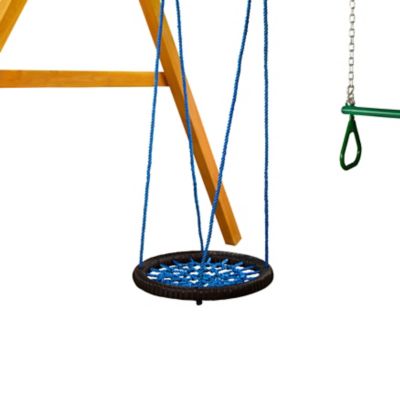
Materials shape the look, feel and upkeep of playground equipment, along with how it fits into the yard. Wood playsets often have substantial posts, broad platforms and a familiar backyard appearance, but the type of wood, construction and specified care all matter. Depending on the manufacturer's directions, upkeep may include checking for splinters, tightening connections and applying a recommended finish. Metal playground structures commonly feature coated steel frames, which can provide a sturdy framework without the same surface-care routine as wood. Their coatings and connection points still need attention, especially wherever a finish becomes damaged or hardware loosens. Molded plastic and high-density polyethylene appear in slides, panels and smaller play structures, offering smooth surfaces and shapes suited to little hands. Plastic components also need regular checks for cracks, sharp edges and movement at attachment points. No material makes an entire play area maintenance-free. Long-term performance comes from the complete construction: frame dimensions, bracing, fasteners, moving joints and the way each component connects. Swing hangers and chains handle repeated motion, while climbing grips and ladder rungs take a different kind of wear. Easy access to those parts can make routine inspections less of a chore. Assembly and anchoring are just as important as the frame material, and some structures call for multiple adults, particular tools or professional installation. A completed playset should sit steady and follow its manufacturer's anchoring requirements before children climb aboard. Protective surfacing is another part of the setup, not simply a finishing touch. Grass, packed dirt and concrete do not provide suitable impact protection beneath elevated play equipment. Playground-rated surfacing needs to suit the equipment's fall height and be installed at the specified depth or thickness across the required area. Loose-fill materials also need attention where feet push them aside beneath swings or slide exits. Keeping the owner's manual, hardware information and care directions handy makes it easier to check the setup over time and identify the right replacement components when a part needs attention.
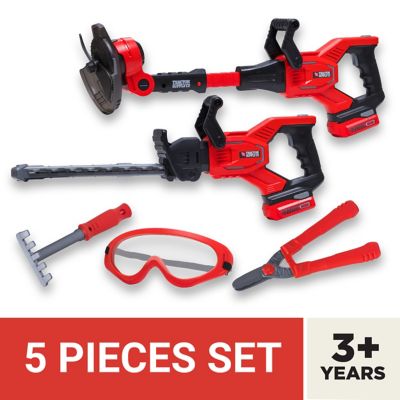
Everyday play habits help explain which playground features earn their place in a backyard. A child who heads straight for the swings may spend more time with a straightforward swing set than with a large structure full of activities that hold little interest. Another child might prefer climbing up one route and coming down another, repeating the circuit until every foothold feels familiar. Playhouses and activity panels create space for a different pace, with room for storytelling, turn-taking and make-believe chores that echo life around the house or farm. These activities offer practice with balance, grip, coordination and sharing, without turning playtime into a lesson. For siblings and visiting cousins, several distinct play areas can spread out the action: one child swings, another climbs, and another sets up shop beneath a platform. Capacity limits still apply, and children need enough room to move without crossing directly in front of a moving swing or crowding a slide exit. Grown-ups have a role nearby, especially when children are trying unfamiliar equipment or playing together at different ages. Beyond the main structure,
Backyard Toys can bring more variety to open space while leaving the equipment's clearance zones unobstructed. A well-planned yard has room for both energetic movement and quieter imaginative play, rather than filling every spare patch with another activity. Playground toys can also make a memorable birthday gift or a shared gift from grandparents, particularly when the grown-ups have agreed on space, age suitability, installation and ongoing care beforehand. A big surprise works better when it fits the household as well as the child. Package dimensions, access to the assembly area and the time needed for setup are practical parts of that conversation. Whether the setting is a small fenced yard or a roomy patch beside the house, playground equipment earns its keep through the everyday moments it supports: a first confident climb, a turn shared without an argument and one more trip down the slide before heading inside.