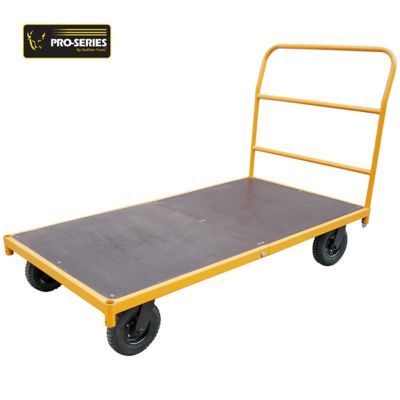
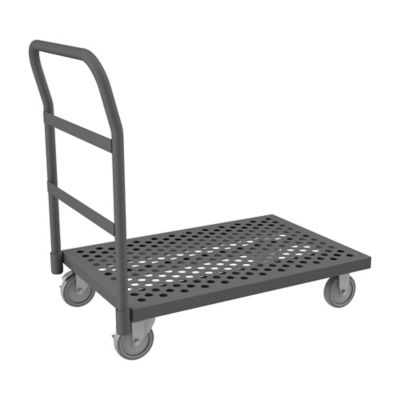
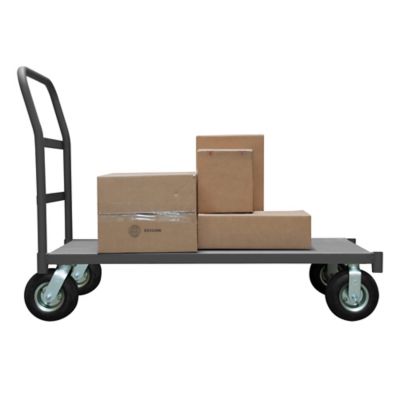
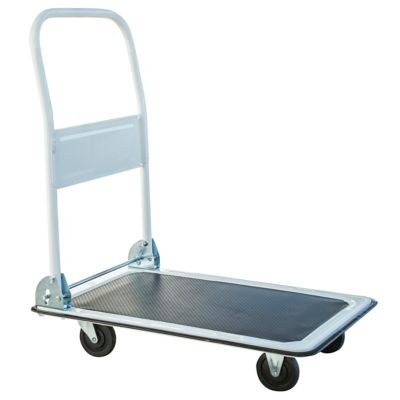
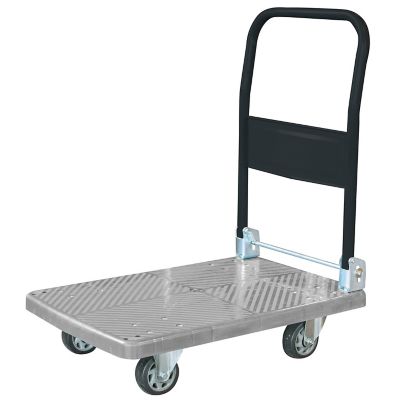
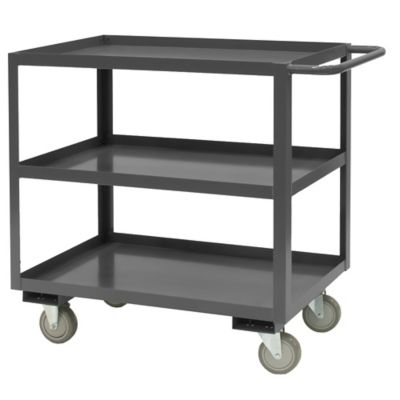
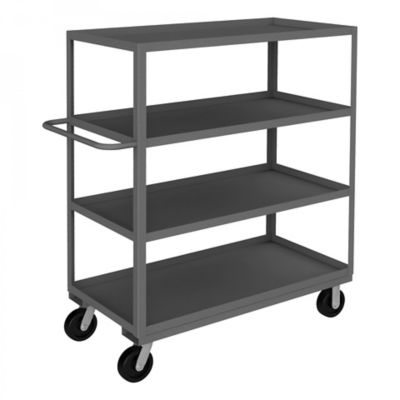
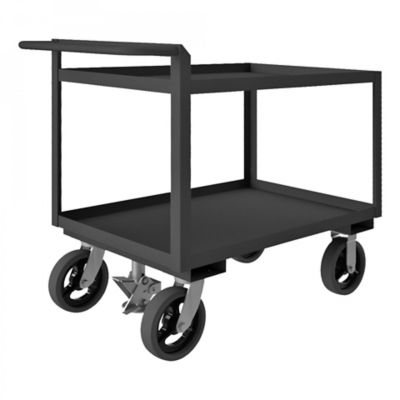
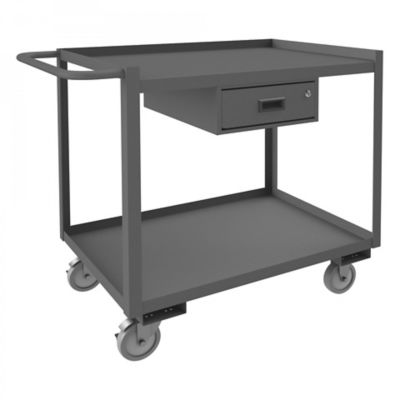
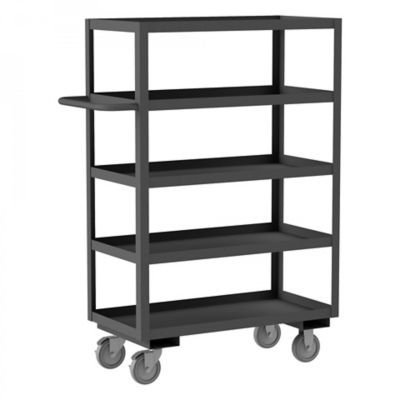
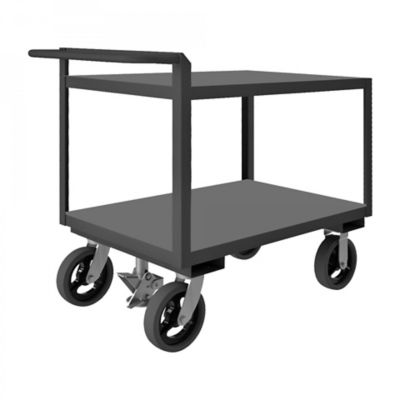
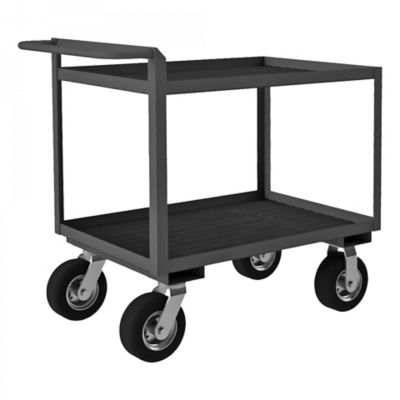
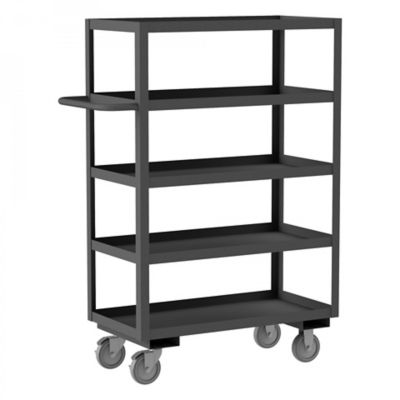
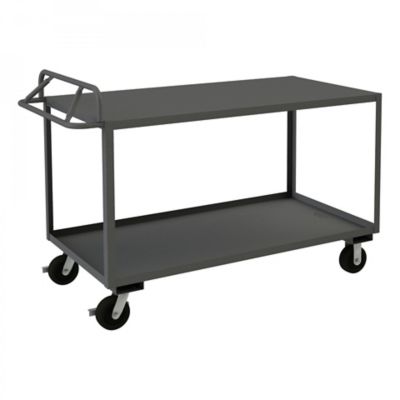
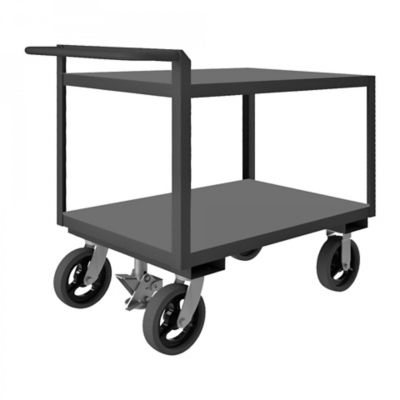
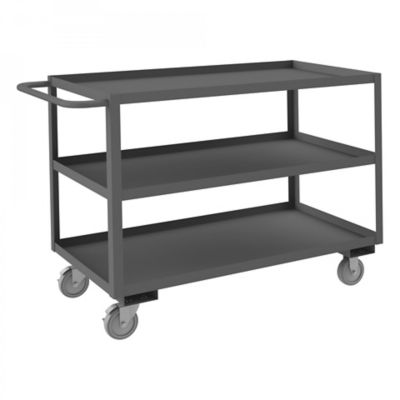
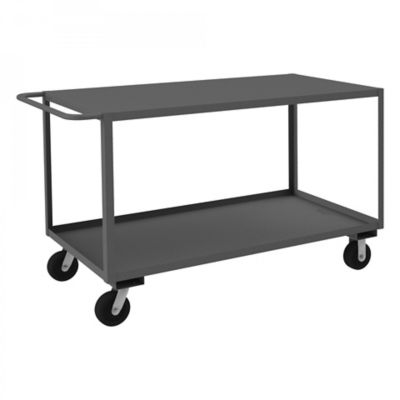
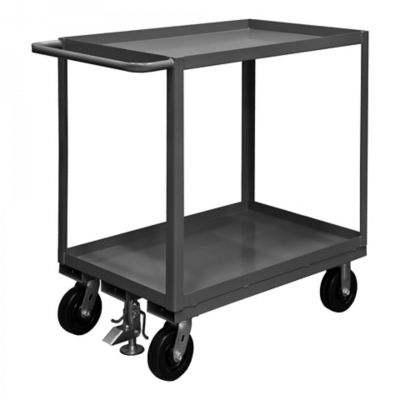
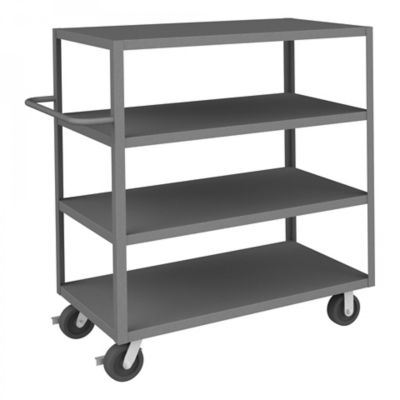
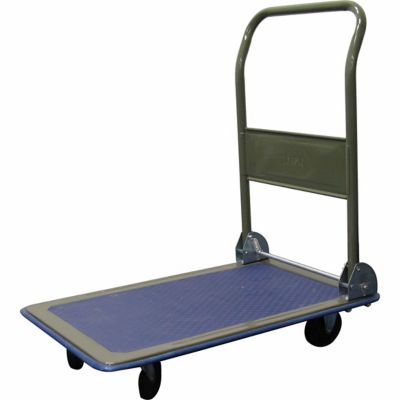
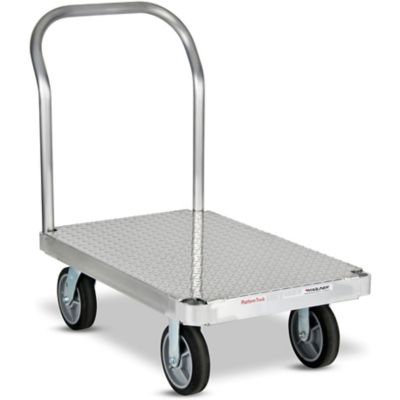
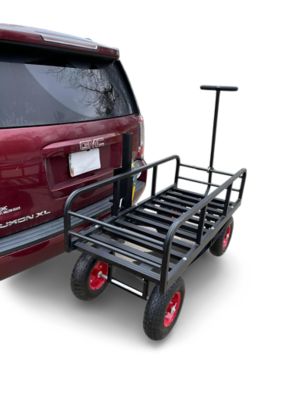
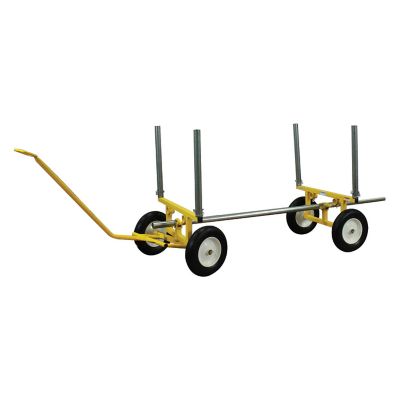
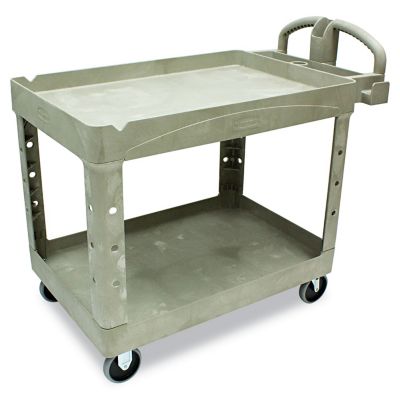
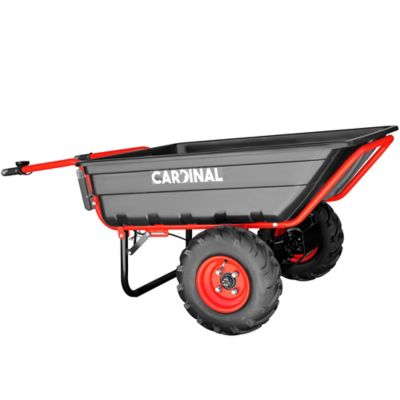
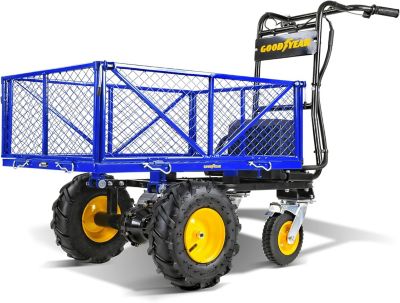
Platform carts are flat-deck, wheeled carts that move supplies, equipment, and other loads without requiring every piece to be carried by hand. Also called platform trucks or flatbed carts, they typically pair an open carrying surface with a push handle and a set of wheels or casters. That straightforward layout works well in farm shops, garages, barns, warehouses, and work areas where supplies need to travel between storage and the job at hand. A stack of feed bags, several tool cases, or a load of boxed parts can ride together on the deck, cutting down on back-and-forth trips. Unlike an upright hand truck, a platform cart supports cargo on a horizontal surface rather than requiring the load to tilt back for transport. The open deck also leaves room for objects with different shapes, provided they fit within the cart’s carrying limits and can stay secure along the route. Deck length and width matter just as much as the overall weight rating. A wider platform gives larger loads more support, while a narrower frame may be easier to steer through a shop doorway or between shelving. The cart’s full footprint includes its handle and any projecting hardware, so deck measurements alone do not tell the whole story. Carrying capacity deserves a close look, too: several bags or containers can add up faster than their appearance suggests. The manufacturer’s rating sets the limit, and evenly distributed cargo helps the frame and wheels carry that weight as intended. Low deck heights can make loading less awkward, while raised edges or textured surfaces may help keep cargo from shifting. For farmers, maintenance crews, small-business owners, and folks tackling projects around the property, the appeal is practical: a cart brings the load along in one manageable trip and keeps supplies together from one stop to the next. Enough room for the cargo, enough clearance for the route, and a frame suited to the work are the main considerations behind a good match.
Construction materials affect how a platform cart handles daily work, how much the cart itself weighs, and what kind of upkeep it needs. Steel frames and decks suit many demanding shop tasks, though their finish needs attention if scrapes expose bare metal. Aluminum construction can reduce the weight someone has to push before any cargo goes aboard, and it resists rust. Molded plastic decks resist rust as well and often have surfaces that are straightforward to wipe down after hauling dusty bags or muddy containers. Chemical compatibility and cleaning recommendations still depend on the material and the manufacturer’s directions. Deck texture is another consideration: a smooth surface may make loading easier, while a nonslip surface can help cargo stay put. Neither replaces proper load placement or restraints where the cart’s design calls for them. Wheel choice makes a noticeable difference once a loaded cart starts moving. Smaller casters can work well on smooth, level floors, but floor joints, doorway thresholds, and scattered debris can interrupt their travel. Larger wheels generally cross small obstacles more readily, although wheel size alone does not make a cart suitable for uneven ground. Rubber, polyurethane, and air-filled tires each have different rolling characteristics, and their suitability depends on the floor, cargo, and cart design. Swivel casters help with tight turns around shelving, while fixed wheels help a cart track along a straight aisle. Some configurations combine both. Brakes can help hold a cart in place during loading or unloading, but a brake is not a substitute for a level parking spot. Handle design also shapes the feel of the cart. A comfortable grip height can reduce awkward bending, and a folding handle can make storage easier when space is tight. On folding designs, a secure locking mechanism matters whenever the handle is upright. These details make the difference between a cart that fits the work area and one that catches on every threshold or takes an extra shuffle to turn.
The route between loading and unloading points often tells more about a cart’s fit than an empty deck does. A straight run across a concrete shop floor presents different demands from a trip through several doorways or around tightly spaced benches. Turning space, threshold clearance, floor condition, and the height of nearby work surfaces all influence how smoothly the job goes. A platform cart that parks beside a workbench can keep tools and materials close without taking over the bench itself, while one assigned to receiving or packing tasks can move cartons between work stations. In shared spaces, manageable steering and a handle that suits different operators are worth considering alongside load capacity. Cargo height matters as well, since a tall stack can block the view ahead or become harder to control around a corner. These carts are meant for cargo rather than passengers, and keeping loads stable is part of everyday use. Routine care is fairly straightforward but should follow the cart’s instructions. Dirt, twine, and loose packing material can collect around caster axles, making wheels harder to turn. Clearing away that buildup, checking fasteners, and inspecting wheels for wear can help keep a cart rolling smoothly. Air-filled tires need pressure checks where fitted, and moving parts may need lubrication if the manufacturer recommends it. Spills deserve attention before they leave a slippery deck or damage a surface finish. Storage space matters, too: a folded handle can tuck a cart beneath a shelf, while a dedicated parking spot keeps an assembled cart out of walkways. For hauling tasks that call for a different frame or carrying layout, the
Portable Carts collection offers a broader look at cart styles. A platform design earns its place wherever a flat load surface and steady rolling support make daily chores more manageable, whether that means shifting supplies across the barn or bringing the next round of materials into the shop.