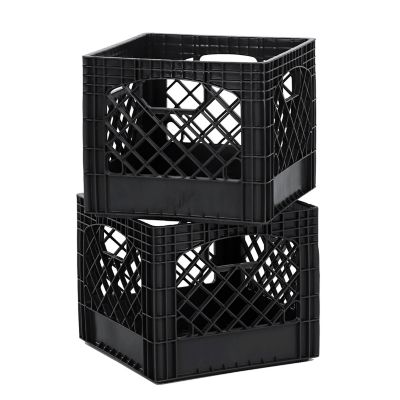
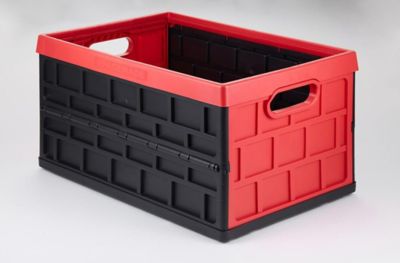
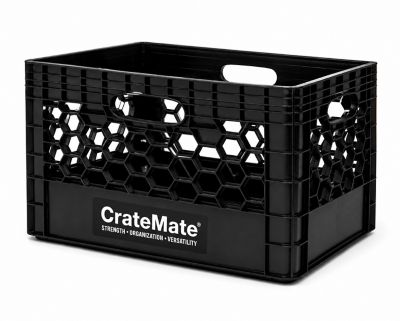
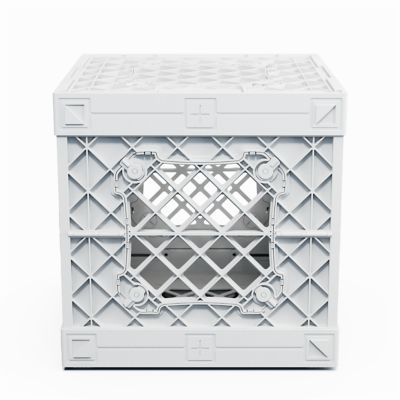
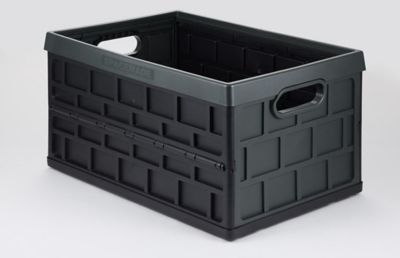
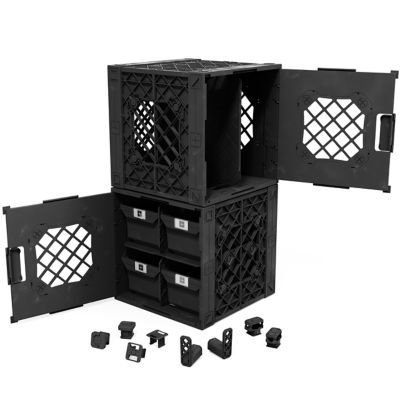
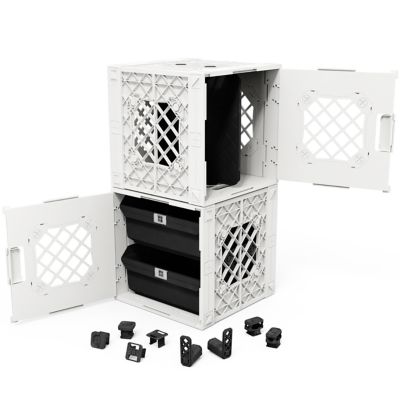
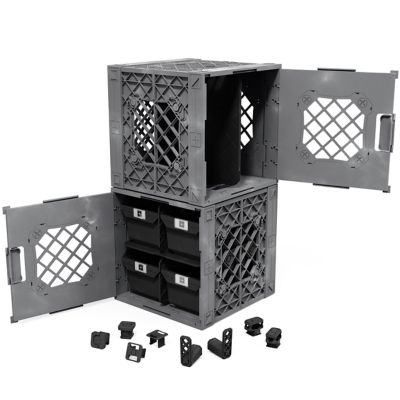
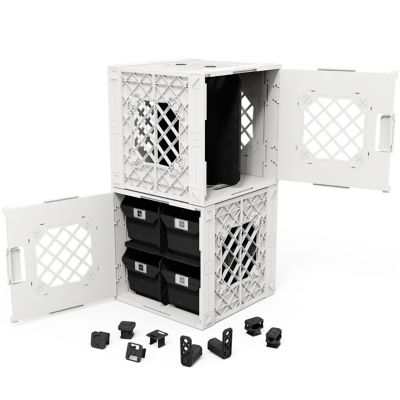
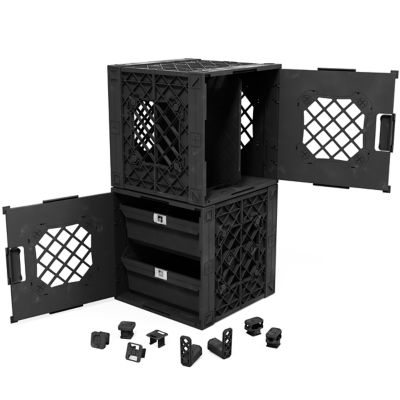
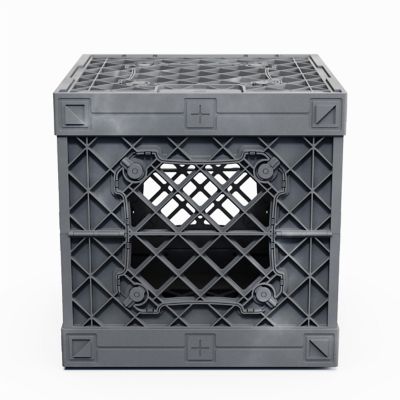
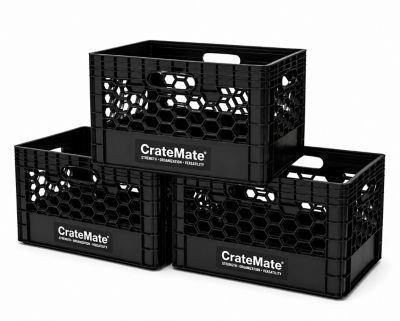
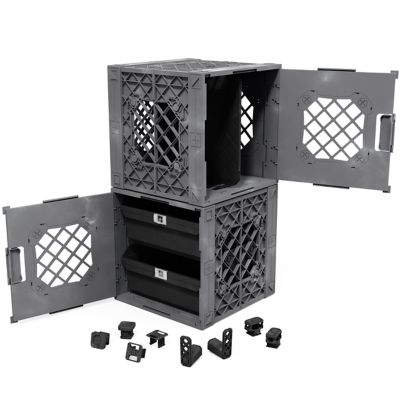
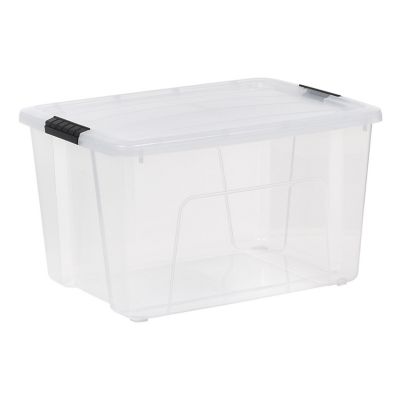
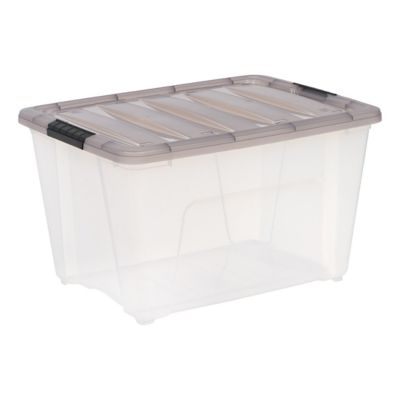
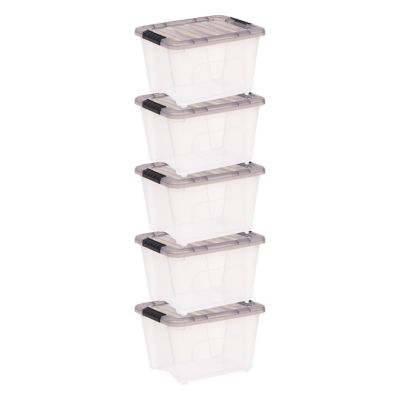
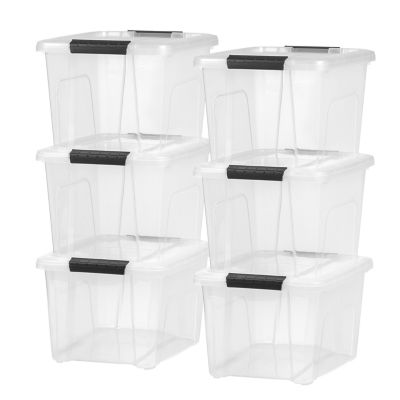
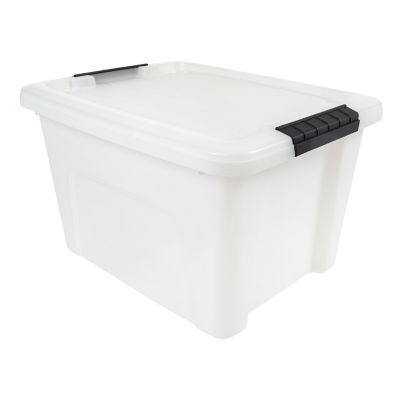
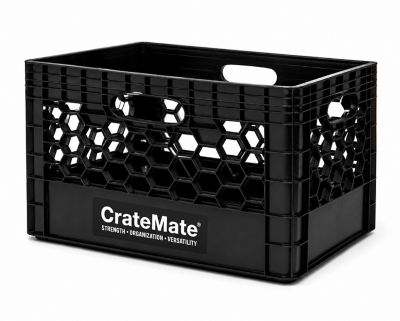
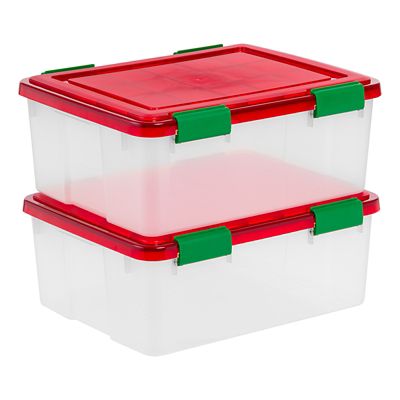
Plastic crates are reusable storage containers that help keep supplies together for carrying, sorting, and stacking. Often made from high-density polyethylene, or HDPE, or polypropylene, they serve a range of jobs around the house, garage, barn, and workshop. Their shape gives loose belongings a defined place, while built-in handholds make a loaded container easier to move between a shelf, workbench, and vehicle. Unlike metal containers, plastic crates do not rust, although their strength, weight limits, and resistance to wear depend on the material and construction. Open-grid milk-crate styles offer visibility and airflow, making it easier to spot a pair of work gloves or a missing grooming brush without emptying the whole container. Solid-wall styles help contain smaller belongings that could slip through a lattice opening, while vented designs allow drainage but will not keep out dust or spills. Collapsible plastic crates have folding sides that reduce their storage footprint between jobs; rigid crates keep their shape without hinges or folding panels. Stackable designs have rims, feet, or other features intended to align compatible containers, though not every crate stacks securely with another style. Common square milk-crate shapes measure roughly 13 inches long by 13 inches wide by 11 inches high, while larger rectangular versions may measure around 19 inches long by 13 inches wide by 11 inches high. Dimensions vary, and capacity labels such as 16 quarts or 24 quarts do not tell the whole story about what will fit. Outside measurements matter for shelf space and vehicle storage, while inside measurements determine whether a particular tool case, bottle, or stack of supplies can sit flat. Tapered walls, reinforced corners, and recessed handles can all reduce the room inside. A broad, shallow crate keeps frequently reached-for supplies within easy reach, while a deeper container provides more room for taller contents. The right shape comes down to the space it needs to occupy and the load it needs to carry.
Around a working property, plastic storage crates can turn scattered supplies into manageable groups without hiding everything behind a lid. A crate near the tack room can hold brushes, lead ropes, and grooming supplies, while another on a garage shelf can keep straps, gloves, and small tool cases together. In a mudroom, an open crate gives everyday gear a place to land without becoming a bottomless pile. In a vehicle, a rectangular crate helps gather grocery bags or chore supplies into one container, although the crate itself still needs suitable restraint so it cannot slide or tip during travel. For gardeners, the open sides of some crates make soil-covered hand tools easier to see and separate from clean household belongings. Harvest handling calls for closer attention to the container: only crates specifically suitable for food contact belong in direct contact with produce, and smooth interiors are gentler on delicate skins than rough edges or pronounced ribs. A crate that carries automotive fluids or farm chemicals should stay separate from food, animal feed, and kitchen supplies. Contents also affect how comfortable a crate feels in hand. Dense loads such as hardware can become heavy well before the container looks full, so a stated load rating matters more than open space alone. Broad handles with smooth edges offer a better grip than narrow openings, especially when the carry involves stairs, gates, or a walk across the yard. Handle placement also influences whether a loaded crate can stay close to the body without bumping against a leg. For shelf storage, enough clearance above the crate makes it possible to lift it free without scraping knuckles or catching the rim. These everyday details help a storage crate fit the way chores actually happen, whether the job calls for one container carried back and forth or several matched crates arranged along a feed-room shelf.
Construction deserves a closer look when crates will carry heavier loads or make frequent trips between storage and the job at hand. Reinforced corners, a well-supported base, and sturdy handholds can help a container handle regular lifting, but appearance alone does not establish its carrying capacity. The load rating should match the intended contents, and any stacking limit should be treated separately from the amount one crate can carry. A stack puts pressure on the containers below it, particularly when the load is uneven. For heavier gear,
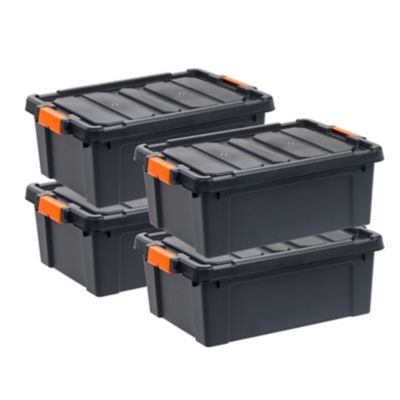
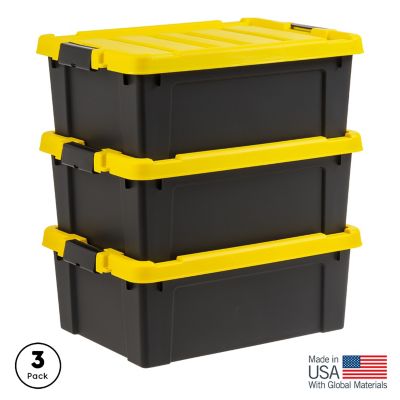
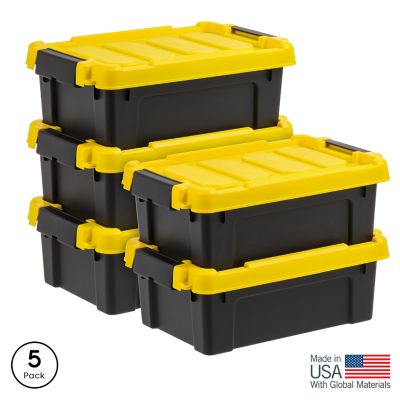
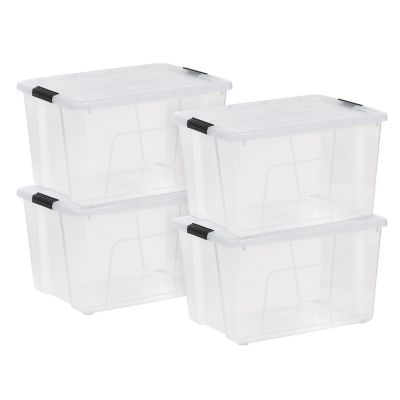
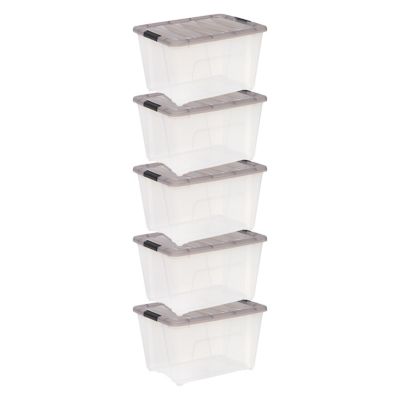
Heavy Duty Storage Crates offer another category to consider, with attention to the stated capacity, dimensions, and construction of each design. Matched stacking features help containers sit together properly, while a level supporting surface and heavier contents toward the bottom help keep an arrangement steady. Crates are storage containers, not substitutes for ladders, seats, or supports unless expressly rated for that purpose. Care is generally straightforward: many plastic surfaces can be washed with mild soap and water, rinsed, and allowed to dry fully, following the maker’s care directions. Lattice corners and underside ribs can trap dirt, so those areas benefit from a little extra attention before a crate returns to a pantry, mudroom, or clean storage shelf. Folding designs also need clear hinges and latches so their sides can open and lock into position as intended. Cracks around handles, damaged corners, or a bowed base are signs that a container may no longer support its original load safely. For everyday organization, color differences and clearly marked labels can make separate tasks easier to recognize at a glance, especially when several people share the same workspace. Nesting containers save room when empty, while stacking containers preserve access to a compact arrangement when filled; some designs offer both functions in different orientations. A practical plastic crate earns its place by fitting the shelf, carrying the load, and keeping the next chore’s supplies together.