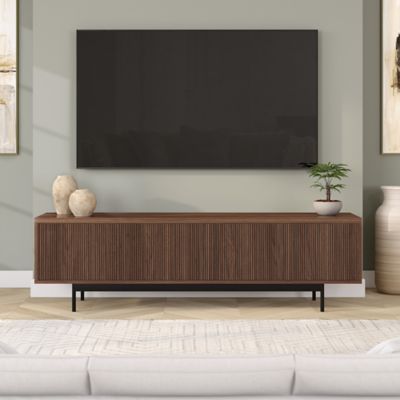
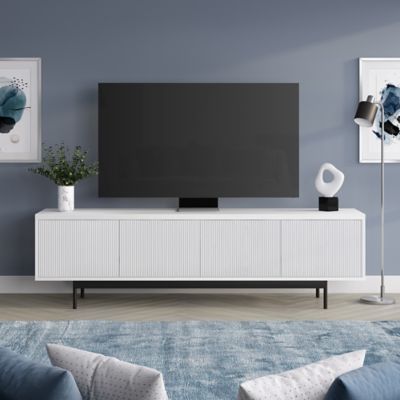
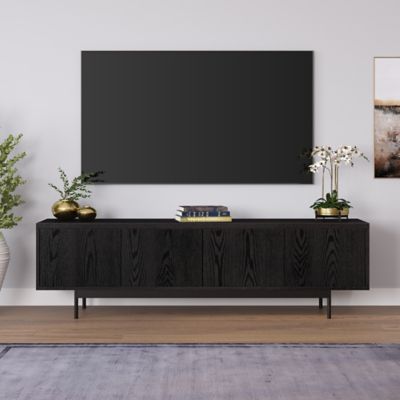
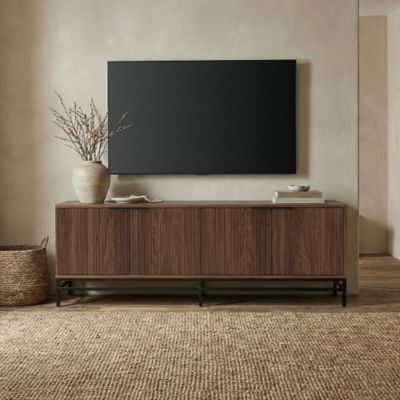
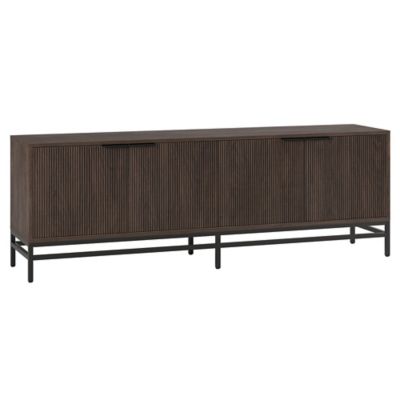
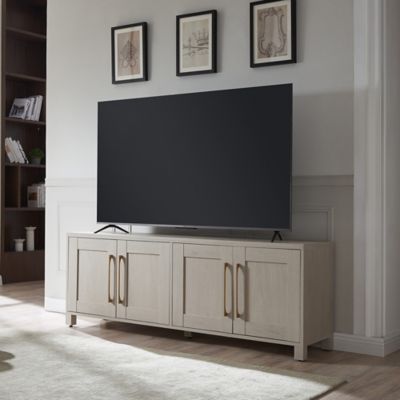
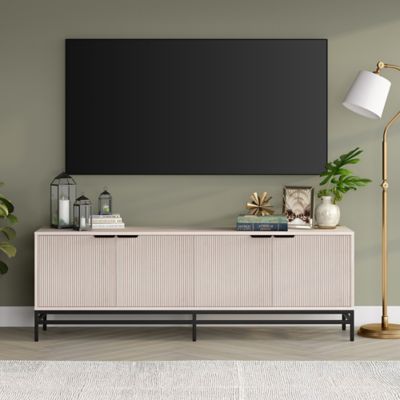
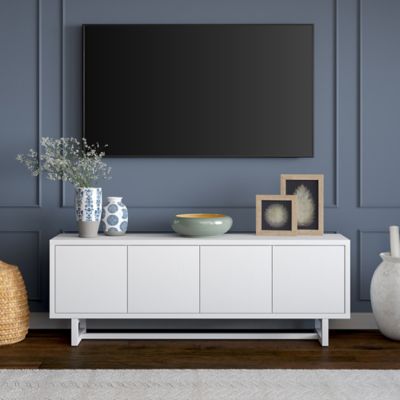
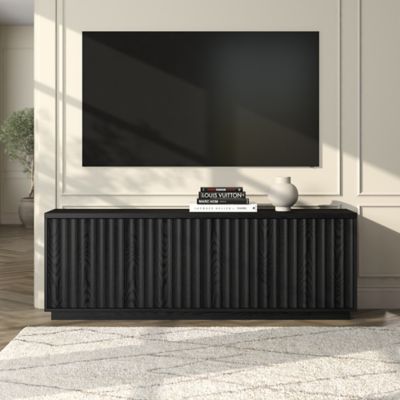
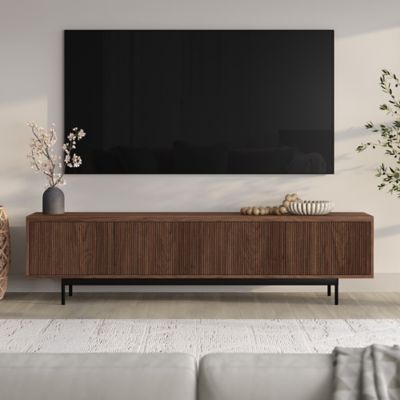
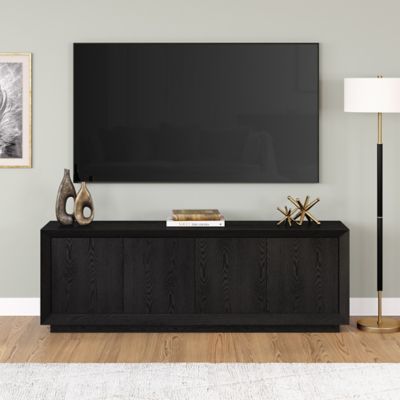
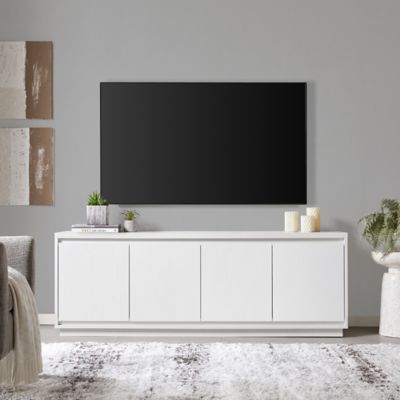
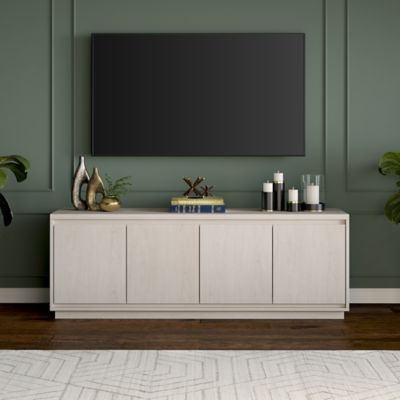
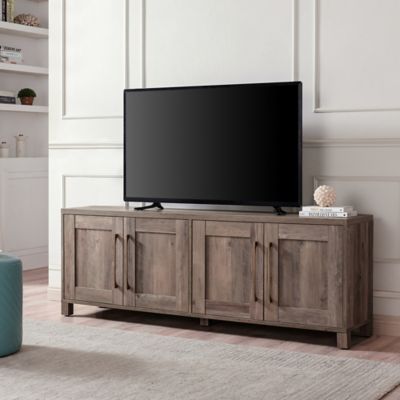
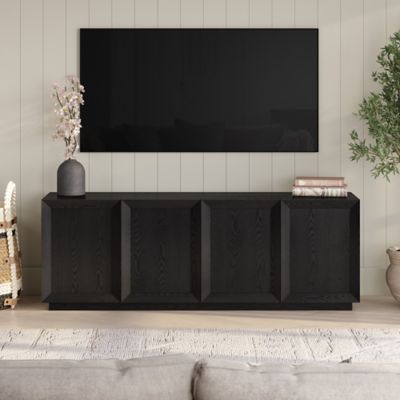
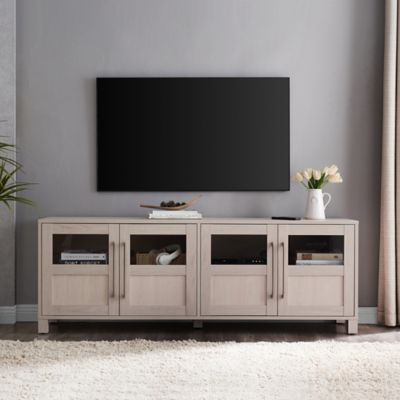
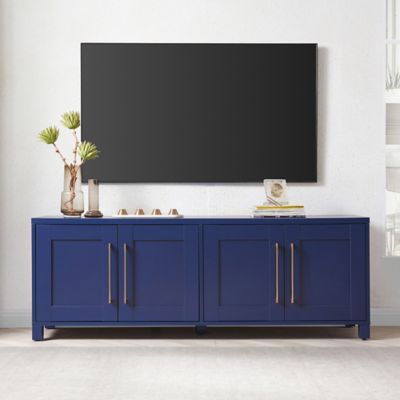
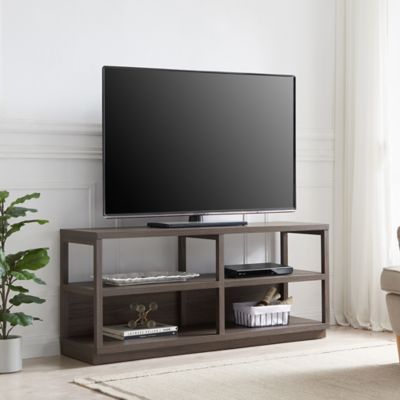
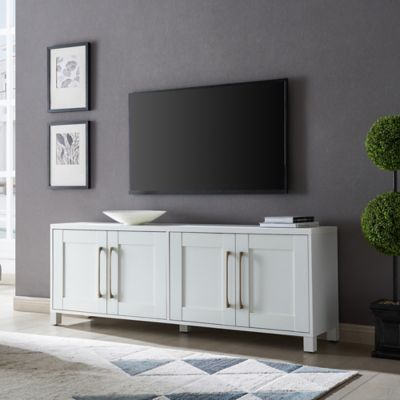
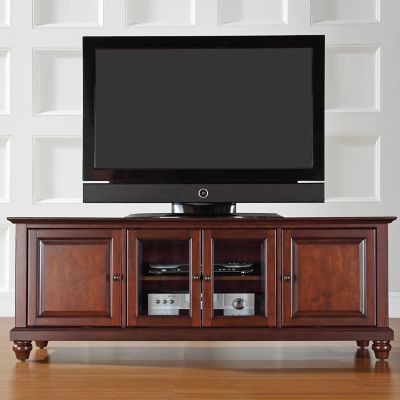
Oversized TV stands are extra-wide media consoles that give large flat-screen televisions a substantial base while keeping entertainment equipment and everyday essentials together. They’re a natural fit for spacious living rooms, family rooms and dens where a smaller cabinet would leave the screen looking crowded or out of proportion. These larger stands can accommodate televisions measuring 75 inches and up, with some designs sized for screens of 100 to 120 inches or more, depending on the stand’s dimensions and stated weight capacity. Screen size alone doesn’t tell the whole story, though. A television’s advertised measurement runs diagonally across the screen, while the furniture beneath it needs enough width and depth for the actual cabinet and its supporting feet. Two televisions with the same screen size may have very different foot spacing, so the TV manufacturer’s measurements matter just as much as the number on the box. A console that extends beyond both sides of the screen gives the arrangement a balanced look and leaves a little breathing room for everyday use. Its top weight limit also needs to cover everything resting there, not just the television. In a roomy farmhouse living room, a long media stand can help anchor a seating area without making the wall feel bare. In a den with a wide sectional, it gives the television a clear place in the room while keeping remotes, controllers and sound equipment close by. Depth matters around walkways, especially when the route from the kitchen to the couch passes directly in front of the cabinet. Doors and drawers need space to open without bumping a coffee table or blocking a doorway. Height affects comfort, too: a screen positioned near seated eye level generally makes more sense for an evening ballgame than one that has everyone tipping their head back. For families with children or pets, proper furniture anchoring and television restraint, following the manufacturers’ instructions, are important parts of the setup.
Materials and construction shape how an oversized TV stand looks, feels and handles everyday wear. Solid wood brings visible grain and natural variation, while engineered wood offers an even surface that can take a range of finishes. Metal frames and hardware add contrast, and glass doors can keep components visible without leaving every shelf completely open. The strength of the whole cabinet depends on more than its main material; joints, shelf supports, back panels, center legs and the way the base meets the floor all play a part. On an extra-long console, support through the middle deserves attention because a wide span carries weight differently from a short side table. Adjustable shelves should have stated load limits that suit the equipment or belongings placed on them. For rooms with wood floors, exposed beams or a big family dining table nearby,
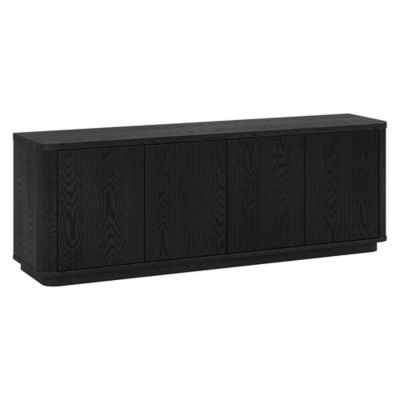
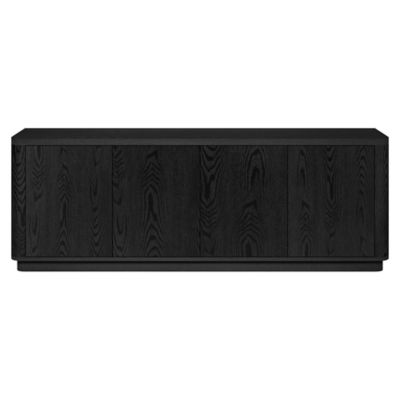
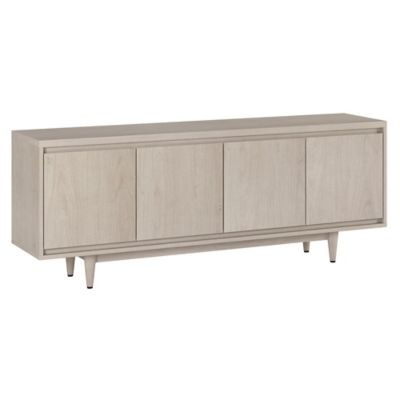
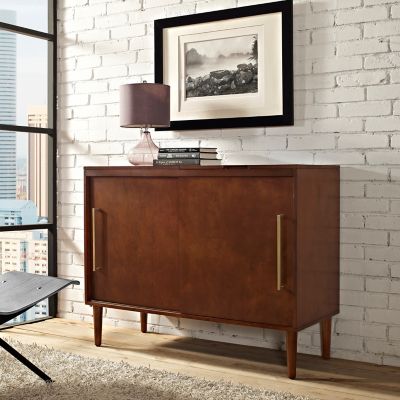
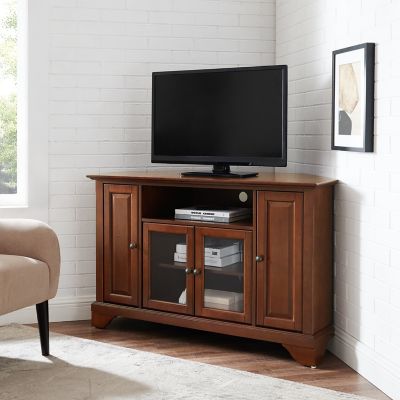
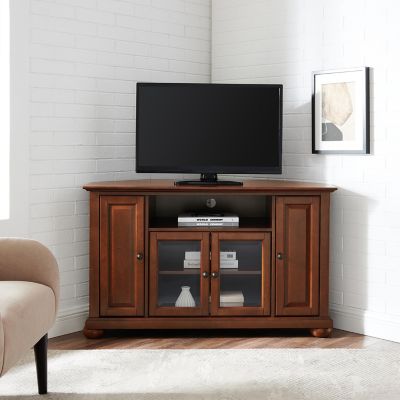
Wooden TV Stands can carry that familiar warmth into the entertainment area. A darker finish may blend with substantial furniture, while a lighter finish can keep a long cabinet from feeling too heavy against the wall. Painted surfaces offer another way to tie the stand to existing trim, cabinets or shelving. Raised legs leave room to reach underneath with a broom or vacuum, while a low plinth base creates a more grounded appearance. Care depends on the finish and materials, so the manufacturer’s cleaning directions should lead the way. Regular dusting, prompt attention to spills and protection beneath drinks help keep the top looking good. Excess moisture, abrasive pads and strong cleaners can damage certain finishes or swell exposed engineered-wood edges. Cable openings and shelf corners also collect dust, especially around electronics that run for hours at a time. A stand with accessible compartments makes those small cleanup jobs easier, and leveling feet, when included, help the cabinet sit evenly on floors that aren’t perfectly flat. The result should feel like furniture that belongs in the room, not just a platform for a screen.
Storage is where oversized TV stands really earn their floor space. A broad cabinet can bring together a soundbar, streaming device, game console, movies and the handful of remotes that otherwise migrate across the couch. Open shelves make frequently handled equipment easy to reach, while drawers and enclosed cabinets give controllers, spare batteries and instruction booklets a place out of sight. Adjustable shelving is especially helpful when one compartment needs to hold a tall game console and another only needs room for a slim receiver. Equipment dimensions should include plugs and cable bends at the back, not just the body of the device. A compartment that looks roomy from the front can become cramped once power cords and connections are in place. Ventilation matters for electronics that give off heat, and open space around vents should match each device manufacturer’s recommendations. Closed doors shouldn’t turn a cabinet into a tight box around equipment that needs airflow. Glass-front doors may allow certain remotes to communicate with components, but that depends on the glass, door frame and type of remote signal. Cable pass-throughs help route cords toward an outlet, while a layout that keeps cables away from hinges and drawer slides prevents everyday snags. A soundbar also needs a clear path toward the seating area and enough separation from the television’s lower edge to avoid blocking the picture or remote sensor. For households that gather for games, movies or a race on Sunday afternoon, those practical details make the whole setup easier to live with. A wide console can also sit beneath a wall-mounted television, providing storage without carrying the screen itself; the wall mount still needs suitable support and proper installation. Whether the room serves a busy family, a couple settling into a new home or grandparents hosting the grandkids, the best fit balances generous storage with clear walkways, comfortable viewing and straightforward care. Oversized TV stands bring those needs together in one substantial piece that helps a large-screen setup feel settled rather than scattered.