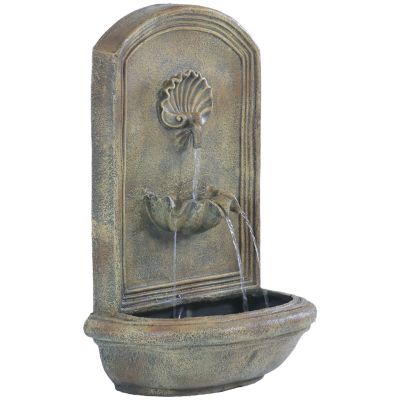
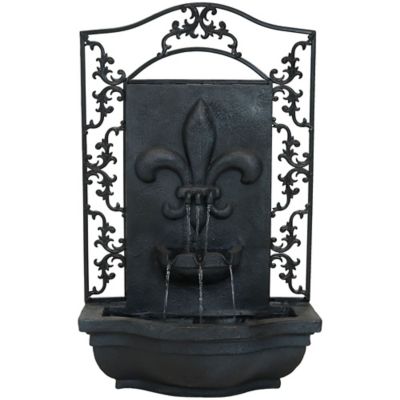
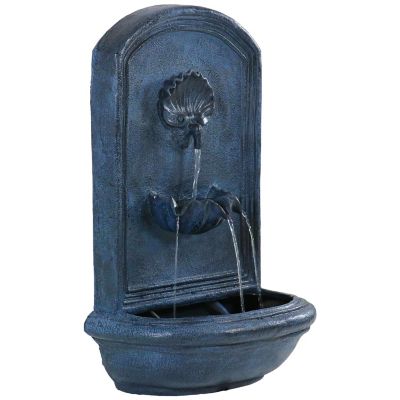
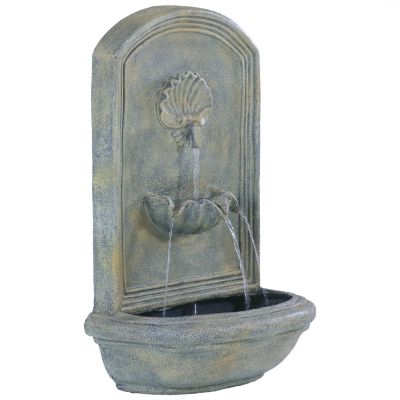
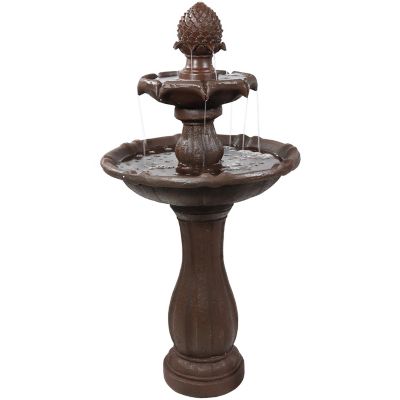
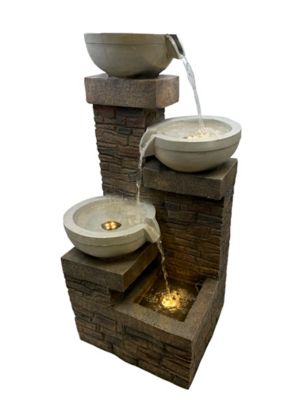
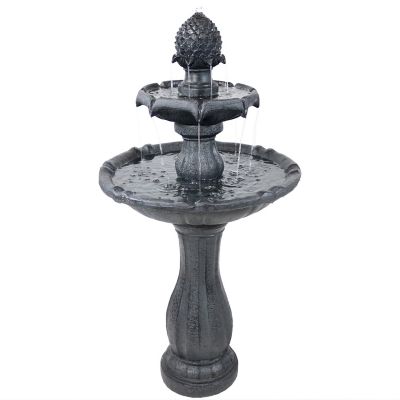
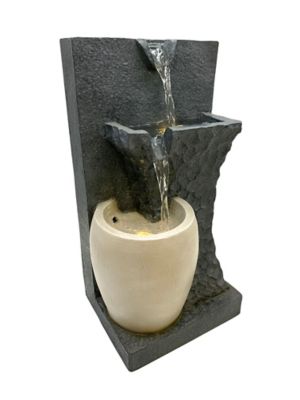
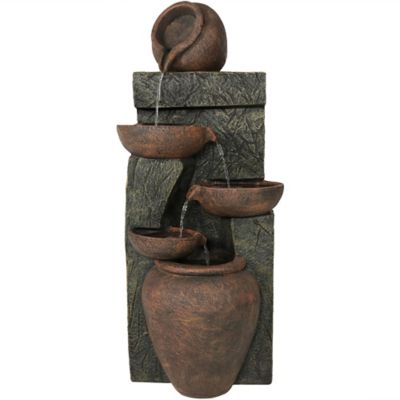
Outdoor wall mounted fountains bring the sound and movement of water to places where a full-size pond or freestanding fountain may not fit. Mounted against a garden wall, patio post, deck rail, fence, or masonry surface, they make good use of vertical space while leaving walkways and seating areas open. The soft trickle can help set a calm tone near an entryway, create a restful corner beside a porch swing, or add a pleasant backdrop to outdoor meals and visits with friends. Many styles feature a basin that catches water as it falls from a spout, then sends it back through a recirculating pump. That steady cycle means there is no need for a nearby water line, though the basin does need to be filled from time to time. Traditional designs may include scrolling details, lion-head spouts, or fleur-de-lis shapes, while modern options often have straight lines, simple frames, slate-like panels, copper-toned accents, or a clean basin profile. Since these fountains stay off the ground, they can be a smart choice for smaller patios, narrow side yards, raised garden areas, and homes where a floor-standing feature would get in the way. They also suit gardeners who want to draw attention to a blank wall or add a bit of motion near flowering beds without taking up planting room. During the cooler months, the sound of running water can keep a sheltered porch or covered patio feeling inviting, and as the weather warms, a wall fountain can become a natural gathering point for coffee, supper, or quiet time outside.
Mounting requirements should be one of the first things to check. Lightweight resin, fiberglass, and similar materials may hang from sturdy screws or wall anchors when installed on a sound wood wall, fence, or properly supported siding surface. Heavier cast stone, concrete, or metal construction may need strong brackets, masonry fasteners, or support from the ground rather than relying on the wall alone. Before installation, look at the wall material, the fountain’s filled weight, the location of studs or masonry joints, and the space needed to fill and clean the basin. A level mounting surface helps water flow evenly and keeps the pump from working harder than it should. It is also wise to place the fountain near a grounded outdoor electrical outlet when the pump runs on low-voltage power, keeping cords routed in line with local safety practices and away from standing water. Some shoppers prefer a solar setup for a spot without convenient electrical access. A solar panel can make placement easier and reduce the need for an extension cord, though shade, cloud cover, panel direction, and battery storage can affect how long the pump runs. Browse
Outdoor Solar Water Features for more options when cord-free placement is part of the plan. Think about splash, too: a fountain placed beside a doorway or seating area should have enough room around the basin to catch stray drops, while a position near plant beds may let overflow soak nearby soil. Wall fountains can make thoughtful gifts for a new homeowner, a gardener, a parent who enjoys porch sitting, or anyone turning a plain outdoor wall into a more welcoming spot. They are especially fitting for birthdays, housewarmings, and gatherings that center on time spent in the yard.
Regular care helps keep the water moving and the fountain looking its best. Check the water level about once a week, and inspect it more often during hot, dry stretches or whenever wind carries leaves and dust into the basin. The pump needs enough water to stay covered; running it dry can cause overheating or early failure. Empty and rinse the basin as needed, wipe away buildup around the spout, and follow the maker’s directions for cleaning the pump and tubing. Distilled water may help reduce mineral deposits, especially in areas with hard water. A fountain treatment labeled for outdoor water features can help manage algae, but it should be selected and applied according to its instructions, particularly when birds or other wildlife may visit the basin. Keep leaves, grass clippings, and fallen petals from collecting around the intake, since debris can slow the flow. Before freezing weather arrives, check the care directions for the fountain’s material and pump. In regions where water can freeze solid, draining the basin and bringing removable pump parts indoors can help prevent cracks and damage; some installations may need a cover or winter storage. Choose a finish and material that fit the surroundings, from warm earthy tones near a garden bed to darker metal-inspired colors beside a wood fence or pale siding. With the right wall support, a nearby power plan, sufficient clearance, and a simple care routine, an outdoor wall mounted fountain can add a steady water sound and a welcoming touch to patios, porches, decks, and garden spaces through changing seasons.