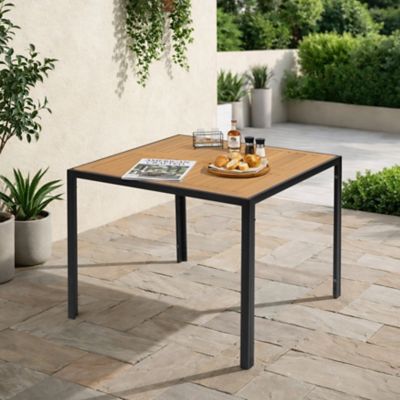
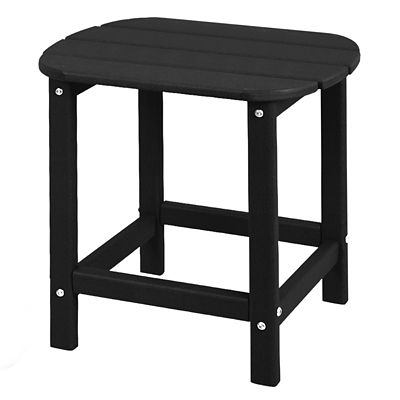
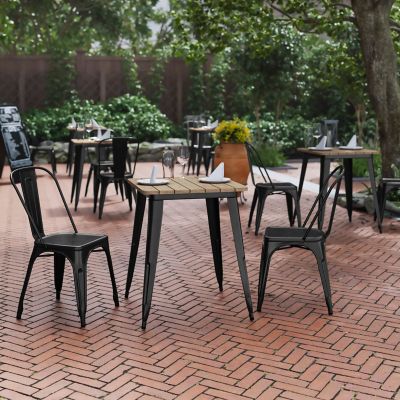
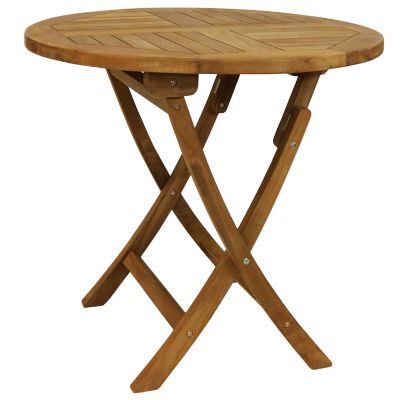
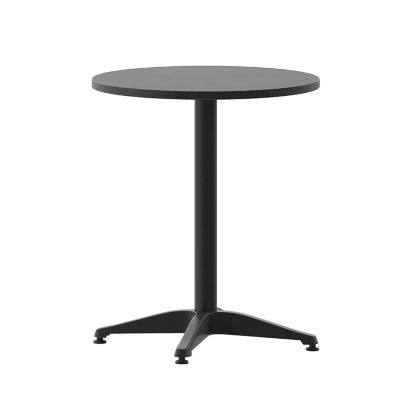
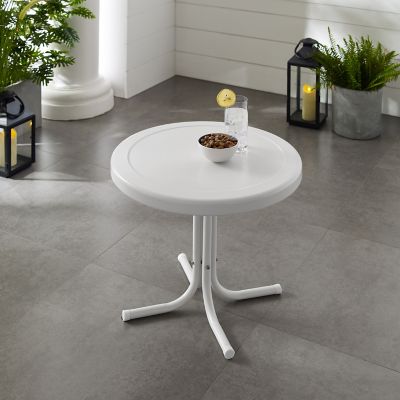
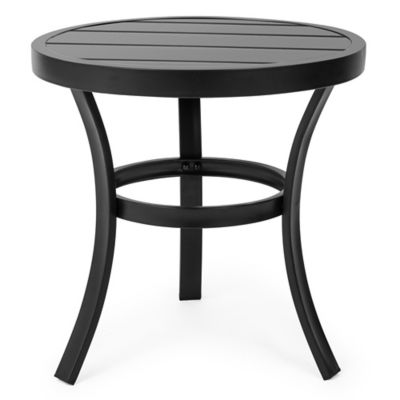
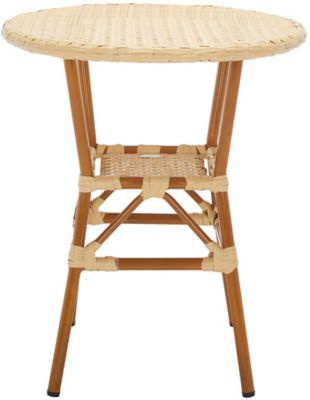
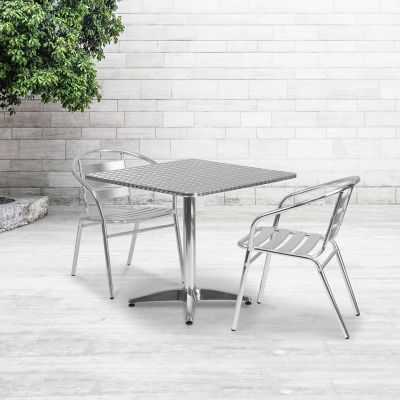
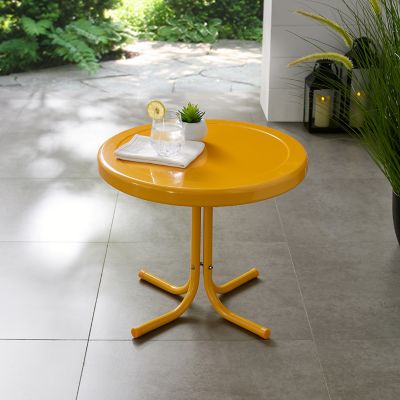
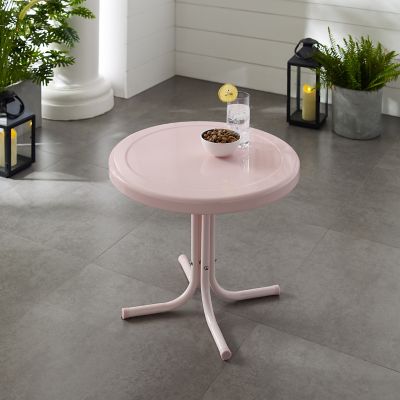
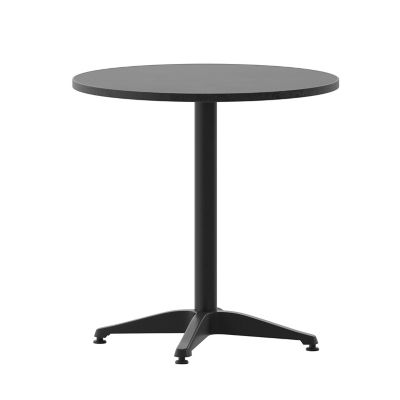
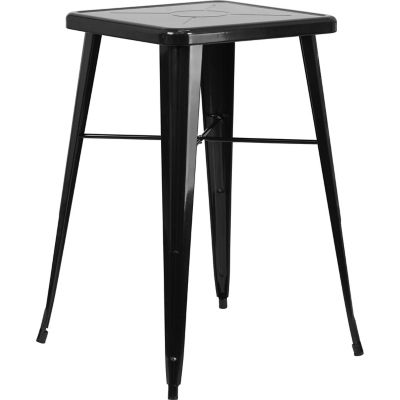
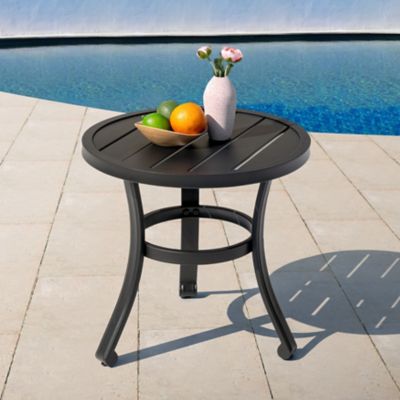
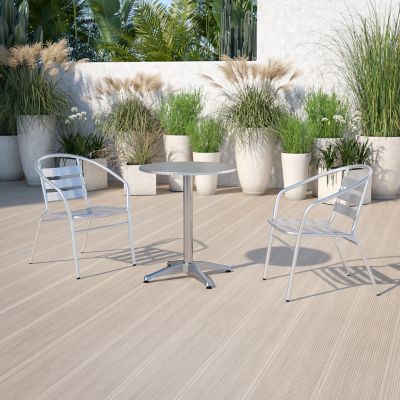
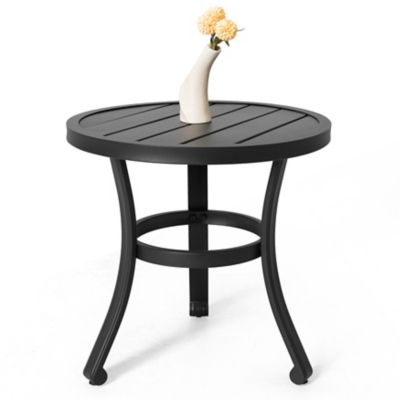
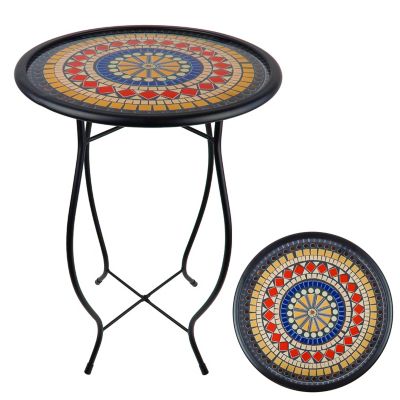
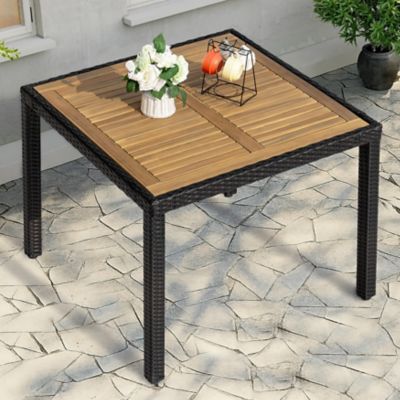
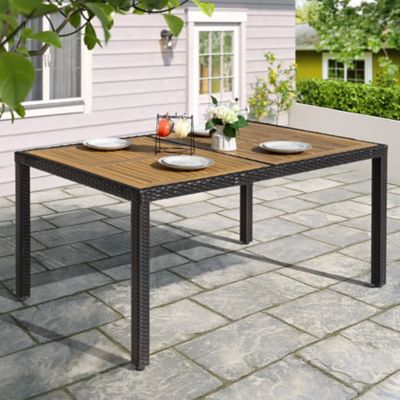
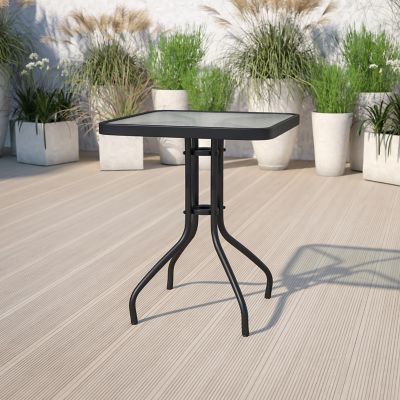
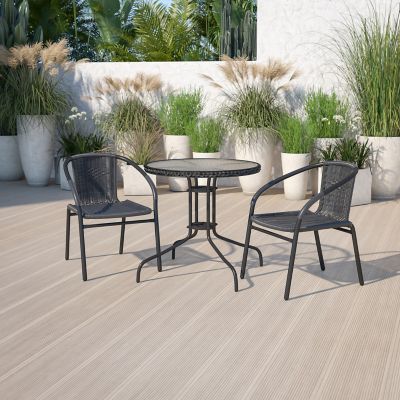
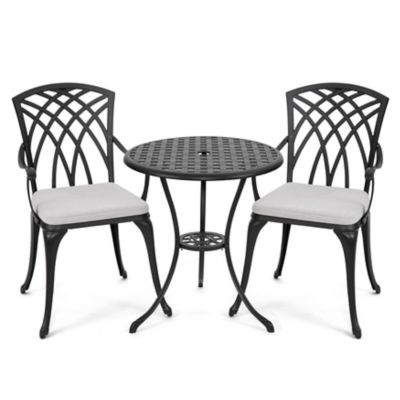
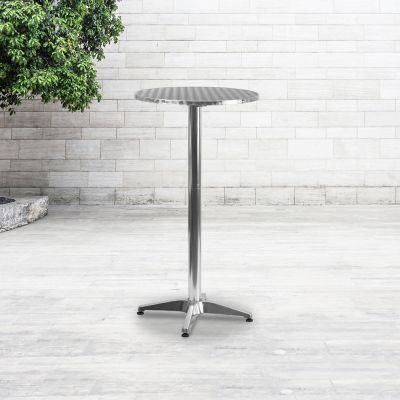
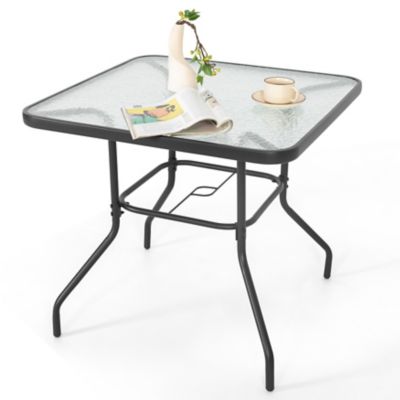
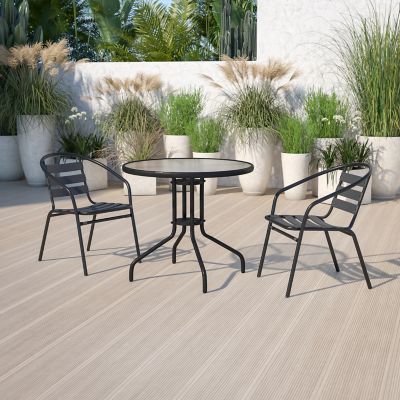
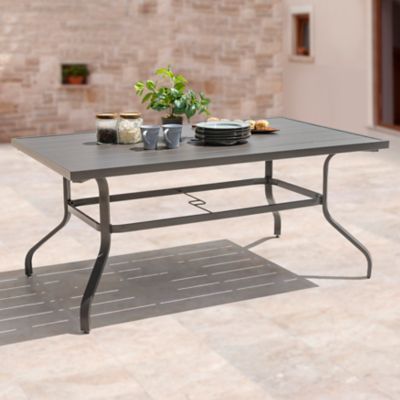
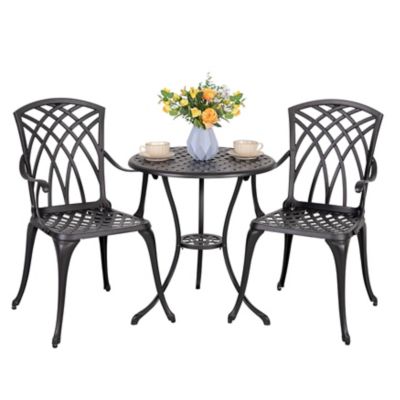
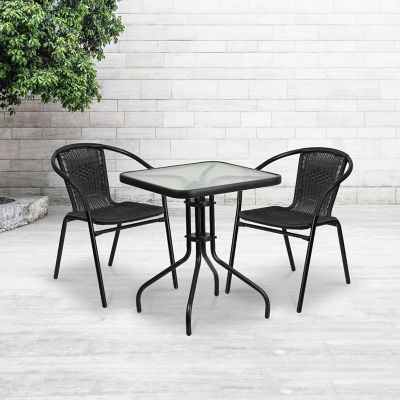
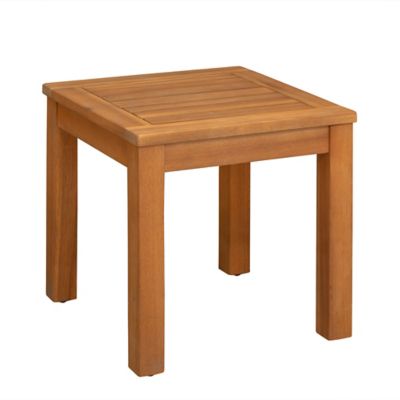
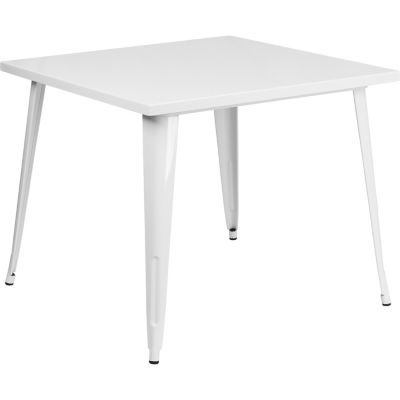
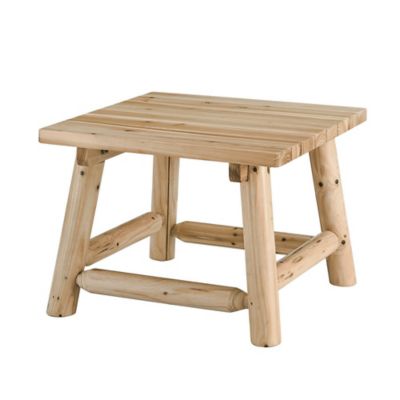
Outdoor tables for small spaces give a narrow porch, balcony, or little patio a useful place for coffee, a shared meal, or a book beside a favorite chair. Compact bistro tables, folding tables, nesting tables, and small side tables serve different purposes without taking over the whole sitting area. A bistro table makes sense for two chairs and a simple supper, while a side table keeps a drink within reach without adding another dining surface. Round tops leave no corners projecting into a tight walkway, though the base and chairs still determine how much floor space the arrangement needs. Square and rectangular tables can tuck alongside a wall or fit neatly into a corner, leaving the center of a porch open. Tabletop measurements tell only part of the story: legs that flare outward, chair arms, and the space needed to pull out a seat all count toward the footprint. A tabletop around 24 to 30 inches across can suit drinks or a light meal for two, depending on the shape and the size of the place settings. Standard dining-height tables generally stand about 28 to 30 inches tall, making chair height and knee clearance important parts of the fit. Side tables work best when the top sits within easy reach of the adjoining seat rather than requiring a stretch or a deep bend. A pedestal base can leave more room for chair legs, but its footprint still needs to stay clear of feet. On a small front porch, the right arrangement also leaves room for the door to swing fully and for someone carrying groceries to pass without turning sideways. Keeping steps, gates, and the main walking path open matters more than squeezing in one extra seat.
Material and construction affect how an outdoor table feels, how easily it moves, and the attention it needs over time. Powder-coated steel offers a firm, substantial feel, with a finish that helps protect the metal from moisture. Scratches and chipped areas deserve attention because exposed steel can develop rust. Aluminum is generally lighter than steel and does not rust the way iron-based metals do, although its finish and hardware still need care. For someone who moves furniture aside to sweep the porch, that difference in weight can matter as much as the tabletop size. Wood brings visible grain and a familiar feel alongside porch rockers or a bench. Species such as teak and acacia have different care needs, and the maker’s directions should determine whether cleaning, oiling, or another finish is appropriate. Resin and recycled-plastic designs can offer straightforward cleanup, but weight, construction, and load limits vary; a solid board-style table and a hollow molded table should not be assumed to perform the same way. Glass tops provide a smooth surface for cups and plates, while edges and supports need sensible handling. Slatted tops let water pass through, though the gaps may be less convenient for narrow cup bases, pencils, or small game pieces. A flat, continuous top suits writing a note, sorting seed packets, or setting down a serving tray. Across materials, snug hardware, sound joints, and a stable base contribute to long service. Adjustable feet can help a table sit level on a slightly uneven surface, but they cannot make an unsuitable location safe. Routine care usually starts with removing grit, wiping spills, and following the specified cleaning method rather than reaching for a harsh cleaner. A trivet beneath hot cookware and a coaster beneath a drink can help protect finishes without adding much fuss.
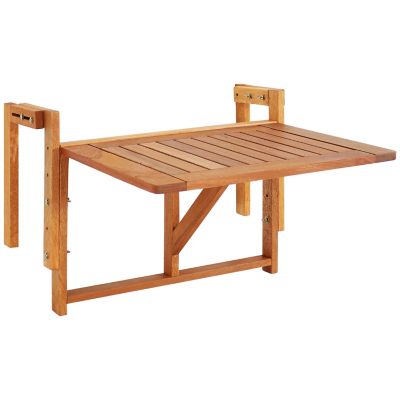
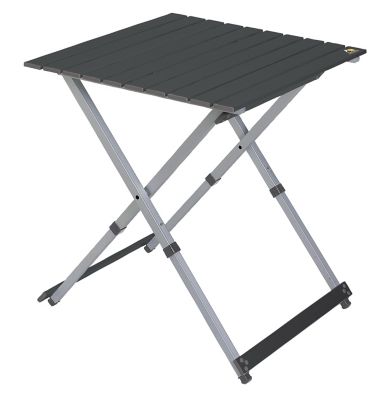
Space-saving features are especially handy when one patch of porch has to handle several jobs. A folding outdoor table can provide room for lunch and then tuck away when the same area needs to serve as a clear passage. Folded dimensions matter just as much as open dimensions when storage means a slim spot beside a cabinet or a corner near the back door. Hinges and locking braces should move smoothly and hold the table firmly in its open position, with fingers kept clear while folding. Nesting tables offer another approach: a smaller surface slides beneath a larger one, then comes out when company needs another place for a glass. Two-tier side tables add a lower shelf for reading material or a small basket, though shelf placement should leave enough room for legs and feet. Wall-mounted and railing-mounted tables can free up floor space where the structure and attachment method allow, but mounting requirements, weight limits, and property rules need to match the location. No table should interfere with a railing’s protective function or become a step for a child. For a coordinated table-and-chair arrangement,
Patio Sets for Small Spaces offer a related option when both seating and a tabletop need to fit the same compact area. A separate side table may be the better match when a pair of chairs already has a comfortable place. These smaller tables can also make a thoughtful housewarming gift for someone settling into a home with a modest porch, provided the measurements and intended use are known. A shallow top beside a rocker, a folding surface for an occasional meal, or a compact table between two seats can make a small spot more useful. There is room for everyday comforts without crowding out the reason for sitting there: a quiet cup of coffee, a conversation across the table, or a few minutes off the feet after chores.