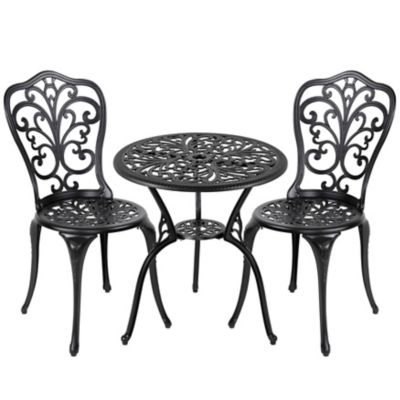
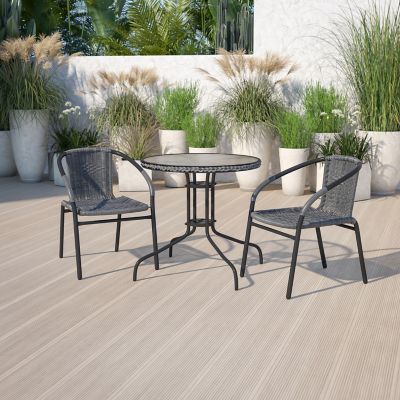
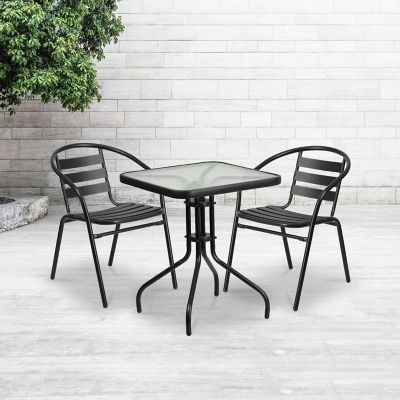
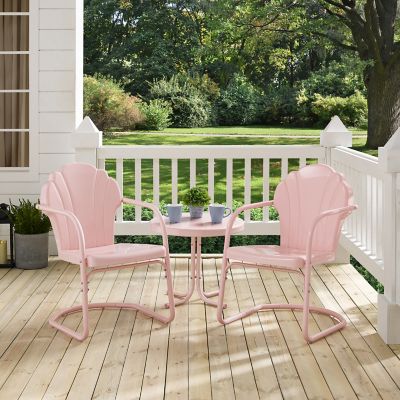
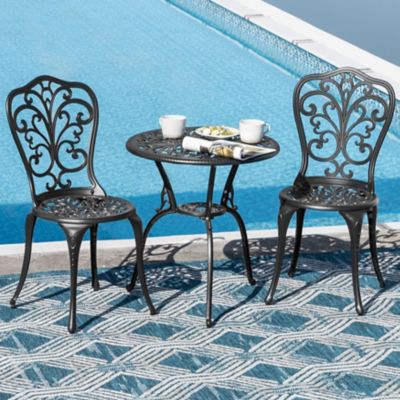
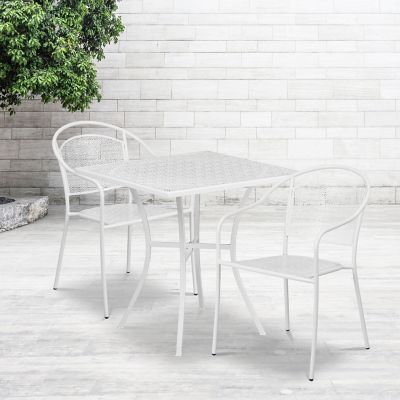
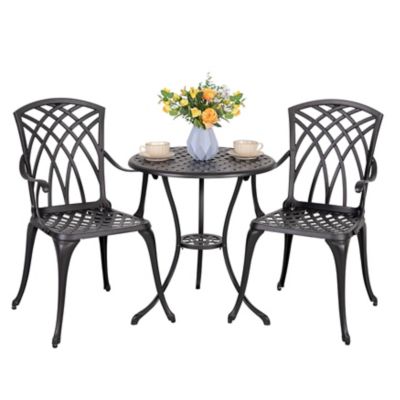
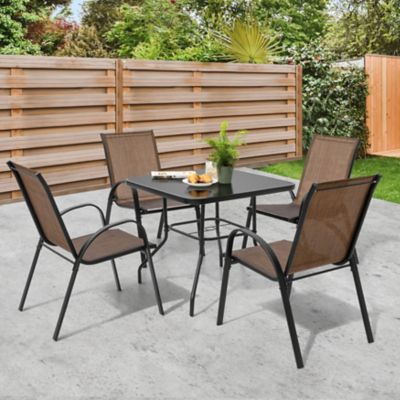
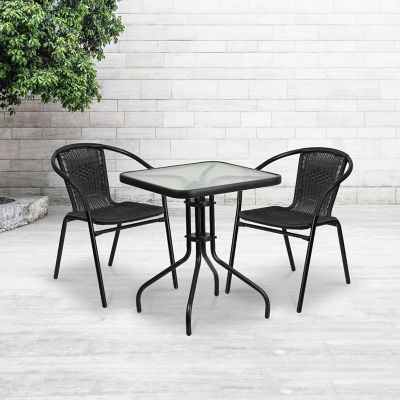
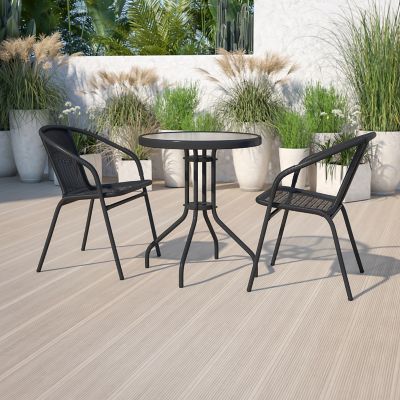
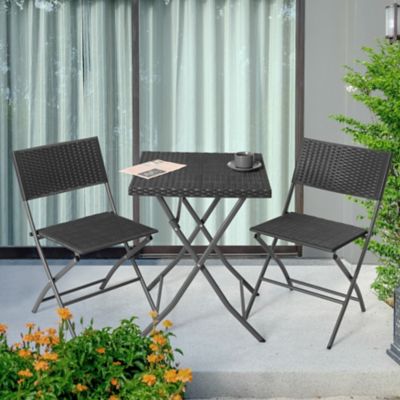
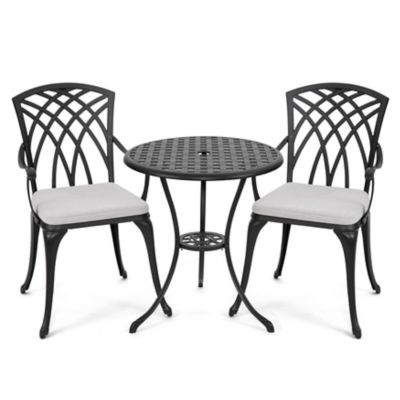
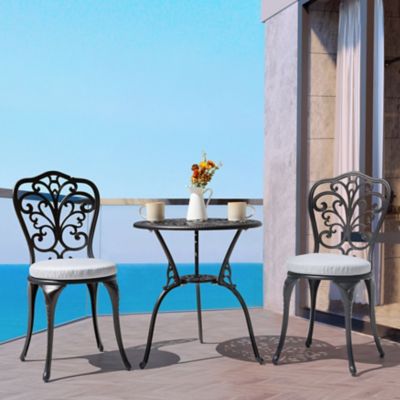
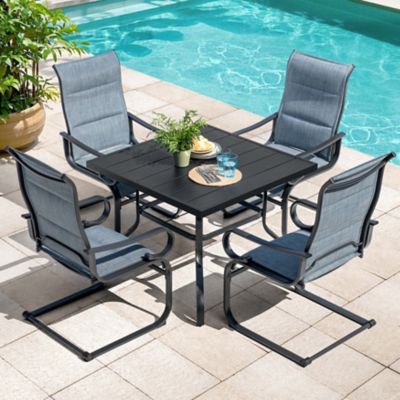
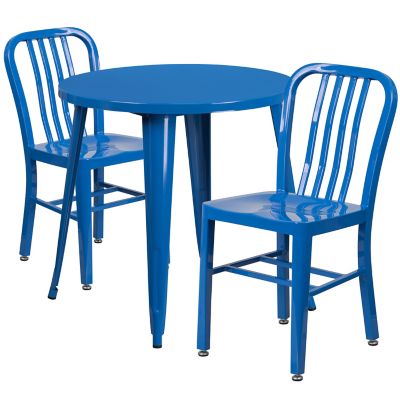
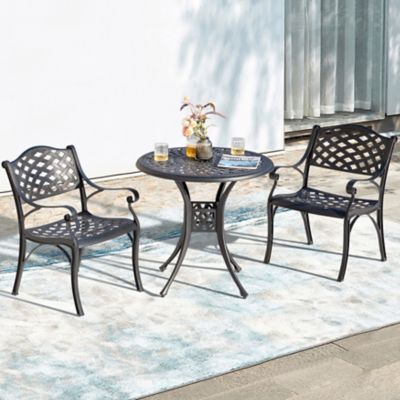
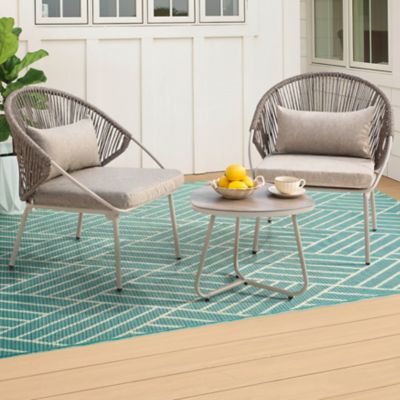
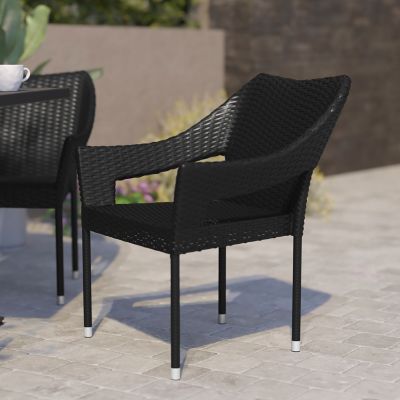
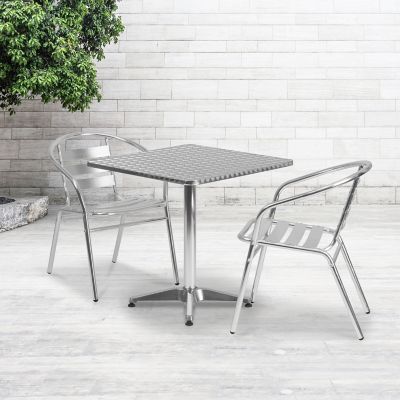
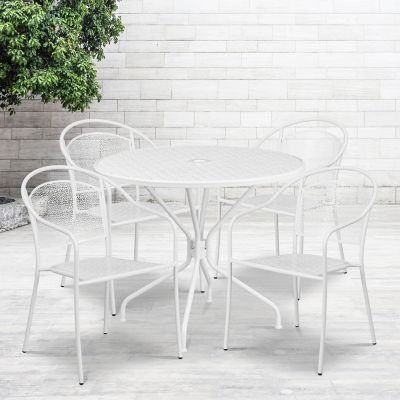
Patio sets for small spaces bring a table and comfortable seating to spots that might otherwise hold little more than a doormat and a pair of boots. A three-piece bistro set, typically one compact table and two chairs, is a practical fit for an apartment balcony, a narrow side porch or a small deck outside the kitchen. It gives two people a place for coffee before chores, a sandwich at midday or a quiet supper without filling the whole floor. Folding chairs and tables can free up that same space for another task, while stackable chairs keep spare seating together in a smaller footprint. For a setup that stays in place, chairs that tuck neatly beneath the tabletop help keep the walkway open between meals. The useful footprint includes more than the table’s width: chair depth, room to pull a seat back and clearance around a doorway all affect how a set fits. A round table has no corners projecting into a tight walking path, while a square table can sit neatly alongside a wall when its design allows. A narrow rectangular table may suit a longer porch, especially when seating sits along its sides rather than at both ends. Tabletop space matters, too. A spot for two mugs takes less room than a meal with plates, serving dishes and elbows on either side. A compact four-seat arrangement can make sense for a small household that regularly eats outside, provided everyone can sit down and get up without moving the whole set. On a porch with a mudroom door, keeping that door’s full swing clear makes everyday trips with laundry, groceries or work boots much easier. For balconies, building rules and load limits also belong in the decision. The best-fitting small patio furniture leaves enough breathing room for the space to function, not just enough room for every piece to squeeze inside.
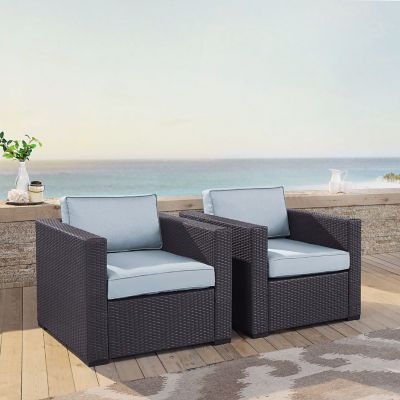
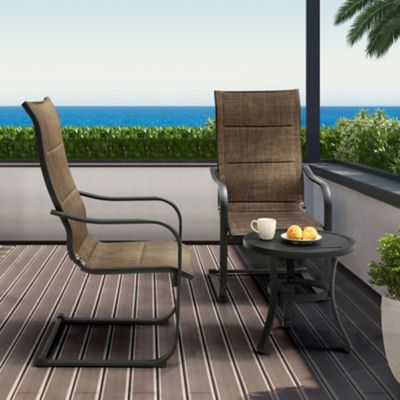
Materials influence how a small patio set feels, how easily it moves and what care it needs over time. Aluminum frames are generally lighter than comparable steel frames, which can make a difference when chairs move aside often. Steel can provide a more substantial feel, and a protective coating helps limit corrosion while it remains intact. Scratches, joints and fasteners deserve occasional attention because a small damaged spot can become a larger maintenance job if ignored. Wood brings visible grain and a solid feel to a porch seating area, though its care needs vary by species and finish. Some wood furniture needs periodic treatment with a finish recommended by its maker. Woven resin seating offers a textured look, with comfort and support also depending on the frame beneath it and the shape of the seat. Mesh and sling seats keep the profile lighter and may eliminate the need to find a home for separate cushions. Cushioned chairs offer a softer place to settle in, but their full depth can take up more floor space than a slim bistro chair. Seat height, back angle and arm placement matter just as much as appearance. A higher, upright seat may be easier for someone who prefers steady support when standing, while a lower lounge-style chair suits lingering with a book rather than leaning over a dining table. Armchairs need enough clearance to slide beneath the table if that tucked-away fit is part of the plan. Smooth tabletops provide a steady spot for drinking glasses, while slatted surfaces have gaps that may be less convenient for small objects. Glass tops need care around their edges, and any replacement glass must meet the furniture maker’s specifications. Weight capacities and care directions belong with the set’s specifications rather than assumptions based on appearance. A sturdy-feeling frame, even contact with the floor and secure connections all contribute to seating that feels settled when someone sits down.
Small-space patio sets earn their place when they suit the way a household actually spends time outside. A pair of straight-backed chairs and a small table can turn a side entry into a regular breakfast spot, while a compact conversation set gives a couple a place to sit after chores without taking over the porch. Folding furniture works especially well where the same patch of floor needs to stay flexible, although folded dimensions matter when the storage spot is a narrow closet or a corner of the shed. Stackable chairs also need a stable, unobstructed place to rest. Cushions, if included, add another storage consideration; removable covers can simplify cleaning when their care labels allow washing. Routine upkeep is usually easier with accessible joints, surfaces that wipe clean and feet that don’t trap grit against the floor. Mild soap and a soft cloth suit many materials, but the manufacturer’s directions should govern cleaners, rinsing and any protective treatments. Drying furniture after cleaning, checking fasteners periodically and replacing missing foot caps can help keep the set in working order and protect the surface underneath. Folding mechanisms need clear joints and fully engaged locks before anyone sits down. Layout matters for accessories as well. Pairing a compact seating arrangement with
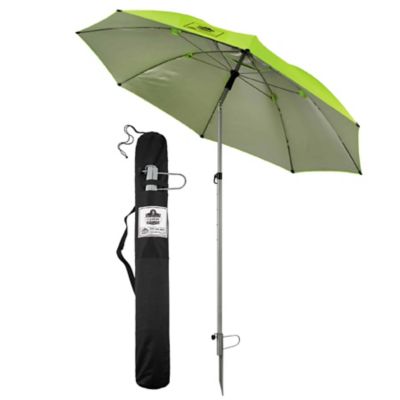
patio umbrellas for small spaces calls for room for the base, pole and chair movement, not just space above the table. An umbrella hole alone doesn’t establish that a table can support an umbrella; the specified base and support requirements still apply. For a housewarming gift or a present for someone settling into a smaller home, a patio set can make an everyday outdoor spot more inviting, provided the recipient’s measurements, seating needs and storage space are known. Whether the setting is a farmhouse porch or an apartment balcony, compact outdoor furniture works best when it supports ordinary routines: setting down a full plate, stretching out a conversation and getting through the doorway without shuffling chairs.