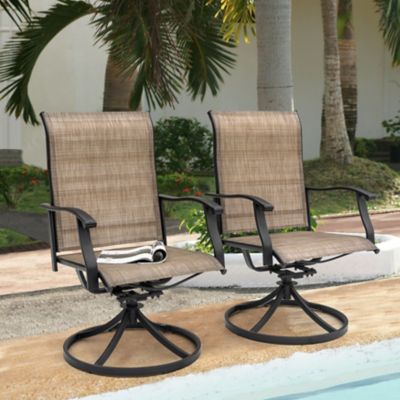
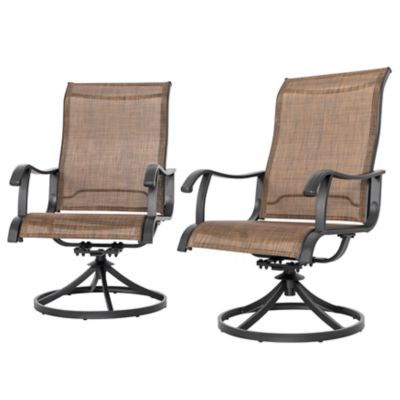
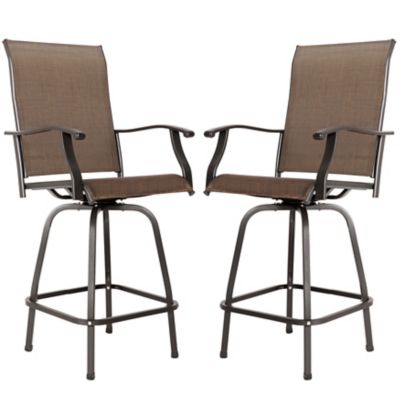
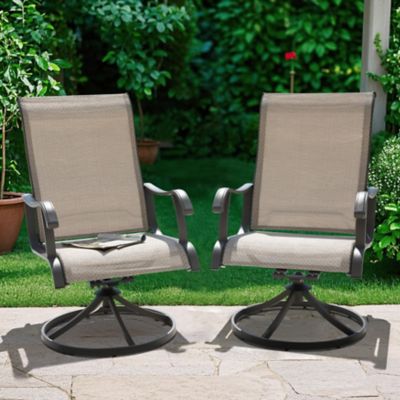
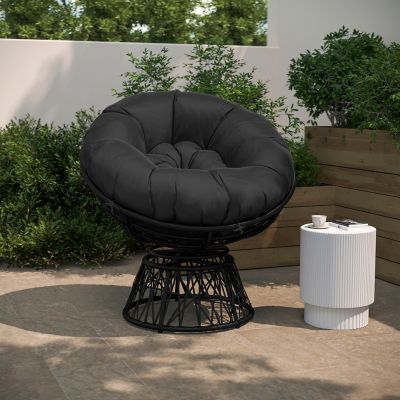
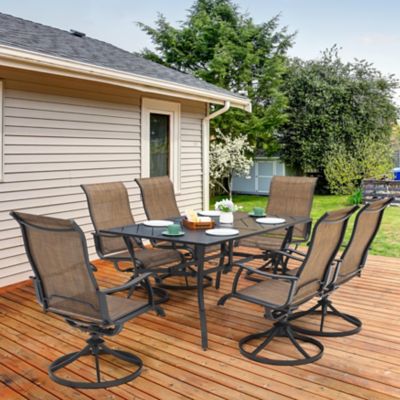
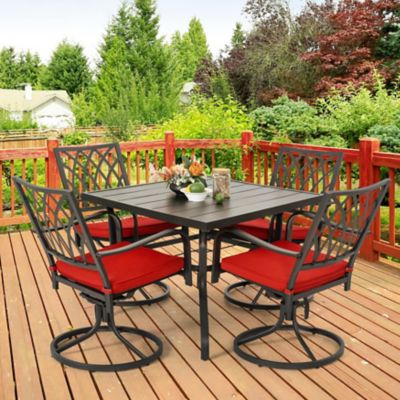
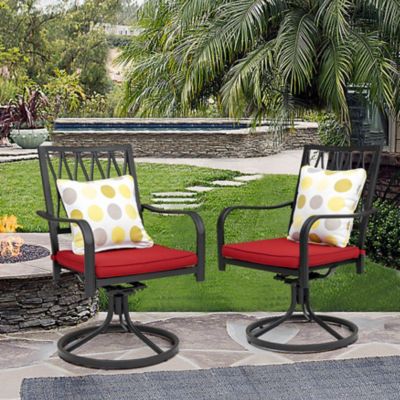
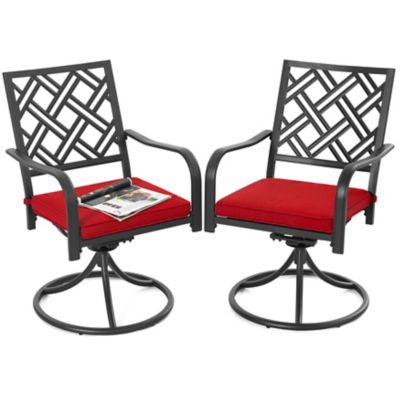
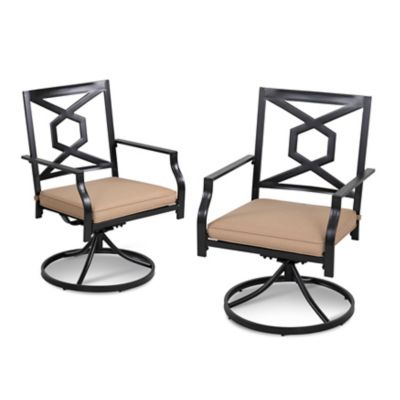
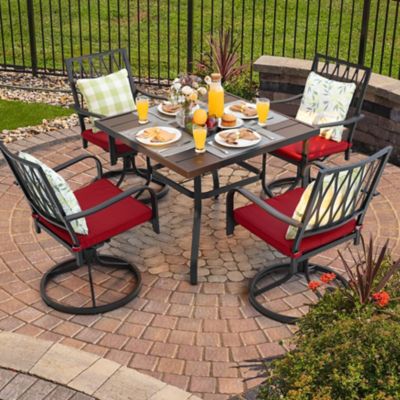
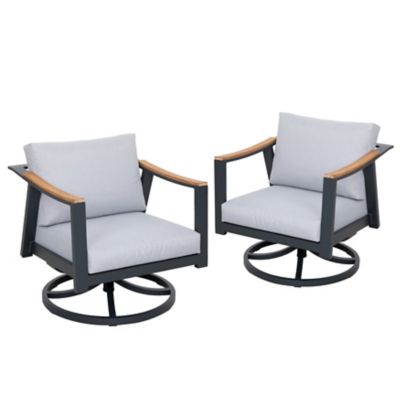
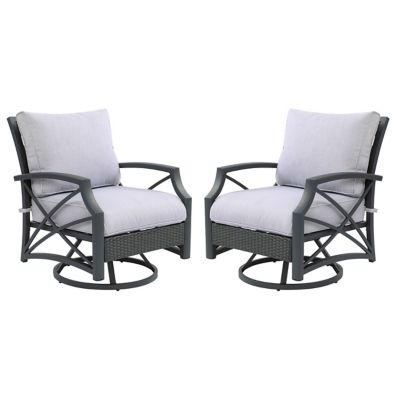
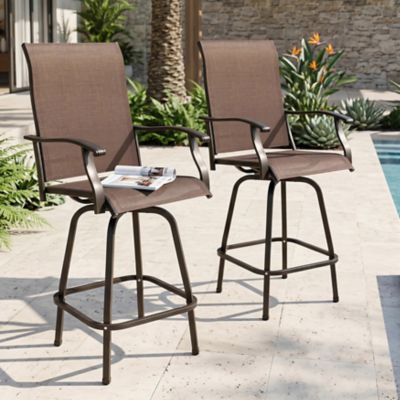
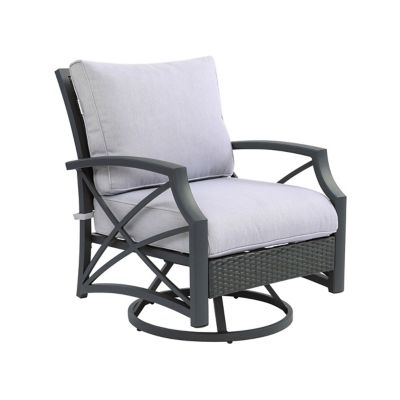
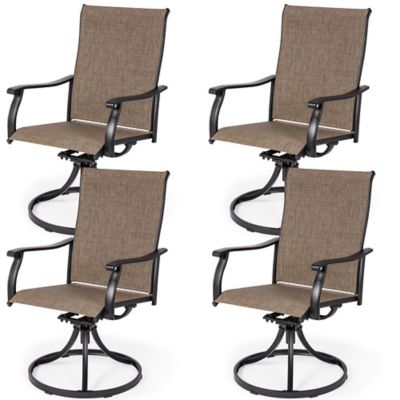
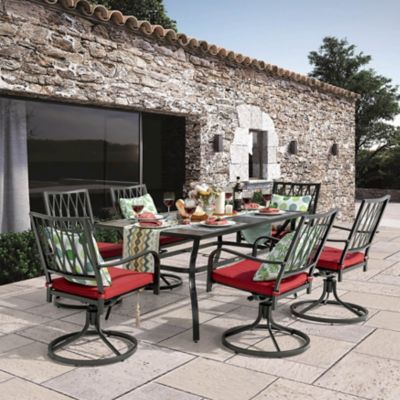
Outdoor swivel chairs make it easy to turn toward the conversation, face the yard or reach the patio table without dragging a chair across the floor. That little bit of movement comes in handy on a farmhouse porch, beside an outdoor dining table or in a backyard sitting area where folks gather after chores. A swivel base lets the seat rotate, while a swivel rocker adds a separate rocking motion; some designs pair rotation with a gliding movement instead. Those differences matter when choosing between a chair for lingering over coffee and one for sitting upright through supper. A chair that turns is not necessarily one that rocks, and the amount of rotation can vary by design. Dining-height outdoor swivel chairs generally suit meals and conversation around a table, while deeper lounge-style seats offer more room to settle back. Counter-height and bar-height seating call for a closer look at table clearance and foot support, since the seat needs to work with the surface in front of it. Comfort comes down to more than a thick cushion. Seat depth affects whether feet can rest comfortably on the ground, back height changes where support falls, and armrests give elbows a place to land. Someone who likes sitting upright may prefer a shallower seat with a firmer cushion, while a deeper chair can suit a person who enjoys leaning back with a book. Wide arms provide resting space, but they also add to the chair’s overall footprint and may not slide beneath a tabletop. For a shared porch or patio, a comfortable fit means considering the people who will sit there most often rather than judging by appearance alone. A supportive seat, an easy-to-reach armrest and a base that stays steady during normal movement can make an everyday chair a favorite place to take a break. Even the front edge deserves attention: a rounded or cushioned edge may feel more comfortable behind the knees than a hard edge that presses against the legs.
Materials shape both the feel of outdoor swivel chairs and the attention they need over time. Aluminum frames are often lighter to reposition, which can be helpful when rearranging a porch or cleaning underneath a dining set. Steel frames tend to have more heft, and their protective finish deserves a look wherever joints, fasteners or moving parts meet. Scratches that expose the metal may need attention according to the manufacturer’s care directions. Woven resin seating brings a textured look without the same upkeep as natural wicker, though the frame beneath the weave still matters for support. Wood offers visible grain and a familiar porch feel, with care needs that depend on the species and finish. Smooth edges, sound connections and an even finish are useful details to compare across frame materials. The seat itself makes another difference. Sling fabric offers a more open feel without a separate cushion, while cushioned seating adds padding and introduces fabric care into the routine. Removable cushion covers can simplify cleaning when their care labels allow removal, but a zipper does not automatically mean a cover belongs in the washing machine. Cushion thickness also tells only part of the story; firmness, shape and the support beneath the cushion influence how the chair feels after more than a few minutes. Ties or other attachment points can help keep cushions positioned as the seat turns, provided they are secured as directed and stay clear of the mechanism. For households with pets, children or frequent company, fabric that allows straightforward spot cleaning can be a practical consideration. Crumbs, garden soil and pet hair are easier to manage when seams and crevices are accessible. Mild cleaning methods recommended for the particular frame and fabric help protect finishes, while thorough drying before covering or storing cushions helps avoid trapped moisture. Following the chair’s own care directions matters more than treating every outdoor material the same way.
A good arrangement gives outdoor swivel chairs enough room to move without bumping a wall, table edge or neighboring seat. The base may stay in one place, but the back and arms sweep through a wider area as the chair turns. On a narrow porch, that moving footprint can matter as much as the listed width. Around a dining table, spacing should allow someone to turn and stand without crowding the next person. A firm, level surface helps the base sit properly; loose gravel, deep gaps between boards or an uneven patch beside the garden may not provide the support a particular chair requires. The manufacturer’s placement requirements and stated weight capacity belong in the decision, especially for seating that will serve different family members and guests. Moving parts also deserve attention around little hands and pet tails, and the area beneath the seat should stay clear of loose fabric, cords and toys. A small side table gives a mug or book a steady landing spot without asking a chair arm to serve as a shelf. For a larger gathering space, swivel seating can face a conversation area while other chairs provide places to stretch out.
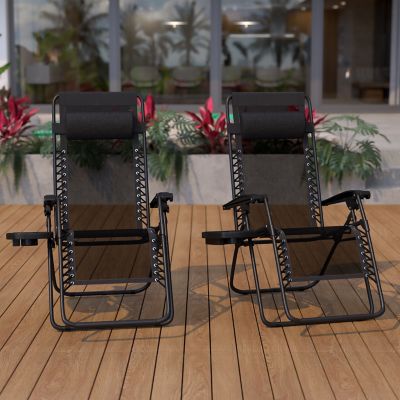
Outdoor Lounge Chairs can round out that arrangement when different family members prefer different ways to sit. Matching every piece is less important than keeping seat heights, walking paths and table access comfortable. Neutral fabrics can sit easily alongside brick, wood siding and stone, while a stronger color can give a plain porch a little personality. As a housewarming or anniversary gift, outdoor swivel seating makes the most sense when the recipient’s space, seating preferences and care routine are already familiar. For everyday use at home, the lasting appeal is straightforward: a chair that fits the setting, supports a comfortable sitting position and turns easily toward whatever is happening nearby, whether that is a family meal, a neighbor stopping by or a quiet view across the yard.