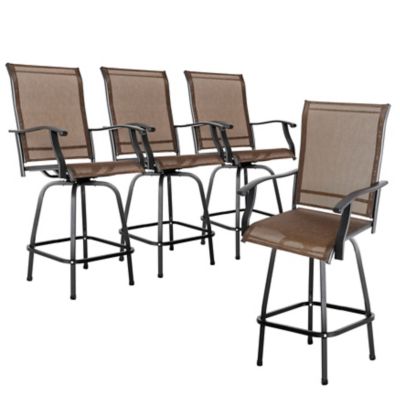
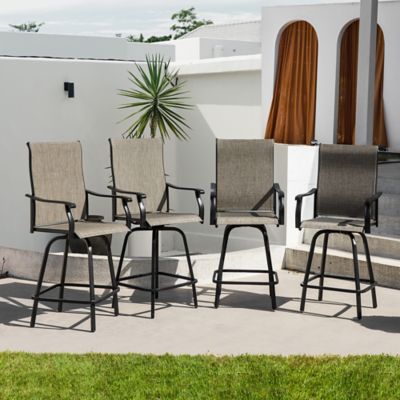
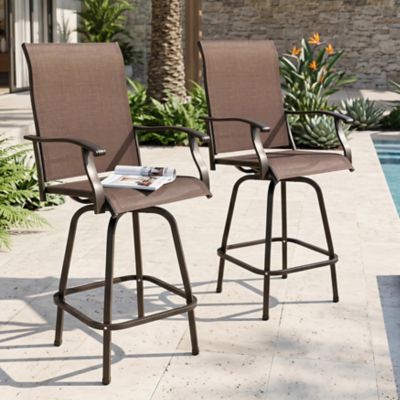
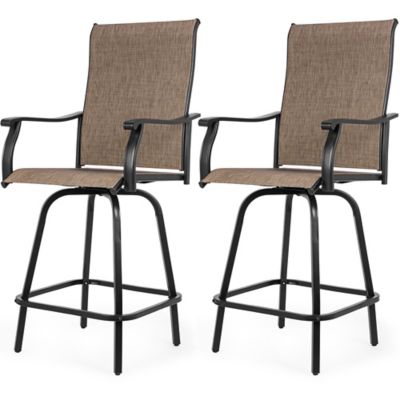
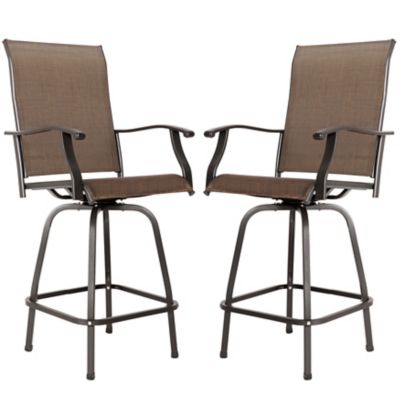
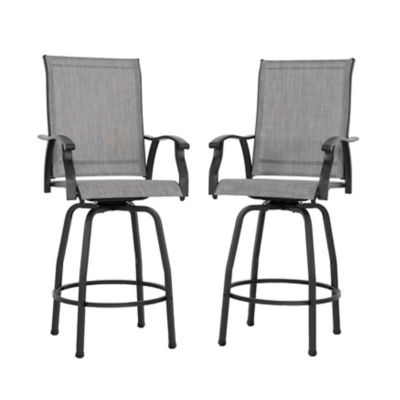
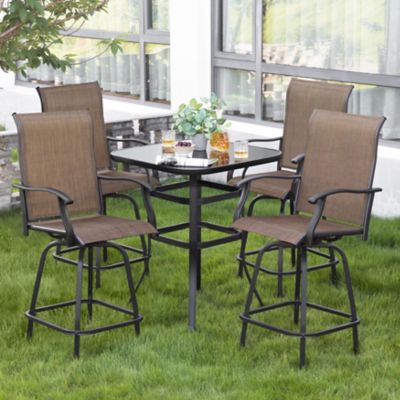
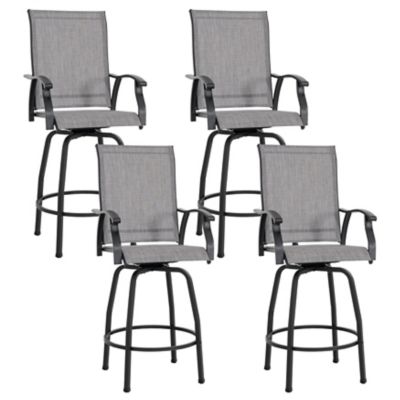
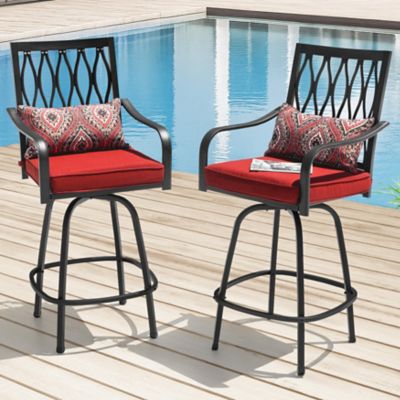
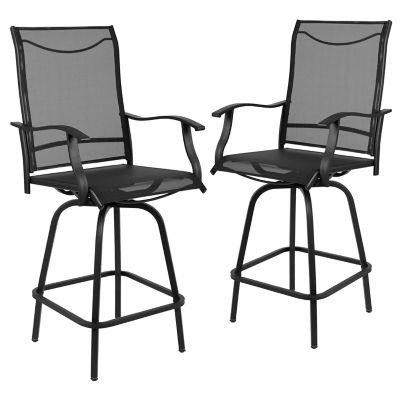
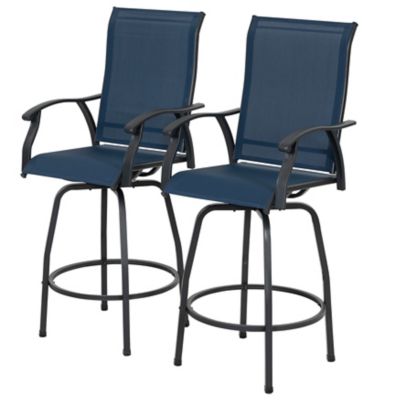
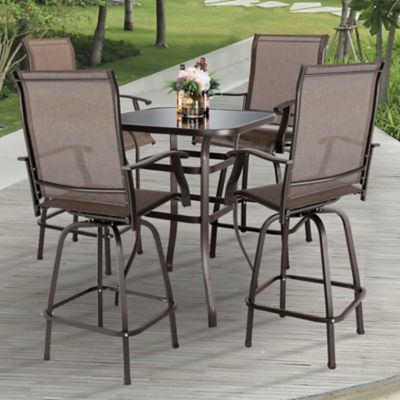
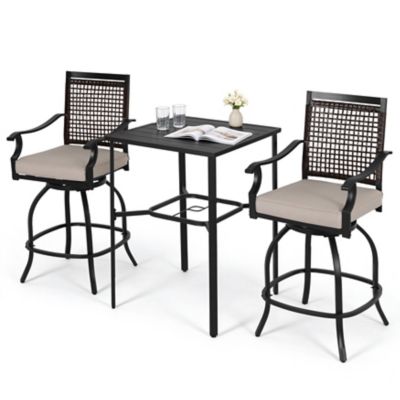
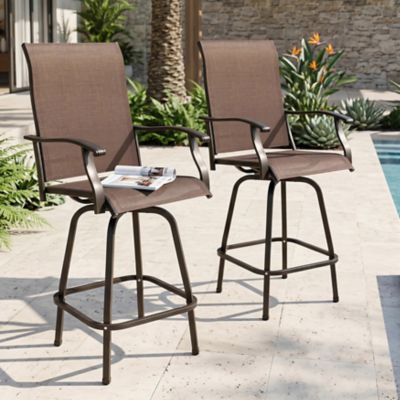
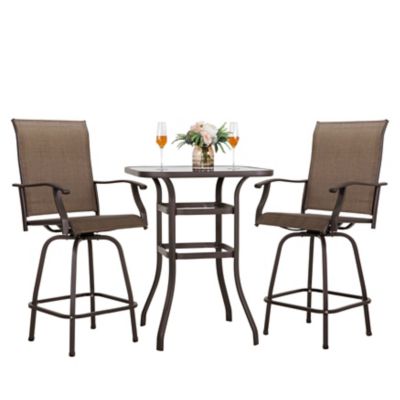
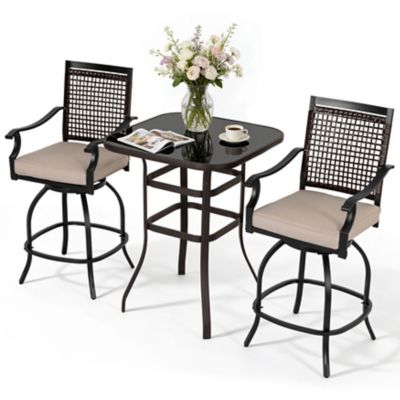
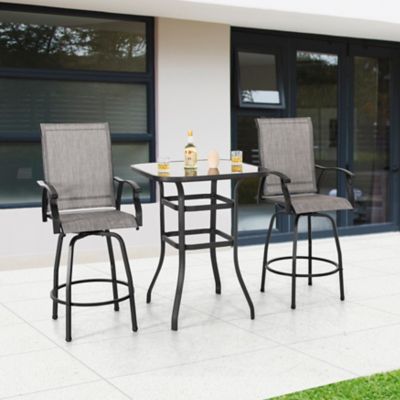
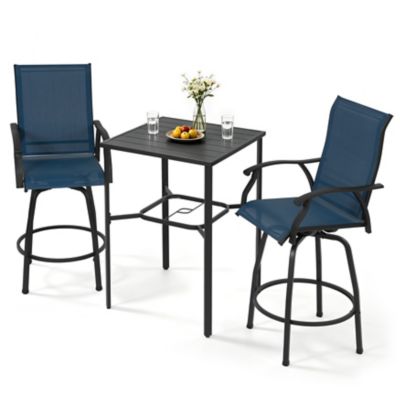
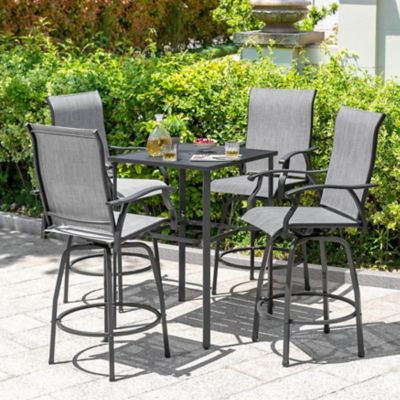
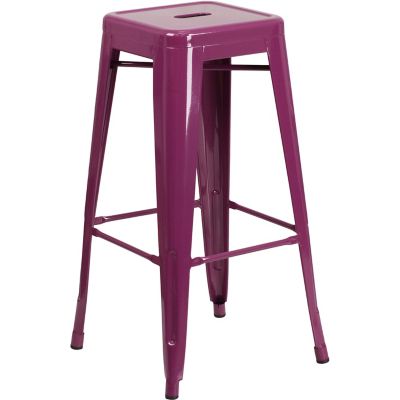
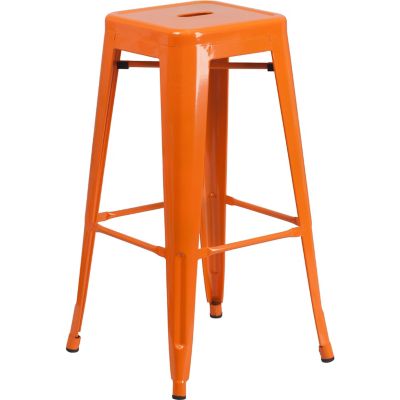
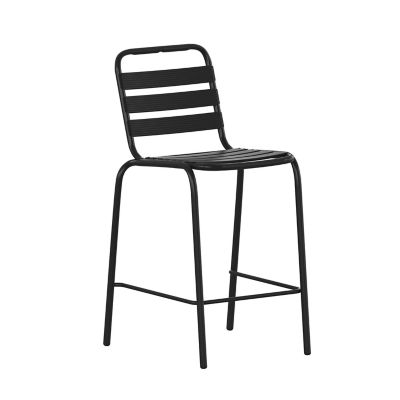
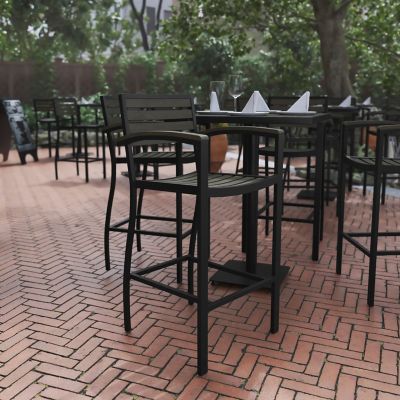
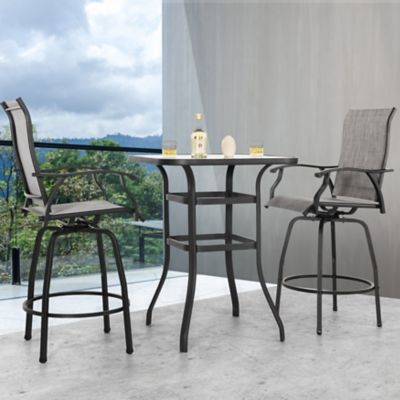
Outdoor swivel bar stools provide raised seating with a rotating seat for patio bars, outdoor kitchens, and high-top tables. The swivel lets someone turn toward a conversation, face the grill, or get up without dragging the whole stool across the patio. Many designs allow a full 360-degree turn, while others offer a smaller range of movement or a seat that returns to its starting position. That difference matters around a narrow porch counter or a busy cooking area, where unrestricted rotation may bring an armrest close to a wall or neighboring seat. Bar-height stools generally have seats about 28 to 32 inches from the ground and pair with bar surfaces around 40 to 42 inches high. Counter-height stools typically have seats about 24 to 27 inches high for surfaces around 34 to 37 inches high. Those ranges are a starting point rather than a guarantee of fit; the actual pairing should leave about 10 to 12 inches between the seat and the underside of the eating surface. A thick tabletop, low apron, or cushion can change that clearance. Overall stool height is different from seat height, so a tall back does not necessarily mean a higher sitting position. Seat width, arm height, and the sweep of the rotating seat also affect how comfortably several stools fit together. Around 26 to 30 inches between seat centers is a common starting point, with more room often needed for wide seats, arms, or unrestricted turning. A roomy layout lets folks settle in with a supper plate without bumping elbows, while keeping a clear path between the seating and the grill. Footrests give feet somewhere to land instead of leaving legs hanging. For a porch overlooking the pasture or a backyard counter beside the cooking area, the right proportions make raised seating feel like part of the space rather than something squeezed into it. A firm, level surface is important, too; tall stools belong on stable footing, not loose gravel or uneven ground.
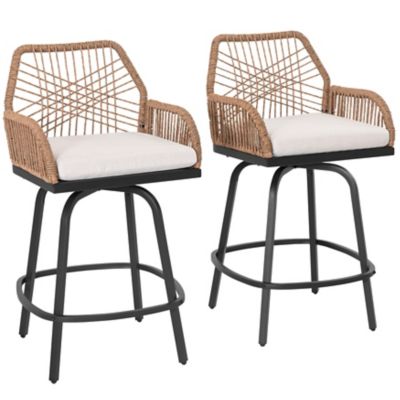
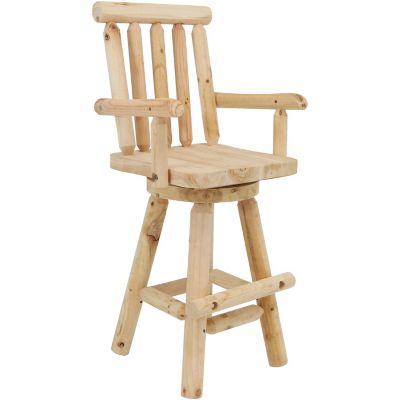
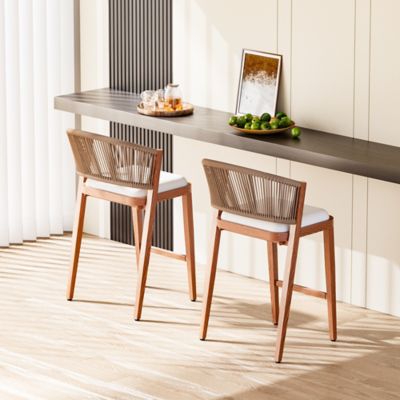
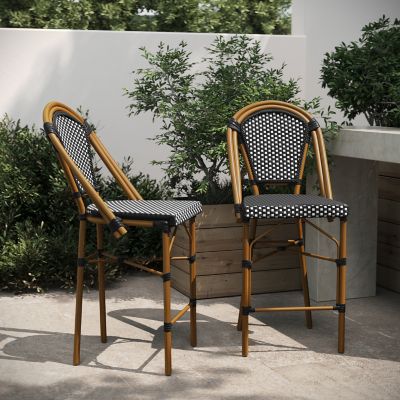
Frame materials influence the weight, feel, upkeep, and long-term wear of outdoor swivel bar stools. Aluminum is relatively light and resists rust, making it easier to move seating when the patio needs sweeping or the table arrangement changes. Powder-coated steel usually brings more heft, though damaged finishes can expose metal to rust. Neither material should be judged by weight alone: frame construction, welds, fasteners, and the swivel assembly all contribute to how steady a stool feels. Cast aluminum can provide shaped backs and substantial-looking frames without the same weight as many steel designs. Outdoor wicker generally refers to synthetic woven material rather than natural rattan, and its performance depends on both the weave and the frame underneath. It adds texture and can soften the look of a metal-framed seat, while tight, supported weaving helps prevent sagging. Rope-style seating also brings an open, textured appearance, but outdoor suitability depends on the fiber and construction. Wood offers a familiar fit for a farmhouse porch or timber-framed outdoor kitchen, with care needs that vary by species and finish. Some wood seating calls for periodic sealing or other treatment according to the manufacturer's directions. Outdoor-rated plastic lumber can be another option for folks who prefer a solid-looking seat without a wood refinishing routine. Across materials, finishes intended for outdoor exposure matter more than appearance alone. Water can collect around joints, beneath cushions, or inside poorly drained sections, so drainage and protected hardware deserve attention. Routine care is usually straightforward: dirt, pollen, and spills are easier to remove before they settle into seams or woven surfaces. Cleaning methods should follow the material's care directions, since harsh cleaners and abrasive tools can damage coatings or fibers. Swivel mechanisms may have separate maintenance requirements, and lubrication should follow manufacturer guidance rather than a general guess. A fitted cover or sheltered storage can reduce exposure when seating is not in service, but cushions and frames should be dry before covering. These details help preserve smooth movement and keep seating ready for everyday gatherings.
Comfort comes from more than a thick cushion. A supportive back, a seat with enough room to shift position, and a footrest at a comfortable height can make the difference between a quick stop at the counter and a leisurely meal outside. A slightly contoured seat may offer support without separate padding, while cushions add softness for longer visits. Cushion thickness affects sitting height, and a loose pad can slide when someone turns, so a secure fit matters on swivel seating. Outdoor fabrics vary in how they handle sunlight, moisture, and cleaning. Olefin and solution-dyed acrylic are common outdoor cushion materials, but fabric treatment, stitching, cushion fill, and drying characteristics also deserve a look. Water-repellent fabric does not make the entire cushion waterproof, and trapped moisture can lead to mildew. Removable covers may simplify care when their cleaning instructions allow it. For shoppers comparing back support, armrests, and padding,
Comfortable Outdoor Bar Stools offers another seating category to consider alongside swivel designs. Arms give elbows a resting place, while armless stools generally tuck closer to a counter and leave more room for getting on and off. Either style needs enough clearance to rotate without catching beneath the tabletop. A smooth swivel can make conversation easier when guests are gathered on both sides of a porch, and it lets the person keeping an eye on supper turn toward the cooking area without rearranging the seat. Still, tall rotating seating calls for care around children, and standing on a footrest or leaning far to one side can upset the stool's balance. Published weight limits and assembly directions are important parts of choosing and setting up any raised seat. For a household that spends plenty of time around an outdoor kitchen, or as a housewarming gift for someone with a bar-height gathering spot, the best match starts with the actual space and the people sitting there. Matching seat heights, sensible spacing, and manageable care needs help create a place where a neighbor can pull up, set down a glass, and stay for a good long visit.