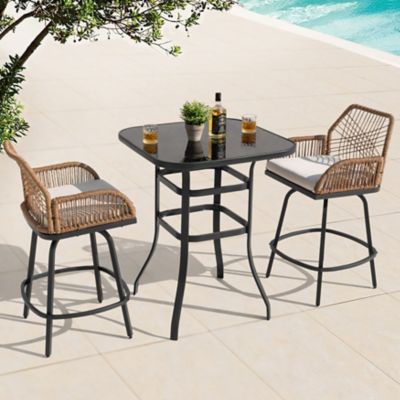
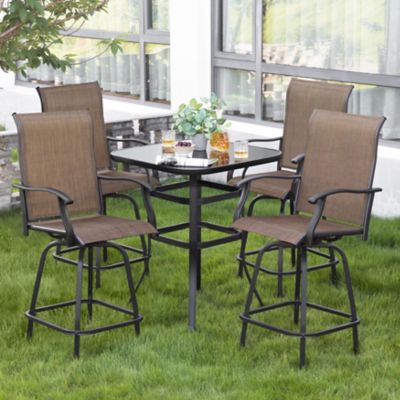
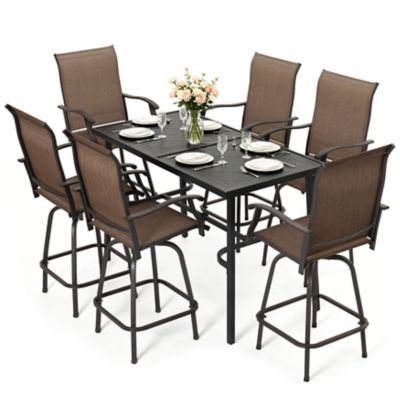
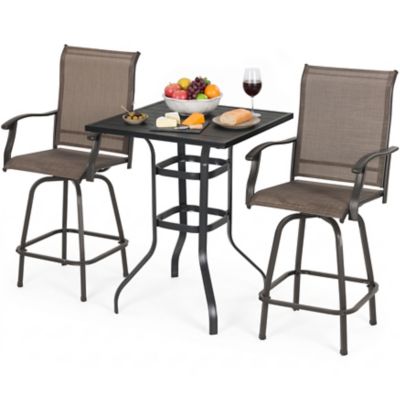
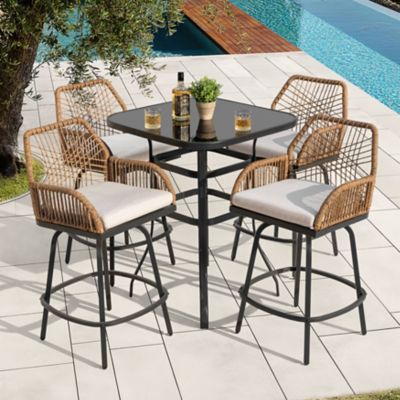
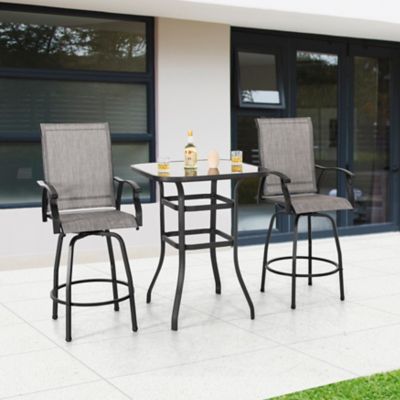
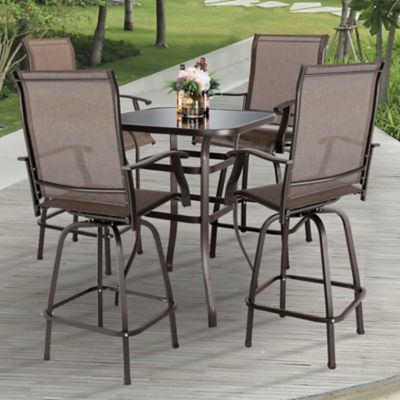
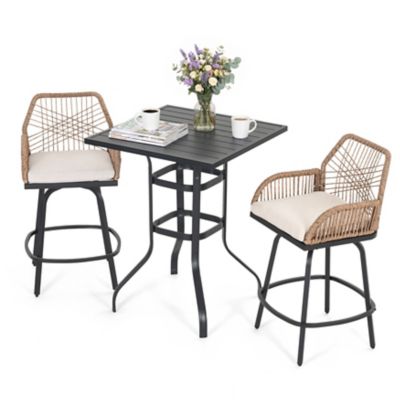
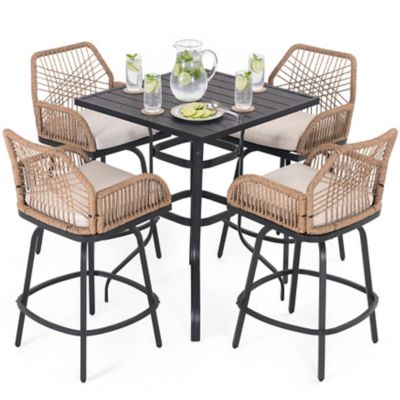
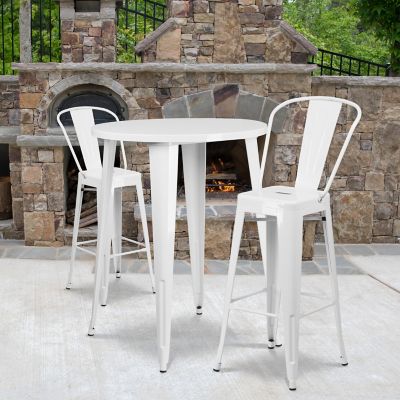
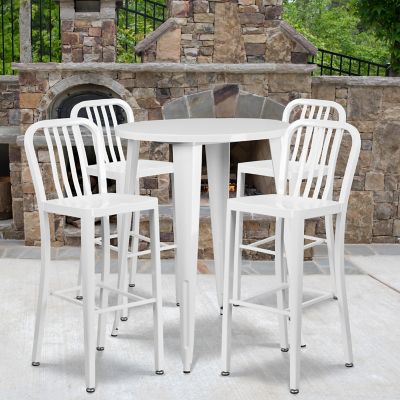
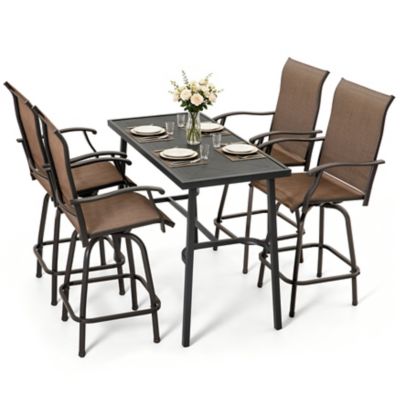
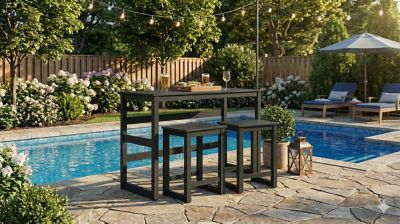
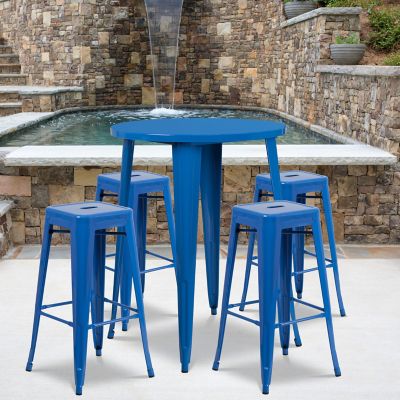
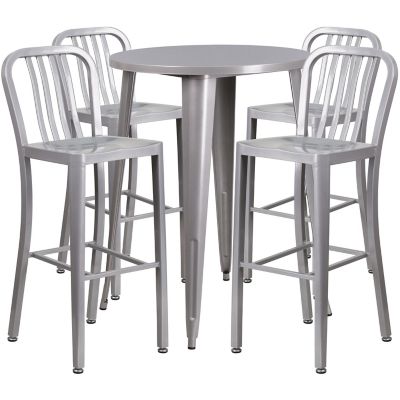
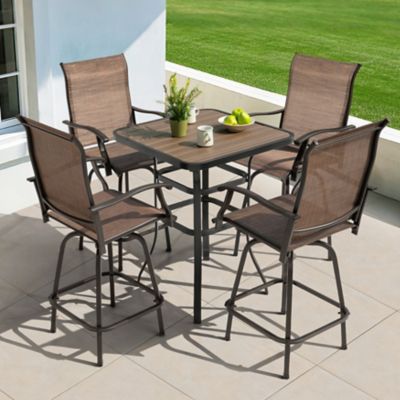
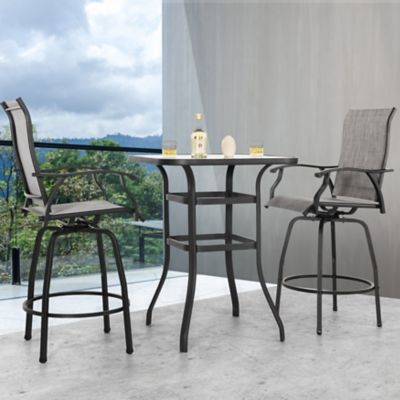
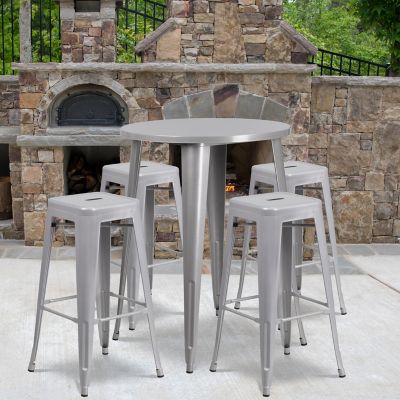
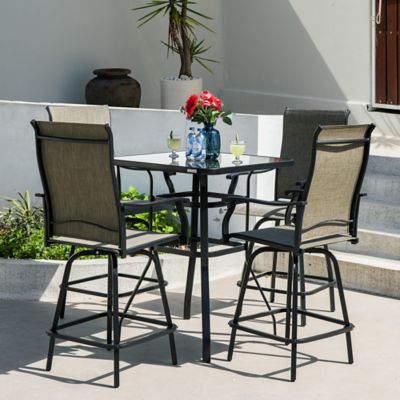
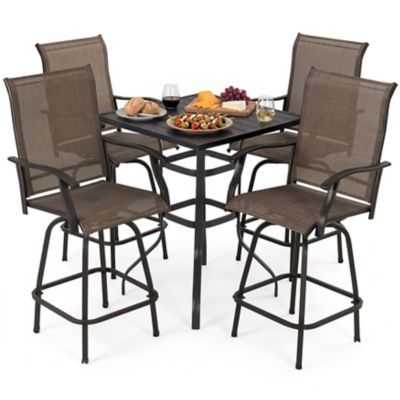
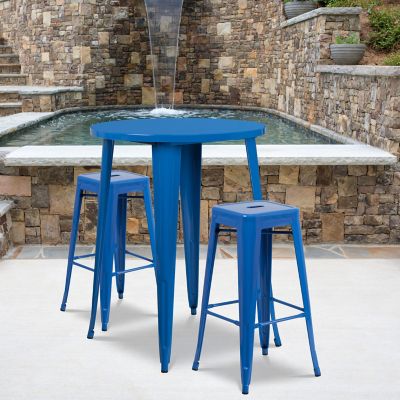
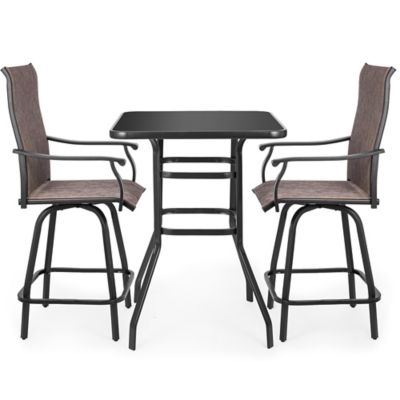
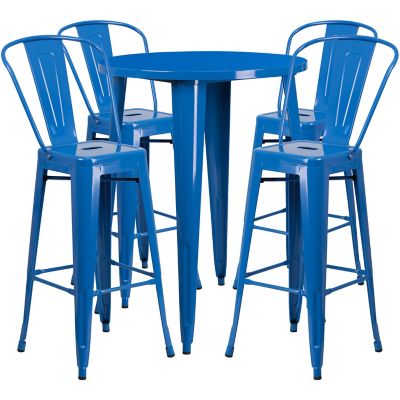
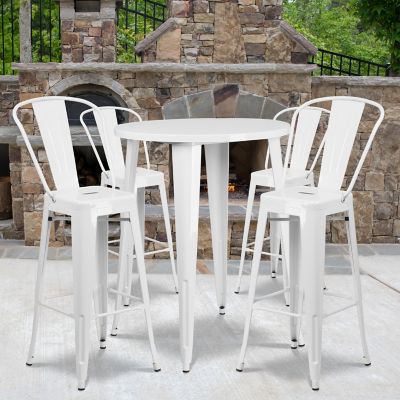
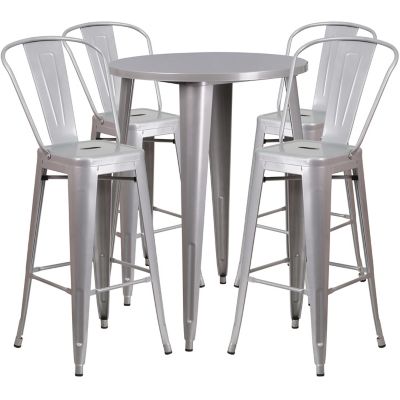
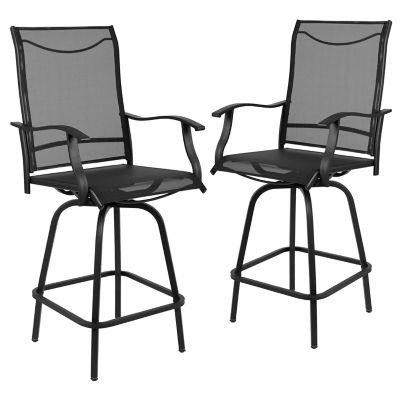
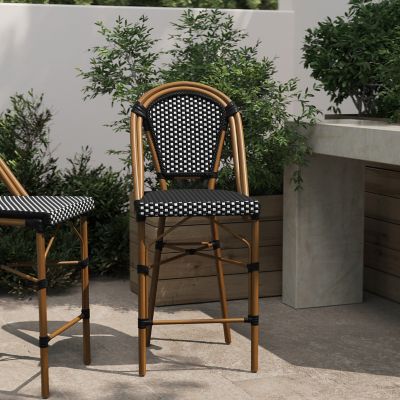
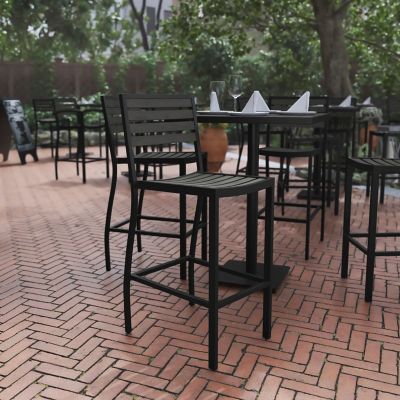
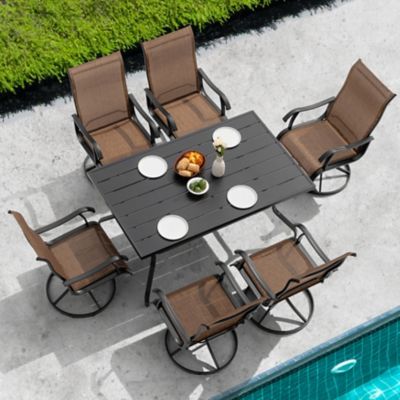
Outdoor bar sets with stools bring a raised table and matching seats together for meals, drinks, and easy conversation on a patio, deck, or poolside gathering spot. Their taller profile creates a place to pull up a seat without making room for a full outdoor dining arrangement. A two-seat set can suit a narrow porch or a quiet corner beside the garden, while a larger arrangement gives family and friends room to settle in over supper from the grill. Square and round tables keep everyone within easy talking distance; longer rectangular tables can fit along a patio edge or help define a gathering area beside an outdoor kitchen. Table shape matters as much as the number of stools, especially where doors, walkways, and cooking equipment share the space. Stools need room to pull out, and people should be able to pass behind seated guests without squeezing between furniture. Bar-height tables commonly stand about 40 to 42 inches tall and pair with stools that have seats roughly 28 to 30 inches above the ground. Counter-height tables are generally lower, often around 34 to 36 inches, with stool seats around 24 to 26 inches high. Exact measurements vary, so the listed table and seat dimensions matter more than the height label alone. For a lower table or an existing outdoor counter,
Outdoor Counter Height Stools offer another seating category to consider. A comfortable pairing typically leaves about 10 to 12 inches between the seat and tabletop, with enough clearance beneath any apron or support frame for knees and thighs. Stools with arms need extra attention because the arms may not slide beneath the table. Sets with tuck-under seating can leave more open floor space between gatherings, making them a practical fit for a porch that also serves as the main path to the backyard.
Materials give outdoor bar sets much of their character and influence the care they need over time. Aluminum frames tend to be lighter to move, which helps when a patio serves several purposes. Powder-coated steel brings more heft, though scratches in the finish deserve attention to help limit rust. Neither frame weight nor appearance alone tells the whole story; construction, hardware, and the stated weight capacity for each seat all matter. Wood sets bring visible grain and a familiar feel that works well alongside a farmhouse porch, stone patio, or simple gravel courtyard with a firm furniture pad. Teak, acacia, and other woods have different care requirements, and some change color with outdoor exposure. Following the maker’s cleaning and finishing directions helps preserve the appearance you prefer. Resin wicker offers a woven look over a supporting frame, while molded resin and high-density polyethylene designs can provide surfaces that wipe down readily after a meal. Each material has its own limits, so an outdoor-use rating and clear care information are worth checking. Table surfaces deserve a close look, too. Slatted tops allow water to pass through, but the gaps can make narrow-bottomed glasses less steady. Solid tops give plates and serving trays an even resting place, while textured surfaces may take a little more attention when cleaning up crumbs or sticky spills. Tempered-glass tops need the handling and cleaning recommended by the manufacturer. Cushioned seats add softness, but removable covers do not always mean machine washing is appropriate. Fabric care labels, drying instructions, and a suitable storage spot help keep cushions ready for the next get-together. Regular cleaning with approved products, prompt spill cleanup, and occasional hardware checks are sensible habits across many outdoor furniture materials. Furniture covers can help limit dirt and exposure when properly fitted, but the set should be clean and dry before covering, with ventilation that allows trapped moisture to escape.
Comfort becomes especially noticeable when a quick drink turns into a long visit. Backless stools keep the profile open and can be easier to tuck away, while stools with backs give guests something to lean against during a meal or an evening of catching up. Armrests add support but take up more room around the tabletop. A footrest is particularly helpful on taller seating because it gives feet a place to land instead of leaving legs dangling. Seat width, seat depth, back angle, and the position of the footrest all affect how a stool feels, even when two sets share the same overall height. Swivel seats can make it easier to turn toward the conversation, provided there is enough room between stools and nearby walls. For households that host often, a table with a lower shelf can keep napkins or serving pieces close without crowding the eating surface. An umbrella opening may suit an exposed patio, but the tabletop opening alone does not support an umbrella; the correct base and the manufacturer’s setup instructions still matter. A firm, level surface helps all the pieces sit steadily, and adjustable feet, where included, can help with small variations in paving. Tall seating belongs well away from deck guardrails, and a clear path around the set helps guests move comfortably between the house, grill, and yard. Adults may appreciate bar-height seating for casual meals, card games, or a place to visit while food is being prepared. Children and anyone who finds climbing onto a stool difficult may be better served by a lower seating area nearby. As a housewarming or wedding gift, a coordinated outdoor bar set makes the most sense when the recipient’s space, preferred seat height, and storage needs are already known. Whether the setting is a compact back porch or a roomy patio overlooking the pasture, the best fit leaves room for everyday movement and feels comfortable enough for folks to stay awhile. Matching the scale, materials, and seating features to that space helps make the set a natural part of outdoor meals and get-togethers.