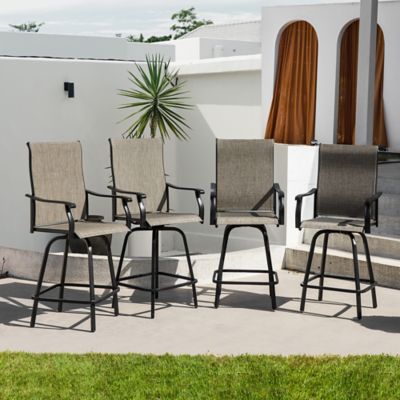
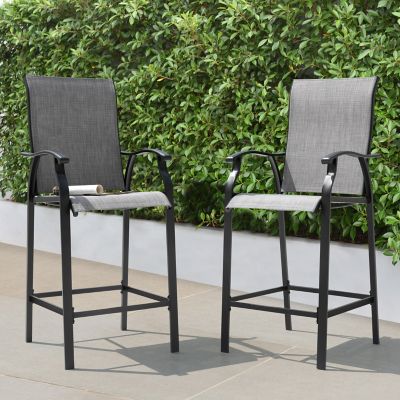
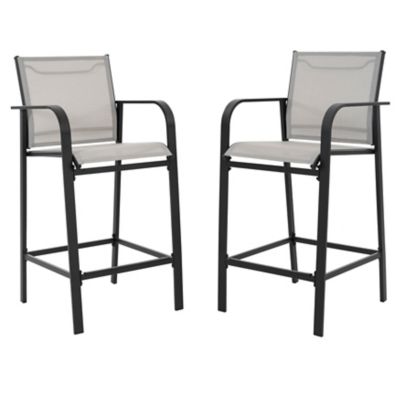
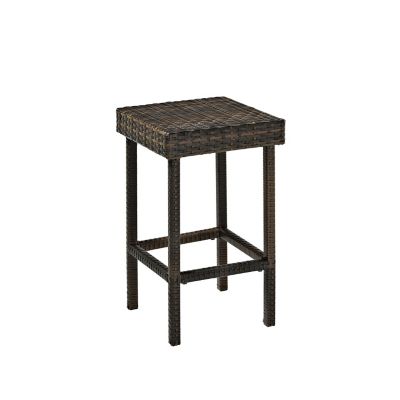
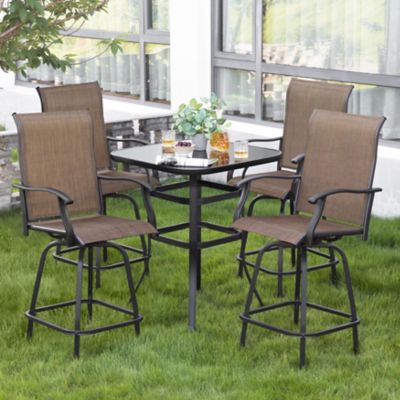
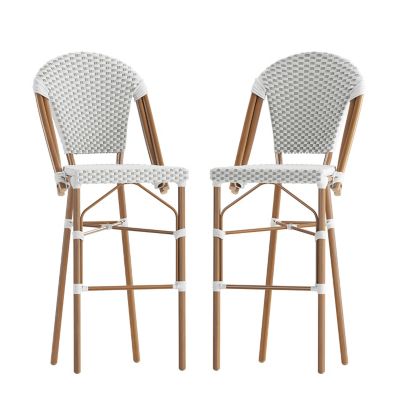
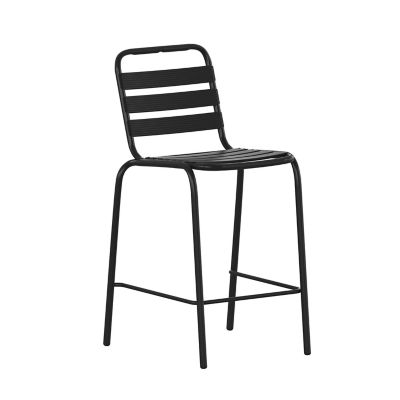
Outdoor bar stools for patios make a raised table or backyard counter a comfortable spot for a quick lunch, a glass of iced tea, or a good visit after chores. Their taller seats bring people up to the right level for eating and talking without pulling dining chairs over to a surface they cannot comfortably reach. The fit starts with seat height, not the overall height of the stool’s back. Counter-height stools commonly have seats about 24–27 inches above the ground, while bar-height stools commonly measure about 28–32 inches at the seat. Counter-height seating generally pairs with surfaces around 35–37 inches high; bar-height seating generally pairs with surfaces around 40–43 inches high. Those ranges are a starting point, since the exact pairing depends on the space beneath the tabletop. About 10–12 inches between the seat and the underside of the eating surface usually leaves comfortable legroom, though a thick apron or support brace can reduce that clearance. Arms also need enough room to slide beneath the counter if the stools will tuck away between meals. Around a patio bar, spacing matters just as much as height. Roughly 26–30 inches from the center of one seat to the next is a useful starting point, with more room for wide seats, arms, or a turning base. A stool that fits neatly under an empty counter may still crowd the walkway once someone sits down and stretches their legs. Keeping a clear route between the seating, back door, and cooking area makes the whole setup easier to enjoy. On a narrow porch, a slim backless frame can keep the space feeling open; around a roomy patio table, a supportive back and broader seat may be a better match for meals that turn into long conversations. Checking the stool’s full footprint also helps keep every leg on a firm, level surface rather than at the edge of a slab or between uneven pavers.
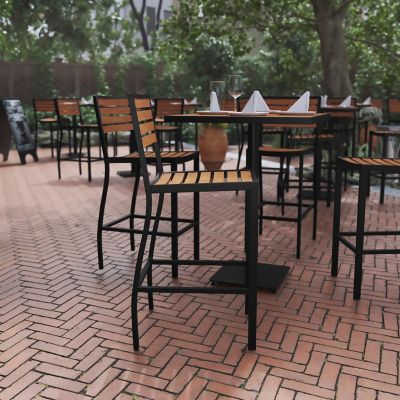
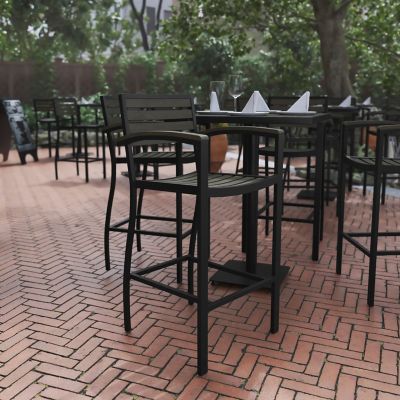
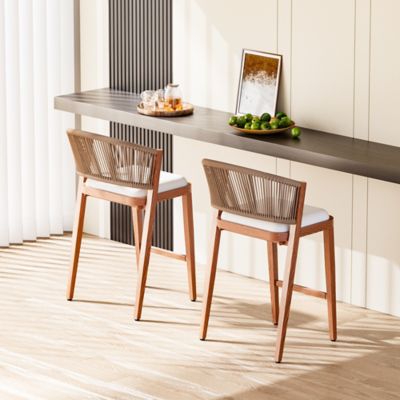
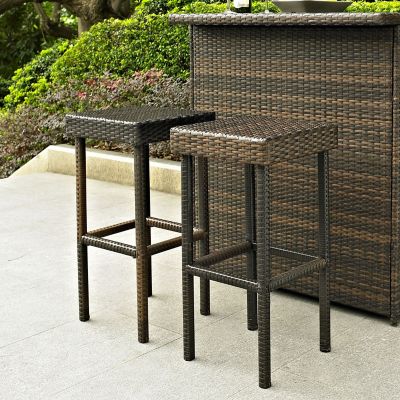
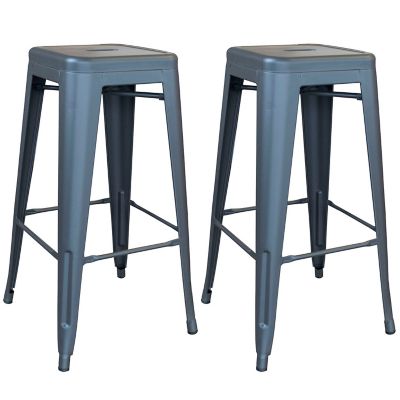
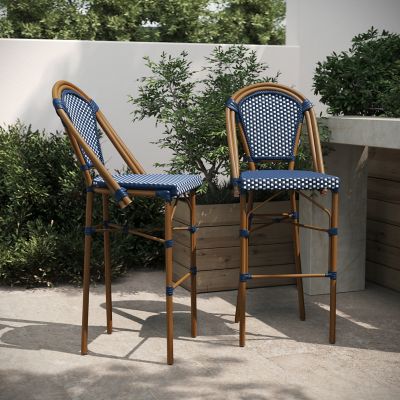
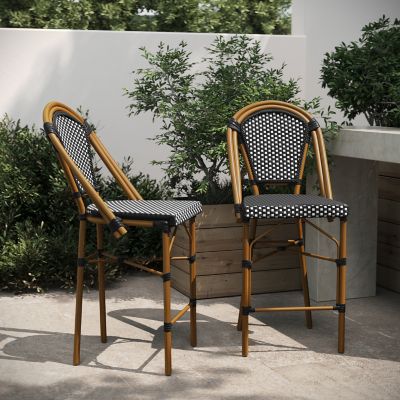
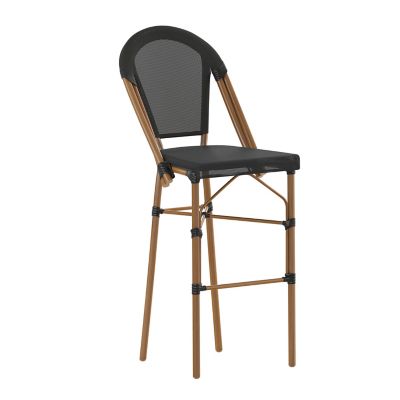
Materials give outdoor patio bar stools much of their character, and they also shape the upkeep that comes with them. Aluminum frames are relatively easy to move and do not develop iron rust, although their finish and hardware still benefit from regular cleaning. Powder-coated steel offers a solid feel, with a coating that helps protect the metal beneath it. Scratches and chipped areas deserve attention because exposed steel can rust when moisture reaches it. Wood brings visible grain and a natural feel to a porch or patio, whether the surrounding space has rough-sawn posts, brick, or a simple concrete floor. Acacia and teak are common outdoor furniture woods, but their care requirements depend on the species, construction, and finish. Some wood finishes call for periodic oiling or sealing, while others should be cleaned and maintained differently. Manufacturer directions help prevent an unnecessary treatment from changing the color or leaving a sticky surface. High-density polyethylene and other outdoor-rated plastic materials resist moisture and do not require the same refinishing routine as wood. Their weight, reinforcement, and connection points still matter, especially on taller seating. Resin wicker adds a woven texture, but the frame underneath carries the load, so both the weave and the supporting structure deserve attention. Sling seats offer a different feel, with fabric stretched across a frame rather than a separate cushion. Across these materials, well-supported footrests, secure joints, and properly tightened hardware help a stool feel steady when someone settles in. The stated weight capacity should suit the intended sitter, and a footrest is meant to support feet rather than serve as a step. Routine care is usually straightforward: remove grit, wipe surfaces with a cleaner approved for the material, and let everything dry thoroughly. Harsh scrubbers and strong cleaners can damage coatings or fabrics. Covers should fit without trapping moisture, and any cushions put away for storage should be fully dry. These small habits help keep outdoor seating ready for the next meal without turning furniture care into another big chore.
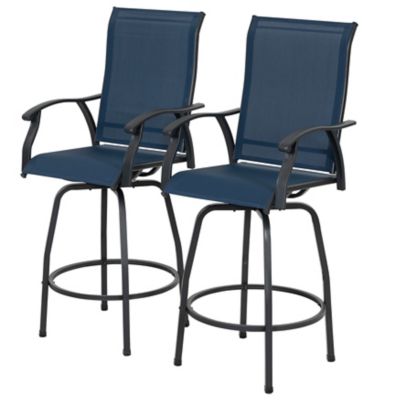
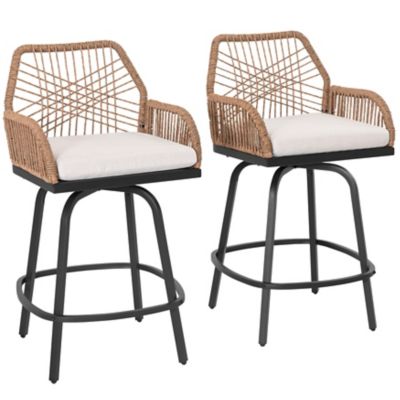
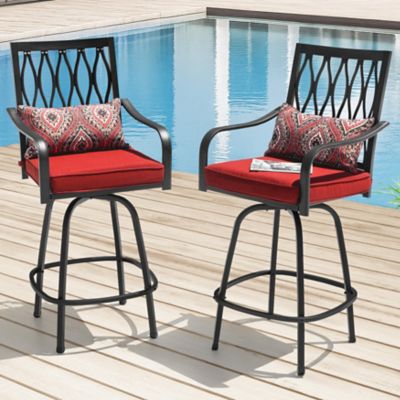
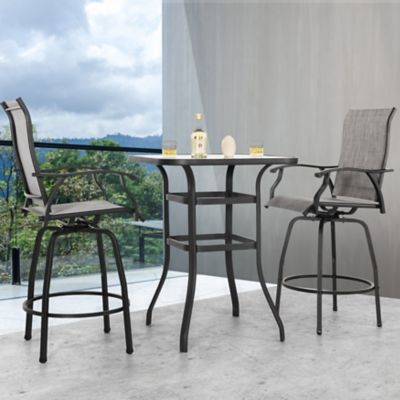
Comfort comes down to more than a padded seat. A shaped back can offer support, a rounded seat edge can feel easier behind the knees, and a footrest at a comfortable height keeps legs from dangling. Arms provide a place to rest elbows, while armless stools make it easier to slide onto the seat from either side. Cushions add softness, but their thickness changes the sitting height and can reduce the clearance beneath a counter. Removable covers and clearly stated cleaning instructions make spills simpler to handle, especially where barbecue sauce, garden dirt, and muddy boots are part of the picture. Outdoor-rated cushion fabric may resist moisture or fading, but that does not mean the cushion can stay wet indefinitely. For a patio where conversation moves between the table and the yard,
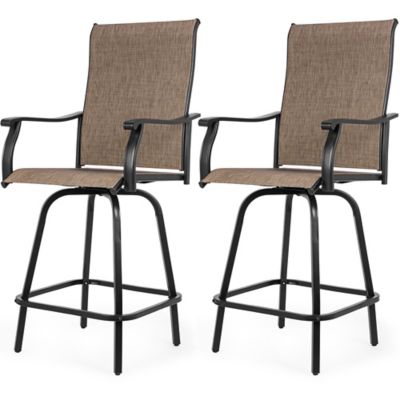
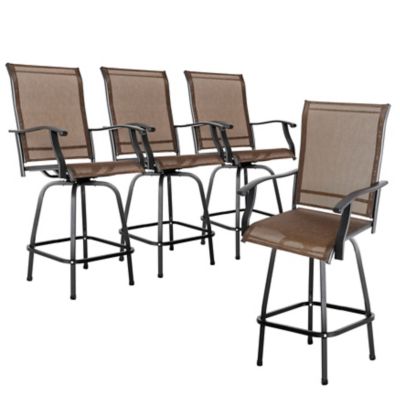
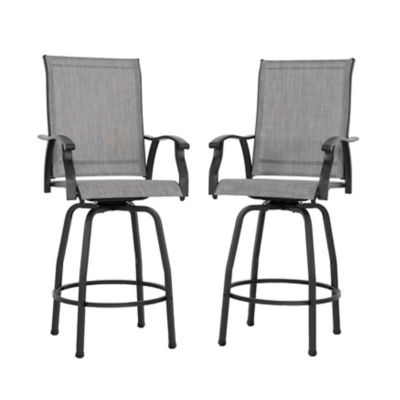
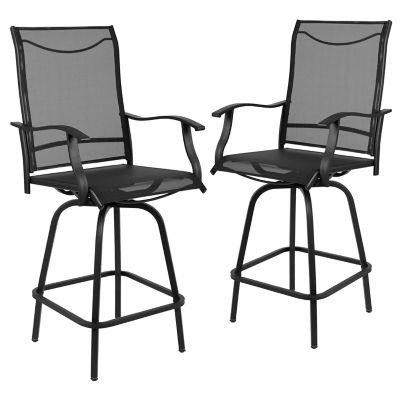
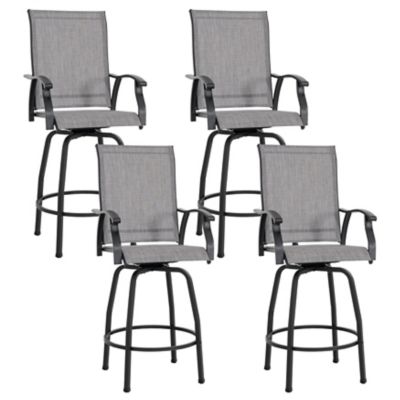
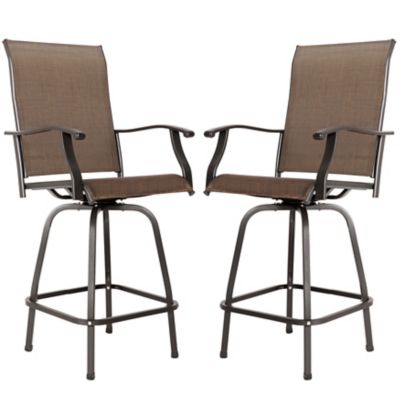
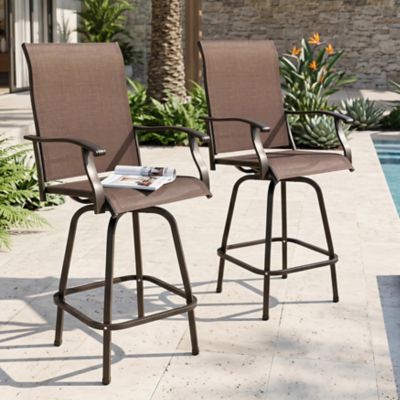
outdoor swivel bar stools let seated guests turn without dragging the whole frame across the floor. The turning motion needs clearance from neighboring seats, counter edges, and porch rails. Stationary stools keep the arrangement more predictable, while stackable designs can help clear floor space when the patio serves several purposes. Protective feet can reduce scraping on compatible surfaces, provided the caps remain secure and free of embedded grit. A consistent seat height keeps everyone comfortable around the same table, even when backs, materials, or finishes differ. Dark frames can sit comfortably alongside metal railings, and wood tones can tie in with posts or an outdoor dining table without everything matching exactly. For a housewarming or a gift to someone who enjoys hosting, patio bar stools make the most sense when the recipient’s counter measurements and seating needs are already known. The best fit is seating that works naturally with everyday routines: breakfast by the back door, a place to sit while supper finishes, or enough room for neighbors to pull up and stay awhile.