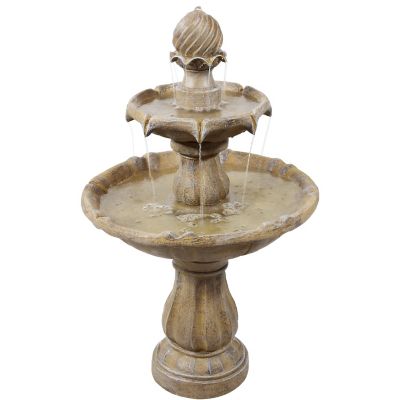
Outdoor sculptures bring a little personality to the places where you live, work and unwind. A plain stretch of lawn can feel more welcoming with a graceful figure near the garden gate, while a broad gravel bed or open field gives an abstract form room to stand on its own. These pieces range from realistic animal statues and classic human forms to modern spheres, loops, arches and other geometric designs. Some are made to catch the breeze, with moving parts that turn, sway or spin when the wind comes through. Others are quiet focal points that draw the eye through a flower bed, frame a porch or add interest beside a driveway. Whether your taste leans rustic, traditional, playful or clean and contemporary, outdoor sculptures can help shape the mood of a space without taking up much room. They work well around country homes, patios, workshops, barns, entryways and community gardens, and a carefully placed piece can make even a small courtyard feel finished. Many shoppers also choose them as thoughtful gifts for gardeners, new homeowners, outdoor entertainers or anyone who takes pride in making their yard feel like their own. A sculpture can mark a special place, celebrate a favorite animal, or simply give a friend something cheerful to enjoy through the seasons. For additional decorative ideas that pair well with a larger focal piece, browse
Outdoor Ornaments for accents that can help carry the look across a porch, pathway or planting area.
Material is one of the biggest considerations when choosing an outdoor sculpture, since the right construction can make a piece easier to enjoy and maintain over the long haul. Metal sculptures are a popular choice for their strength and visual presence. Steel may develop a warm, weathered finish over time, while copper and bronze can take on a natural patina that gives the piece more character as it ages. Some shoppers prefer that changing finish, especially in a garden with weathered wood, stone edging or old-fashioned plantings; others want a cleaner appearance and should look for care instructions that explain how to preserve the original surface. Stone and magnesium oxide pieces offer a solid, grounded look that fits naturally among shrubs, mulch and rock beds, though their weight can make placement a two-person job and their surfaces may need protection in areas with hard freezes. Resin is often lighter and easier to move, making it a practical choice for renters, seasonal decorators or anyone who likes to refresh the layout from time to time. Look for outdoor-rated construction, UV-resistant finishes and guidance for placing the piece in direct sunlight. Lightweight sculptures may need a stable base, ground stakes or another secure mounting method, particularly in an open yard where strong gusts can roll or tip them. Before buying, measure the intended spot from several angles and consider how large the sculpture will appear once it is surrounded by plants. A small accent can disappear beside a tall fence, while a large statement piece may crowd a narrow walkway. It also helps to check the height, width, weight and assembly requirements, then think about how the piece will look when flowers are full in warm weather and when beds become more open during the cooler months.
Placement has a lot to do with whether an outdoor sculpture feels naturally settled into the landscape or simply set down in the nearest open space. Start with the view from the places you use most, such as the kitchen window, front steps, back porch or garden path. A sculpture can create a destination at the end of a walkway, fill an empty corner beneath a tree or give a long fence line a welcome break. Animal figures often feel at home near plantings, water features or a children’s play area, while abstract and geometric pieces can complement gravel, pavers and neatly clipped greenery. Moving sculptures need enough clearance to turn freely without brushing a wall, branch or roof edge, and they are usually most engaging where people can see their motion from a distance. Keep sightlines and safety in mind around steps, driveways and areas used by pets or livestock. Heavy pieces are less likely to shift, but the ground should still be firm and level; a compacted base of gravel, pavers or concrete can provide added stability and help prevent settling. In exposed locations, inspect fasteners and mounting points from time to time, especially after strong weather. Wipe away dirt, sap and bird droppings with the care recommended for the material, and avoid harsh cleaners that can damage a protective finish. During severe storms or freezing conditions, lightweight or fragile pieces may be better moved to a sheltered area, while covered storage can help preserve their color and surface. With a little planning, an outdoor sculpture can become part of the everyday scenery: a bright shape beside the barn, a familiar animal greeting guests at the gate, or a weathered focal point that looks even better as the garden grows around it.