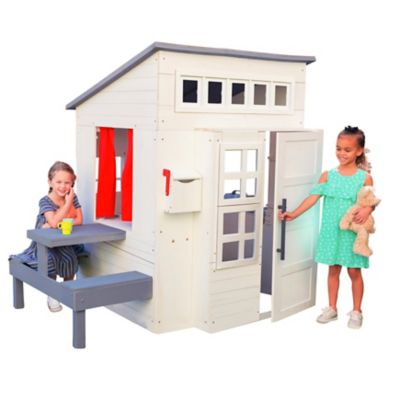
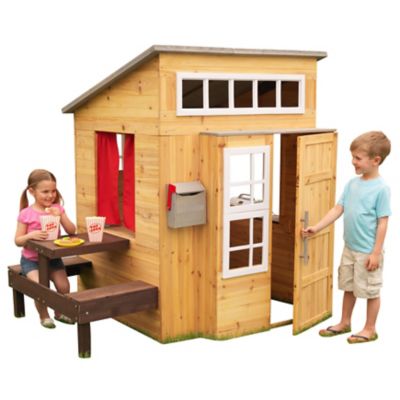
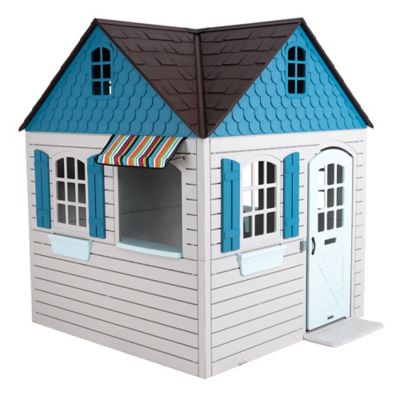
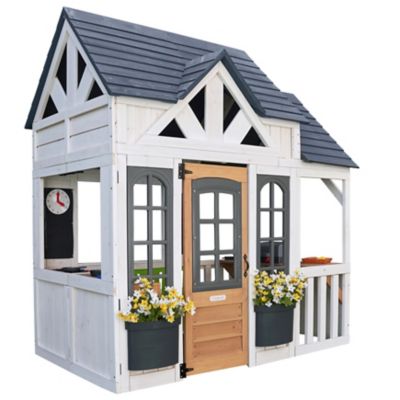
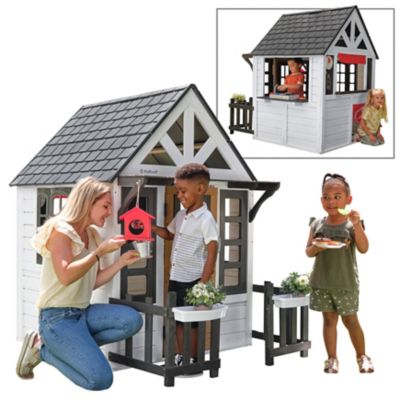
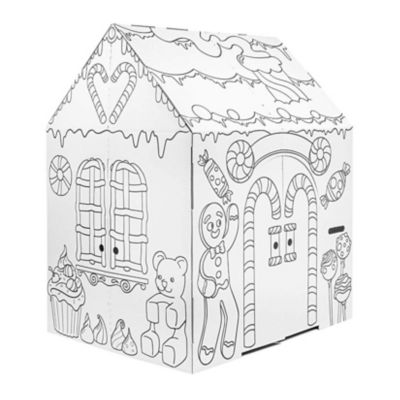
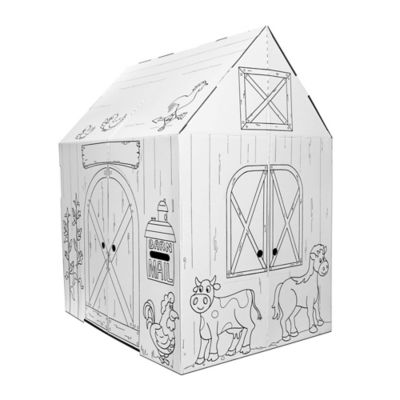
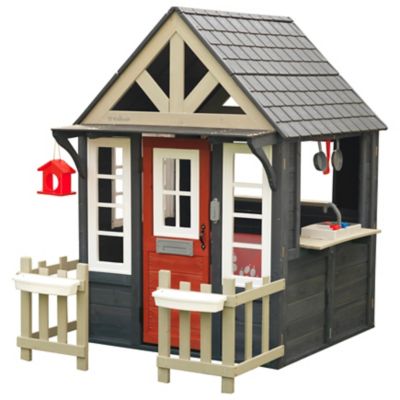
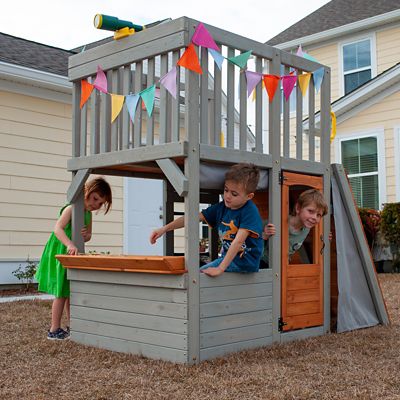
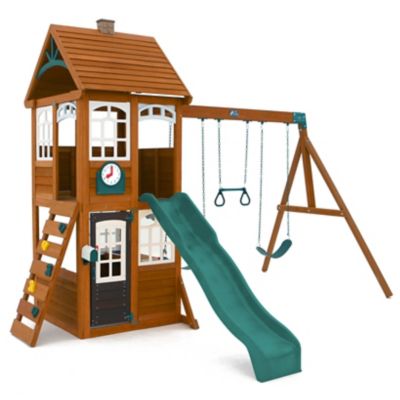
Outdoor playhouses give kids a little place of their own, where a front door can open onto a pretend farmhouse, a country store, or the headquarters for a backyard adventure. A child-sized counter becomes a checkout stand, a window turns into a spot for taking lunch orders, and a small porch makes room for a neighborly visit with a stuffed animal tucked under one arm. That kind of open-ended play lets children practice taking turns, making up stories, and working through everyday routines on their own terms. Some children enjoy hosting a whole crew, while others prefer a quiet corner where they can arrange toy dishes or settle in with a picture book. The right fit starts with the children who will spend time there, not just how the playhouse looks from the back door. Manufacturer age recommendations, doorway height, interior headroom, and the amount of floor space all help show whether a structure suits a toddler, an older child, or siblings sharing the same space. A compact layout may be plenty for one child and a few pretend-play supplies, while a roomier footprint gives friends space to move around without crowding the entrance. Windows and open sections can help grown-ups keep an eye on the fun, and an entrance that an adult can reach easily makes everyday assistance simpler. Think about the whole play area, too: children need room to approach the door, walk around the walls, and step onto or off any attached porch. A spot near the family’s usual backyard gathering area can keep play within sight without putting it in the middle of foot traffic. On a property with a barn, workshop, or equipment parking area, a clearly separated play space helps keep make-believe chores away from real working equipment. Whether the playhouse is a birthday gift, a shared family gift, or a new addition to the yard, its value comes from fitting the children’s size, interests, and daily play habits.
Materials and construction shape how an outdoor playhouse feels, how much upkeep it needs, and how it holds together through regular play. Wood brings a familiar little-house look, with boards, trim, and finishes that can resemble the buildings around a farm or homestead. Depending on the construction, wood may need periodic attention to its protective finish, joints, and exposed edges. Smooth surfaces matter anywhere small hands will grab a windowsill or slide along a doorframe, and checking for splinters or loose pieces belongs in the normal care routine. Molded plastic offers a different feel, often with rounded forms and surfaces that wipe clean after a busy afternoon of pretend cooking or serving. Plastic components still need inspection for cracks, damage, and loose connections; simple upkeep does not mean a structure can be left unchecked. Doors, shutters, counters, and other moving or attached parts should stay firmly connected and work as the manufacturer intends. Outdoor-rated hardware and finishes are worth considering alongside wall thickness, base construction, and the way panels join together. The supporting surface matters just as much as the house itself. A level, firm base helps doors line up and gives children a steadier place to stand, while the manufacturer’s placement and anchoring requirements establish what the structure needs underneath and around it. A built-in floor, an open-bottom design, or a raised entry can each call for a different setup, so the dimensions and installation details deserve a close look before choosing a location. Assembly space also needs to allow an adult to handle large panels and secure fasteners without children underfoot. Once the playhouse is ready, cleaning methods should match its materials and finish. Mild soap may be appropriate for some surfaces, while others have more specific care requirements. Keeping the entrance free of loose toys, checking connections, and addressing damaged parts before play resumes all help preserve a welcoming space. With sensible care, a playhouse can stay part of the backyard routine as children’s stories and favorite games change.
The details inside and around a playhouse often decide how children make it their own. A serving window encourages back-and-forth conversation, a shelf gives pretend groceries a home, and a counter provides a place to line up cups for an imaginary gathering. A working door adds to the little-house experience, though its movement, handle placement, and potential pinch points deserve attention, especially with younger children. Interior space that leaves room to turn around can be more useful than a long list of features squeezed into a tight footprint. For siblings, separate activity spots can help one child run the kitchen while another tends the store window, with room for both to move between jobs. For a child who prefers quieter play, a simpler layout can leave space for a small seat and a basket of familiar toys. Reach matters as well: windows, shelves, and handles should make sense for the child’s height, and families considering access for a mobility aid should check entrance width, thresholds, turning space, and the approach to the structure rather than relying on outside dimensions alone. Playhouses are generally intended for supervised play, not sleeping accommodations, climbing on the roof, or storing heavy equipment. Keeping activities within the manufacturer’s intended use helps make the play area easier to manage. When a playhouse shares the yard with other activities, leaving clear paths between spaces reduces crowding and gives children room to move from one kind of play to another. Families planning a broader backyard setup can explore
Equipment For Outdoor Play while considering the space each activity needs. For gift giving, checking with a parent or caregiver about age, available room, assembly, and upkeep helps ensure the surprise fits the household. A thoughtfully chosen playhouse does not need an elaborate setup to inspire a full afternoon. A few suitable playthings, a clear patch of yard, and room for imagination can turn that small doorway into a favorite stop between backyard adventures.