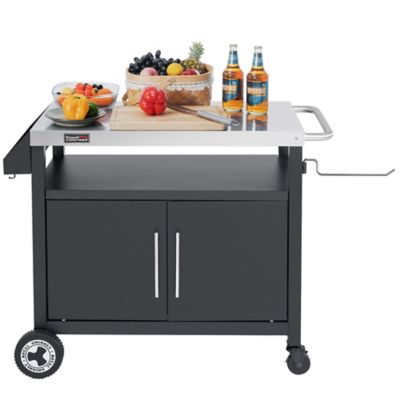
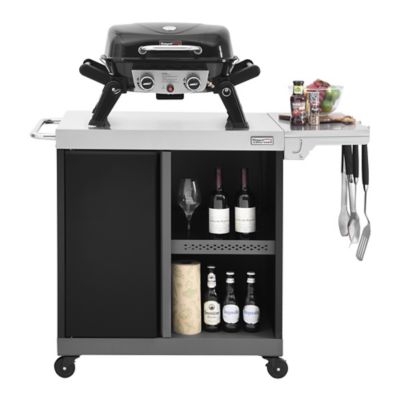
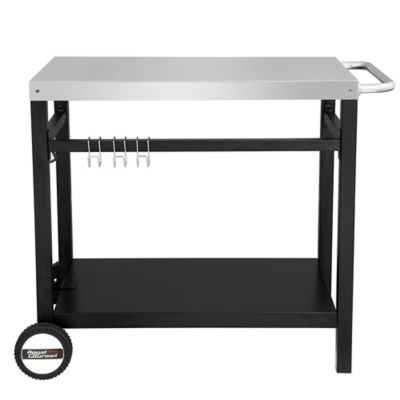
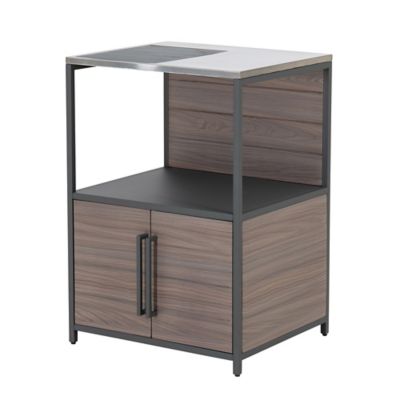
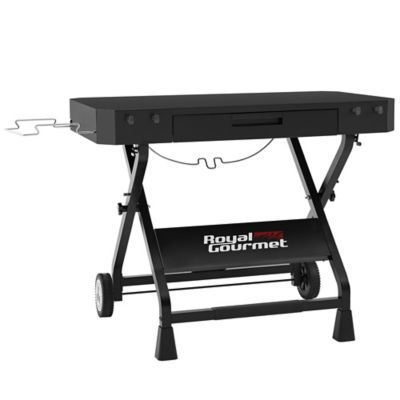
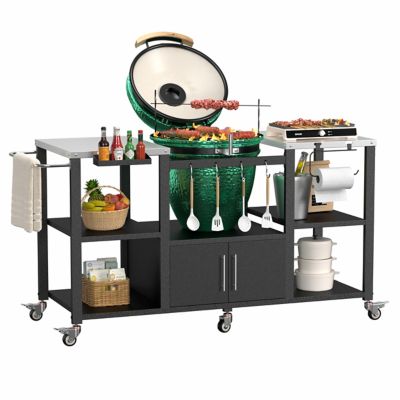
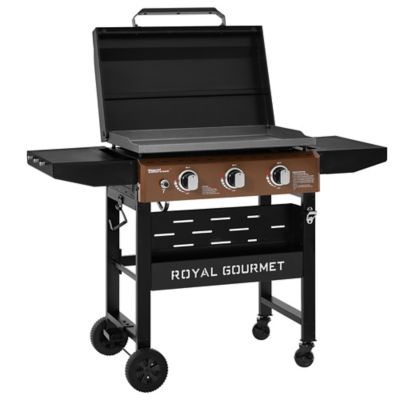
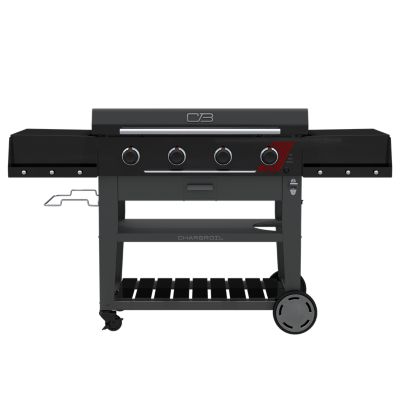
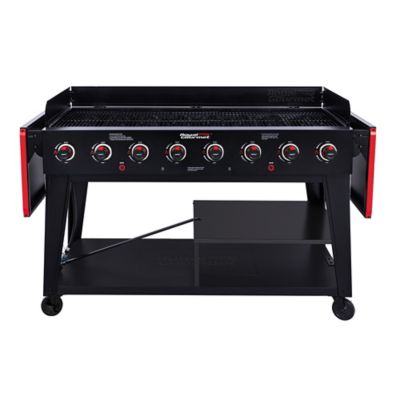
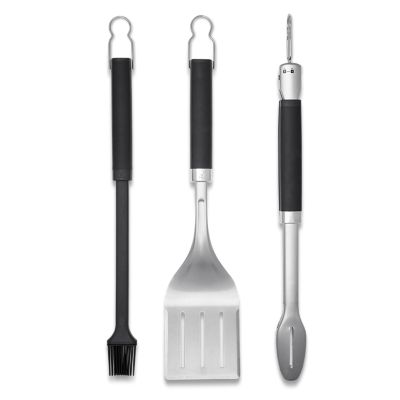
An outdoor BBQ prep table gives a Fourth of July cookout something a grill alone cannot: a handy place to get food ready, set down a platter and keep the next round of burgers moving. Around a backyard patio, farmhouse porch or picnic shelter, that extra workspace can make the difference between a comfortable cooking setup and a balancing act with bowls and utensils. Outdoor prep tables range from simple work surfaces to stations with shelves, enclosed storage, side extensions and wheels. The right arrangement depends on what happens beside the grill. A cook feeding a few family members may need room for a cutting board, seasoning containers and a serving plate, while a larger Independence Day gathering calls for more space to organize buns, corn, skewers and trays. Surface material matters just as much as the layout. Stainless steel offers a smooth top that is generally easy to wipe down, though it still needs cleaning and protection from substances that can cause staining or corrosion. Powder-coated steel frames provide support with a protective finish; scratches deserve attention according to the manufacturer's care directions so exposed metal does not become a trouble spot. Wood brings a familiar look to a porch or patio, with upkeep that depends on the species, finish and exposure. Resin components can simplify routine cleaning, but their heat limits matter near cooking equipment. A separate food-safe cutting board provides a proper place for slicing vegetables or trimming meat, regardless of the tabletop material. For a holiday spread with several dishes in motion, a table can hold the next tray of food while the grill's side shelf stays clear for the utensils needed at the grate. Rather than turning every available chair into a landing spot, a dedicated preparation surface keeps the cooking area organized and leaves seating where guests need it.
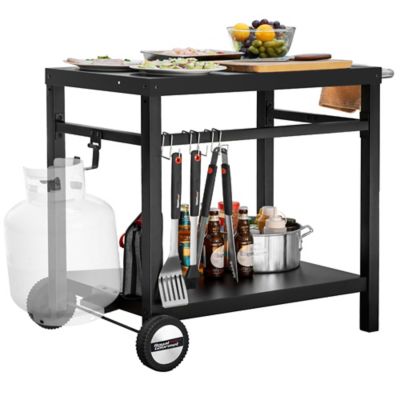
Fit involves more than finding a tabletop wide enough for a platter. An outdoor BBQ prep table needs room for the cook to stand comfortably, move between the grill and work surface, and reach storage without stepping into a busy walkway. Table height affects that everyday comfort, especially during longer stretches of chopping, assembling kabobs or portioning food for a crowd. A deeper top can accommodate larger boards and trays, but anything along the back edge should remain within easy reach. Side leaves and folding extensions add working room when open, so their full footprint matters on a narrow porch or compact patio. Lower shelves offer a place for covered containers and spare supplies, while enclosed cabinets can help keep utensils and serving pieces together. Neither setup replaces proper temperature control for food that needs refrigeration. Raw meat belongs in a separate tray away from buns, vegetables and cooked food, with clean utensils ready when the grilling is done. Weight capacity also deserves attention: the stated limits for the top, shelves and extensions may differ, and a heavy appliance or full container can put more load on a table than a few dinner plates. Wheels suit a setup that moves between storage and a cooking area, but wheel size and the ground beneath them affect how easily a cart rolls. Smooth concrete is a different job from gravel, grass or uneven pavers. Locking casters help keep a mobile table in place during preparation; a firm, level location is still important. Any propane-cylinder holder should match the cylinder size and follow the table and grill manufacturers' directions. A prep table also needs the required clearance from hot grill surfaces, exhaust and combustible materials. These details are especially useful at a Fourth of July gathering, when one person may be tending the grill while another carries a platter past the work area.
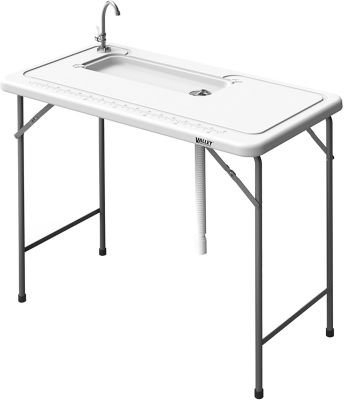
Storage and care shape how well a BBQ prep table fits into life beyond a single cookout. Open shelving puts serving trays and larger pots within sight, while cabinet doors offer a tidier place for grilling tools after cleanup. Hooks, towel bars and utensil rails can free up tabletop space, provided hanging tools stay clear of walkways and hot surfaces. A folding design suits a household that packs away its cooking setup between gatherings, and a stationary table may fit a dedicated grilling area where the layout stays the same. For another grill-side workspace, the
BBQ Grill Cart Fourth of July Sale page brings together the related cart category. Whether the preference is a movable station or a table that stays put, thoughtful construction includes steady legs, secure joints, smooth edges and hardware suited to outdoor exposure. Cleaning instructions should match the surface: mild soap and a soft cloth may be appropriate for many finishes, while abrasive pads or harsh cleaners can damage some materials. Spills, grease and food residue are easier to manage before they dry onto the top. Drying the surface and checking shelf corners help prevent moisture from lingering, especially around seams and fasteners. Wood may need periodic finish maintenance, and metal frames benefit from checks for loose hardware or damaged coating. A properly fitted cover or sheltered storage can reduce exposure when the table is not part of the day's cooking setup, as long as surfaces are dry before covering. For someone who regularly hosts family cookouts, smokes meat for neighbors or handles the grilling at a Fourth of July get-together, an outdoor preparation table can be a practical gift. The most useful choice reflects that person's space, cooking habits and ability to move or store it. A clear worktop, sensible storage and a comfortable fit beside the grill give the cook room to focus on the meal instead of searching for somewhere to set the next plate.