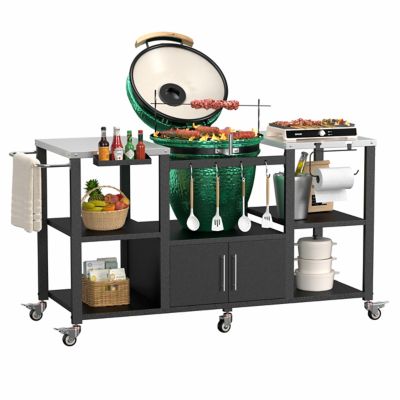
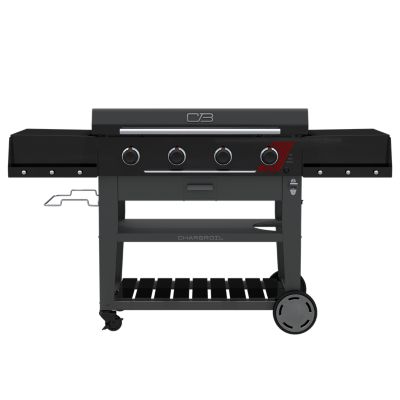
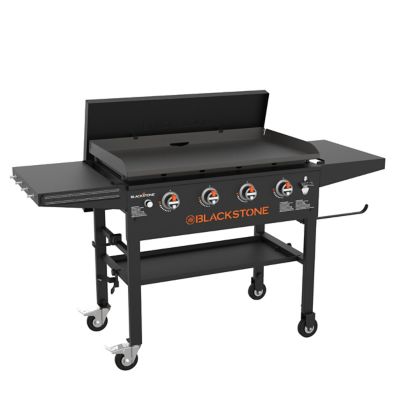
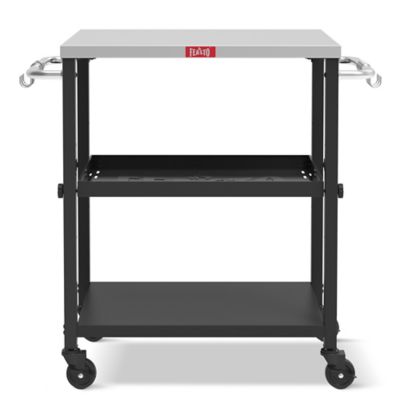
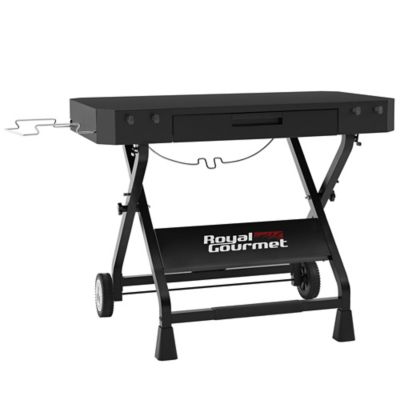
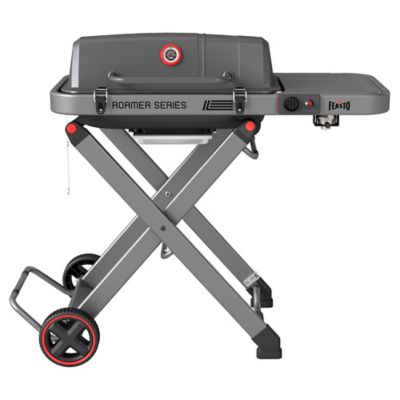
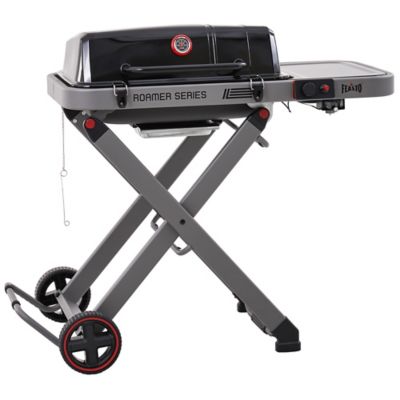
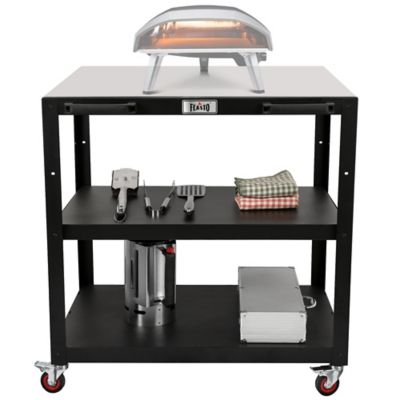
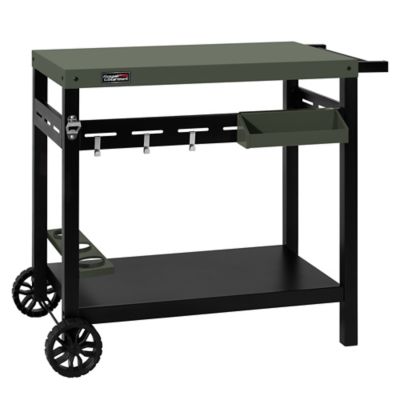
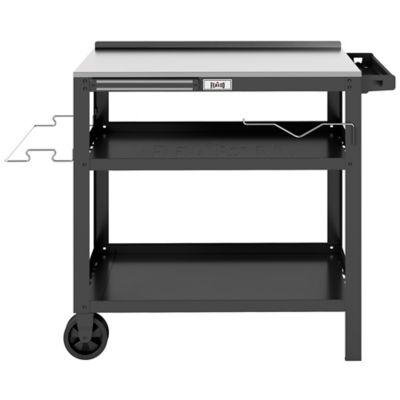
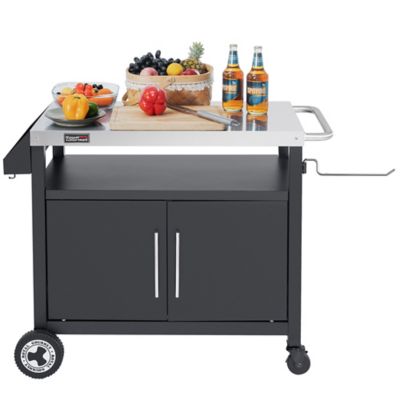
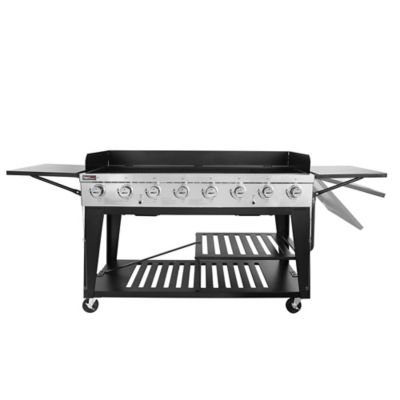
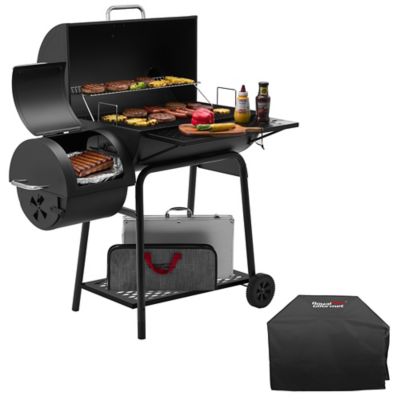
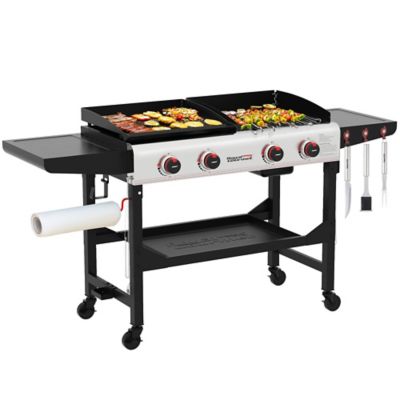
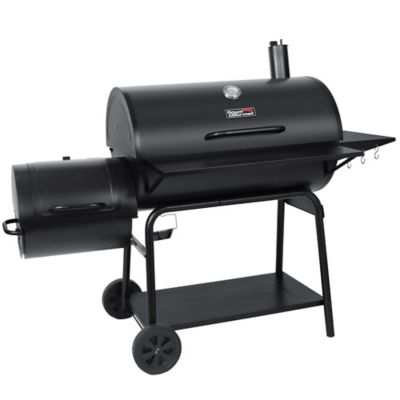
A Fourth of July cookout has a way of spreading beyond the grill. There are burger patties waiting for their turn, corn ready for the grate, serving trays headed toward the picnic table and somebody looking for the barbecue sauce. A BBQ grill cart gives all that activity a place to land without taking over the outdoor dining table. These carts serve as movable workstations for food preparation, cooking tools and serving supplies, with layouts ranging from open shelves to enclosed compartments and broad worktops. For Independence Day gatherings, that extra space can help keep the cook close to the grill instead of making repeated trips through the back door. The right layout depends on what happens beside the cooking area. A cook handling a few steaks may need room for a cutting board and a platter, while a family feeding a porch full of neighbors may prefer separate spaces for ingredients, clean utensils and finished food. Keeping raw meat separate from ready-to-eat dishes matters just as much outdoors as it does in the kitchen, so enough worktop space for separate trays is worth considering. Shelf placement also makes a difference: everyday tools belong within easy reach, while heavier supplies sit more securely lower down, within the cart’s stated load limits. Hooks and side rails can keep utensils off the work surface, provided they do not hang against hot equipment or block a walkway. A grill cart can also act as a serving station away from the heat, giving buns, napkins and condiments a home near the meal. On a small patio, one compact cart may handle several of these jobs; beside a larger cooking area, a wider station can create a clear division between preparation and serving. That flexibility suits backyard cooks, folks hosting family reunions and anyone who likes a little breathing room when the grill gets busy.
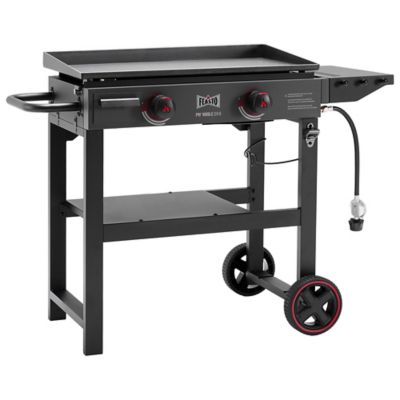
Materials and construction shape how a BBQ grill cart fits into an outdoor cooking setup. Stainless steel worktops offer a smooth surface that is generally straightforward to wipe down, though stainless steel is not completely immune to stains or corrosion. The metal grade, surface finish and care requirements all matter, especially where grease, moisture and salty food residue can linger. Powder-coated steel frames add a protective finish over the underlying metal, but scratches and chips deserve attention because exposed steel may begin to rust. Wood surfaces bring a different feel to the cooking area and may need periodic treatment according to the manufacturer’s directions. Regardless of the material, a cutting board protects the worktop and provides a designated preparation surface; direct food contact should be limited to surfaces approved for that purpose. Fit goes beyond the width of the top. Overall height affects comfort while chopping or arranging platters, and handles, side shelves and hanging tools add to the room a cart needs. A fold-down extension can provide elbow room during a gathering without requiring the same footprint afterward. Storage compartments need enough clearance for doors to open, and the route between the cart, grill and dining area should stay clear. Wheels are another practical detail. Small casters generally suit smooth, firm surfaces, while larger wheels may handle joints and minor unevenness more easily, depending on their design. Loose gravel, soft ground and sloped pavement can make any loaded cart harder to control. Locking wheels help hold a mobile station in place, but cooking and preparation still call for a level, stable location. Load ratings apply to the entire cart and may differ for the top, shelves and extensions, so evenly distributed storage matters. A prep cart is not automatically a stand for a grill or pizza oven. Supporting a cooking appliance requires the right dimensions, weight capacity, heat tolerance and manufacturer approval, along with the clearances specified for that appliance. Keeping those distinctions in mind helps match the cart to its actual job rather than asking a serving station to do work its design cannot support.
Care and everyday organization help a grill cart stay ready for the next cookout. After food preparation, crumbs, grease and spills need attention before they settle into corners or collect around shelf edges. Cleaning methods should match the surface: a manufacturer-approved cleaner and a soft cloth may be appropriate where abrasive pads or harsh chemicals could damage a finish. Worktops and handles that come into contact with raw ingredients need cleaning and, where appropriate, sanitizing according to the surface and cleaner instructions. Drying the cart after cleaning helps limit lingering moisture, particularly around seams, fasteners and enclosed storage. Wheels should remain free of packed dirt and food debris, and loose hardware needs attention before the cart carries another load. Outdoor-rated construction does not make every cart suitable for constant exposure, so storage guidance is worth checking. A properly fitted cover can help shield a cooled, clean cart from rain and airborne dirt, while covered storage may offer more protection when practical. Hot cookware belongs only on surfaces rated for the heat, and a cart supporting a cooking appliance should not be moved while that appliance is lit or hot. For day-to-day convenience, a tidy setup leaves room for the task at hand rather than filling every inch with supplies. Clean utensils can sit apart from tools awaiting washing, serving platters can stay separate from raw-food trays, and heavy containers can ride on a lower shelf instead of crowding the top. Tongs, spatulas and other cooking essentials round out the workspace; explore
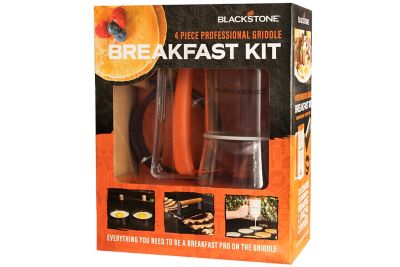
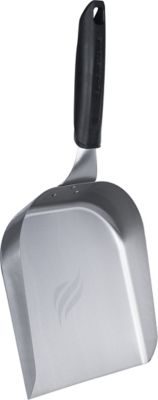
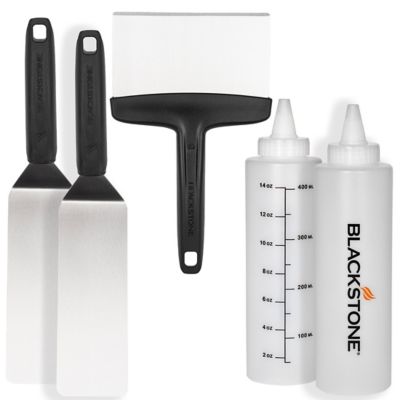
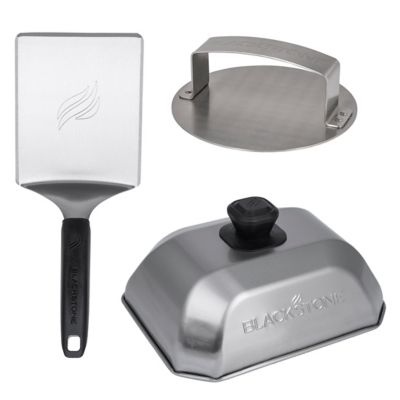
BBQ Grill Tools Fourth of July Sale for the tools that belong alongside the cooking station. A grill cart can also make a thoughtful gift for a backyard cook or a new homeowner setting up an outdoor eating area, especially when its size and storage match the recipient’s space. From an Independence Day meal with the extended family to a quiet supper after chores, a well-matched cart keeps the necessary supplies close and gives the cook room to work.